![[HERO] The Accessible Ocean: A Masterclass in Cruising with a Disability](https://cdn.marblism.com/j0aspe6JGJ9.webp)
Let me tell you something that might sound counterintuitive: cruising is probably the most accessible form of luxury travel on the planet. And I’m not just saying that because we book a lot of cruises. I’m saying it because it’s true.
When you cruise, your hotel moves with you. Your hotel moves with you. Read that again. You unpack once, settle into a rhythm, and wake up in a new port without the chaos of airports, train stations, or unfamiliar hotel lobbies. For travelers with disabilities, whether mobility-related, visual, hearing, or invisible, this is the ultimate travel hack. No wrestling suitcases through cobblestone streets. No navigating public transportation in a foreign language. No anxiety about whether the “accessible” room you booked actually has grab bars or just good intentions.
The ocean doesn’t care about your diagnosis. And neither should your vacation.
Why Cruising is the Gold Standard for Accessible Travel
Think about traditional land-based travel for a moment. You book a hotel. You hope the photos match reality. You arrive and discover the “accessible” bathroom has a tub you’d need a ladder to climb into. You spend half your vacation coordinating taxis, researching restaurant accessibility, and Googling “wheelchair-friendly attractions near me” at 11 PM.
Cruising flips that script entirely.
Everything is designed for safety and flow. Ships are built with wide corridors, gentle ramps, and elevators that actually work. There are no surprise staircases. No “sorry, the accessible entrance is around back through the alley.” The entire vessel is engineered to move thousands of people safely and efficiently, and that engineering benefits everyone, especially travelers who need predictable, reliable infrastructure.
You have a dedicated Guest Services team who knows your name. You have dining staff who remember your dietary needs. You have excursion coordinators who can pre-arrange accessible shore tours. And if something goes wrong? You’re not stranded in a foreign city trying to find a pharmacy that stocks your specific medical supplies. You’re on a floating city with medical staff, pharmacies, and a concierge team whose literal job is to solve problems.
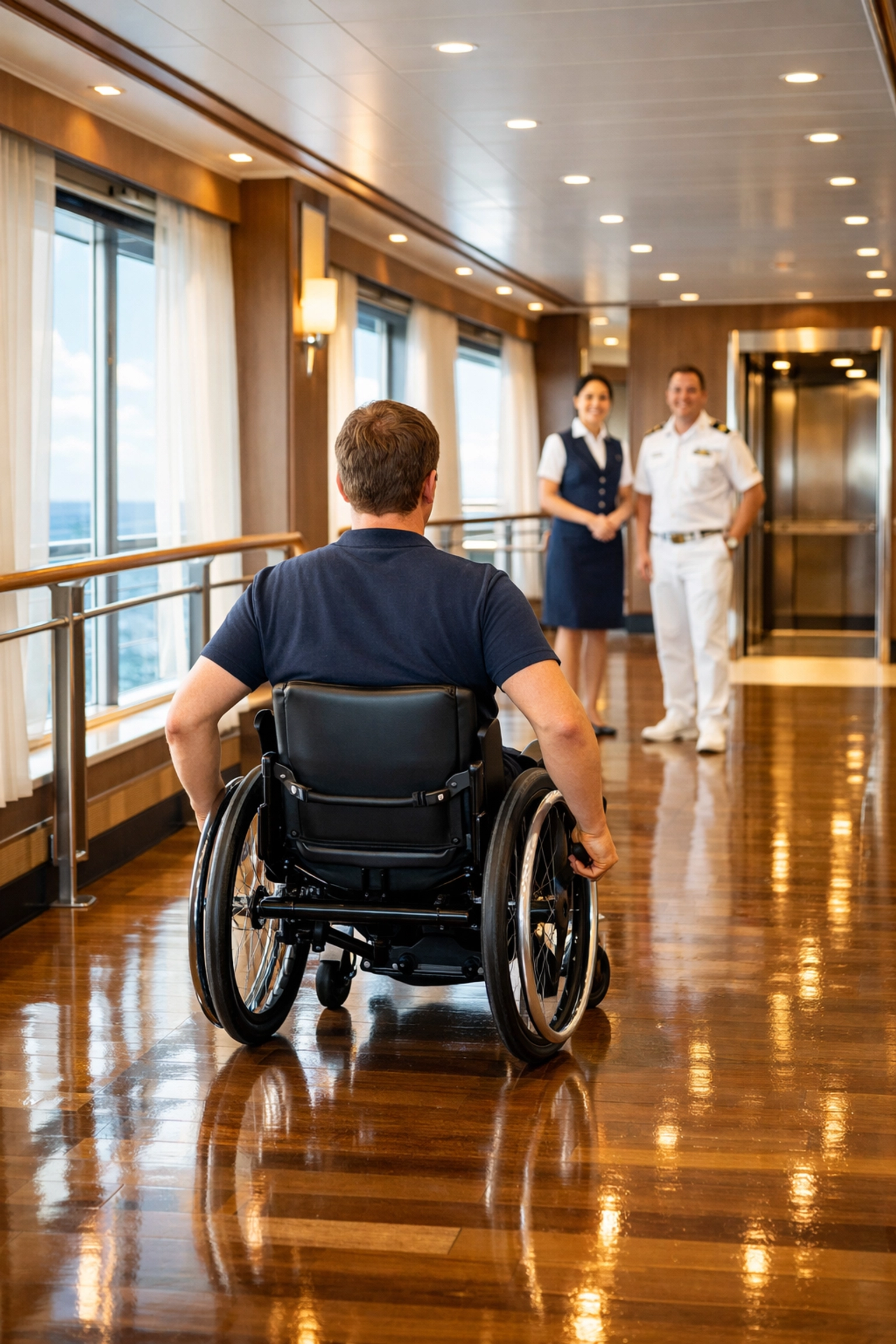
Choosing the Right Ship: Size Matters (But Not How You Think)
Here’s where it gets interesting. Not all cruise ships are created equal when it comes to accessibility. And the “best” choice depends entirely on what kind of experience you’re after.
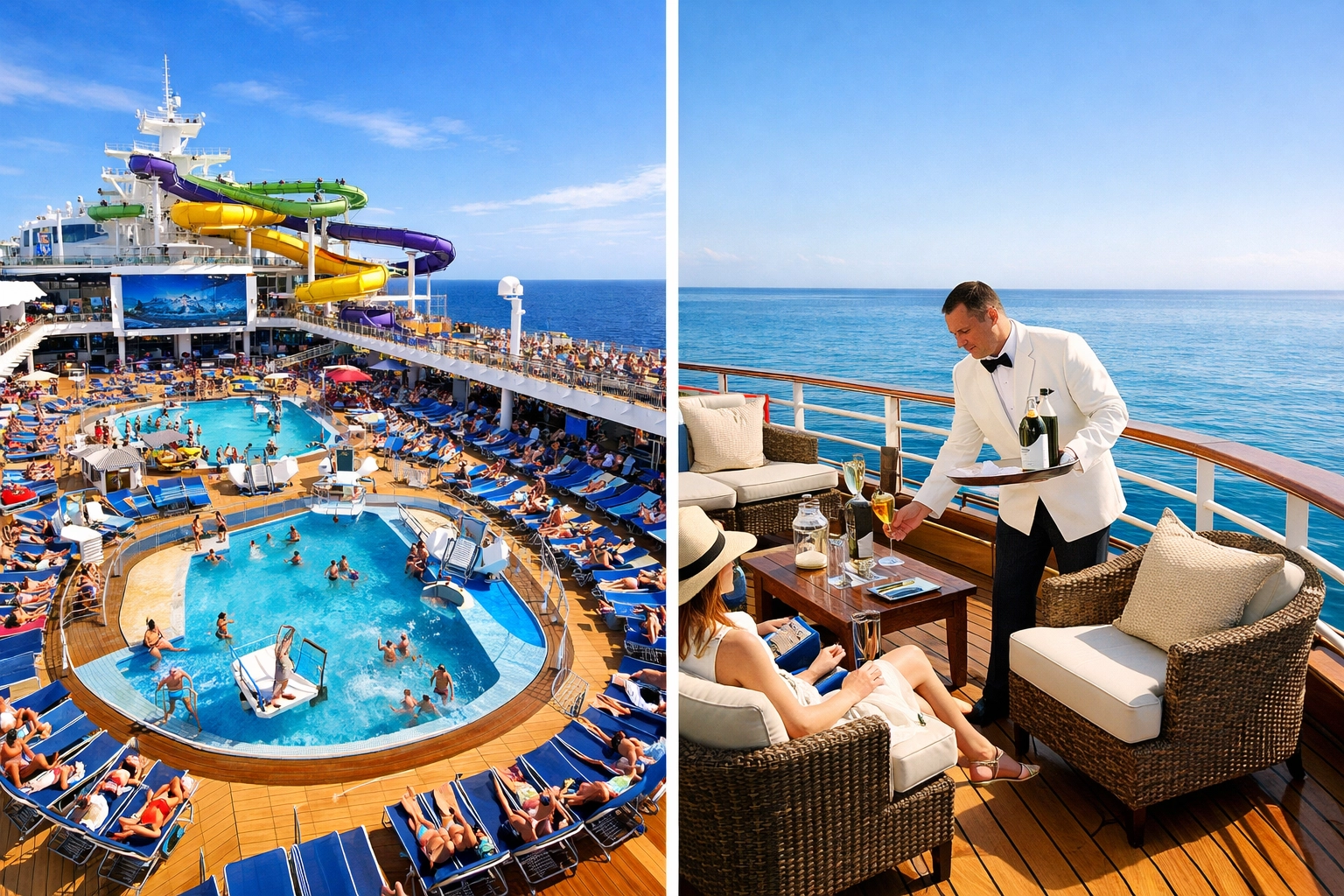
The Mega-Ship Advantage: Ships like Royal Caribbean’s Oasis Class or MSC Seaside are floating cities with cutting-edge accessibility technology. We’re talking 40+ fully accessible cabins, state-of-the-art pool lifts, Broadway-style theaters with designated wheelchair seating and assistive listening devices, and elevators so spacious you could throw a party in them. These ships often have specialized medical facilities and staff trained in disability services. If you want variety, activities, and the peace of mind that comes with modern ADA-compliant design, mega-ships are your friend.
The Luxury Small-Ship Experience: Now flip the script. Imagine sailing on something like Silversea or Seabourn. Fewer than 600 passengers. A crew-to-guest ratio that borders on absurd. These ships may have fewer accessible cabins (often 4-8 per vessel), but what they lack in quantity, they make up for in extreme personal service. Your butler knows you take your coffee at 7:15 AM. The cruise director remembers you’re sensitive to strobe lights. The chef personally accommodates your gluten-free, low-sodium diet without you having to ask twice.
The choice isn’t about “better” or “worse.” It’s about what kind of traveler you are. Do you want the independence and options of a mega-ship? Or the white-glove, anticipatory service of a luxury small vessel?
We help you figure that out. No judgment. No assumptions. Just honest conversation about what works for your life.
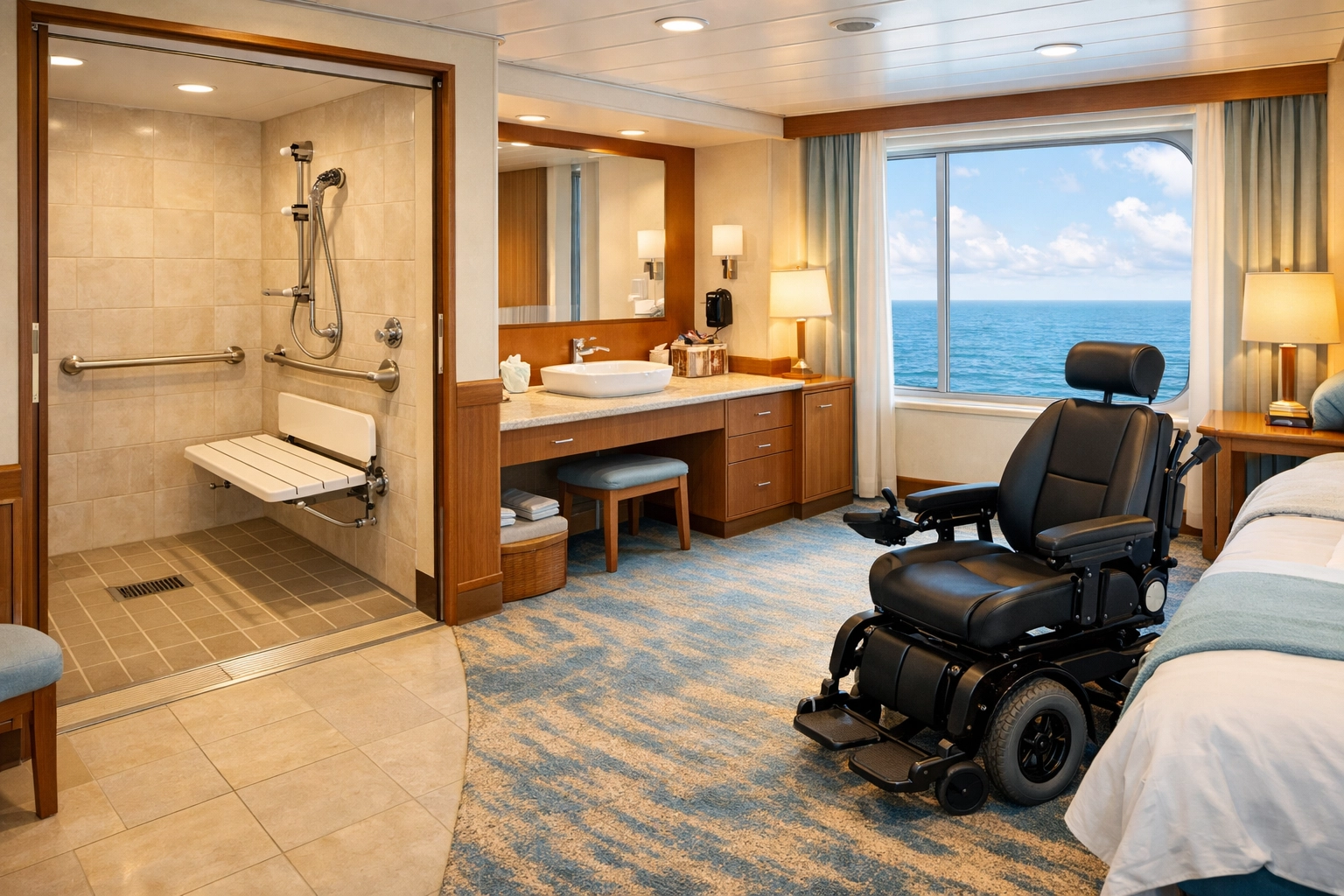
The Cabin Deep Dive: Know Your Options
This is critical. When cruise lines say “accessible cabin,” they don’t all mean the same thing. There are two main categories, and understanding the difference will save you a world of frustration.
Fully Accessible Cabins: These are the gold standard. We’re talking roll-in showers with fold-down benches, grab bars in all the right places, lowered sinks and vanities, closet rods you can actually reach, and doorways wide enough for power chairs. Light switches are positioned lower. Emergency call buttons are within arm’s reach from the bed and bathroom. These cabins are designed for wheelchair users and travelers with significant mobility challenges.
Ambulatory Accessible Cabins: These cabins have grab bars and wider doorways, but they typically have a bathtub with a shower curtain instead of a roll-in shower. They’re designed for travelers who can walk short distances but need stability support. If you use a walker or cane, these might work beautifully. If you’re a full-time wheelchair user? Not so much.
Here’s the thing cruise lines won’t always tell you upfront: Accessible cabins book up fast. Like, six-months-in-advance fast. Especially on popular sailings during peak season. And once they’re gone, they’re gone. No amount of begging or pleading will magically create a roll-in shower where a bathtub exists.
This is where working with us makes a tangible difference. We know which ships have the most accessible inventory. We know which cabins have the best layouts (not all accessible cabins are created equal, even on the same ship). And we book early to secure your spot before the inventory evaporates.
The Tendering Problem (And How to Avoid It)
Let’s talk about one of the biggest accessibility hurdles in cruising: tendering.
When a ship is too large to dock at a port, it anchors offshore and uses smaller boats, called tenders, to ferry passengers to land. For able-bodied travelers, it’s a minor inconvenience. For wheelchair or scooter users? It can range from “challenging” to “absolutely impossible.”
Picture this: You’re transferring from a moving cruise ship to a smaller boat that’s bobbing in the water. Sometimes there’s a ramp. Sometimes there’s a step. Sometimes the crew physically lifts your wheelchair. The process is unpredictable, weather-dependent, and often stressful.
The solution? Choose a “dock-only” itinerary.
These are sailings where the ship physically docks at every port, no tendering required. You roll off the ship directly onto stable ground. No transfers. No anxiety. No weather cancellations leaving you stuck on the ship while everyone else explores Santorini.
Not every itinerary offers this. Some of the world’s most beautiful ports, Bora Bora, certain Caribbean islands, parts of the Greek Isles, are tender-only. And that’s okay. You just need to know what you’re signing up for.
We pre-screen itineraries for this exact issue. We flag tender ports. We discuss alternatives. And if you decide a tender port is worth the hassle, we coordinate with the ship’s access team ahead of time to ensure the smoothest possible experience.
Onboard Amenities: The Details That Matter
Accessibility isn’t just about cabins. It’s about the entire onboard experience. And modern cruise ships have come a long way.
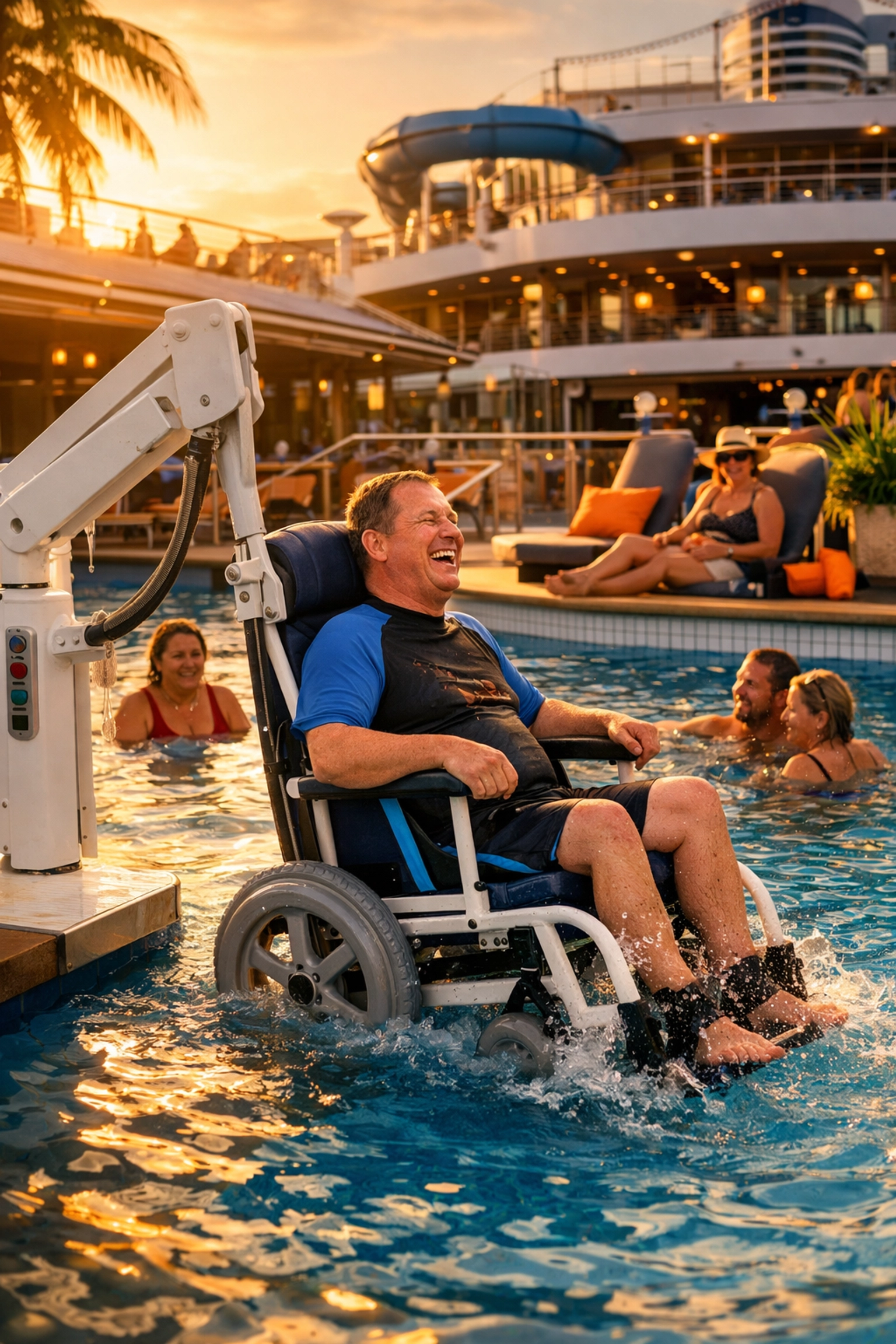
Pool lifts allow wheelchair users to actually swim, not just sit poolside watching everyone else. These hydraulic lifts gently lower you into the water and lift you back out with dignity and ease. Not every ship has them, but the ones that do make them accessible to all guests without requiring advance reservations.
Braille signage and large-print menus are standard on most major cruise lines. Tactile deck maps help visually impaired guests navigate independently. Some ships offer guided embarkation tours specifically for guests with visual impairments.
Assistive listening devices are available in theaters and show venues. If you have hearing loss, you can request a portable receiver that syncs with the ship’s sound system. No more straining to hear dialogue or missing punchlines.
Accessible theater seating means you’re not relegated to the back row. Designated wheelchair spaces are integrated throughout the theater, often with companion seating right next to you. You get the same sightlines, the same experience, the same front-row excitement as everyone else.
And here’s a detail that might seem small but matters enormously: Visual and tactile alert systems. Fire alarms flash lights in addition to making noise. Door knocks trigger vibrating alerts. These systems ensure that guests with hearing impairments aren’t left out of critical safety information.
Shore Excursions: The Make-or-Break Moment
You’ve booked the perfect accessible cabin. The ship’s amenities are flawless. You dock at your dream destination. And then… you realize the cruise line’s standard shore excursions involve cobblestone streets, steep hills, and four hours of standing.
This is where most travelers with disabilities get stuck at the pier.
Not on our watch.
We coordinate accessible-vetted shore excursions before you leave home. These aren’t the generic “bus tour for 50 people” experiences. We’re talking private or small-group tours with accessible transportation, wheelchair-friendly routes, and guides who actually understand pacing and rest breaks.
Want to explore Rome’s Colosseum? We arrange step-free access and a guide who knows the elevator entrances. Dreaming of snorkeling in Cozumel? We find operators with beach wheelchairs and accessible boat entry. Hoping to visit a Norwegian fjord? We book the scenic drive with photo stops, no hiking required.
The goal is simple: You don’t miss out. You don’t sit on the ship while everyone else has adventures. You just do it differently. Smarter. With the right support in place.
Equipment Rentals: It’s Waiting When You Arrive
Here’s a common anxiety: “How do I get my scooter/power chair/oxygen concentrator on the ship?”
The logistics can be overwhelming. Airlines have strict rules about battery types. Cruise lines require advance notice and documentation. And then there’s the question of whether your personal equipment can even fit through your cabin door.
We handle all of it.
We coordinate with specialized medical equipment rental companies that deliver directly to cruise ships. Your scooter is waiting in your cabin when you board. Your oxygen concentrator is set up and ready. Your shower chair, raised toilet seat, or portable ramp, whatever you need, is already there.
No hauling equipment through airports. No worrying about damage during transit. No last-minute panic when you realize your power chair battery doesn’t meet cruise line regulations.
And when the cruise ends? The rental company picks everything up. You walk off the ship (or roll off, as it were) with nothing but your luggage and incredible memories.
The Time For Your Vacation Difference
Let me be blunt: Booking a cruise with a disability is not the same as clicking “book now” on a website.
Cruise lines have “special needs” departments. And they mean well. But they’re also processing hundreds of requests, operating on strict timelines, and following corporate protocols that don’t always account for individual circumstances.
We are your buffer. Your advocate. Your translator between “what you need” and “what the cruise line requires.”
We handle the paperwork. We submit the accessibility forms 60+ days in advance (because that’s when they’re actually processed, not two weeks before sailing). We confirm and reconfirm your cabin assignment. We document your equipment rentals. We notify the dining team about allergies. We coordinate with shore excursion operators.
And when something goes wrong, because in travel, something always goes wrong, we fix it. Not “sorry, we’ll try to help.” Not “call the cruise line directly.” We fix it. That’s the job.
You want to spend your mental energy getting excited about glaciers in Alaska or tapas in Barcelona, not decoding cruise line accessibility policies. So we do that part for you.
Let’s Make This Happen
Cruising with a disability isn’t a compromise. It’s not “the best you can do given the circumstances.” It’s legitimately one of the most freeing, accessible, joyful ways to see the world.
You deserve more than “good enough.” You deserve the full experience. The midnight buffets. The Broadway shows. The sunrise over the Mediterranean. The zip-lining in Roatán (yes, there are accessible zip-line experiences: ask us how).
And you deserve a team that doesn’t treat accessibility as a checkbox. We treat it as the starting point for building something extraordinary.
So let’s talk. Tell me where you want to go. Tell me what worries you. Tell me what you’ve always dreamed about but assumed wasn’t possible.
I bet we can make it happen.
Ready to explore the accessible ocean?
Visit us at www.TimeForYourVacation.com | www.DaveTheTourGuide.com | www.BlackKeyElite.com | www.TimeForYourVacation.blog
Listen to our podcast: https://www.podomatic.com/podcasts/contact24682

 Time For Your Vacation
Leave a reply to Dave Galvan Cancel reply