• [HERO] How Cruise Ships Manufacture "Fun"

    You didn’t just stumble onto that cruise ship. You were designed to be there.

    Every belly flop contest. Every perfectly timed conga line through the Lido deck. Every moment you thought you were spontaneously having fun? That was manufactured. Engineered. Choreographed down to the second by people in conference rooms 18 months before you ever stepped aboard.

    Welcome to the multi-billion-dollar machinery of manufactured joy.

    I’m not saying you’re not having fun. You absolutely are. But understanding how cruise ships create that fun: the psychology, the architecture, the sensory manipulation, the timing: changes everything. It transforms you from a passive participant into someone who can choose exactly what kind of “fun” you actually want.

    And that’s where the real vacation begins.

    The Architecture of Joy: How Space Manipulates Your Mood

    The moment you step onto a cruise ship, you’re entering a psychological laboratory.

    Royal Caribbean’s ships feature those massive promenades: indoor boulevards lined with shops, bars, and restaurants that feel like miniature cities. You think that layout is accidental? It’s intentional crowd flow engineering. The promenade forces you to walk past every revenue-generating venue on the ship. Multiple times. Per day.

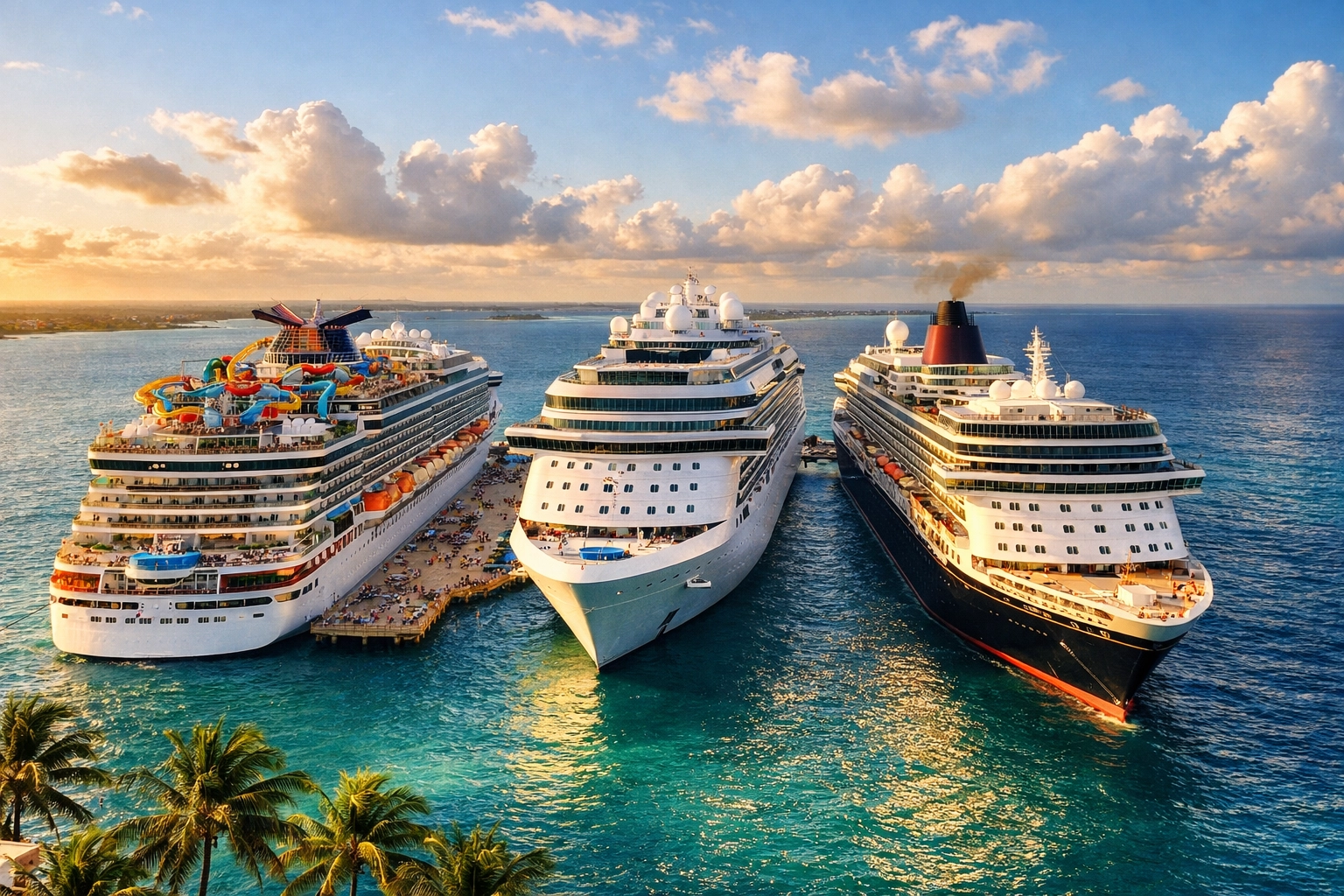
    Carnival’s “Fun Ship” design philosophy takes a different approach. Their ships feature a vertical layout that pushes you upward toward pool decks and outdoor spaces. The central atrium becomes a theater of constant activity: you can’t escape it. Every time you move between decks, you’re witnessing entertainment, promotions, or activities.
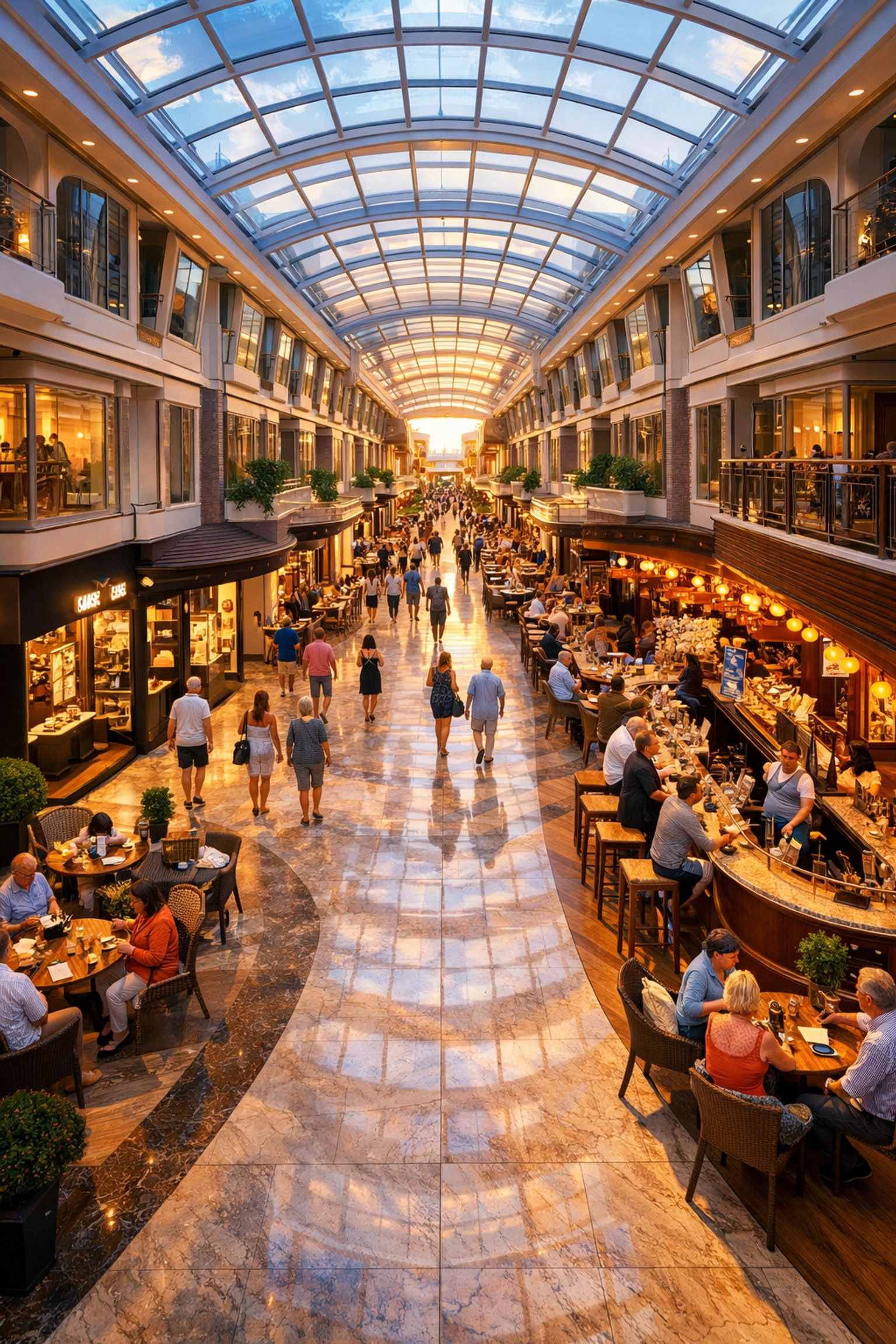
    Cruise ship indoor promenade with shops and passengers demonstrating architectural crowd flow design

    The psychology is brilliant. Wide-open spaces create feelings of freedom and possibility. Narrow corridors with lower ceilings near staterooms create intimacy and relaxation. The casino is always located where you must walk through it to reach dining venues. Not by accident.

    Disney Cruise Line masters the themed environment. Their ships use movie-based design to trigger nostalgia and emotional connection before you even participate in an activity. That Art Deco theater isn’t just pretty: it’s priming you to feel like you’re in a golden age of glamorous travel.

    Luxury lines like Oceania and Silversea flip this script entirely. Their ships feature asymmetrical layouts with hidden corners, libraries, and quiet observation lounges. The architecture whispers rather than shouts. You discover spaces rather than being funneled through them.

    The difference? One approach manufactures constant stimulation. The other curates opportunities for genuine discovery.

    The Cruise Director: Orchestrator of Your Every Waking Moment

    Let me tell you about the most underestimated person on any ship: the Cruise Director.

    This person never sleeps. I’m convinced they’re actually three people rotating in the same uniform.

    The Cruise Director is part psychologist, part DJ, part camp counselor, and part corporate brand ambassador. They’re reading the crowd’s energy in real-time and adjusting the entire ship’s vibe accordingly. If trivia runs long because people are engaged, the next activity shifts back 10 minutes. If the pool deck feels dead at 2 PM, suddenly there’s an impromptu dance party with a live band.

    Everything they do is calculated. That seemingly spontaneous moment when they grabbed the microphone and started a conga line? Planned six months ago during training at Carnival Studios in Davie, Florida: a 44,500-square-foot facility with eight music studios and five full-stage dance studios designed to replicate exact shipboard conditions.

    The Cruise Director’s daily schedule isn’t just a list of activities. It’s a behavioral blueprint designed to keep you moving, engaged, and: most importantly: away from your stateroom during peak spending hours.

    Morning activities are high-energy to wake you up and get you spending on coffee and breakfast. Afternoon activities are designed around the pool deck bars. Evening activities crescendo toward the main theater shows, with strategic breaks positioned exactly when the casino and specialty restaurants hit peak operating efficiency.

    On mega-ships, the Cruise Director manages a team of 30-50 entertainment staff members. On luxury ships, the equivalent role is far more subtle: a concierge approach that suggests rather than orchestrates.

    Sensory Engineering: The Science of Vacation Vibes

    Close your eyes on a cruise ship. Now tell me what you smell.

    Coconut sunscreen. Salt air. That specific blend of chlorine and tropical air freshener near the pool deck. The warm bread smell wafting from the pizzeria.

    None of this is accidental.

    Cruise lines employ sensory engineers who design the olfactory experience of your vacation. Royal Caribbean pipes custom scent blends through HVAC systems in public spaces. Carnival uses different musical playlists in different zones: Caribbean steel drums near the Lido deck, smooth jazz near specialty restaurants, Top 40 remixes in the main atrium.

    The lighting design is even more sophisticated. During embarkation, lights are bright and energetic: welcoming and exciting. As evening approaches, lighting gradually shifts to warmer tones, creating intimacy and romance. Late-night venues feature dynamic lighting that pulses with music, subconsciously keeping you awake and engaged.
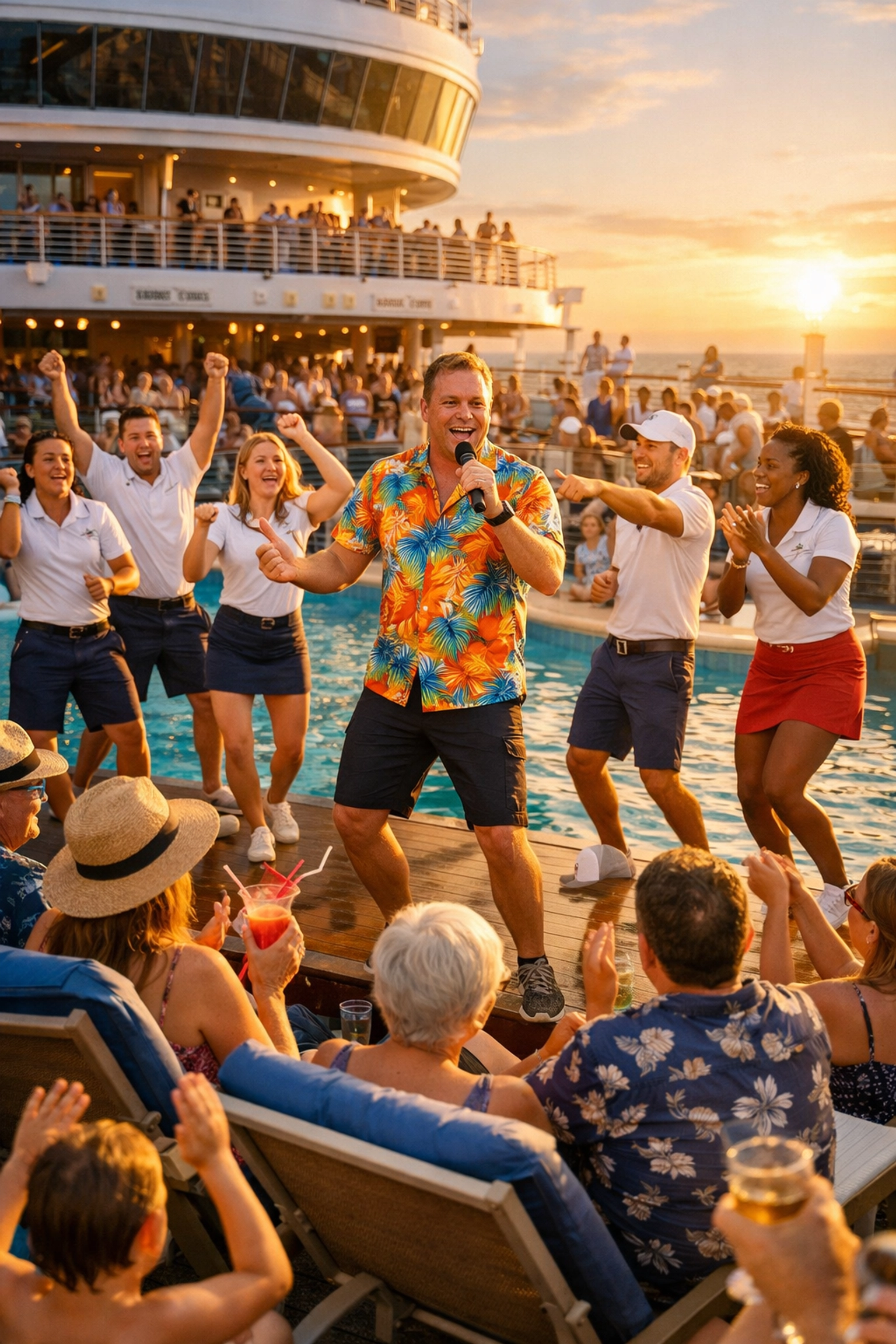
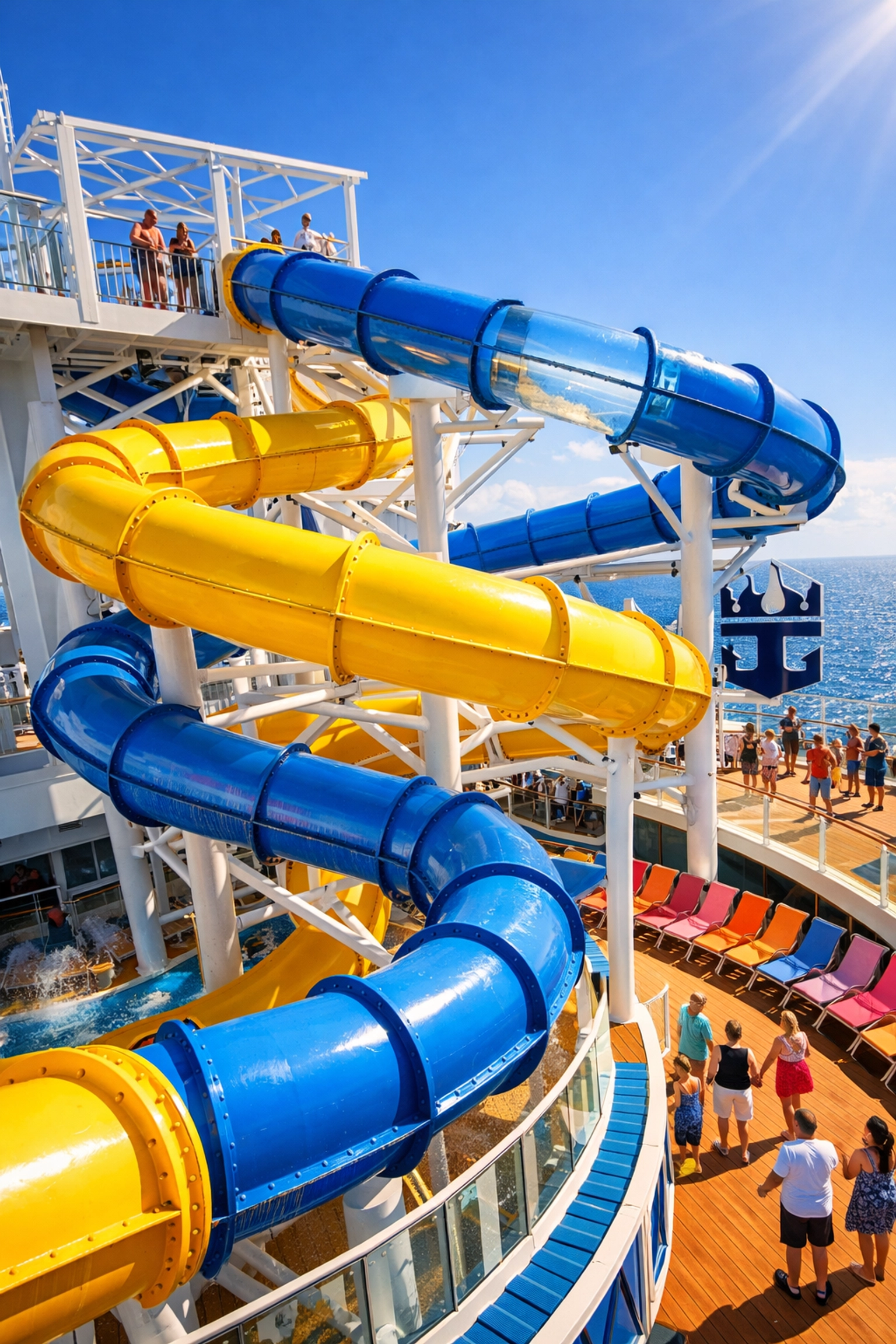
    Cruise director leading pool deck entertainment with passengers enjoying scheduled activities

    Norwegian Cruise Line Holdings operates what’s described as the largest rehearsal complex in the world, featuring 14 full-size-stage studios and 14 vocal studios. Shows are designed with three versions: a fully produced “A version” for normal conditions and modified versions for rough seas. Even the weather is factored into your manufactured fun.

    The sound design extends beyond music. Notice how quiet the hallways are near staterooms? Acoustic dampening. Notice how lively the casino sounds? Strategic speaker placement amplifying winning slot machines.

    Luxury lines take the opposite approach. Seabourn and Regent Seven Seas engineer silence. Their sensory experience prioritizes the absence of manufactured stimulation: you hear the ocean, real conversation, the clink of crystal glassware.

    One approach immerses you in constant sensory stimulation. The other removes distraction so you can notice what actually matters to you.

    The Buffet Phenomenon: Food as Performance Art

    The cruise ship buffet isn’t about food. It’s about spectacle.

    You walk into the Windjammer or Lido Marketplace and you’re confronted with abundance: hundreds of options, ice sculptures, live cooking stations, dessert displays that belong in a museum. The message is clear: you’re getting your money’s worth. Look at all this food. Look at all this value.

    The buffet layout is psychologically designed to make you take more food than you want. The plates are smaller than standard restaurant plates: so you make multiple trips and feel like you’re “getting more.” High-margin items like bread and pasta are positioned first. Expensive proteins are positioned in the middle where you’ve already filled your plate.

    The live cooking stations aren’t just about fresh food: they’re about the performance. The sizzle. The flames. The chef in the tall white hat. You’re not just eating. You’re experiencing entertainment.

    Mass-market lines understand that the buffet serves a secondary purpose: it keeps thousands of passengers fed efficiently while freeing up crew members to prepare for premium dining experiences that generate additional revenue.

    Luxury lines approach dining completely differently. Oceania features multiple specialty restaurants included in your fare, with reservations required. Silversea serves meals at your preferred time in intimate dining rooms with tablecloths and sommeliers. The message shifts from abundance to curation.

    The difference? One says “look at everything you can have.” The other says “we’ve selected exactly what you should experience.”

    “Forced” Fun vs. “Found” Joy: The Belly Flop Contest Paradox

    Picture this: It’s 2:30 PM. You’re relaxing by the pool with a book. The cruise director’s voice erupts from speakers you didn’t know existed.

    “ALLLLLRIGHT EVERYONE! It’s time for the WORLD FAMOUS BELLY FLOP CONTEST! We need six brave volunteers to compete for the title of BELLY FLOP CHAMPION!”

    You have two reactions.

    Option one: You put down your book, close your eyes, and wait for it to be over.

    Option two: You’re already on your feet, ready to compete.

    This is the fundamental divide in cruise ship entertainment philosophy.

    Mega-ships: Carnival, Royal Caribbean, Norwegian: operate on the principle that fun is a contact sport. Participation is achievement. The more activities you do, the better your vacation. Their entire model is built on forced engagement. Hairy chest contests. Newlywed games. Napkin folding demonstrations. Silent disco parties at midnight.

    And here’s the thing: millions of people absolutely love this. They want to be told where to go and what to do. They want structure and suggestions and someone else making decisions. They want the energy of a crowd and the validation of participation.

    This is manufactured fun at its peak efficiency.

    Luxury lines manufacture something entirely different: the space for you to find your own joy.
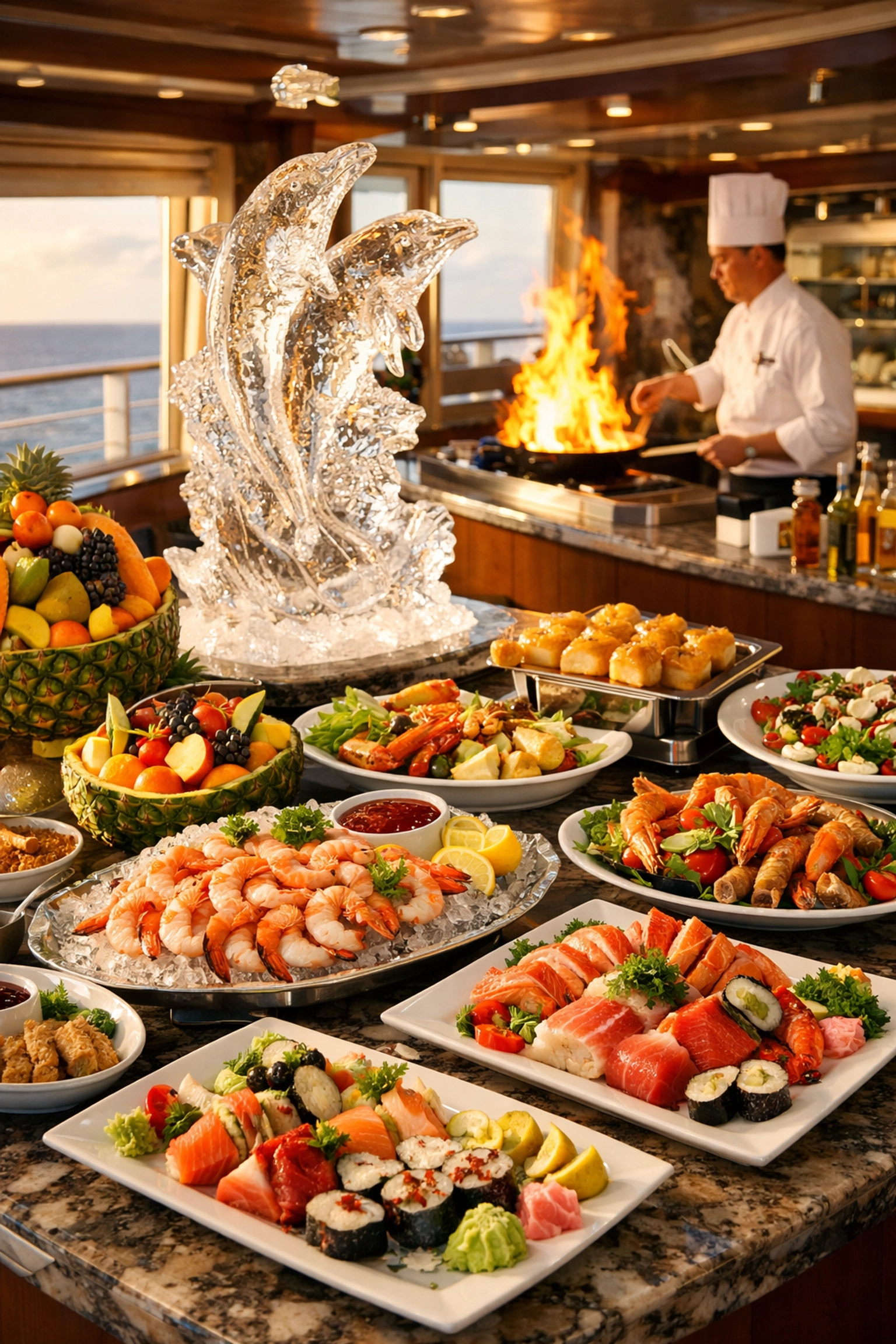
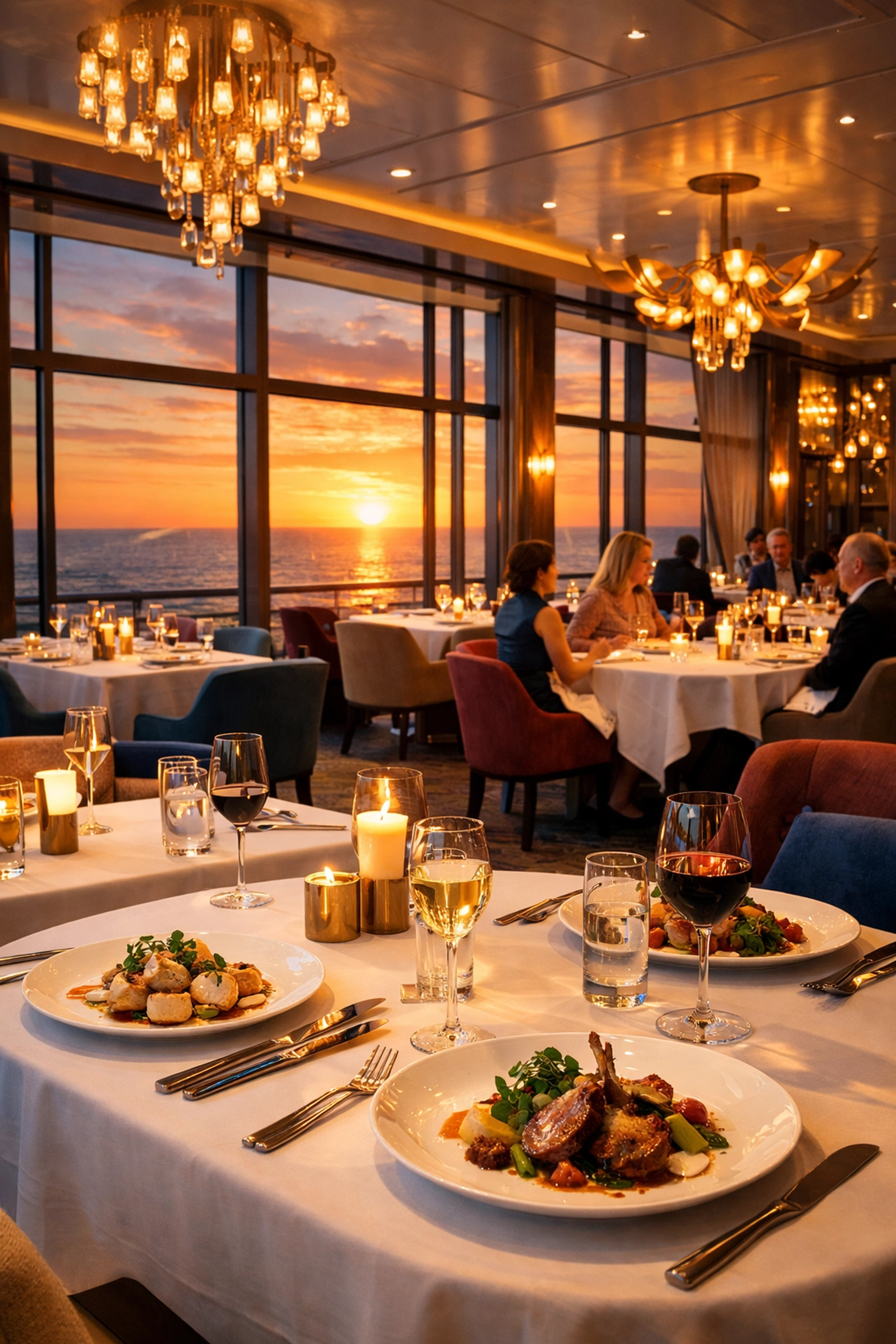
    Luxury cruise ship buffet spread with gourmet dishes and live cooking station

    An evening on Oceania Marina might include a pianist in Martini’s playing Cole Porter standards. You can join the crowd or sit alone with a cocktail. Nobody announces your presence. Nobody hands you a microphone. The entertainment exists as an option, not a mandate.

    Silversea’s idea of fun is a marine biologist giving an intimate lecture to 20 guests about tomorrow’s port. Or a cooking class with the executive chef limited to eight participants. The fun is found, not forced.

    Neither approach is wrong. But one might be completely wrong for you.

    The Schedule Science: Why Everything Happens When It Happens

    Pull out your daily newsletter: that printed schedule delivered to your stateroom every evening.

    Look at the timing. Really look at it.

    7:00 AM – Morning stretches on Deck 10
    8:00 AM – Breakfast service begins
    9:00 AM – Port talk in the main theater
    10:00 AM – Trivia competition
    11:00 AM – Mixology class (fee applies)
    12:00 PM – Lunch service / Pool deck activities
    2:00 PM – Art auction preview
    3:00 PM – Bingo
    4:00 PM – Sail away celebration
    5:30 PM – Evening dining begins
    8:00 PM – Main theater production show
    10:00 PM – Late night comedy / DJ party

    This schedule wasn’t created randomly. It was engineered by teams of behavioral scientists and revenue optimization specialists.

    Notice how activities that generate additional revenue: the art auction, mixology class, spa promotions: are strategically positioned during mid-day hours when you’re most relaxed and receptive to spending. Notice how free activities like trivia and bingo create crowd momentum that flows directly into adjacent revenue opportunities.

    The evening dining schedule creates two seatings: early and late: that maximize restaurant table turnover. The 8 PM show ensures the casino is empty during the performance, then fills immediately after when guests are energized and looking for more entertainment.

    Royal Caribbean’s entertainment director revealed that the typical production timeline is 18 months from concept to opening night. The first three months focus on designs, auditioning costume and scenery shops, and beginning choreography workshops. Nothing is improvised.

    Most shows run at least five years aboard ships depending on popularity, then rotate among the fleet. You think you’re seeing a brand new production. It’s been performed 1,500 times.

    On luxury lines, the schedule exists more as suggestion than mandate. Regent Seven Seas might list three optional activities for an entire day. The message: your time is yours.

    Gamification of Cruising: Apps, Quests, and Digital Manipulation

    Modern cruise ships have transformed into floating video games.

    Royal Caribbean’s app doesn’t just show your schedule: it assigns missions. Complete three activities and earn a digital badge. Check in at five locations and unlock a special offer. The cruise has become a treasure hunt designed to move you around the ship and expose you to maximum revenue opportunities.

    Carnival’s Hub App tracks your activity, suggests experiences based on your behavior, and sends push notifications when activities align with your profile. The AI learns whether you’re a pool deck person or a theater person, then optimizes your schedule accordingly.

    MSC Cruises introduced wearable medallions that track your location throughout the ship. This allows crew members to “spontaneously” appear with your favorite drink. It feels like magic. It’s actually just RFID technology and behavioral data.

    The gamification serves multiple purposes. It increases engagement. It collects massive amounts of behavioral data. It creates social sharing moments that function as free marketing. And it subtly trains you to view cruise activities as achievements to be unlocked rather than options to be considered.

    Luxury lines largely avoid this technology. Silversea doesn’t need an app to gamify your experience: their entire model is built on anticipating needs without digital surveillance. The crew remembers your name and preferences through training and attention, not technology.

    How We Filter the Fun: Finding Your Perfect Match

    Here’s what many years in luxury travel has taught me: the best vacation isn’t the one with the most activities. It’s the one that matches how you actually want to spend your time.

    You don’t need a cruise ship with 47 different activities per day if you want to read a book by the ocean. You don’t need a quiet luxury ship with two optional activities if you want non-stop action and new friends.

    At Time For Your Vacation, we act as the filter between you and the manufactured fun machine.

    We ask different questions than cruise line marketing departments. Not “what activities are available?” but “how do you actually want to feel on vacation?”

    If you want structured activity and high energy and the feeling that you’re maximizing every moment, we’ll match you with Carnival or Royal Caribbean or Norwegian. These ships are engineering marvels of entertainment: and if that’s your personality, you’ll have an incredible time.

    If you want space to breathe and discover things at your own pace and feel like you’re being treated as an individual rather than a crowd participant, we’ll guide you toward Oceania, Regent, Silversea, or Seabourn.
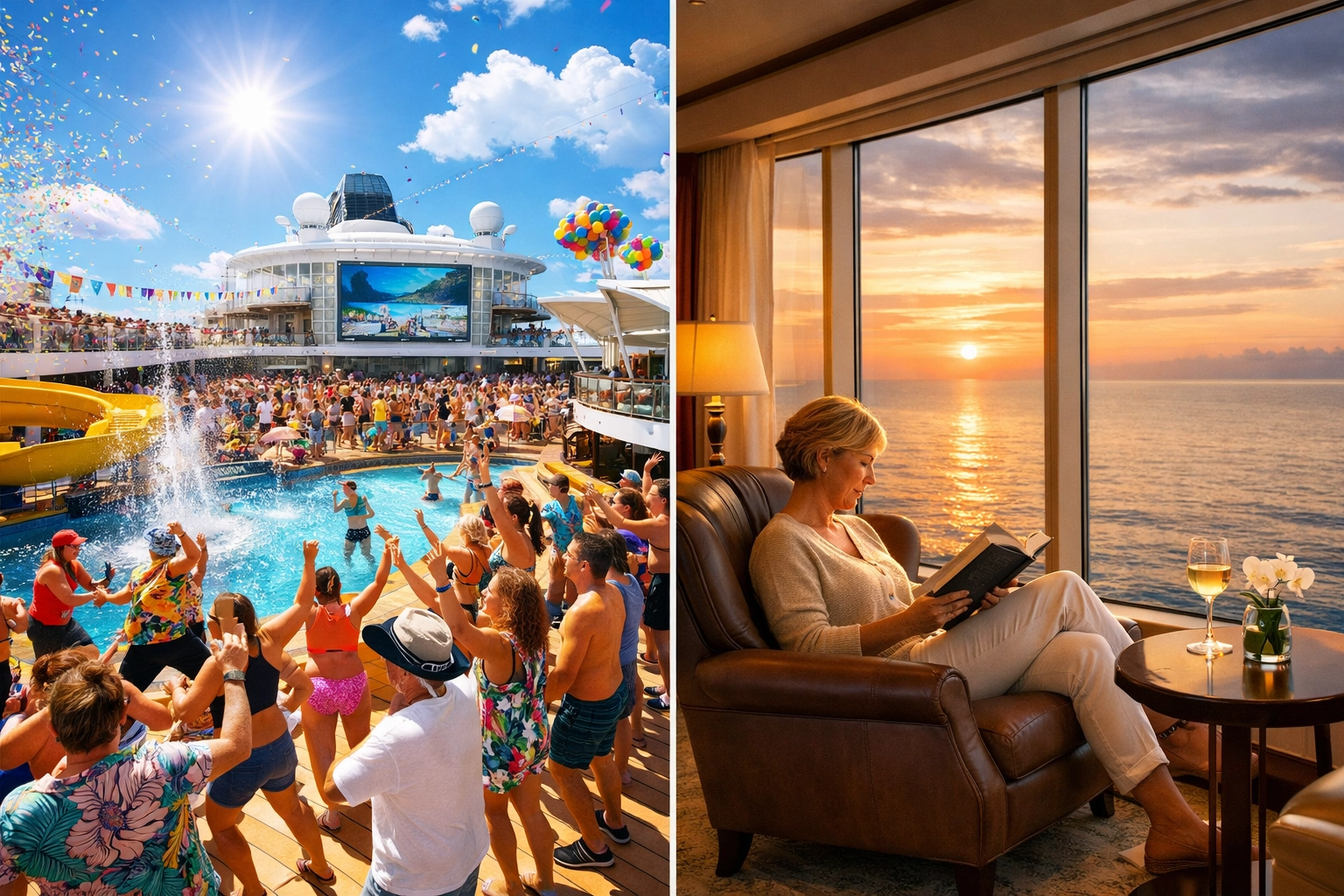
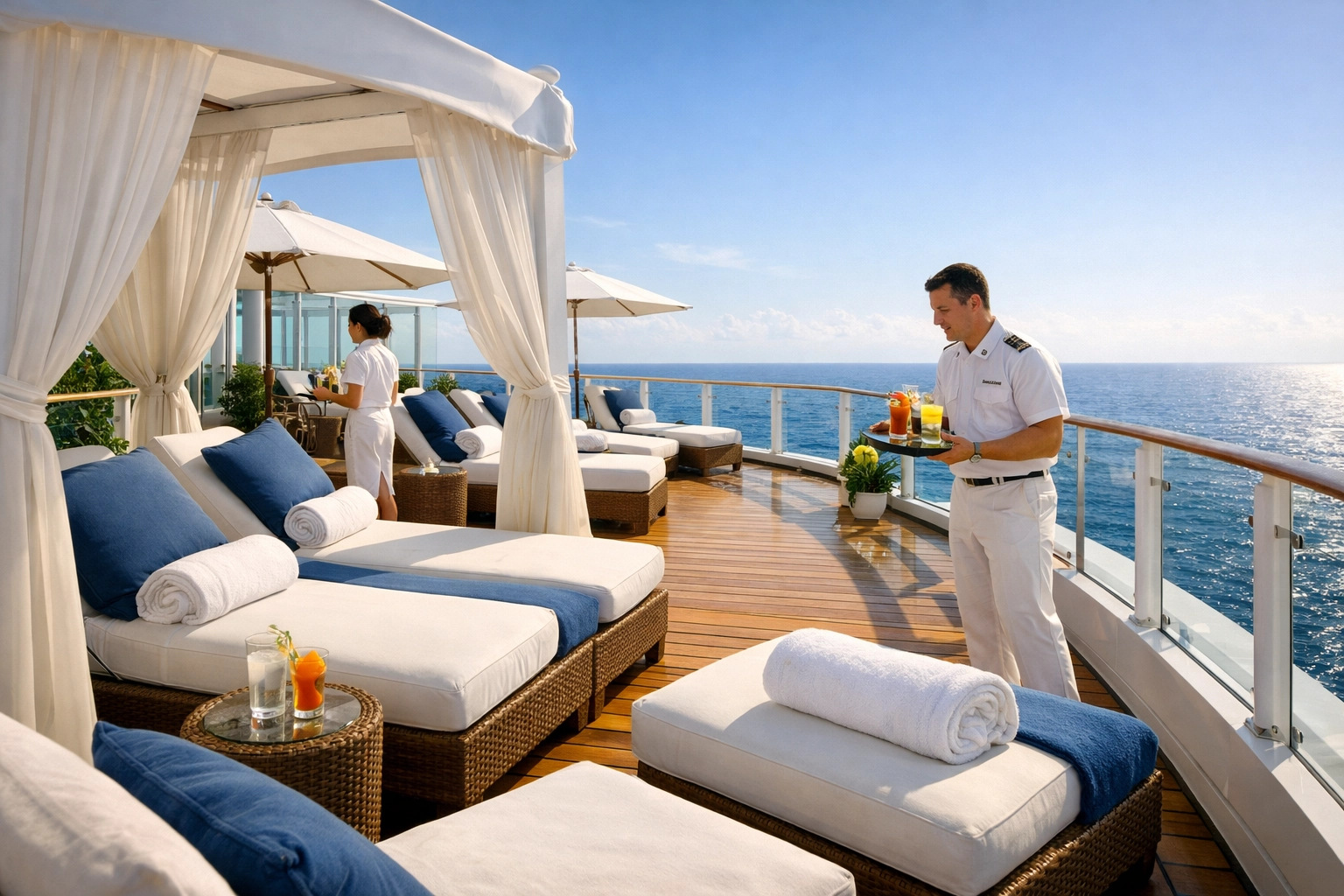
    Contrasting cruise experiences: lively pool deck party versus serene luxury ship observation lounge

    If you want something in between: the production values of mega-ships but the sophistication of luxury lines: we’ll introduce you to Celebrity, Holland America, or Princess.

    The cruise industry has manufactured every possible version of “fun.” Our job is helping you find the one that doesn’t feel manufactured to you.

    The Truth Behind the Curtain

    The cruise industry has perfected the science of manufactured joy. Massive rehearsal complexes like Carnival Studios’ 44,500-square-foot facility house 25,000 costumes and eight music studios specifically designed to train performers for ships they’ll never see until embarkation day. Norwegian’s rehearsal complex features 14 full-size-stage studios that exactly replicate theater dimensions, down to the 480-square-foot LED screens.

    Hundreds of professionals: performers, musicians, seamstresses, sound technicians, production writers, choreographers, lighting engineers, stage managers: work simultaneously across multiple productions every single day. They’re manufacturing your fun right now, 18 months before you’ll experience it.

    Shows require approximately 300 costumes each, specifically engineered to withstand humidity, salt water air, and frequent laundering at sea. Every show has backup versions for rough seas. Every moment is rehearsed six days a week for two months before performers ever step aboard.

    This is industrial-scale joy production.

    And here’s the beautiful part: now that you know how it works, you can choose whether you want to participate.

    You can embrace the manufactured fun fully, understanding that it’s designed to give you an incredible, worry-free experience where every detail is anticipated and handled.

    Or you can seek out the cruise lines that manufacture something more subtle: ships that create the conditions for genuine discovery rather than orchestrated participation.

    Both are valid. Both are valuable. Both can be exactly what you need.

    The question isn’t whether the fun is manufactured. It is. The question is: which flavor of manufactured fun matches who you actually are?

    Your Move

    The next time you’re standing on a cruise ship pool deck and the Cruise Director announces the belly flop contest, you’ll have a choice.

    You can participate enthusiastically, knowing this moment was designed 18 months ago by teams of entertainment professionals specifically to create this exact experience.

    Or you can smile, take a sip of your drink, and appreciate the machinery at work while choosing your own adventure.

    Either way, you’re finally in control.

    Want to find the cruise line that matches your definition of fun: whether that’s 24/7 orchestrated activities or silent libraries with ocean views? Let’s talk.


    Dave Galvan, author of this amazing tome, is a travel author, luxury travel concierge, travel blogger, travel vlogger, travel tour guide, travel podcaster and traveler.

    Ready to find your perfect cruise experience? Visit www.TimeForYourVacation.com, www.DaveTheTourGuide.com, and www.TimeForYourVacation.blog to start planning the vacation that actually matches who you are.

    Podcast: https://www.podomatic.com/podcasts/contact24682

  • [HERO] Cruise Extras You Should Avoid: How to Keep Your Luxury Vacation from Nickeling and Diming You to Death

    You’ve booked your dream cruise. You’ve paid for the cabin. You’ve locked in the airfare. You’re mentally preparing for umbrella drinks and endless ocean views. Then you board the ship and, surprise!, everything costs extra. The cocktail? Extra. That restaurant you saw in the brochure? Extra. A photo with a guy in a tuxedo? Extra. The art auction promising you’ll triple your investment? Extra (and also a lie).

    Welcome to modern cruising, where the sticker price is just the opening bid.

    Look, I love cruising. I genuinely do. There’s something magical about waking up in a new port without unpacking your suitcase seventeen times. But let’s be honest: cruise lines have become masters of the upsell. They’ve turned “all-inclusive” into a term so flexible it might as well be made of rubber. And while some extras are genuinely worth it, others are designed to separate you from your money faster than you can say “duty-free.”

    So let’s talk about the cruise extras you should absolutely avoid. The ones that sound amazing in theory but deliver disappointment in practice. The ones that prey on your vacation mindset when your guard is down and your credit card is burning a hole in your pocket.

    I’m pulling back the curtain on the industry I know inside and out. Consider this your insider’s guide to keeping your luxury vacation from turning into a financial regret.

    The Art Auction Trap: Where “Investment” Meets Fantasy

    Let’s start with the big one: the art auction.

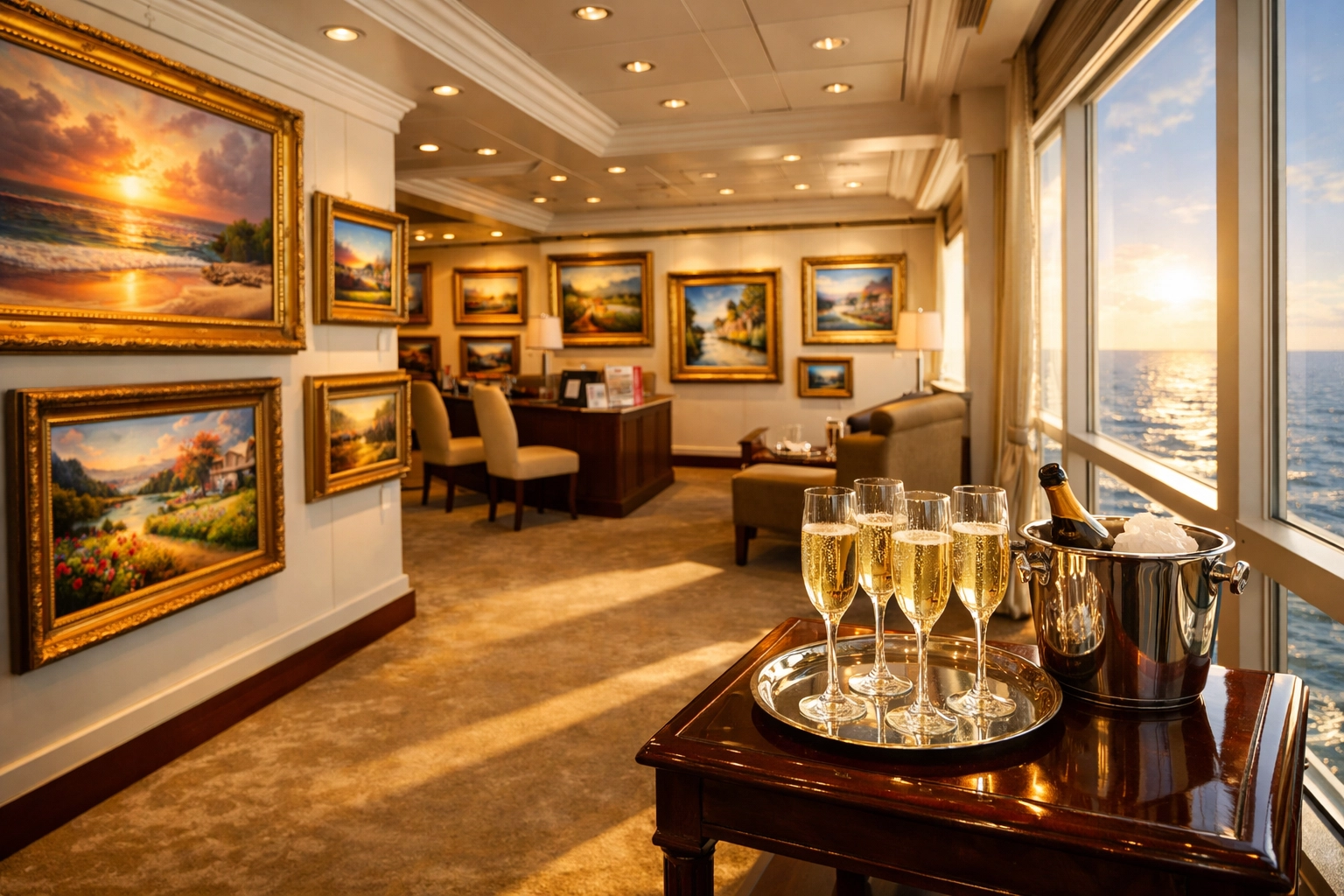
    Picture this. You’re sipping champagne in an elegant gallery space. A charismatic auctioneer is telling you about limited editions and provenance and how this Picasso print will definitely appreciate in value. You’re on vacation. You’re feeling fancy. You’re thinking, “Why not invest in some culture?”

    Here’s why not: cruise ship art auctions are not investment opportunities. They’re profit centers. Pure and simple.

    The art sold on cruise ships is often mass-produced prints, not originals. That “limited edition” of 500? That’s not limited. That’s mass production with a fancy certificate. And that appraisal showing the piece is “valued” at $5,000? That appraisal came from the same company selling you the art. It’s circular logic designed to make you feel like you’re getting a deal when you “only” pay $2,500.

    Cruise ship art gallery with framed prints and champagne - typical art auction setup to avoid

    I’ve seen clients come home with cruise ship art they were convinced was an investment, only to discover it’s worth maybe 20% of what they paid when they try to resell it. The secondary market for cruise ship art is dismal because everyone who wants it already bought it, on a cruise ship, after champagne.

    The auctioneers are professionals. They’re trained to create urgency, excitement, and FOMO. They’ll tell you that pieces are selling out fast. They’ll point to other passengers bidding. They’ll make you feel like you’re about to miss the opportunity of a lifetime.

    You’re not. You’re about to overpay for mass-produced art that will remind you of your vacation every time you look at it. Which, honestly, isn’t the worst thing. But don’t call it an investment. Call it an expensive souvenir.

    Hey Look, I buy art on a cruise ship. But I pay less than $50 per piece that I like. I will not pay any more than that.

    What to do instead: If you genuinely love a piece and want it as a memento of your trip, fine. Buy it. Enjoy it. Hang it in your home. But skip the auction theatrics and negotiate directly with the gallery during off-hours when the pressure is lower. Or better yet, wait until you’re home and invest in real art from actual galleries where you can verify provenance and value.

    Shore Excursion Cattle Calls: The Big Bus Trap

    Shore excursions are where cruise lines make a killing. And I mean that literally, they’re killing your budget and your experience simultaneously.

    The ship’s standard shore excursions sound convenient. They promise to maximize your limited port time. They guarantee you won’t miss the ship. They provide “expert” guides who will show you the highlights. And let’s understand something, the cruise lines keep the majority of the money you are spending and the excursion is keeping a significantly smaller amount.

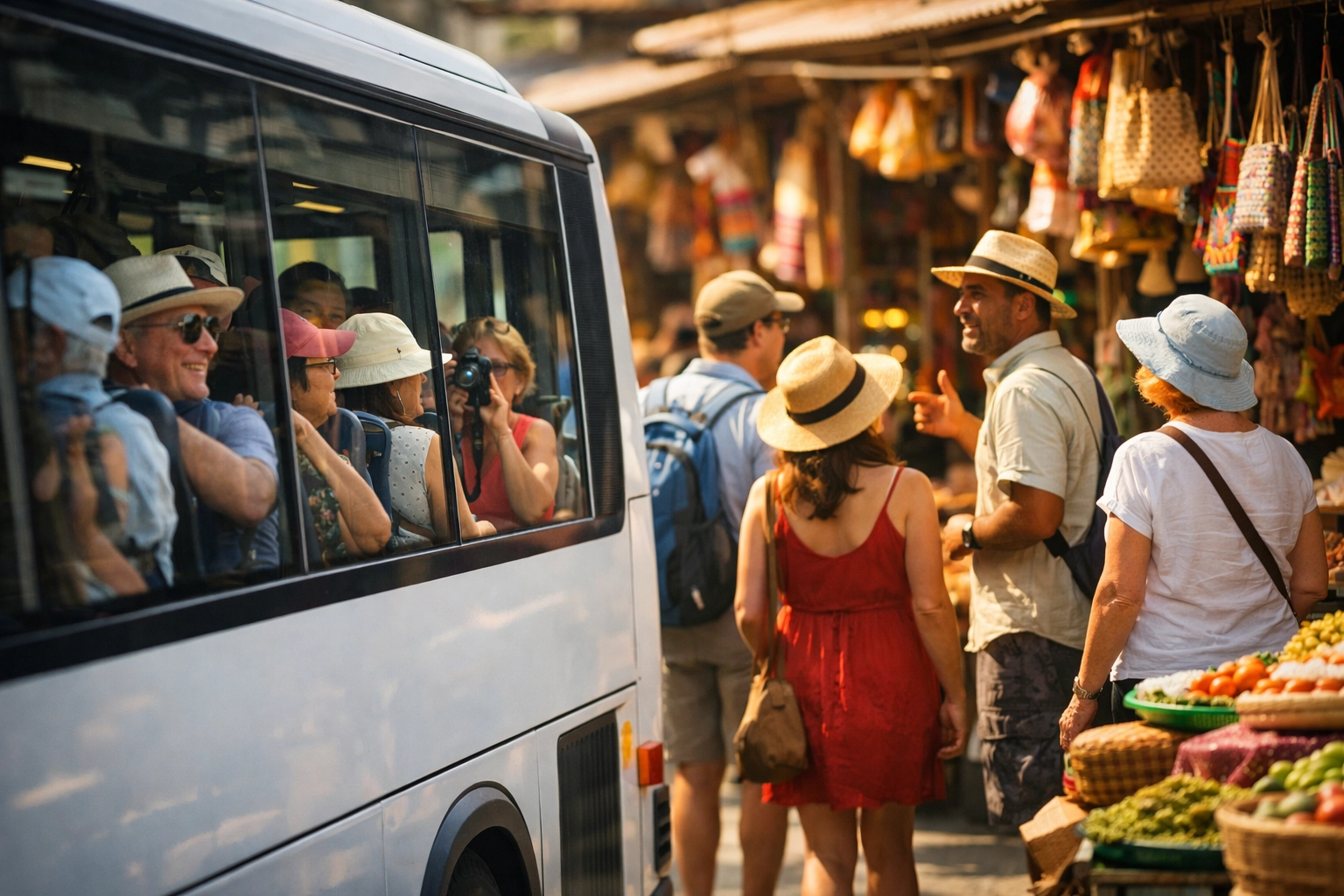
    What they don’t tell you is that you’ll be herded onto a bus with 50 other passengers, shuttled to the same tourist traps everyone visits, given 10 minutes for photos, and rushed back to the ship. You’ll spend more time in gift shops than experiencing the actual destination. You’ll eat lunch at the restaurant that gives the tour company the biggest kickback. And you’ll pay premium prices for a thoroughly mediocre experience.

    I’ve watched passengers pay $149 per person for a “cultural experience” in Cozumel that consisted of a tequila tasting at a tourist trap and a brief stop at a beach club where they were aggressively pitched timeshares. The entire “excursion” could have been done independently for about $30, with better tequila and fewer sales pitches.

    The cruise lines defend these prices by saying they guarantee you won’t miss the ship. That’s true. But you know what else guarantees you won’t miss the ship? Booking a private tour with a reputable local guide who knows exactly when you need to be back and treats you like a human being, not a commission opportunity.

    What to do instead: Work with a travel professional (hi, that’s us) who can arrange private or small-group excursions that actually immerse you in the destination. We partner with local guides who provide authentic experiences without the cattle-call chaos. You’ll get personalized attention, flexible timing, and real cultural connection. And often, it costs the same or less than the ship’s generic offering.

    Or, in many ports, you can simply walk off the ship and explore independently. Most Caribbean and Mediterranean ports are easily walkable from where ships dock. Download Google Maps, do a little research, and create your own adventure. The ship will wait for you as long as you’re back before departure.

    Drink Package Math: When “Unlimited” Isn’t Worth It

    Drink packages are the great debate of modern cruising. Everyone has an opinion. Some people swear by them. Others feel trapped by them.

    Here’s the truth: drink packages make sense for some cruisers and absolutely don’t for others. The problem is that cruise lines have gotten very good at making them seem like deals when they’re often not.

    Let’s do the math. A typical unlimited beverage package on a mainstream cruise line runs between $60-$90 per person per day. That’s before the automatic 18-20% gratuity they tack on, which brings your daily cost closer to $70-$108 per person.

    To break even at $85 per day, you’d need to drink about 7-8 cocktails or specialty coffees daily (assuming $12-$15 per drink after gratuity). That’s a lot of alcohol. Are you really going to drink 8 mai tais every single day of your cruise? For seven days straight? Your liver is filing a formal complaint just reading this.

    For most people, the math doesn’t work. You’d spend less buying drinks as you go, especially if you’re the type who has a couple of cocktails at dinner, a beer by the pool, and maybe a nightcap. Even at cruise ship prices, that’s probably $40-$50 per day, significantly less than the package.

    Crowded cruise shore excursion tour bus versus small private group tour with local guide

    The cruise lines also restrict where you can use packages. Norwegian Cruise Line, for example, doesn’t allow drink packages on their private islands. So you’re paying for “unlimited” drinks but can’t use them at one of the signature experiences of your cruise. That’s not unlimited. That’s limited with an asterisk.

    Now, if you’re the type who genuinely drinks from the moment you wake up until you stumble back to your cabin at 2 AM, the package might make sense. If you’re traveling with teenagers who will demolish the specialty coffee and smoothie menu, it could work. But for most people? You’re subsidizing the ship’s bar tab.

    What to do instead: Calculate your actual drinking habits. Be honest with yourself. If you have 3-4 drinks per day, you’re probably better off paying as you go. If you’re a heavy drinker (no judgment), the package might save you money.

    Better yet, book a cruise line where beverages are already included. Oceania includes unlimited soft drinks, specialty coffees, and bottled water. Silversea includes all beverages including premium liquor. Regent includes everything, including top-shelf spirits and wines. These lines cost more upfront, but when you factor in what you’d spend on drink packages elsewhere, they often come out to the same or less, with far superior quality.

    The Spa “Product Pitch”: Relaxation Interrupted

    You book a massage. You’re looking forward to 60 minutes of blissful relaxation. The therapist is skilled. The music is soothing. Your muscles are melting.

    And then, 45 minutes in, it starts. The pitch.

    “Your skin is very dry. You really should try our miracle serum. It’s only $145 for the travel size.”

    “I noticed some tension in your shoulders. This magnesium cream would really help. It’s $89, but I can give you two for $150.”

    “We have a special promotion today. Buy three products and get a free facial add-on. That’s a $200 value!”

    Suddenly, your relaxation has turned into a sales presentation. You’re lying there naked under a sheet while someone who just had their hands on your body is now trying to sell you products. It’s uncomfortable. It’s awkward. And it’s by design.

    Cruise ship spas operate on commission. The therapists are evaluated not just on the quality of their massages but on how many products they move. Some are aggressive about it. Others are subtle but persistent. All of them are under pressure to sell, sell, sell.

    The products themselves are rarely worth the astronomical prices. You can usually find the same brands online for 30-50% less. Or you can find equivalent products at your local drugstore for even less. That $145 “miracle serum” is probably similar to something you can buy at Target for $25.

    What to do instead: Book your spa treatment. Enjoy it. When the product pitch begins, smile politely and say, “Thank you, but I’m all set.” You don’t owe anyone an explanation. If they persist, a firm “No thank you” usually ends it.

    If you genuinely love a product they used during your treatment, write down the name and buy it online when you get home. You’ll save money and avoid the awkward sales pressure when you’re trying to achieve zen.

    Some luxury cruise lines have spa staff who don’t work on commission, which eliminates the aggressive selling. Regent, Silversea, and Seabourn tend to have more subtle spa experiences. It’s worth asking before you book.

    Overpriced Photo Packages: Your iPhone Works Fine

    Remember when you needed a professional photographer to capture your vacation memories? Yeah, neither do I. Because we all have professional-quality cameras in our pockets now.

    Yet cruise ships still employ roving photographers who snap pictures of you at dinner, by the pool, during embarkation, and at every conceivable moment. Then they display these photos in gallery spaces and charge you $20-$30 per print or $200-$500 for digital packages.

    The photos are rarely good. The lighting is harsh. The backgrounds are generic. The poses are awkward because you were caught off-guard while trying to navigate a buffet line. And yet, the cruise lines are betting on your nostalgia and FOMO to make you buy them anyway.

    I’ve seen people spend $400 on photo packages they never look at again. The photos get downloaded, filed away on a hard drive, and forgotten. Meanwhile, the candid shots they took with their phones, the ones that actually capture real moments and genuine emotion, those are the ones they share and treasure.

    What to do instead: Take your own photos. Your smartphone camera is probably better than the cruise ship’s equipment. Ask fellow passengers or staff to snap pictures of you at key moments. Use the timer feature for couple shots. Take advantage of the incredible scenery you’re cruising through instead of relying on posed shots against a fake backdrop.

    If you really want professional photos, wait for formal night. Those portraits can be nice mementos, and you can usually buy just the one or two you really love instead of committing to an entire package. Or negotiate directly with the photographer, they sometimes have flexibility to sell individual images at better rates than the official package prices.

    The Casino “Bonus” Illusion: Free Comes with Strings

    Cruise ship casinos love to lure you in with “free play” promotions. Sign up for the casino loyalty card and get $50 in free slot play! Attend the casino orientation and receive $25 in complimentary chips! Match play coupons! Prize drawings! Free drinks while you gamble!

    Here’s what they don’t advertise: these bonuses are designed to get you through the door, where you’ll likely lose far more than the bonus amount. The “free” slot play can only be used on specific machines with terrible odds. The match play coupons require you to bet your own money first. The prize drawings require you to earn points by gambling, which means you’ve already lost money before you’re even eligible to win.

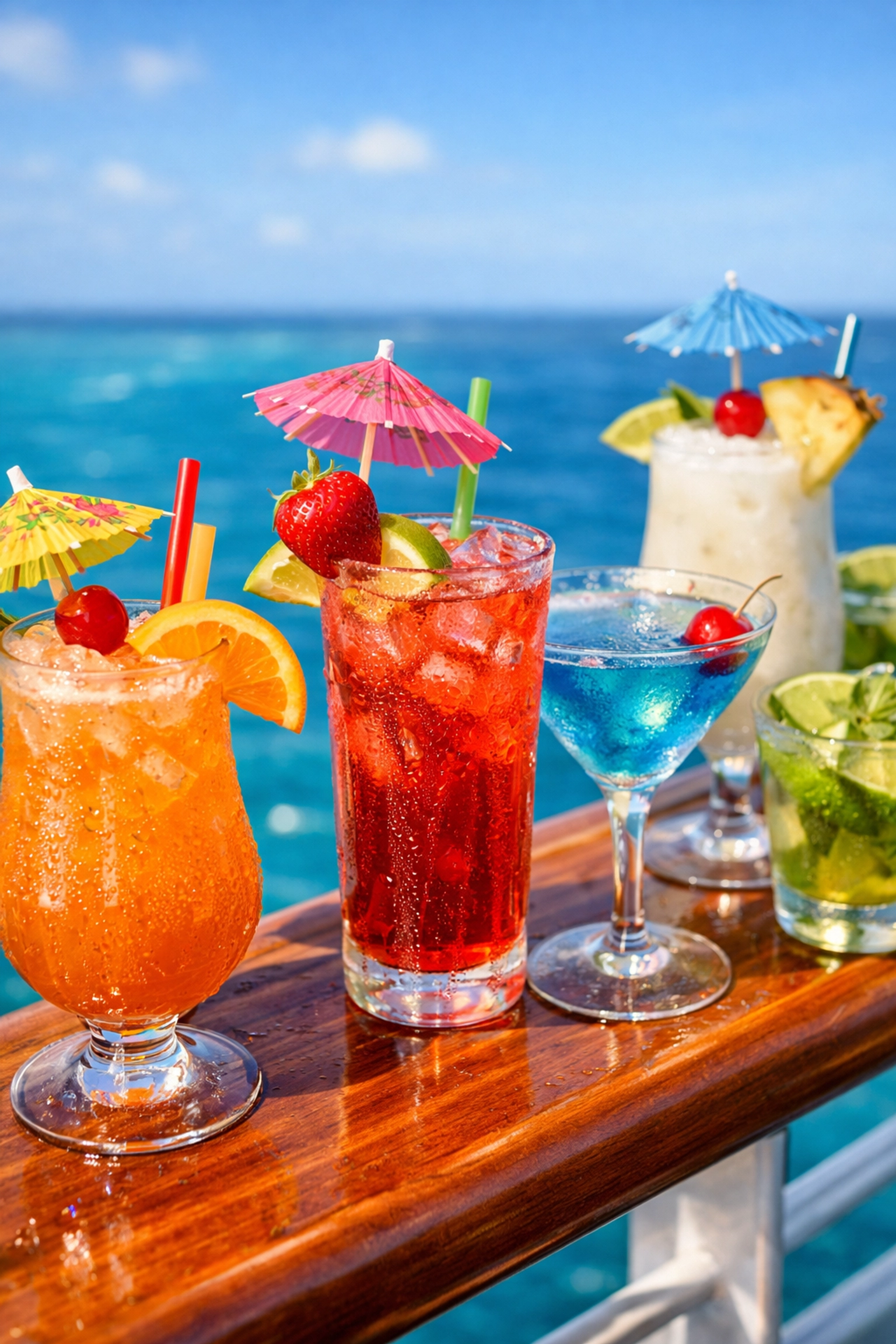
    Tropical cocktails on cruise ship deck railing - illustrating cruise beverage package costs

    And those free drinks while gambling? They’re slow to arrive and designed to keep you at the tables longer. You’re not getting free drinks. You’re getting just enough alcohol to lower your inhibitions while you feed money into machines programmed to favor the house.

    I’m not anti-casino. If you enjoy gambling as entertainment and set a budget you’re comfortable losing, go for it. But don’t fall for the illusion that casino bonuses are giving you something for nothing. They’re calculated marketing designed to separate you from your money more efficiently.

    What to do instead: If you enjoy casino games, set a strict entertainment budget before you start. Treat it like paying for a show, once the money is gone, you’re done. Don’t chase losses. Don’t convince yourself that the next spin will be the winner. And definitely don’t fall for the “bonus” promotions that require you to gamble more to unlock value you’ll probably never see.

    If you want to gamble, do it because you enjoy it, not because you think you’re getting a deal. The house always wins. Always.

    Wi-Fi Woes: Premium Prices for Mediocre Connections

    Cruise ship internet has improved dramatically over the past decade. But it’s still expensive, still often slow, and still absolutely not worth the premium packages most lines push on you.

    The cruise lines offer tiered Wi-Fi packages: basic (email only), standard (email and web browsing), and premium (streaming and video calls). The premium packages can cost $25-$40 per day per device. For a week-long cruise, you’re looking at $175-$280 for internet access that’s still slower than what you get free at McDonald’s.

    The psychology here is brilliant: they’ve priced the basic package so low ($10-$15 per day) that it feels useless, and the premium package so high that it feels like luxury. So most people end up in the middle with the standard package, which is exactly where the cruise line wants you, paying for internet that works just well enough to keep you from complaining but not well enough to actually enjoy.

    Here’s the truth: unless you absolutely need to work during your cruise or have a family emergency situation, you don’t need internet. You definitely don’t need streaming capability. You’re on vacation. The whole point is to disconnect.

    I admit, I always get a wifi package so I can communicate with my kids while on the my trip, and be able to upload pics and videos to social media while out and about. But, for me, it’s a tax write-off.

    What to do instead: Embrace the digital detox. Let people know you’ll have limited connectivity before you leave. Check email once a day in port using free Wi-Fi at a café. Use your cruise as an opportunity to actually be present instead of scrolling through Instagram comparing your vacation to everyone else’s.

    If you truly need to work or stay connected, buy the minimum package that accomplishes your goals. Don’t pay for streaming when you could be watching the ocean. And definitely check the port schedule, many ships now offer free or very cheap Wi-Fi when docked in port, which might be all you need.

    The luxury lines are starting to include Wi-Fi in their base fares. Regent, Silversea, and Crystal all include unlimited internet. If connectivity is crucial for you, factor that into your cruise line selection rather than paying for overpriced packages afterward.

    Fitness & Wellness Upsells: The Free Gym Works Fine

    Cruise ship gyms are remarkably well-equipped. They have cardio machines with ocean views. They have weights, yoga mats, and usually some group fitness classes included in your cruise fare.

    But then you see the signs for the “premium” wellness experiences. The personal training sessions at $100 per hour. The boot camp classes for $25 per session. The Pilates reformer classes for $35. The “wellness consultations” that are really just sales pitches for supplements and programs.

    These aren’t worthless, some people genuinely value structured fitness instruction on vacation. But ask yourself: are you really going to maintain a workout routine on a cruise? Are you the type who hits the gym at home consistently? Because if you’re not working out at home, you’re probably not going to start during your vacation regardless of how much you spend.

    The free group fitness classes are usually perfectly adequate. The gym equipment is available anytime. You can run on the track. You can swim in the pool. You can do yoga on your balcony. None of these require extra fees.

    What to do instead: Use the included fitness facilities. Try the free group classes. If you really want instruction, watch a YouTube workout video in your cabin. Or embrace the fact that you’re on vacation and maybe it’s okay to take a week off from your fitness regimen.

    If wellness is genuinely important to you, book a cruise that specializes in it from the start. Some lines, like Oceania’s wellness cruises or Seabourn’s Spa & Wellness voyages, include extensive programming in the base fare. You’ll get better instruction and more comprehensive experiences than paying a la carte for upcharges on a regular cruise.

    Specialty Dining Reality Check: Is It Actually Special?

    This is where things get complicated, because specialty dining can legitimately be worth it, on some ships, for some restaurants, for some diners.

    The cruise lines have shifted their strategy over the past decade. They used to include all dining in your cruise fare. Now, the main dining rooms serve perfectly acceptable food, but the really exciting venues charge extra. Want the steakhouse? $50 per person. Italian restaurant? $35 per person. Sushi? $45 per person. It adds up fast.

    What’s frustrating is that many of these specialty restaurants aren’t actually that special. They’re using the same kitchen, often the same ingredients, just with fancier plating and a different tablecloth. The $50 steakhouse steak isn’t dramatically better than the main dining room steak. The $35 Italian pasta isn’t significantly superior to what you could order in the regular restaurant.

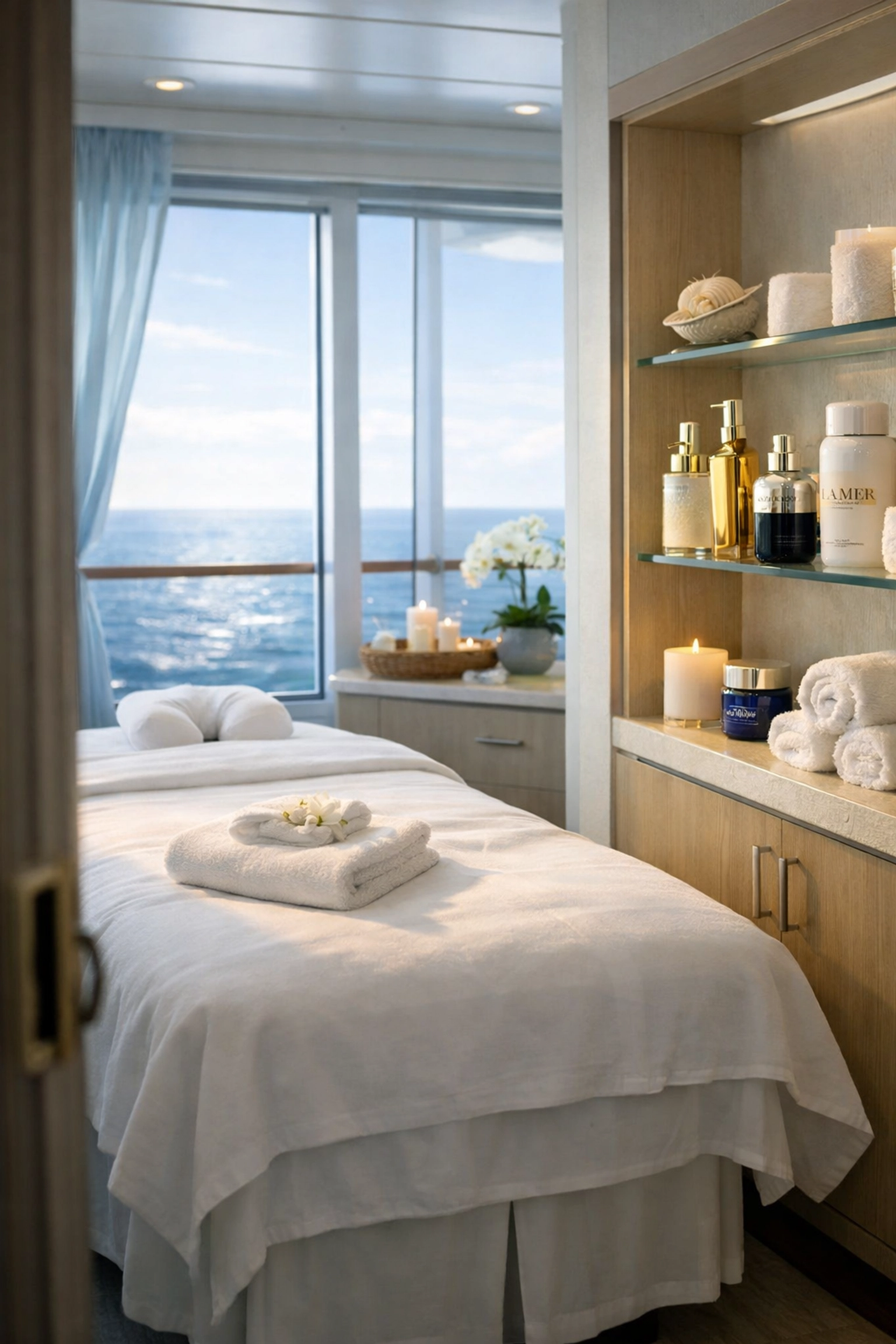
    Luxury cruise spa massage room with expensive skincare products on display for sale

    Some specialty restaurants are worth it. The small, intimate venues with actual specialty chefs and unique menus can be genuinely excellent. But the large specialty restaurants that seat 200 people? Those are just the main dining room with a cover charge.

    The other issue is that some cruise lines have shifted from flat fees to per-item pricing. What used to be a $25 cover charge is now $12 for this appetizer, $35 for that entrée, $8 for dessert. You can easily spend $70-$80 per person without realizing it, which is absurd on a cruise where you’ve already paid for food.

    With that said, I do occasionally take my wife out to a special dinner when there is a special occasion. Birthdays, anniversary, Valentines Day of 2025 I was in a steak house aboard Royal Caribbean’s Liberty of the Seas with my wife enjoying a very good steak.

    What to do instead: Research the specialty restaurants before you book. Read reviews from actual passengers, not the cruise line’s marketing materials. Look for the small, genuinely unique venues with specialized cuisines.

    Better yet, choose a cruise line where specialty dining is included. Oceania includes all specialty restaurants in your fare. Regent, Crystal, and Silversea include everything. You can try every restaurant without worrying about the bill.

    If you’re on a ship with upcharges, try one specialty restaurant if you’re curious, but don’t feel obligated to dine at every venue. The main dining room food is usually very good. Room service is typically free (though some lines now charge for that too). You won’t go hungry, and you won’t miss out on essential experiences by skipping the specialty venues.

    The exception: if there’s a celebrity chef restaurant you’re genuinely excited about, go for it. Thomas Keller’s restaurant on Seabourn, for example, or the Ritz-Carlton Yacht Collection’s Evrima restaurants. Those are curated experiences worth paying for. But the generic “Italian restaurant” or “steakhouse” on most ships? Skip it.

    The Benefit of Working with an Expert: How to Avoid the Trap Altogether

    Here’s the thing about all these cruise extras: they exist because the base fare has been compressed to make cruising seem affordable. The cruise line advertises a seven-night Caribbean cruise for $699 per person, and that sounds amazing. Then you board and discover that pretty much everything costs extra.

    You end up spending $1,500 per person on top of the base fare for drinks, dining, excursions, photos, Wi-Fi, gratuities, and miscellaneous upcharges. Your $699 cruise actually cost $2,199. Which might still be a good value, or it might not, depending on what you got for your money.

    The smarter approach is to work with a travel professional who understands the true cost of cruising and can match you with the right cruise line for your expectations and budget.

    If you want all-inclusive without thinking about costs, we’ll put you on Regent or Silversea where literally everything is included, drinks, dining, excursions, gratuities, Wi-Fi, everything. Yes, the base fare is higher. But the final cost is often comparable to a mainstream cruise once you add up all the extras, and the experience is dramatically superior.

    If you want a great value with sensible inclusions, we might suggest Oceania, where specialty dining, soft drinks, and bottled water are included, but alcohol is extra. Or Celebrity, which has found a good middle ground with some inclusions and reasonable upcharges for premium experiences.

    If you’re on a tight budget and genuinely don’t mind paying as you go, we can explain exactly what’s included on mainstream lines like Royal Caribbean, Carnival, or Norwegian, so you can budget accordingly and won’t be shocked by charges.

    The key is knowing before you book. Understanding what’s included, what costs extra, and what those extras actually deliver. That way you’re making informed decisions, not impulse purchases when you’re on the ship with your guard down.

    We also arrange private shore excursions that blow away the ship’s cattle-call tours: often for the same price or less. We connect you with local guides who provide authentic experiences, not tourist traps. We build in buffer time so you’re never stressed about missing the ship. And we tailor everything to your interests instead of herding you with 50 strangers.

    The Bottom Line: Cruise Smart, Not Hard

    Look, cruising is supposed to be fun. It’s supposed to be relaxing. It’s supposed to be the vacation where you don’t think about logistics or planning because everything is handled.

    But it’s also big business. Cruise lines are public companies with shareholders expecting growth. They’ve figured out that they can advertise low base fares to get people through the door, then make their real profits on upsells once you’re trapped: I mean, once you’re on board enjoying your vacation.

    You don’t have to fall for it. You can be smart about what you spend on and what you skip. You can research before you book. You can choose cruise lines whose inclusions match your expectations. You can work with professionals who help you avoid the traps.

    You can have an incredible cruise without feeling nickel-and-dimed to death. It just requires being thoughtful about what actually enhances your experience and what’s just separating you from your money.

    Skip the art auction. Arrange private excursions. Do the drink package math. Politely decline the spa products. Take your own photos. Avoid the casino bonuses. Disconnect from Wi-Fi. Use the free gym. Be selective about specialty dining.

    And most importantly, work with someone who knows the industry inside and out. Someone who’s actually been on these ships, experienced these extras, and knows which ones deliver value and which ones are pure profit padding.

    That’s where Time For Your Vacation comes in. We’re not just booking agents. We’re your advocates. We’re the friend who’s been there, done that, and learned the lessons so you don’t have to. We match you with the right cruise line, negotiate the best pricing, arrange superior shore experiences, and give you honest advice about what’s worth your money and what’s not.

    Because your vacation should be about the experience, not the bill. About the memories, not the regrets. About enjoying the journey, not calculating whether you drank enough mai tais to justify that beverage package.

    You deserve better than being treated like a walking ATM. You deserve a cruise that delivers on its promises without constantly reaching for your wallet.

    Let’s make that happen.


    Dave Galvan, author of this amazing tome, is a travel author, luxury travel concierge, travel blogger, travel vlogger, travel tour guide, travel podcaster and traveler.

    Ready to plan a cruise that won’t nickel and dime you? Let’s talk. Visit www.TimeForYourVacation.com, www.DaveTheTourGuide.com, or www.TimeForYourVacation.blog to connect. You can also catch my podcast at https://www.podomatic.com/podcasts/contact24682 where we dive even deeper into luxury travel secrets the industry doesn’t want you to know.

  • [HERO] How the Ultra-Wealthy Really Travel

    Let’s get one thing straight right off the bat: the ultra-wealthy don’t travel the way you think they do.

    They’re not sitting in first class sipping champagne and watching the same in-flight entertainment as everyone else. They’re not stressing about TSA PreCheck or wondering if their checked bag will make the connection. And they’re definitely not Googling “best restaurants in Paris” at 2 AM while scrolling through conflicting TripAdvisor reviews.

    The truth about how the ultra-wealthy really travel isn’t about how much they spend: it’s about what they never have to think about. It’s about access to places you didn’t know existed. It’s about privacy so complete that even their travel plans are a closely guarded secret. And most importantly, it’s about time. Because when you have everything money can buy, time becomes the only currency that truly matters.

    I’ve spent years working with clients at every level of luxury travel, from first-time business class flyers to families who think nothing of chartering a 777 for a multigenerational reunion in the Maldives. And what I’ve learned is this: true luxury travel is invisible. The best experiences are the ones where everything just… happens. No friction. No stress. No “let me check on that for you.”

    So let me pull back the curtain and show you how the other 0.01% actually explores the world: and how we make it happen for our clients.

    Beyond First Class: When Time Becomes the Ultimate Luxury

    First class is nice. Business class is comfortable. But let’s be honest: you’re still dealing with security lines, boarding groups, and the reality that your departure time is dictated by an airline schedule designed to fill seats, not cater to your life.

    The ultra-wealthy don’t fly on someone else’s timetable. They fly on their own.

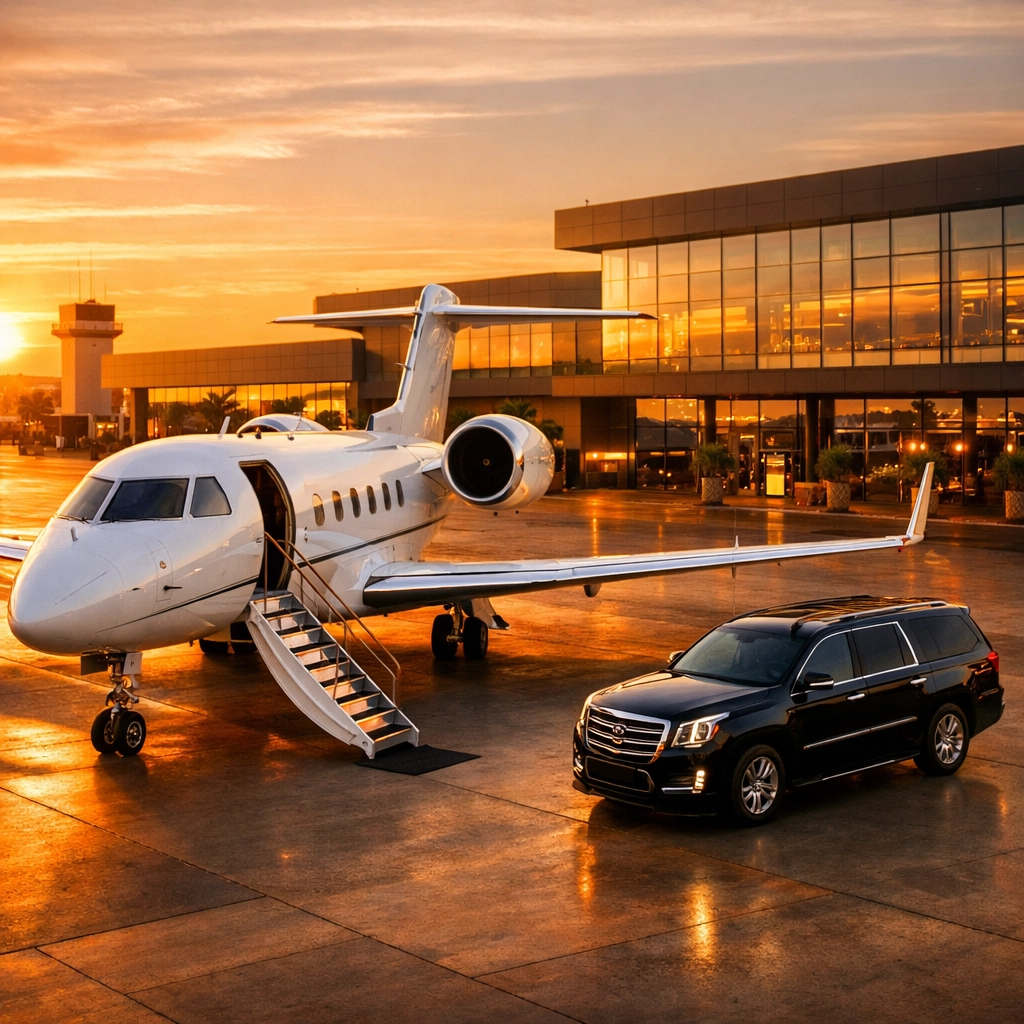
    Private jet at luxury FBO terminal with SUV ready for seamless transfer

    Private aviation isn’t just about leather seats and personalized service: though those are lovely perks. It’s about fundamentally redefining what travel means. You don’t arrive at the airport two hours early. You arrive fifteen minutes before departure, drive directly to your aircraft, and you’re wheels-up before most people have made it through TSA.

    Now, here’s where it gets interesting. Most people assume the ultra-wealthy own jets. Some do, of course. But ownership is expensive, complicated, and requires managing crew, maintenance, and the reality that your $65 million aircraft sits idle 80% of the time. The smarter approach? Jet cards and fractional ownership programs that give you guaranteed access to aircraft of varying sizes without the headaches of ownership.

    Want to fly six people to Aspen for a long weekend? Book a light jet. Need to take the entire extended family to Italy for a month? Charter a larger aircraft with cabin configurations that actually make sense for your group. The flexibility is the point: you’re not locked into one plane that may or may not fit your needs on any given trip.

    For clients who aren’t quite ready to dive into the world of full private aviation, we’ve found that services like JetBlue Getaways can offer a surprisingly elevated entry point into premium travel: think dedicated check-in, priority boarding, and packaged experiences that remove much of the commercial travel friction. But even then, the ultra-wealthy are looking for something more: seamless transitions between every touchpoint of their journey.

    Because here’s what nobody tells you about private aviation: the real luxury isn’t the plane itself. It’s landing at a private FBO (Fixed Base Operator) terminal, stepping off your aircraft directly into a waiting SUV, and arriving at your hotel without ever touching a piece of your luggage. It’s the fact that customs and immigration can often be handled at your convenience, sometimes at the FBO itself. It’s the knowledge that if your plans change mid-trip, your aircraft can be repositioned in hours, not days.

    Time is the ultimate luxury. The ultra-wealthy have simply figured out how to buy more of it.

    The Service You Never See: When Luxury Becomes Invisible

    Here’s a little secret about truly exceptional service: you should never have to ask for anything. Ever.

    Think about that for a moment. In most travel experiences, even high-end ones, you’re constantly requesting things. “Could we get extra towels?” “Is it possible to book that restaurant?” “Can someone help with our bags?”

    The ultra-wealthy don’t ask because they don’t have to. Everything is anticipated before they even realize they need it.

    Luxury hotel suite with champagne and orchids prepared before guest arrival

    I call this “invisible service,” and it’s the hallmark of genuine luxury travel. Your favorite champagne is already chilling in your suite before you arrive: not because you requested it, but because your travel concierge knows your preferences and communicated them weeks ago. The restaurant you mentioned wanting to try? You’re booked for tomorrow at 8 PM, even though they’re typically fully reserved three months out, because we have relationships with the right people.

    Your morning routine includes a specific type of coffee? It’s already programmed into the in-suite espresso machine. You prefer a certain pillow firmness? It’s on your bed when you check in. Your daughter is allergic to shellfish? Every restaurant you visit during your trip has been notified in advance, and alternative preparations have been arranged.

    This level of service requires something that money alone can’t buy: information, relationships, and anticipation. Which brings me to the most important thing about how we work with our luxury clients: we become extensions of your life, not just trip planners. We know your preferences, your quirks, your family dynamics, and your definition of perfect.

    The ultra-wealthy value this invisibility because it allows them to focus entirely on the experience itself, not the logistics surrounding it. They’re not checking in with hotels or confirming dinner reservations. They’re not managing transportation or keeping track of tickets. They’re just… living. Experiencing. Being present.

    That’s what we provide: the gift of presence by handling the absence of friction.

    Exclusive Access: The Experiences Money Can’t Actually Buy

    Let’s talk about access: real access, not the “skip the line” pass you can buy online.

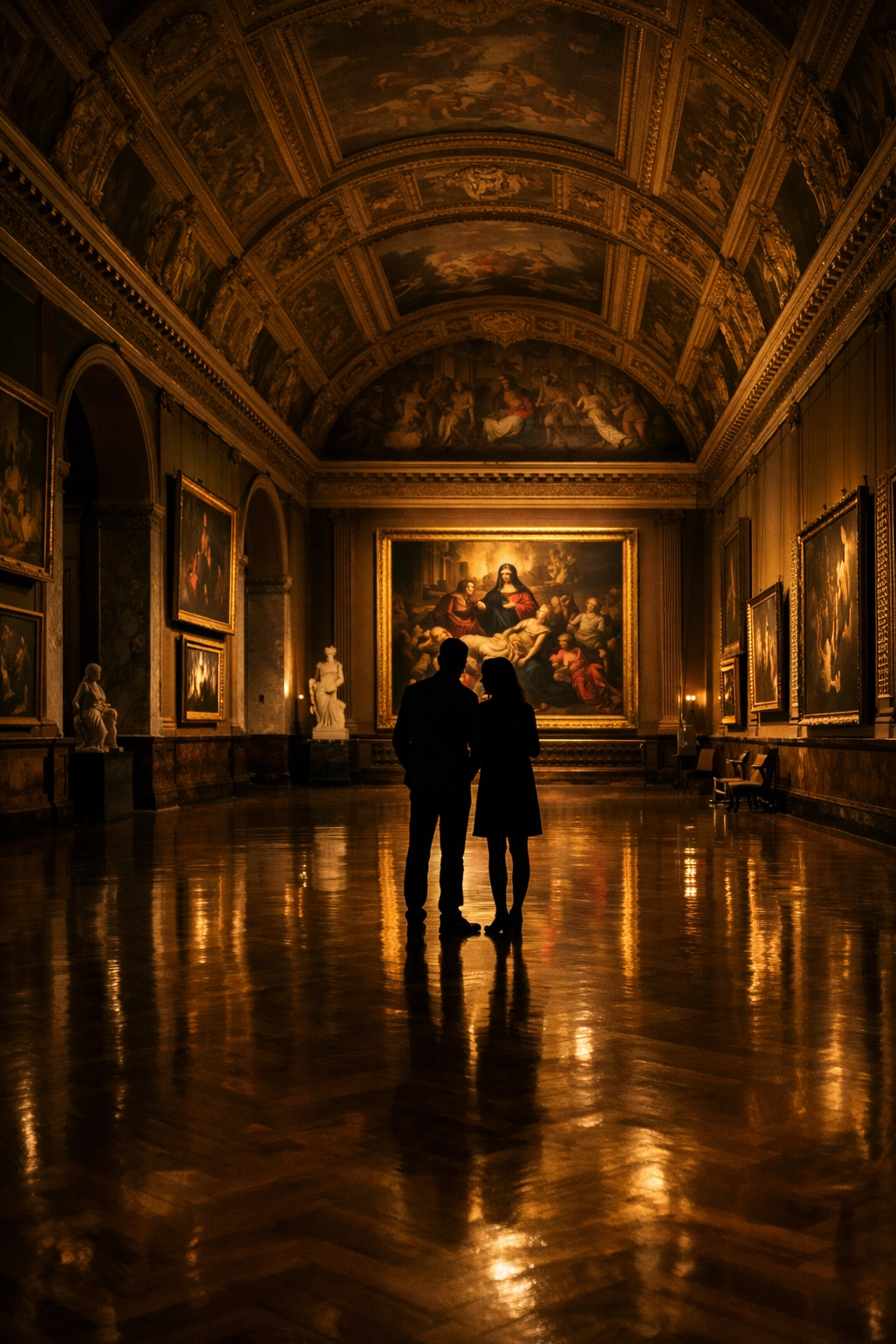
    The ultra-wealthy aren’t interested in seeing the Louvre during public hours, jostling for position to glimpse the Mona Lisa through a sea of selfie sticks. They want a private, after-hours tour where they can stand alone in front of masterpieces, with a curator sharing insights that never make it into the standard audio guide.

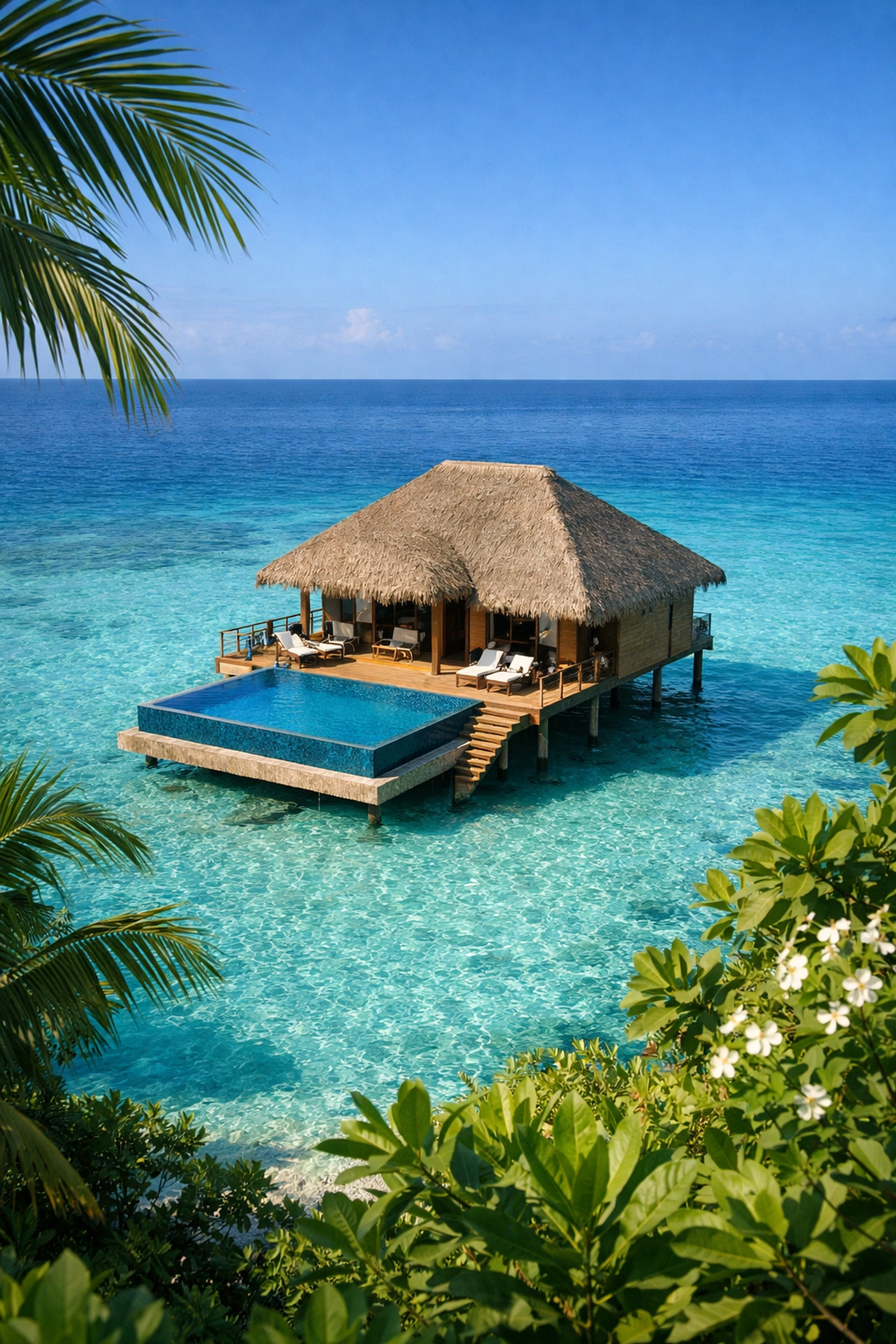
    They don’t want to visit a “private island resort.” They want to rent the entire island, staff included, creating a secluded paradise for their family or inner circle where privacy is absolute and every detail is customized to their specifications.

    Private after-hours tour of the Louvre museum with exclusive access

    This is where connections matter infinitely more than credit card limits. Because here’s the thing: many of these experiences aren’t technically for sale. You can’t Google “buy out the Vatican for a private tour” and find a price list. These opportunities exist in a shadow market of relationships, favors, and insider access that takes years to cultivate.

    Villa buyouts have become increasingly popular among the ultra-wealthy: taking over an entire luxury property in places like Tuscany, Provence, or the Amalfi Coast. Not just renting a villa, mind you, but securing exclusive use of properties that might normally accommodate multiple groups, complete with dedicated staff who are there solely for your party. We’ve arranged buyouts where the chef customizes every meal based on daily preferences, where the sommelier curates wine tastings from the property’s private cellar, and where activities like truffle hunting or pasta-making classes happen on your schedule, not a predetermined itinerary.

    Private concerts in historic venues. Closed-museum tours. After-hours shopping on Bond Street or Fifth Avenue where entire boutiques open exclusively for you. Helicopter access to locations typically closed to visitors. These aren’t experiences you can find on any booking site: they’re arranged through networks of contacts, built over years of relationships and earned trust.

    Here’s a real example: I once arranged for a client to have a private dinner inside the Colosseum in Rome. Not near it. Not in view of it. Inside it. The level of coordination this required: working with Roman authorities, security teams, catering partners who could operate in a UNESCO World Heritage site: was staggering. But the result was a once-in-a-lifetime evening that no amount of money could simply “buy” without the right relationships.

    This is where having “a person”: a travel concierge with genuine connections: becomes invaluable. We don’t just book trips. We open doors that most people don’t even know exist.

    Slow Travel at High Speed: The World Cruise Paradox

    Here’s something that surprises people about ultra-wealthy travelers: they’re not always rushing. In fact, some of the most popular experiences among this demographic are the slowest forms of travel available: world cruises lasting months at a time.

    But there’s a crucial difference in how they approach it.

    The ultra-wealthy choose lines like Silversea, Seabourn, and Regent Seven Seas for their extended voyages: often booking entire suites for 90, 120, or even 180-day journeys that circumnavigate the globe. These aren’t the massive floating cities you picture when you think “cruise ship.” These are intimate vessels with passenger counts in the hundreds, not thousands, where the staff knows your name and preferences by day two.

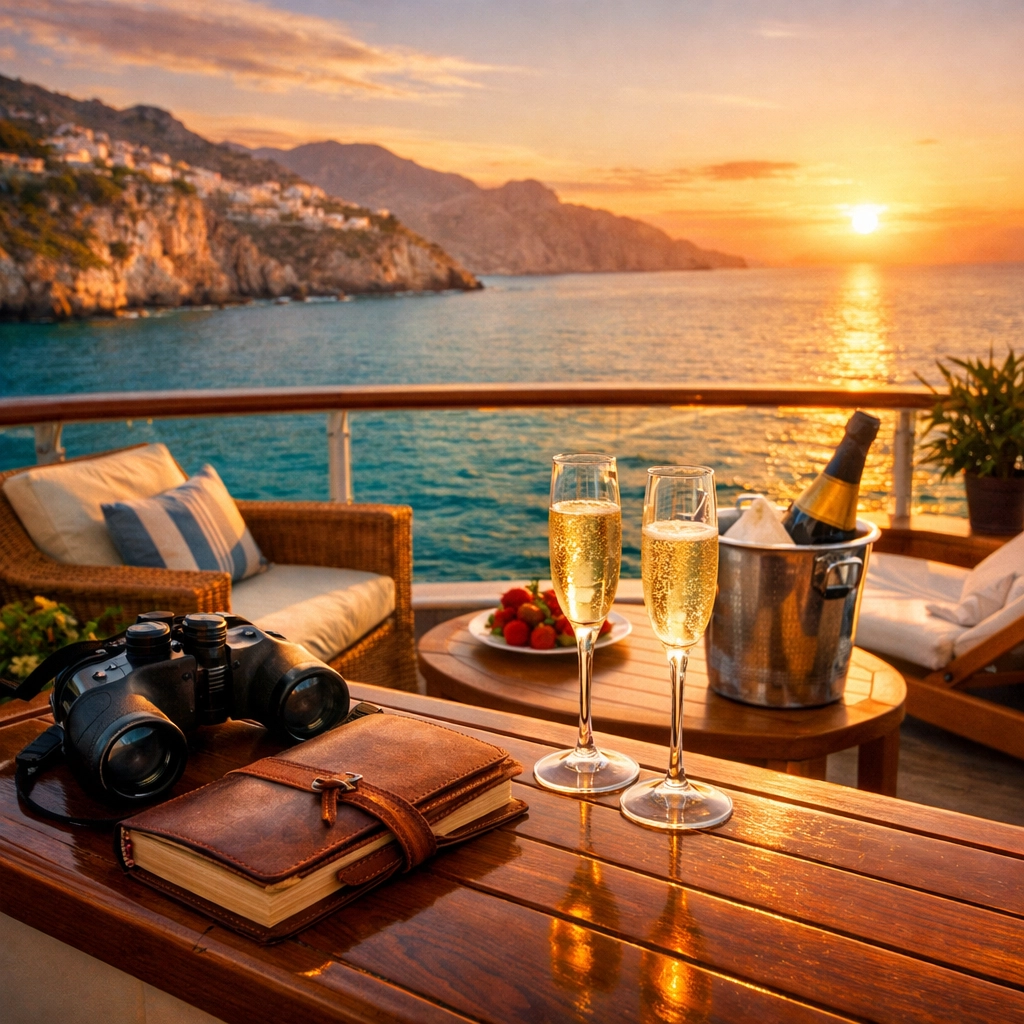
    Luxury cruise ship balcony overlooking Mediterranean coastline at sunset

    But here’s where it gets interesting: while the ship itself moves at a leisurely pace, everything surrounding the experience is highly customized and accelerated. When the ship docks in Barcelona, the ultra-wealthy aren’t joining the standard shore excursion to see Gaudi’s Sagrada Familia with 50 other passengers. They’re being whisked away in a private vehicle for a bespoke day that might include a private tour of a renowned winery in Priorat, lunch at a Michelin-starred restaurant where the chef comes out to meet them personally, and a stop at a private gallery that’s not open to the public.

    This is what I call “slow travel at high speed”: the pace is unhurried and immersive, but the quality and exclusivity of every experience is dramatically elevated. Every port stop is meticulously planned weeks or months in advance. Every activity is tailored. Every moment is optimized for maximum enjoyment and minimum hassle.

    We coordinate with the cruise line, of course, but more importantly, we’ve built relationships in every major port around the world. When our clients dock in Singapore, our local contact is there to orchestrate the day. When they arrive in Cape Town, we’ve pre-arranged a private safari excursion to a reserve that doesn’t allow casual visitors. When they reach Sydney, we’ve secured tickets to a sold-out performance at the Opera House: in the best seats, naturally.

    The beauty of this approach is that it combines the convenience and social aspects of cruise travel with the exclusivity and personalization of completely bespoke travel. You have the luxury of unpacking once and waking up in new destinations, but you never sacrifice the quality of your experiences ashore.

    It’s also worth noting that multigenerational travel has become huge in this space. Families are booking multiple suites for extended voyages, creating shared experiences across generations while still maintaining privacy and independence when desired. Grandparents, parents, and adult children all traveling together for months at a time, with each family unit having their own space but gathering for meals and excursions. It’s a beautiful way to create lasting memories without the logistical headaches of coordinating separate travel for everyone.

    Privacy: The New Status Symbol

    If you want to understand what the ultra-wealthy truly value, look at what they’re willing to pay premiums for. And increasingly, that’s privacy.

    Flashy resorts with prominent social scenes? That’s for Instagram influencers and newly wealthy tech bros. The truly affluent are seeking the opposite: properties where discretion is paramount, where celebrities and billionaires can let their guard down without worrying about paparazzi or social media posts from other guests.

    This has created a growing market for “off-the-grid” luxury: places that are spectacular but deliberately understated, where the staff signs NDAs as a matter of course, and where your presence is never acknowledged publicly.

    We’re seeing more interest in private estates, remote eco-lodges with tiny guest capacities, and exclusive-use properties where you might be the only guests on an entire island or in a vast wilderness reserve. These aren’t places you’ll find through standard hotel booking sites. Many don’t even have websites. They exist through word-of-mouth, industry relationships, and trusted referrals.

    Security is also a major component of privacy. The ultra-wealthy don’t announce their travel plans publicly. Their itineraries are closely guarded. They use private terminals, private transfers, and properties with robust security protocols. Their travel agents (like us) are selected specifically because we understand the importance of confidentiality and have systems in place to protect sensitive information.

    I’ve worked with clients who travel under pseudonyms. Others who require that hotel staff never photograph them or mention their presence. Some who insist on specific security protocols at every property. This isn’t paranoia: it’s the reality of traveling when you’re well-known, influential, or simply prefer to move through the world without being noticed.

    Privacy has become the ultimate luxury because it’s increasingly rare. In a world where everything is shared, documented, and broadcast, the ability to simply disappear for a few weeks is priceless.

    The Expert Factor: Why the Wealthy Never Google Their Vacations

    Here’s what I tell people who ask why anyone would use a travel concierge in the age of Google: the ultra-wealthy don’t DIY their vacations for the same reason they don’t change their own oil or file their own taxes.

    Not because they can’t. Because their time is better spent on things they actually want to do: and because true expertise delivers results that no amount of internet research can replicate.

    Think about it this way: you could spend 40 hours researching hotels in Bali, reading reviews, comparing properties, and trying to figure out which one actually matches your preferences. Or you could spend 20 minutes talking to someone who’s personally inspected properties throughout Bali, has relationships with hotel management, knows which rooms have the best views, understands which properties are truly family-friendly versus just claiming to be, and can get you amenities and upgrades that aren’t available to the general public.

    Which approach saves time? Which delivers better results?

    Secluded overwater villa at private island resort with infinity pool

    We’re not just booking agents. We’re curators of experiences, leveraging decades of collective industry knowledge and relationships to create trips that would be literally impossible to arrange on your own. We have personal relationships with general managers at luxury properties worldwide. We know which tour operators are truly exceptional versus those with good marketing. We can call in favors for last-minute reservations or access that’s typically booked months in advance.

    More importantly, we know how to handle problems before they become your problems. The ultra-wealthy value this enormously: they want solutions, not updates about issues. If a flight is delayed, we’re already rebooking alternatives. If a hotel has a problem with their reservation, we’re on the phone fixing it before they even check in. If weather forces a change of plans, we’ve already adjusted the itinerary with equally spectacular alternatives.

    This is what “having a person” really means. It’s having someone whose full-time job is making your travel flawless, someone with the expertise and connections to make the impossible happen, and someone who takes responsibility for every detail from start to finish.

    At Time For Your Vacation, this is exactly what we provide. We’re not just travel agents: we’re your personal travel concierge, your problem-solver, your insider access, and your guarantee that every trip will be extraordinary.

    The Unglamorous Reality: Logistics, Security, and Invisible Problem-Solving

    Let me tell you about the side of luxury travel that nobody talks about: the unglamorous, behind-the-scenes work that makes everything look effortless.

    The ultra-wealthy don’t see flight delays. Not because delays don’t happen, but because we’ve already rerouted them before it becomes an issue. They don’t experience lost luggage because we’ve arranged private transfers for bags or coordinated with hotels to have everything waiting when they arrive. They don’t worry about political instability in a destination because we’re monitoring situations and adjusting plans if necessary: often before the mainstream news even picks up the story.

    Security is a massive consideration that varies wildly by client. Some require armed security details. Others simply need trustworthy drivers and vetted guides. All of them want someone thinking three steps ahead about potential risks: not just physical security but also privacy concerns, health considerations, and logistical vulnerabilities.

    We coordinate with private security firms in destinations where it’s warranted. We vet every service provider: drivers, guides, staff: to ensure they meet our standards. We have emergency protocols in place for every trip, including 24/7 access to our team if anything unexpected occurs.

    Here’s a real scenario: a client traveling through Southeast Asia experienced a minor medical emergency: nothing life-threatening, but enough to require immediate attention. Within 30 minutes, we had arranged for a private physician to meet them at their hotel, coordinated with their insurance company, and adjusted their itinerary to allow for rest without losing any key experiences they’d been anticipating. The entire situation was handled so smoothly that the client’s family barely noticed there had been any disruption.

    That’s the difference between DIY travel and having expert support. When things go wrong: and eventually, something always goes sideways in travel: having someone with resources, relationships, and expertise makes the difference between a ruined vacation and a minor blip that’s quickly resolved.

    The ultra-wealthy understand that the real value of a travel concierge isn’t in the good times when everything goes according to plan. It’s in the moments when something unexpected happens and they have a dedicated professional who takes ownership of the solution.

    The Bottom Line: It’s About Access, Not Expense

    If there’s one thing I want you to take away from this, it’s this: ultra-wealthy travel isn’t about spending the most money. It’s about having access to experiences, service, and resources that create genuinely frictionless, extraordinary journeys.

    You don’t need to own a private island or charter a 777 to experience this level of travel. What you need is the right partner: someone with the relationships, expertise, and commitment to creating exceptional experiences tailored specifically to you.

    At Time For Your Vacation, we work with clients at every level, from those taking their first elevated vacation to those who expect nothing less than perfection on every trip. Our approach is the same regardless: understand what you truly want (which is often different from what you think you want), leverage our relationships to provide access you couldn’t arrange yourself, and handle every detail so completely that you can focus entirely on enjoying the experience.

    Whether you’re dreaming of a month-long Mediterranean journey aboard a luxury cruise ship, a private villa buyout in Provence with your extended family, or simply want someone to plan your next vacation so perfectly that you never have to think about logistics: we’re here for exactly that.

    Because at the end of the day, luxury travel is about freedom. Freedom from stress. Freedom from logistics. Freedom to simply be present in extraordinary places with the people you love, knowing that everything else has been handled.

    That’s how the ultra-wealthy really travel. And that’s exactly what we provide.


    Dave Galvan, author of this amazing tome, is a travel author, luxury travel concierge, travel blogger, travel vlogger, travel tour guide, travel podcaster and traveler.

    www.TimeForYourVacation.com
    www.DaveTheTourGuide.com
    www.TimeForYourVacation.blog
    Podcast: https://www.podomatic.com/podcasts/contact24682

  • [HERO] The Worst Travel Advice I've Ever Heard (And What to Do Instead)

    Look, I’m going to be real with you.

    The internet is full of travel advice. And I mean full of it. Pinterest boards promising “life-changing hacks.” Reddit threads swearing by oddly specific booking times. TikTok influencers shouting about how you absolutely must do everything their way or you’re doing it wrong.

    Here’s the problem: most of that advice ranges from mildly annoying to trip-ruiningly terrible.

    After years of planning luxury travel experiences, and fixing the disasters that happen when people follow bad advice, I’ve compiled the worst offenders. These are the travel “tips” that sound smart but actually cost you time, money, stress, and the kind of vacation memories you actually want to make.

    Let me save you some headaches.

    “Just Wing It!” (Or: How to Turn Paradise Into a Planning Nightmare)

    This one drives me absolutely insane.

    “Just wing it!” they say. “The best travel is spontaneous!” they insist. “You’ll find better deals when you get there!”

    No. No. And hell no.

    Here’s what actually happens when you wing it in the world of luxury travel: you end up in the worst room at the hotel. You miss out on the excursions everyone raves about because they’ve been sold out for weeks. You spend your “relaxing” beach day frantically googling “best restaurants near me” while everyone around you is sipping cocktails they pre-ordered.

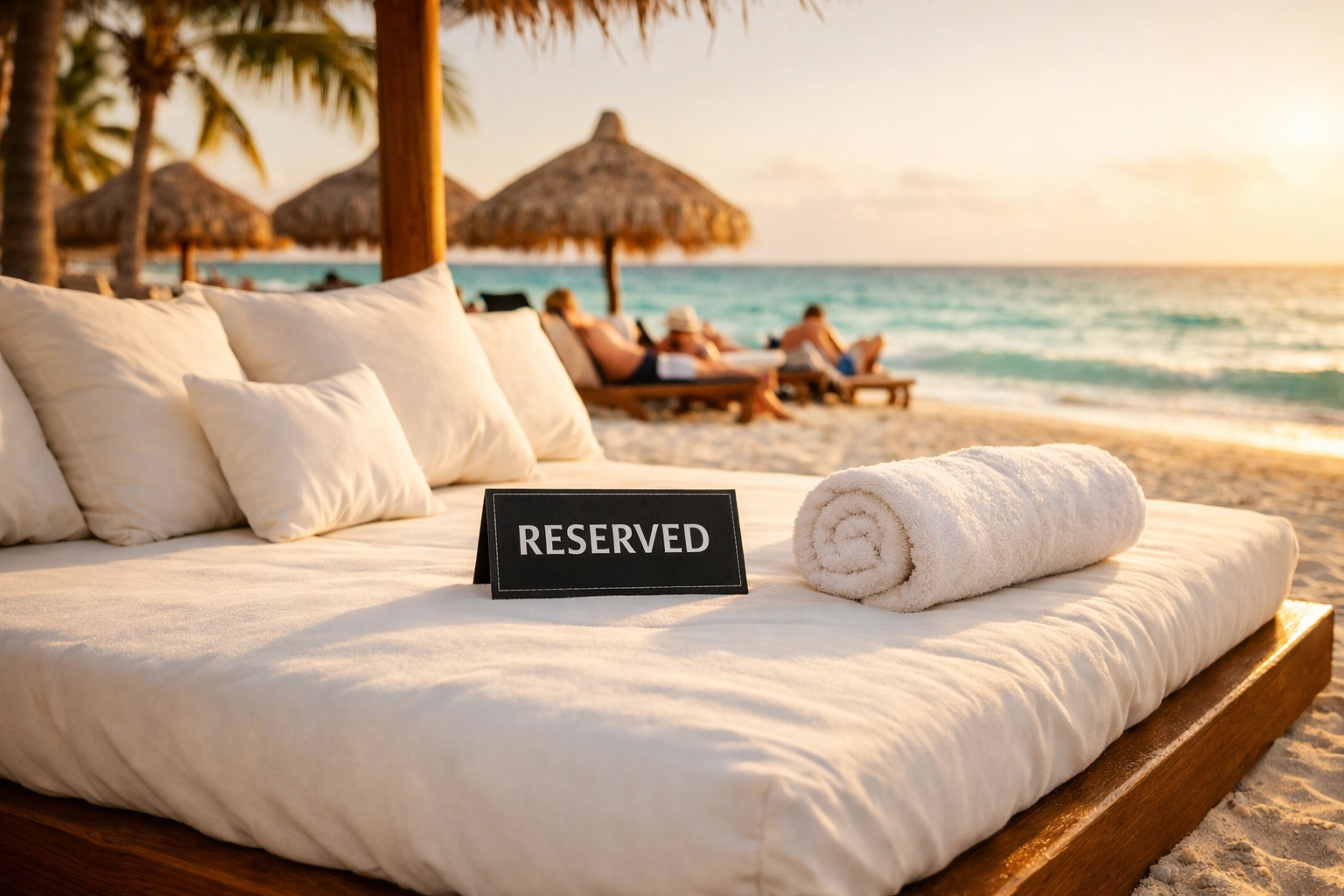
    Let me give you a real example. Paradise Beach in Cozumel, Mexico. It’s one of those dreamy beach club destinations where cruise passengers spend their port day. Beautiful turquoise water. Comfortable beach chairs. Snorkeling. Cold drinks. The works.

    But here’s the catch: if you show up without planning, you’re either not getting in or you’re paying premium prices at the door while everyone who booked ahead is already three piña coladas deep on their reserved daybed.

    The “wing it” crowd? They’re the ones standing in the taxi line at the port, squinting at their phones, trying to figure out where to go while their precious port time ticks away.

    Spontaneity has its place. Deciding between the grilled fish and the shrimp tacos? Wing it. Choosing to stay an extra hour at the beach? Absolutely, wing it. But your accommodations, your transfers, your major activities? That’s not spontaneity. That’s gambling with your vacation.

    What to do instead: Plan the framework. Book the big stuff. Reserve the experiences you know you want. Then be spontaneous within that structure. You’ll have the freedom to explore knowing you’ve got a great room to return to and dinner reservations at the spot you’ve been dreaming about.

    Reserved luxury beach daybed with white cushions on pristine sand showing benefits of advance vacation planning

    “Book Your Flights on a Tuesday at 3 AM” (And Other Booking Myths That Need to Die)

    Oh, this one. This persistent, zombie-like myth that just won’t die.

    “Book on Tuesday!” “Clear your cookies!” “Search in incognito mode!” “Buy exactly 47 days before departure!” “Only book during a waning crescent moon while Mercury is in retrograde!”

    Okay, I made that last one up. But you get the point.

    Here’s the truth that the “hack” peddlers don’t want you to know: there is no magic time to book flights. Airlines use complex revenue management systems that adjust prices based on hundreds of variables. Demand, competition, seasonality, booking pace, how many people searched that route in the last hour, it’s algorithmic chaos.

    That Tuesday at 3 AM “hack”? It came from a study. One study. From 2013. About domestic U.S. flights. And it wasn’t even that significant a difference.

    Meanwhile, you’re setting alarms, refreshing browsers, and treating flight booking like some kind of covert military operation. And for what? Maybe you save $23. Maybe you don’t. Maybe you lose sleep and miss the actual good deal that showed up on Thursday afternoon.

    You know what makes a bigger difference than clicking “buy” at precisely 3 AM? Actually knowing how to book travel. Understanding fare classes. Knowing which routes have better pricing. Recognizing when a price is genuinely good versus waiting-for-a-miracle unrealistic. Being aware of packages like JetBlue Vacations that bundle flights and hotels at rates you literally cannot replicate by booking separately.

    What to do instead: Work with someone who books travel for a living. Someone who isn’t setting alarms for 3 AM because they have tools, knowledge, and industry relationships. Someone who can tell you, “That’s a solid price, let’s book it” or “Let’s wait, I’ve seen this route drop by next week.” Your time is worth more than gambling on flight hack mythology.

    “Avoid Tourist Traps at All Costs” (Or: Why Popularity Isn’t a Crime)

    Let me ask you something.

    Why do you think places become popular?

    Usually, it’s because they’re actually good.

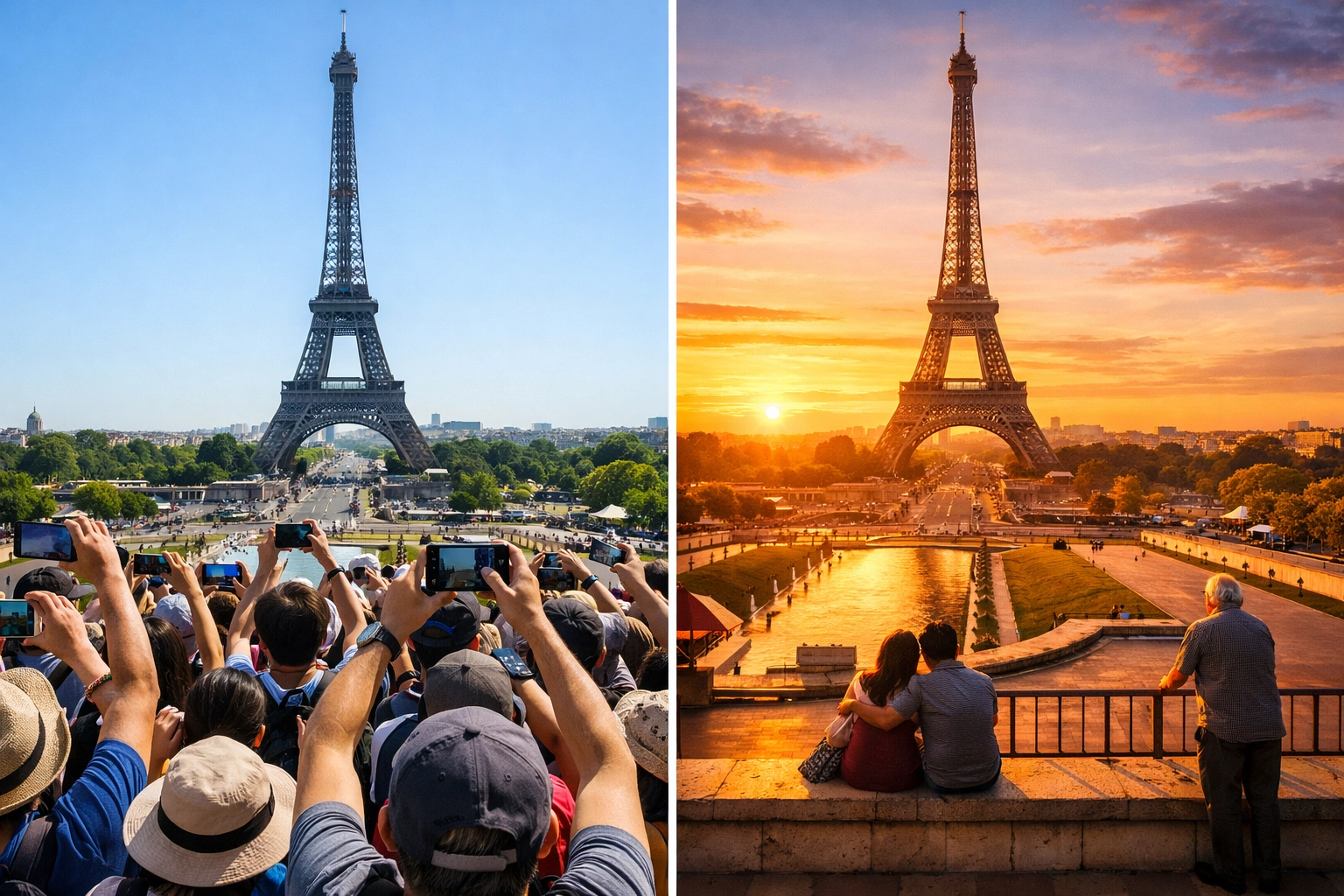
    Yes, some places are overhyped. Yes, some destinations are crowded for reasons that have nothing to do with quality. But the blanket advice to “avoid tourist traps” has created this weird travel snobbery where people brag about how they avoided the Eiffel Tower or skipped the Grand Canyon because they’re “too touristy.”

    You flew to Paris and didn’t see the Eiffel Tower because you wanted to feel superior to other travelers? Congratulations, you played yourself.

    Here’s the real secret: the trick isn’t avoiding popular places, it’s visiting them the right way.

    Cozumel is packed with cruise passengers. Does that make it a “trap” you should skip? Absolutely not. You just need to know how to do Cozumel. Book your excursions in advance. Know which beach clubs are worth it. Understand that taxis only take cash (and charge $18 cash versus $40 with a credit card, yeah, we’ll get to that scam in a minute). Go to the places that cruise passengers rave about, but do it with a plan.

    Vegas? Ultra-touristy. Also? An absolute blast if you know which shows to see, which restaurants to book, and which “deals” are actually bad deals wrapped in neon.

    The Instagram-famous spots? Some are genuinely stunning. Others are disappointments. But you won’t know which is which by categorically avoiding anything popular. You’ll know by doing actual research or, even better, working with someone who’s already sorted the gems from the garbage.

    What to do instead: Judge each destination on its actual merits, not its tourist-to-local ratio. And if something is crowded, figure out when to go, how to experience it, and what to skip. That’s the kind of insider knowledge that makes trips memorable, not travel snobbery.

    Exhausted traveler booking flights at 3 AM airport terminal debunking travel booking time myths

    “You Don’t Need a Travel Agent” (The Biggest Lie of the Digital Age)

    This is the one that really gets under my skin.

    “You don’t need a travel agent! You have the internet! You can book everything yourself!”

    Sure. You can book everything yourself. You can also cut your own hair, fix your own plumbing, and represent yourself in court. The question isn’t “can you”, it’s “should you?”

    Let’s talk time. Real talk.

    How long did you spend researching your last vacation? Comparing hotels? Reading reviews? Cross-checking dates? Finding restaurants? Mapping out logistics? Debating whether Resort A is actually better than Resort B even though Resort B has a lazy river but Resort A has that adults-only pool?

    If you’re honest, it was probably 20-40 hours. Maybe more.

    Now imagine this: you spend 20 minutes on the phone describing what you want. A week later, you receive a complete itinerary. Hotels booked. Transfers arranged. Restaurants reserved. Activities scheduled. Contingency plans in place. All you have to do is show up.

    Time is money. If you make $50,000 a year, your time is worth roughly $25 an hour. If you spent 30 hours planning your vacation, you just “spent” $750 of your time. What did you save by booking it yourself? Maybe $200 in fees?

    You lost money. And you lost time you could’ve spent doing literally anything else.

    But let’s set aside the math. Let’s talk about what you don’t know.

    You don’t know that the hotel you booked just renovated half its rooms and if you don’t specifically request the new wing, you’re getting the old, sad version. You don’t know that the “ocean view” room is technically accurate but requires you to crane your neck at a 45-degree angle to see a sliver of water. You don’t know that Restaurant X is impossible to book online but a travel professional can get you a table. You don’t know that Tour Company Y has a terrible safety record that wouldn’t show up in your Google search.

    You don’t know what you don’t know.

    And when something goes wrong, because something always goes wrong, you’re on hold with customer service, navigating automated phone trees, begging for a supervisor. Meanwhile, travelers who worked with professionals have someone advocating for them, fixing problems, handling the stress while they actually enjoy their vacation.

    What to do instead: Recognize that expertise has value. Stop treating travel planning like a fun hobby when it’s actually a specialized skill set. Your vacation is too important, too expensive, and too rare to leave to amateur hour. Work with professionals who do this for a living. The peace of mind alone is worth it.

    “Pack for Every Possible Scenario” (Or: How to Ruin Your Trip Before You Leave)

    Let me paint a picture.

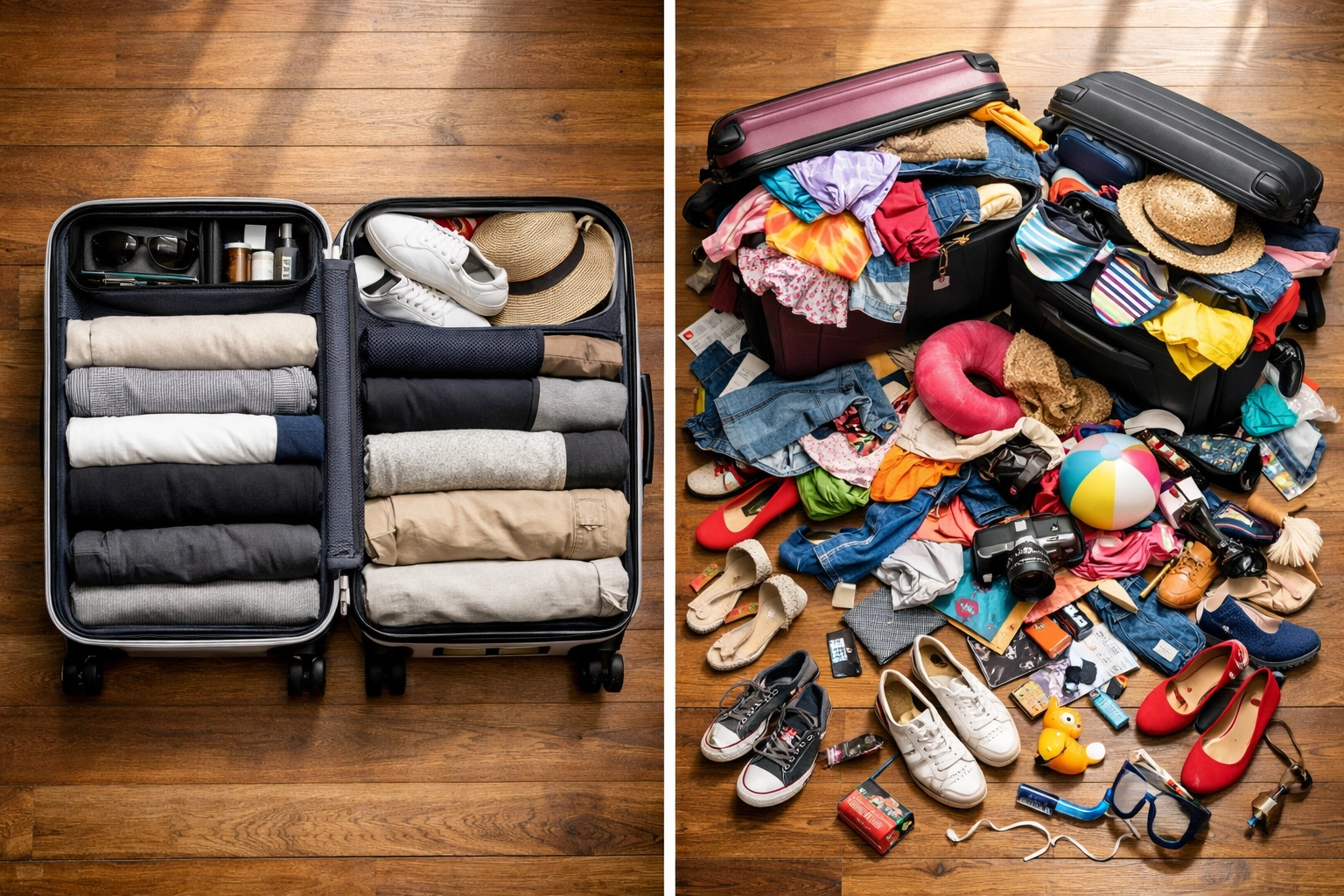
    You’re packing for your luxury beach vacation. You’re bringing your swimsuit, obviously. But what if it gets cool in the evening? Better bring a sweater. What if you want to go to a nice dinner? Better pack dress shoes. What if there’s a hiking opportunity? Better throw in athletic shoes. What if, what if, what if.

    Before you know it, you’ve got two checked bags, a carry-on, and a personal item. You’re paying baggage fees. You’re lugging weight through airports. You’re waiting at carousel after carousel hoping your bag made the connection. You’re spending the first hour of your vacation unpacking an entire wardrobe into hotel drawers.

    All for items you’ll never use.

    Here’s the thing about luxury travel: it’s about freedom, not luggage.

    The carry-on-only philosophy isn’t about deprivation. It’s about mobility. It’s about walking off the plane and straight to your hotel. It’s about not caring if your flight gets changed because you’ve got everything you need right there with you.

    “But what if I need something?” you ask.

    Then you buy it. You’re on vacation. In a place with stores. You’ll survive.

    And honestly? You probably won’t need it. That “just in case” dress you packed for a fancy dinner you might go to? You won’t go. That second pair of hiking boots because what if the first ones don’t work out? They’ll work out fine. That fourth swimsuit? Girl. No.

    What to do instead: Pack what you will use, not what you might use. Build a capsule wardrobe that mixes and matches. Choose versatile pieces. And for the love of vacation happiness, embrace the carry-on life. Your back, your sanity, and your travel experience will thank you.

    Crowded tourist attraction versus peaceful experience showing importance of timing and planning

    “Save Money by Staying Further Away” (The False Economy of Cheap Locations)

    Oh, this one sounds so logical.

    “Hotel A is $300 a night downtown. Hotel B is $150 a night, and it’s only 15 minutes away! Look at all the money you’re saving!”

    Except you’re not saving money. You’re relocating your spending from accommodation to transportation and frustration.

    Let’s do the math. That $150-per-night hotel that’s “only 15 minutes away”? First, it’s never actually 15 minutes. It’s 15 minutes in ideal traffic that you will never experience. In reality, it’s 25-40 minutes depending on time of day, accidents, construction, and acts of God.

    Now you’re taking taxis. Or Ubers. Or dealing with public transportation. Each trip is costing you $20-40. You do that twice a day, once to get to the fun part of town, once to get back, and you’re spending $40-80 daily on transportation.

    Over a 5-day trip, that’s $200-400. Congratulations, you’ve now spent the same amount as Hotel A. Except you’ve also spent hours of your vacation in transit.

    Let me give you a real example. Cozumel. You book a hotel far from the cruise port to save money. Now you need a taxi to Paradise Beach. The taxi driver wants $18 cash. You don’t have cash. Suddenly it’s $40 with a credit card. That’s not a taxi fare, that’s a hostage situation with wheels.

    And it’s not just the money. It’s the mental load. It’s the stress of timing your return. It’s the exhaustion of schlepping back and forth. It’s missing that spontaneous evening stroll because you’re 20 minutes from anywhere worth strolling.

    Location matters. In travel, proximity is luxury.

    What to do instead: Budget appropriately for location. Consider the total cost, not just the nightly rate. Factor in transportation expenses, time costs, and convenience. Often, spending more on the right location saves you money overall and dramatically improves your vacation quality. Sometimes paying $300 to be where you want to be beats paying $150 to be where you don’t.

    “Street Food is Always Dangerous” vs. “Always Eat Like a Local” (Finding the Middle Ground)

    These two pieces of advice are natural enemies, locked in eternal combat in the comments section of every travel blog.

    Camp A: “Never eat street food! You’ll get sick! Stick to hotel restaurants!”

    Camp B: “You MUST eat street food! It’s the soul of a destination! Hotel restaurants are for cowards!”

    Both camps are wrong. And both camps are a little bit right.

    Here’s the reality: street food around the world is often spectacular. It’s fresh, it’s authentic, it’s delicious, and yes, it’s safe, when you use common sense.

    But “always” and “never” are terrible travel advisors.

    Should you avoid all street food because you’re afraid? No. You’ll miss some of the best meals of your life. Should you eat at every questionable cart because you want to prove how adventurous you are? Also no. Food poisoning is not a personality trait.

    The key is observation. Look for vendors with high turnover, that means fresh ingredients. Watch how they handle food. Check if locals are eating there. Use your instincts. If something looks or smells off, walk away.

    On the flip side, don’t let travel snobbery convince you that eating at your resort is somehow cheating at vacation. Sometimes the hotel restaurant is fantastic. Sometimes you’re tired and want a familiar meal. Sometimes you just want a cheeseburger, and that’s okay. You’re not going to lose your traveler credentials.

    What to do instead: Be adventurous but not reckless. Try street food when it looks good and clean. Eat at local restaurants that have crowds and good reviews. Also eat at your hotel if you want to. Balance exploration with wisdom. And maybe pack some Pepto, just in case. You’re on vacation, do what makes you happy, not what makes strangers on the internet respect you.

    Professional travel itinerary and organized luggage on luxury hotel bed showing expert trip planning

    “You Can Sleep When You Get Home” (The Toxic Hustle of Vacation Planning)

    This advice usually shows up in the form of motivational travel quotes.

    “Adventure awaits! Sleep when you’re dead! The world is calling!”

    Listen, I’m all for adventure. But lack of sleep doesn’t make travel more meaningful. It makes travel miserable.

    Here’s what actually happens when you don’t sleep on vacation: everything becomes harder. Small inconveniences feel like catastrophes. You’re irritable with your travel companions. You can’t enjoy the museum because you’re fighting to keep your eyes open. You snap at the waiter. You make poor decisions about activities and spending. You miss the sunset because you crashed at 6 PM.

    You’re not experiencing more by sleeping less. You’re experiencing less because you’re too exhausted to actually be present.

    Jet lag is real. Travel fatigue is real. Your body needs rest, especially when you’re in unfamiliar environments, walking more than usual, and navigating new situations.

    Some of the best moments of travel happen when you’re well-rested and alert. You notice details. You have energy for spontaneity. You can actually appreciate that incredible view instead of staring at it through a fog of exhaustion.

    What to do instead: Build rest into your itinerary. Don’t pack every minute of every day. Allow for downtime. Take a nap if you need one. Sleep in if you want to. You’re on vacation: the goal is to return home refreshed, not requiring a second vacation to recover from your vacation.

    “Skip Travel Insurance: It’s a Waste of Money” (Until It Isn’t)

    This is the one nobody wants to think about. Travel insurance feels like jinxing yourself. “I’m not going to need it,” you think. “Nothing bad is going to happen.”

    And then it does.

    Flights get canceled. Bags go missing. Someone gets sick. Weather disrupts your plans. The hotel you booked goes out of business. You break your ankle snorkeling. Your wallet gets stolen. Your phone falls in the ocean.

    When something goes wrong far from home, the financial, emotional, and logistical costs are substantial.

    Travel insurance isn’t for the 99% of trips where nothing goes wrong. It’s for the 1% where everything does. And that 1% can cost you thousands of dollars, hundreds of hours of stress, and memories of the worst vacation of your life.

    I’ve seen it happen. The family whose connecting flight was canceled with no available alternatives for three days. The couple whose luggage disappeared, along with all their medications. The traveler who needed emergency medical care in a country where their health insurance didn’t work.

    The ones with travel insurance? Annoyed but protected. The ones without? Financially devastated.

    What to do instead: Buy travel insurance. Read the policy. Understand what’s covered. It’s not sexy. It’s not exciting. It’s not going to make you look adventurous on Instagram. But it’s one of the smartest investments you can make in your travel.

    Organized carry-on luggage versus overpacked suitcases comparing minimalist and excessive packing styles

    “Take Advice from Anyone Who Has an Opinion” (When Everyone’s an Expert)

    Here’s the final: and perhaps most important: piece of bad advice:

    Taking advice from anyone who has an opinion.

    The internet democratized travel information, which is mostly good. But it also means every person with a blog, social media account, or strong feeling thinks they’re a travel expert.

    Someone who has never traveled with kids might have strong opinions about family travel. Someone who’s never planned a multi-city itinerary might insist you should wing it. Someone who’s never been to your destination might tell you it’s dangerous. Someone who had one bad experience might tell you to avoid an entire country.

    Not all advice is equal. Not all experience translates to expertise.

    The person telling you to “just show up” at popular attractions has probably never stood in a five-hour line. The person insisting you pack in a carry-on might be 5’2″ and traveling solo: not 6’4″ traveling with a spouse and two kids. The person saying you don’t need a travel agent might have unlimited time to spend on research and no problem sitting on hold with airlines for hours.

    What works for them might not work for you.

    What to do instead: Seek advice from people who have been where you want to go: physically or figuratively. Listen to professionals who plan travel for people with similar needs as yours. Consider the source. Ask yourself: does this person actually know what they’re talking about, or are they just confident?

    Trust expertise. Trust experience. Trust people who have made mistakes and learned from them. Don’t trust someone just because they speak loudly or type in all caps.

    The Real Travel Hack Nobody Talks About

    Here’s the actual secret to great travel: work with professionals who do this for a living.

    It’s not sexy. It’s not a “hack.” It’s not going to trend on TikTok. But it works.

    The worst travel advice usually comes from people trying to save money in the wrong places, over-planning in some areas while under-planning in others, and treating travel like a competition instead of an experience.

    The best travel experiences come from having a foundation of smart planning, professional guidance, and enough flexibility to embrace spontaneity when it happens naturally.

    Stop following travel “hacks” that waste your time, money, and peace of mind. Stop taking advice from people who’ve never done what you’re trying to do. Stop treating vacation planning like a solo mission when professionals exist specifically to make your life easier.

    Your vacation is too valuable for amateur hour.

    Plan the framework. Get expert help. Then actually enjoy yourself. That’s the real travel advice worth following.


    Dave Galvan, author of this amazing tome, is a travel author, luxury travel concierge, travel blogger, travel vlogger, travel tour guide, travel podcaster and traveler. When he’s not debunking terrible travel advice, he’s helping people plan incredible vacations that actually live up to the hype.

    Ready to stop following bad advice and start planning a trip that actually works? Visit www.TimeForYourVacation.com, check out www.DaveTheTourGuide.com, or explore more travel wisdom at www.TimeForYourVacation.blog.

    You can also tune into the podcast at https://www.podomatic.com/podcasts/contact24682 for more travel real talk and insider tips that actually matter.

    Because the best travel hack is working with someone who knows what they’re doing. And that’s not advice; that’s just common sense.

  • [HERO] Paradise Beach Cozumel Review: The Gold Standard for a Cruise Port Day (Updated)

    (The following is an updated review from 2024 of Paradise Beach from 2024)

    Look, I’ve been to a lot of cruise port beach clubs. A lot. From the Caribbean to the Mediterranean, I’ve sat in more beach chairs than I care to count. And here’s what I’ll tell you straight up: Paradise Beach in Cozumel isn’t perfect. But it might just be the best option you’ll find when your ship docks at this Mexican island paradise.

    Let me break down exactly what you’re getting into, the spectacular service, the underwater magic, the food that’ll surprise you (sometimes in good ways, sometimes… not so much), and the one taxi trap that could cost you an extra $22 if you’re not paying attention.

    This isn’t a sponsored post. This is a real review from a real visit. I chose the beach over the pool, I paid for my own food, and I’m going to tell you exactly what worked and what didn’t.

    Ready? Let’s dive in.

    The Taxi Situation: Bring Cash or Pay Double

    Let’s get the most annoying part out of the way first.

    You’re going to need a taxi to get from the cruise terminal to Paradise Beach. It’s not walkable. The ride takes about 10-15 minutes depending on traffic, and here’s where things get interesting.

    If you pay cash, the ride costs $18 one way. Pretty standard for Cozumel.

    If you want to use a credit card? That same ride suddenly costs $20.

    This isn’t Paradise Beach’s fault, it’s just how the taxi system works in Cozumel. Most drivers strongly prefer cash, and they’ve essentially built a “convenience fee” into credit card payments that’s more than double the cash price. It’s frustrating, it feels predatory, and it’s something you need to know before you leave the ship.

    My advice? Hit the ATM on your cruise ship or bring small bills from home. A $20 bill will get you there with change to spare. If you’re traveling as a couple or family, you can split one taxi and make it even more economical.

    Mexican pesos cash for Cozumel taxi to Paradise Beach from cruise port

    First Impressions: Where Paradise Beach Gets It Right

    The moment you walk through the entrance, something becomes immediately clear: the staff here genuinely care about your experience.

    This isn’t the robotic, going-through-the-motions service you sometimes get at cruise port attractions. The team at Paradise Beach is warm, attentive, and honestly seems happy to see you. They’ll greet you with smiles, explain your options clearly, and point you toward the beach or pool depending on your preference.

    The check-in process is smooth. You’ll make a decision about packages (more on that in a minute), and then you’re free to stake your claim on the perfect spot.

    Here’s what I loved about the service throughout the day: it was consistent. Whether you needed another drink, had a question about the snorkeling equipment, or wanted a fresh towel, someone was always nearby and ready to help. No hunting down staff members. No waiting forever for attention.

    In the world of beach clubs catering to cruise passengers, this level of service is rare. Really rare. Most places are focused on volume over experience. Paradise Beach manages to do both.

    The Big Choice: Pool or Beach?

    When you arrive, you’ll face a decision that will define your entire day: do you want to set up at the pool or the beach?

    Both have their advantages. Both have comfortable chairs (though some reviews mention they’re not the most luxurious you’ll ever sit in, I’ll be honest, they’re fine but not spectacular). Both offer the option to upgrade to a daybed if you want more space and comfort.

    I chose the beach.

    Why? Because we have a pool at home. When I’m on a Caribbean island, I want my toes in the sand and my eyes on the ocean. That’s the whole point.

    The beach at Paradise Beach delivers exactly what you’d expect from the Mexican Caribbean: white sand, turquoise water, and that gentle lapping of waves that makes you forget you have responsibilities waiting back home. The water access is immediate and easy, no long walks, no obstacles, just a few steps from your chair to the water.

    If you’re traveling with kids who are obsessed with pool activities, or if you prefer the controlled environment of a swimming pool, the pool area is genuinely nice. It’s well-maintained, offers inflatables and water features, and has a fun, family-friendly vibe. From what I observed, the pool crowd seemed just as happy as the beach crowd.

    The daybed upgrades are available at both locations. They’re worth considering if you’re traveling as a group or want a more private, comfortable setup. You’ll get more space, better cushioning, and a bit of separation from the masses.

    But here’s my take: the standard beach chairs are perfectly adequate for a port day. Save your upgrade money for drinks and food.

    Paradise Beach Cozumel aerial view showing pool area and white sand beach with turquoise water

    The Beach Experience: Relaxation in Paradise

    Let me paint you a picture of what a day on the Paradise Beach sand actually looks like.

    You’ve claimed your chair. You’ve stripped down to your swimsuit. You’ve slathered on sunscreen (please, for the love of all that is holy, wear sunscreen). And now you’re staring at the most gorgeous shade of blue water you’ve seen in months.

    This is where Paradise Beach earns its name.

    The beach itself is clean and well-maintained. The water is calm, warm, and incredibly inviting. Unlike some Cozumel beaches that deal with significant seaweed problems (especially during certain seasons), Paradise Beach does a decent job of keeping the swimming areas clear.

    Is it the pristine, magazine-cover perfection you see in resort brochures? Not always. Nature happens. Some days the water has a slightly murky look, and yes, there might be some seaweed floating around. But compared to the alternatives in the area, it’s one of the better beach experiences you’ll find for cruise passengers.

    The vibe is wonderfully relaxed. This isn’t a party beach with thumping music and spring break energy. It’s families building sandcastles. Couples reading books under umbrellas. Solo travelers taking contemplative walks along the shoreline.

    After the chaos of getting off the ship, navigating the port, and dealing with the taxi situation, this relaxation is exactly what you need. You can feel your shoulders drop, your breathing slow, and that vacation mentality finally kick in.

    The location, just a short ride from the cruise port, means you’re not sacrificing hours of your port day to transportation. You can be in the water within 30 minutes of stepping off your ship. That proximity is gold when you’re working with limited port time.

    The Snorkeling: Underwater Magic

    Here’s where Paradise Beach really shines.

    The snorkeling here is legitimately good. Not “good for a beach club” good, actually good.

    You can rent snorkeling equipment on-site (or bring your own if you’re the type of traveler who packs their own gear). The rental process is straightforward, the equipment is in decent condition, and the staff will point you toward the best spots.

    The underwater visibility varies depending on conditions, but on a good day, you’re looking at a surprisingly diverse marine ecosystem. I spotted colorful tropical fish, interesting coral formations, and that magical underwater landscape that makes Caribbean snorkeling so addictive.

    This isn’t Cozumel’s famous wall diving, but it doesn’t need to be. For a casual snorkeling experience that doesn’t require a boat or special excursion, it’s fantastic. Families with kids will especially appreciate how accessible it is, you can keep an eye on younger snorkelers while they explore.

    The water depth is manageable for beginners but interesting enough for experienced snorkelers. You’re not just floating in three feet of water looking at sand.

    One tip: go snorkeling earlier in the day if possible. The water tends to be clearer in the morning, and you’ll beat some of the crowds.

    Beach chairs at Paradise Beach Cozumel facing calm Caribbean ocean waters

    Food & Drinks: The Hits, The Misses, and Everything In Between

    Let’s talk about the food situation at Paradise Beach, because this is where opinions get complicated.

    First, you need to understand your options. You can either:

    1. Go à la carte and pay for individual food and drink items as you order them
    2. Purchase a drink package that covers unlimited alcoholic and non-alcoholic beverages
    3. Purchase a food and drink package that covers meals and drinks

    For a full day at the beach, most people find the all-inclusive package worthwhile. You’ll drink and eat enough to justify the upfront cost, and you won’t have to think about prices every time you want a margarita.

    Now, about the actual food quality.

    The hits: Some of the dishes here are genuinely impressive. The tacos are fresh and flavorful, with quality ingredients that taste like real Mexican food rather than Americanized cruise port cuisine. The quesadillas hit the spot when you want something satisfying but not too heavy. The pizzas are solid, nothing groundbreaking, but perfectly acceptable beach food. And the fruit? Fresh, sweet, and refreshing in the Caribbean heat.

    The misses: Not every dish is a winner. Some items felt like they were sitting out too long or prepared in bulk with inconsistent quality. Without getting too specific (because your mileage may vary), I’d say stick to the Mexican specialties and avoid anything that looks like it’s been under a heat lamp for a while.

    The drinks are where Paradise Beach really delivers. The bartenders know what they’re doing, the portions are generous (by cruise port standards), and you won’t feel like you’re drinking watered-down approximations of real cocktails. The margaritas are particularly good, made with real ingredients, not powdered mix.

    Coffee, smoothies, and non-alcoholic options are plentiful and well-executed. If you’re traveling with kids or non-drinkers, they won’t feel shortchanged.

    Here’s my honest assessment: the food is inconsistent but generally good enough to keep you satisfied throughout the day. Set your expectations at “quality beach club food” rather than “fine dining,” and you’ll be happy. When you hit a great dish, it’s a pleasant surprise. When you hit a mediocre one, it’s not a disaster, just skip it next time and order something else.

    The variety is solid. You won’t get bored eating the same thing all day. And the ability to order multiple times throughout your visit means you can sample different options and figure out what works.

    The Family-Friendly Factor

    Paradise Beach excels at catering to families, and it’s easy to see why so many cruise passengers with kids choose this spot.

    The setup is inherently family-friendly. The beach has calm, shallow areas perfect for young children. The pool offers inflatables, water slides, and enough activities to keep kids entertained for hours. There’s even a separate shallow pool area for very young children, including those in swim diapers.

    Parents can actually relax here. The layout allows you to keep an eye on your kids whether they’re in the water, at the pool, or playing in the sand. The staff is attentive to families, and the overall atmosphere is welcoming to children without being overrun by chaos.

    Teenagers won’t feel like they’re stuck at a “baby place” either. The snorkeling, water activities, and freedom to explore give older kids enough to stay engaged.

    If you’re traveling as a multi-generational group, Paradise Beach handles that gracefully too. Grandparents can claim comfortable chairs and watch the action. Parents can participate or supervise. Kids can run wild (within reason).

    This flexibility is rare. Most beach clubs either cater heavily to party crowds or lean so hard into family activities that they lose appeal for adults. Paradise Beach finds a middle ground that works.

    Snorkeling underwater view with tropical fish and coral at Paradise Beach Cozumel

    The Gift Shop Reality Check

    Let’s be honest about the gift shop situation.

    The prices are steep. Really steep.

    If you’re looking to buy souvenirs, sunscreen you forgot to pack, or any of the typical beach accessories sold at these places, you’re going to pay premium prices. We’re talking significantly higher than what you’d pay at shops in town or even at other vendors near the cruise port.

    My advice? Buy your souvenirs elsewhere. If you forgot something essential, sure, pay the premium and move on with your day. But don’t plan on doing your Cozumel shopping at the Paradise Beach gift shop unless you enjoy paying tourist trap prices.

    This is a minor complaint in the grand scheme of your day, but it’s worth mentioning so you’re not shocked when you see the price tags.

    The shop does carry quality items, it’s not selling cheap junk. But you’re paying for the convenience of shopping in your swimsuit with a margarita in your hand. That convenience comes at a cost.

    What Makes Paradise Beach the “Gold Standard”?

    After spending a full day here, I understand why Paradise Beach has built such a strong reputation among cruise passengers. It’s not perfect, but it gets the important things right.

    The service is the foundation. When staff members genuinely care about your experience, everything else improves. That warmth and attentiveness creates a positive atmosphere that’s hard to quantify but easy to feel.

    The location can’t be overstated. Being this close to the cruise port means you maximize your beach time and minimize your stress about getting back to the ship.

    The flexibility in pricing and setup gives you control over your experience. Want to splurge on the all-inclusive package and a daybed? Do it. Want to keep costs down with à la carte options and regular chairs? That works too.

    The access to both beach and pool means different groups in your party can have different experiences and everyone stays happy.

    The relaxation factor is real. This isn’t a crowded, chaotic scene. You can actually decompress here.

    Does it have flaws? Absolutely. The food consistency, the gift shop prices, and the taxi situation are legitimate downsides. But when I compare Paradise Beach to the dozens of other cruise port beach clubs I’ve visited, it comes out ahead more often than not.

    The “gold standard” designation might feel like hyperbole, but in the context of what’s available to cruise passengers in Cozumel, it’s earned.

    Fresh tacos, fruit platter, and margaritas at Paradise Beach Cozumel beachside dining

    My Final Verdict

    Paradise Beach isn’t trying to be a luxury resort. It’s not competing with exclusive private island experiences. It’s a beach club designed for cruise passengers who want a quality beach day without complications.

    And in that specific category, it delivers.

    Would I return? Yes, without hesitation.

    Would I recommend it to friends and clients? Yes, with the caveats I’ve mentioned throughout this review.

    The service alone makes it worth visiting. Add in decent food, good snorkeling, easy access, and a genuinely relaxing atmosphere, and you’ve got a winning combination for a port day.

    Just remember to bring cash for the taxi. And maybe skip the gift shop.

    Your cruise ship will dock in Cozumel. You’ll step off into the warm Mexican sunshine. You’ll navigate the port. And then you’ll face the question every cruiser asks: what should we do today?

    Paradise Beach is a solid answer to that question. Not perfect, but pretty damn good.


    Dave Galvan, author of this amazing tome, is a travel author, luxury travel concierge, travel blogger, travel vlogger, travel tour guide, travel podcaster and traveler.

    Ready to plan your next vacation? Whether you’re looking for beach clubs in Cozumel or planning a completely different adventure, I’m here to help make it happen. Visit www.TimeForYourVacation.com, www.DaveTheTourGuide.com, or check out more travel insights at www.TimeForYourVacation.blog.

    You can also catch me on the podcast at https://www.podomatic.com/podcasts/contact24682 where I share stories, tips, and honest reviews from my travels around the world.

  • [HERO] The Ultimate Guide to Milestone Travel: How to Celebrate Big Birthdays, Anniversaries, and Empty Nest Moments in Style

    Let’s be honest. You’ve worked hard. You’ve celebrated birthdays with cakes and dinners. You’ve marked anniversaries with jewelry and flowers. You’ve done the “normal” thing for years.

    But milestone moments? Milestone moments demand milestone travel.

    This isn’t about being extravagant for extravagance’s sake. This is about recognizing that some moments in life deserve more than a restaurant reservation and a gift card. They deserve experiences that create memories you’ll replay for decades. They deserve destinations that make you say, “We actually did that.”

    Whether you’re turning 40, celebrating 25 years of marriage, or finally reclaiming your house after the last kid moves out, milestone travel is your ultimate “I made it” statement. It’s the exclamation point on a chapter of your life. And it’s way more fun than updating your LinkedIn profile.

    The Psychology of Milestones: Why We Need “Big” Trips for Big Moments

    Here’s something interesting about human nature: we remember experiences far more vividly than we remember possessions.

    That watch you bought five years ago? You might struggle to recall the exact moment you unboxed it. But that sunrise you watched from a hot air balloon over Cappadocia? You can probably describe the temperature of the air, the color of the rock formations, and exactly what your partner said when they saw it.

    Milestone moments create natural psychological punctuation marks in our lives. They’re the moments when we pause, look back at where we’ve been, and contemplate where we’re going. They’re simultaneously reflective and forward-looking. And travel amplifies this natural tendency toward reflection and renewal.

    When you remove yourself from your everyday environment and place yourself somewhere completely different, you create space for transformation. You’re not the same person on safari in Kenya as you are in your home office. You’re not the same couple watching whales breach in Antarctica as you are running errands on Saturday morning.

    Milestone travel creates context for celebration. It gives you permission to invest in yourself, your relationships, and your experiences in ways that feel justified and meaningful. It’s not frivolous when it’s marking something important. It’s commemorative. It’s deserved.

    And frankly, it’s a lot more interesting to tell people “We spent my 50th birthday week in a villa overlooking the Amalfi Coast” than “We went to The Olive Garden.”

    Luxury overwater bungalow in Bora Bora for romantic milestone anniversary celebration

    Big Birthdays: Tailoring the Trip to the Decade

    Not all birthdays are created equal. Your 30th requires something different than your 60th. Your travel style, your energy level, your priorities, and your budget all evolve as you do. Here’s how to match the milestone to the destination.

    The Dirty 30: Party Villas and Peak Experiences

    Turning 30 feels like the ultimate contradiction. You’re officially an adult, but you’re still young enough to do incredibly stupid things and recover by Tuesday. This is the birthday for high-energy destinations that combine luxury with adventure.

    Think party villas in St. Barts where you and your closest friends can take over an entire property. Picture yourself with a private chef preparing fresh-caught lobster, a villa manager arranging boat charters, and enough infinity pool space that everyone can spread out. Days are for snorkeling and beach clubs. Nights are for champagne toasts under the stars.

    Or consider Tulum for a bohemian-luxe vibe. Boutique hotels on the beach, cenote swimming, world-class nightlife, and enough Instagram opportunities to make your 20-something colleagues deeply jealous. You’re celebrating adulting by proving you can still party like you haven’t quite figured it out yet.

    Other 30th birthday destinations that hit the mark: Ibiza for electronic music lovers, Cartagena for culture and Caribbean beaches combined, or Park City for a mountain adventure with world-class dining.

    Fabulous 40: Sophistication Meets Adventure

    By 40, you’ve figured some things out. You know what you like. You know what you don’t. And you’re willing to invest in quality over quantity.

    This is the decade for safari. Specifically, luxury safari in Kenya or Tanzania. You’re staying in tented camps with king-sized beds, en-suite bathrooms, and personal butlers. You’re watching wildebeest migrations during the day and enjoying candlelit dinners in the bush at night. You’re proving that adventure doesn’t require sleeping on the ground and eating protein bars.

    Consider Governors’ Camp in Kenya’s Masai Mara or Singita lodges in Tanzania’s Serengeti. These properties redefine what “camping” means. We’re talking about wine cellars, spa treatments, and guides who can identify bird calls from 200 yards away.

    Alternatively, Japan offers the perfect 40th birthday blend of culture, cuisine, and contemplation. Stay at a ryokan in Kyoto where kaiseki meals become performance art. Visit temples that have stood for centuries. Soak in onsen hot springs. Japan rewards travelers who appreciate nuance, craftsmanship, and the beauty of doing things right.

    Other destinations perfect for 40: New Zealand for Lord of the Rings landscapes and adventure, Tuscany for villa living and wine country elegance, or the Amalfi Coast for Mediterranean perfection.

    Nifty 50: Legacy Trips and Bucket List Moments

    Fifty is when you stop apologizing for wanting nice things. This is the birthday for bucket list experiences that you’ve been talking about for years.

    Antarctica becomes achievable and meaningful. You’re celebrating half a century by visiting the seventh continent. You’re kayaking among icebergs, watching penguin colonies, and experiencing landscapes that look like another planet. This isn’t just a trip. This is a statement that you’re still exploring, still discovering, still pursuing experiences that challenge and inspire you.

    Consider expedition cruising with companies like Silversea or Seabourn that combine adventure with five-star amenities. You’re landing on the Antarctic Peninsula in Zodiac boats during the day and enjoying champagne and caviar in elegant lounges at night.

    Or go with a “legacy safari” experience in Kenya where you combine wildlife viewing with community engagement. Visit schools supported by conservation organizations. Learn about anti-poaching efforts. Create meaningful connections with the places you visit. At 50, experiences that give back feel increasingly important.

    Other 50th birthday destinations: The Galapagos for evolution and ecology, Bhutan for spiritual renewal and Himalayan beauty, or a riverboat cruise through Europe combining multiple countries with effortless logistics.

    Sensational 60+: Comfort, Culture, and Connection

    By 60 and beyond, you know exactly what you want. You don’t have patience for uncomfortable beds, mediocre food, or rushed itineraries. This is the decade for slow travel with exceptional quality.

    Consider luxury river cruising through Europe. Companies like Viking, AmaWaterways, and Scenic offer all-inclusive experiences where you unpack once and wake up in a new city each morning. You’re exploring Christmas markets in Germany, wine regions in France, and castle-topped hillsides in the Czech Republic, all from the comfort of a ship with excellent beds, gourmet meals, and enrichment programs.

    Or embrace the classic elegance of luxury ocean cruising. Oceania and Regent Seven Seas create experiences where the journey matters as much as the destinations. You’re enjoying world-class dining, destination-focused programming, and the opportunity to visit multiple countries without the stress of airports and hotels.

    For those who still crave adventure, consider expedition cruising in Norway’s fjords or Alaska’s Inside Passage. Companies like Ponant and Hurtigruten offer smaller ships with big-ship amenities, allowing you to explore remote destinations in comfort.

    Other destinations perfect for 60+: Portugal’s Douro Valley for wine and culture, New England and Canada for fall foliage cruises, or Australia and New Zealand for once-in-a-lifetime distances made comfortable.

    Multi-generational family on African safari celebrating milestone birthday at sunset

    Anniversaries: How to Outdo Dinner and a Gift

    Traditional anniversary gifts are cute. Paper for year one. Cotton for year two. By year 25, you’re celebrating with silver, and by year 50, you’ve earned gold.

    But here’s a revolutionary idea: skip the stuff and book the trip.

    The 5-Year Mark: Romantic Rediscovery

    Five years in, you’re past the honeymoon phase but still deeply in love with the idea of being in love. This is the anniversary for romantic luxury that feels special without being over the top.

    Hawaii delivers perfectly. Consider Maui’s Wailea coast or Kauai’s North Shore. You’re staying in resorts with couples’ spa treatments, beachfront dining, and just enough activities to keep things interesting without being exhausting. Take a sunset sail. Learn to surf. Eat your body weight in poke bowls.

    Or choose the Caribbean with a twist. Skip the big resorts and book a boutique property in St. Lucia like Jade Mountain, where every suite has a private infinity pool overlooking the Pitons. You’re celebrating privacy, views, and the luxury of uninterrupted time together.

    The 10-Year Mark: Adventure and Indulgence Combined

    Ten years deserves something bigger. You’ve made it through a decade together. You’ve survived arguments about where to eat, whose family to visit for holidays, and whether the toilet paper should go over or under.

    This is the anniversary for Bora Bora. Yes, it’s a splurge. Yes, it requires a long flight. And yes, it’s absolutely worth it.

    Stay in an overwater bungalow at the St. Regis, Four Seasons, or Conrad. You’re snorkeling with manta rays directly from your private deck. You’re having breakfast delivered by canoe. You’re watching the sun set over Mount Otemanu while soaking in your private plunge pool. This is the trip you’ll reference for the rest of your marriage.

    Alternatively, consider Italy’s Amalfi Coast. Rent a villa in Positano or Ravello. Spend days exploring coastal towns by boat, eating pasta and drinking Prosecco, and pretending you’re characters in a 1960s Italian film. Romance doesn’t get more classic than this.

    The 25-Year Mark: Silver Linings and Luxury Cruising

    Twenty-five years is the silver anniversary, and it deserves silver-level luxury. This is when all-inclusive ultra-luxury cruising makes perfect sense.

    Silversea offers all-suite, all-balcony ships with butler service, unlimited shore excursions, and dining that rivals Michelin-starred restaurants. Book a Mediterranean cruise that explores the Greek Islands, Croatia, and the Italian coast. You’re celebrating a quarter-century together by exploring some of the world’s most romantic destinations without worrying about logistics.

    Or consider Oceania Cruises for their culinary focus. Master Chef Jacques Pépin developed their menus. Their ships are mid-sized, elegant, and designed for travelers who appreciate fine dining and cultural immersion. A two-week cruise through the Baltic capitals or Norwegian fjords creates memories that justify 25 years of compromise and teamwork.

    River cruising also shines for 25th anniversaries. AmaWaterways and Scenic offer romantic European itineraries where you’re exploring medieval towns, wine regions, and cultural capitals from the comfort of a beautifully appointed stateroom.

    The 50-Year Mark: Golden Moments and Meaningful Journeys

    Fifty years of marriage is extraordinary. This isn’t an anniversary. This is a life achievement that deserves a life-changing trip.

    Consider a multi-generational family cruise where children and grandchildren can celebrate with you. Royal Caribbean’s newest ships offer enough variety that teens, young adults, and seniors can all find activities they love while coming together for formal dinners and milestone toasts.

    Or create a “golden journey” that retraces meaningful moments from your relationship. Return to the city where you met. Revisit your honeymoon destination. Visit places you’ve always dreamed about together. This kind of curated itinerary becomes more than a vacation. It becomes a living scrapbook of your life together.

    Luxury tour operators like Abercrombie & Kent or Tauck can create completely customized experiences that honor your history while providing world-class comfort and service.

    Antarctica expedition cruise with kayakers exploring icebergs for empty nest travel

    The Empty Nest Celebration: Turning Quiet into Opportunity

    They’re gone. The house is quiet. You can walk around naked if you want. And the fridge stays full for more than 36 hours.

    Empty nest is often framed as a loss, but it’s actually an incredible opportunity. You have time, freedom, and the ability to rediscover who you are as individuals and as a couple beyond “Mom” and “Dad.”

    This milestone demands celebration, not mourning. And it demands the kind of travel you couldn’t do when you were coordinating soccer schedules and college applications.

    Slow Travel and Cultural Immersion

    Empty nest is perfect for month-long adventures. Rent an apartment in Paris for three weeks. Actually learn to cook French food. Visit museums without rushing. Sit in cafes and read books. Live like a local instead of touring like a visitor.

    Consider Tuscany for a similar experience. Rent a farmhouse in Chianti wine country. Take cooking classes. Visit local markets. Drink wine on terraces while watching the sun set over vineyards. This is travel as lifestyle, not itinerary.

    Southeast Asia offers incredible value for extended travel. Spend a month exploring Thailand, Vietnam, and Cambodia. Base yourself in Chiang Mai for two weeks, then move to Hoi An, then finish in Siem Reap. You’re experiencing cultures, cuisines, and landscapes that feel worlds away from carpools and parent-teacher conferences.

    Expedition Travel and Big Adventures

    Empty nest is also when you can finally pursue those physically demanding adventures you’ve been postponing.

    The Galapagos becomes achievable. You’re spending a week on a small expedition ship exploring islands that inspired Darwin’s theory of evolution. You’re snorkeling with sea lions, watching blue-footed boobies, and seeing giant tortoises that predate your marriage. This is education and adventure combined in one of Earth’s most unique ecosystems.

    Antarctica represents the ultimate empty nest celebration. It’s remote. It’s challenging. It’s expensive. And it’s absolutely unforgettable. You’re kayaking in pristine waters, camping on the continent (yes, really), and experiencing wilderness that feels untouched by human impact.

    Patagonia offers similar appeal with slightly easier logistics. Hike in Torres del Paine National Park in Chile or Los Glaciares National Park in Argentina. Stay in luxury lodges that provide comfort after days of trekking. Celebrate your newfound freedom by pushing physical boundaries you thought were behind you.

    Learning-Based Travel

    Empty nest is also perfect for trips with purpose. Learn something. Develop a skill. Engage your mind in ways that daily routines don’t allow.

    Consider culinary travel in Spain. Take week-long cooking classes in San Sebastian or Barcelona. Visit pintxo bars and Michelin-starred restaurants. Learn to make paella, tapas, and Spanish omelets. You’re not just eating. You’re understanding cuisine as culture.

    Photography workshops in iconic locations combine skill development with incredible scenery. Imagine spending a week photographing wildlife in Tanzania with a professional photographer, or learning landscape photography in Iceland’s otherworldly terrain.

    Language immersion programs let you finally learn Italian, French, or Spanish while living in-country. It’s never too late to become fluent in your dream language.

    Multi-Generational Milestones: Grandkids Happy, Grandparents Pampered

    Here’s the challenge: how do you celebrate a milestone birthday or anniversary while including adult children and grandchildren ranging from age 3 to 33?

    The answer isn’t Disney World (though no judgment if that’s your thing). The answer is destinations and experiences that offer something for everyone without forcing everyone to do everything together.

    All-Inclusive Resorts with Kids Clubs

    Properties like Beaches Resorts in Turks and Caicos or Jamaica create multi-generational magic. The grandkids are entertained by trained counselors doing water sports and crafts. The adult children can relax by the pool with fruity drinks. And you can enjoy couples’ massages and romantic dinners knowing everyone is happy and safe on the same property.

    The all-inclusive model eliminates the stress of coordinating meals and activities for multiple age groups and budgets. Everyone eats when they’re hungry. Everyone participates in what interests them. And you all come together for beach time and evening entertainment.

    Villa Rentals in Beautiful Destinations

    Renting a villa in destinations like Costa Rica, Hawaii, or Italy gives you private space for the whole family while maintaining everyone’s sanity.

    The grandkids have a pool and yard to play in. The adults have private bedrooms and bathrooms. You have a kitchen for family meals and the flexibility to eat out when you want. Everyone gathers for breakfast and dinner, but days are spent however each generation prefers.

    Consider properties with on-site staff who can arrange activities. A villa manager in Mexico can coordinate deep-sea fishing for the guys, spa treatments for the ladies, and beach games for the kids. You’re creating shared memories without micromanaging every detail.

    Cruise Ships Designed for Families

    Royal Caribbean’s newest ships like Icon of the Seas or Wonder of the Seas are basically floating theme parks with luxury accommodations. Grandkids can hit water slides and rock climbing walls. Teens have their own dedicated spaces. Adult children can enjoy pools and bars. And you can book specialty dining and spa treatments that create your own oasis.

    The genius of cruise ships for multi-generational travel is that everyone is together but everyone has space. You meet for dinner. You do some excursions together. But you’re not in each other’s faces 24/7.

    Disney Cruise Line offers similar benefits with added character experiences and Broadway-quality entertainment that appeals across generations.

    National Parks and Dude Ranches

    For families who love the outdoors, destinations like Yellowstone or Grand Teton National Park offer activities from easy nature walks (grandparents and toddlers) to challenging hikes (teenagers and athletic adults).

    Stay at properties like Old Faithful Inn or Jenny Lake Lodge that provide comfort and dining without sacrificing the national park experience. Days are spent exploring geysers, watching wildlife, and creating campfire memories.

    Luxury dude ranches in Montana, Wyoming, or Colorado offer similar multi-generational appeal. Horseback riding, fly fishing, cookouts, and western hospitality create experiences that don’t rely on screens or schedules.

    Couple celebrating anniversary on luxury European river cruise with castle views

    The Logistics of “Big”: Why Planning Milestone Trips Is Actually Complicated

    Here’s the truth about milestone travel: the bigger the celebration, the more moving parts exist.

    You’re not just booking a hotel room and hoping for the best. You’re coordinating flights for multiple people across different cities. You’re securing reservations at restaurants that book months in advance. You’re arranging private transfers, VIP experiences, and surprise moments that require insider access.

    You’re dealing with different budgets, different dietary restrictions, different mobility levels, and different expectations. Uncle Bob wants adventure. Aunt Susan wants spa time. Your mother-in-law needs ground-floor accommodations. And your best friend from college is bringing her vegan, gluten-free partner who doesn’t drink alcohol.

    This is where professional travel planning becomes essential, not optional.

    The VIP Perks You Don’t Know Exist

    Travel advisors who specialize in luxury and milestone travel have relationships that unlock experiences you can’t access on your own.

    That impossible dinner reservation at Le Bernardin in New York or Osteria Francescana in Italy? Your advisor can make it happen. The private after-hours tour of the Vatican? They know who to call. The complimentary room upgrade, spa credits, and welcome amenities that make you feel celebrated? Those come from advisor relationships with hotel properties.

    Cruise lines offer wave season promotions, onboard credits, and cabin upgrades to bookings made through preferred agencies. You’re getting the same price you’d pay booking direct, but with added value that makes your milestone celebration even more special.

    Handling Group Coordination Without Losing Your Mind

    Trying to coordinate travel for 12 family members using email threads and group texts is a recipe for insanity. Someone misses the flight information. Someone books the wrong dates. Someone decides last minute they can’t afford it and now you’re scrambling to adjust reservations.

    Professional travel advisors manage all of that. They create detailed itineraries. They communicate directly with all travelers. They handle payments, cancellations, and changes. They anticipate problems before they become crises.

    When your sister’s flight gets delayed and she’s going to miss the group transfer to the resort, your advisor is already rebooking her and arranging alternative transportation. When your nephew suddenly announces he’s bringing his new girlfriend, your advisor is adding her to reservations and ensuring accommodations work for everyone.

    You get to focus on celebrating. They get to focus on logistics.

    The Surprise Elements That Make Milestones Magical

    The best milestone moments include thoughtful surprises that show someone put real effort into planning.

    Imagine arriving at your villa in Santorini to find a private chef preparing your anniversary dinner on the terrace overlooking the caldera. Or reaching your safari camp in Kenya to discover the staff has arranged a surprise bush dinner under the stars for your birthday.

    These moments don’t happen by accident. They require communication with properties, coordination with vendors, and the kind of insider knowledge that comes from planning hundreds of milestone celebrations.

    Travel advisors know which hotels excel at romantic gestures. They know which restaurants can create custom menus. They know which tour operators can arrange private experiences that turn good trips into unforgettable trips.

    Why Time For Your Vacation Is Your Secret Weapon

    Planning milestone travel requires expertise, relationships, and the kind of attention to detail that comes from doing this professionally, not as a hobby.

    At Time For Your Vacation, we specialize in creating celebration-worthy experiences that honor your milestone moments with the luxury, thoughtfulness, and personalization they deserve.

    We’re not just booking your flights and hotels. We’re understanding what you’re celebrating and why it matters. We’re matching you with destinations and experiences that reflect your personality, your travel style, and your vision for this moment.

    We have relationships with luxury cruise lines, boutique hotels, villa rental companies, and tour operators worldwide. We know which properties offer the best value. We know which destinations deliver on their promises. And we know how to navigate complex group bookings, multi-generational coordination, and surprise planning that actually stays surprising.

    When you’re celebrating your 50th birthday with a Galapagos expedition cruise, we’re not just booking your cabin. We’re securing the right category for your budget. We’re arranging pre- and post-cruise extensions. We’re coordinating flights that align with embarkation. We’re making sure you have proper gear recommendations, travel insurance, and everything you need for your bucket list adventure.

    When you’re planning your 25th anniversary trip to Bora Bora, we’re finding the overwater bungalow that maximizes your budget. We’re arranging airport transfers, spa treatments, and private beach dinners. We’re securing complimentary amenities through our partnerships. We’re making sure every detail reflects the romance and significance of celebrating a quarter-century together.

    Our clients come to us because they want experiences, not just transactions. They want someone who cares about their celebration as much as they do. They want professional expertise combined with personal service that makes them feel valued, not just like another booking number.

    JetBlue Getaway Packages: Luxury Entry Points

    Not every milestone requires a $20,000 budget or three weeks of vacation time. Sometimes you want to celebrate in style without the commitment of a major expedition or international flight.

    JetBlue Getaway packages offer an excellent entry point into luxury milestone travel, combining flights and accommodations at competitive rates with the flexibility to customize your experience.

    Consider a long weekend in Aruba celebrating your 10th anniversary. JetBlue flies direct from major East Coast cities, and their vacation packages partner with properties ranging from all-inclusive resorts to boutique beachfront hotels. You’re getting the Caribbean beach experience without the logistics of complex international travel.

    Or celebrate your 40th birthday with a girls’ weekend in Charleston. JetBlue Getaways can package your flight with a stay at a historic property in the French Quarter, leaving you free to explore restaurants, galleries, and beaches without stress.

    The beauty of JetBlue packages is that they provide structure (flight plus hotel equals less planning) while maintaining flexibility (you choose your activities and dining). They’re perfect for milestone moments that deserve more than staying home but don’t require circumnavigating the globe.

    We help clients leverage JetBlue Getaway packages as foundations for customized milestone celebrations, adding on spa experiences, private tours, special dining reservations, and surprise elements that transform a simple package into a memorable celebration.

    Multi-generational family at Italian villa infinity pool overlooking Amalfi Coast

    The “I Made It” Factor: Why Milestone Travel Matters

    Let’s talk about what milestone travel really represents.

    It’s not about showing off on Instagram (though the photos are nice). It’s not about keeping up with your neighbors (though they will be jealous). And it’s not about spending money just because you can.

    Milestone travel is about honoring accomplishment. It’s about recognizing that you’ve reached a significant moment in your life and you’re choosing to mark it with intention and meaning.

    When you turn 50 and book that Antarctica expedition, you’re saying “I’ve lived half a century and I’m not done exploring.” When you celebrate 25 years of marriage with a Mediterranean cruise, you’re saying “We’ve built something worth celebrating in extraordinary ways.” When you embrace empty nest with a month in Italy, you’re saying “This next chapter deserves the same investment and attention as raising our kids did.”

    These trips become the stories you tell. They become the framed photos on your walls. They become the memories that sustain you through ordinary days and difficult moments.

    Years from now, you won’t remember the exact price of that overwater bungalow in Bora Bora. You’ll remember watching the sunrise with your spouse, feeling grateful for another year together. You won’t remember the logistics of coordinating family schedules for that multi-generational safari. You’ll remember watching your grandchildren’s faces when they saw their first elephant in the wild.

    Milestone travel is an investment in memories, experiences, and the life you’re actively creating. It’s the ultimate “I made it” statement because it proves you’re not just surviving life, you’re celebrating it.

    Start Planning Your Milestone Moment

    Your milestone deserves more than a dinner reservation and a cake.

    It deserves a destination that takes your breath away. It deserves experiences that challenge and inspire you. It deserves the kind of celebration that you’ll remember with absolute clarity for the rest of your life.

    Whether you’re turning 30 or 60, celebrating 5 years or 50, or embracing empty nest as the beginning of your next adventure, we can help you create a milestone trip that honors this moment with the luxury, thoughtfulness, and expertise it deserves.

    Let’s start planning your celebration. Because you’ve earned it. Because this moment matters. And because milestone moments deserve milestone travel.


    Dave Galvan, author of this amazing tome, is a travel author, luxury travel concierge, travel blogger, travel vlogger, travel tour guide, travel podcaster and traveler.

    Ready to start planning your milestone celebration? Visit www.TimeForYourVacation.com, explore www.DaveTheTourGuide.com, read more at www.TimeForYourVacation.blog, or listen to our podcast at https://www.podomatic.com/podcasts/contact24682.

  • [HERO] Antarctica Cruise Planning 101: A Beginner's Guide to Mastering Expedition Travel

    Antarctica isn’t just a destination. Antarctica is the ultimate reset button on your understanding of what travel actually means. It’s the place where your Instagram feed goes silent because words fail you. Where the scale of nature makes you feel simultaneously insignificant and incredibly alive. And in 2026, it’s the bucket-list trip that’s transitioning from “maybe someday” to “I’m actually doing this.”

    But here’s the thing about Antarctica: you can’t just book a cruise and hope for the best. This isn’t the Caribbean. This is expedition travel to the most remote continent on Earth, where every decision, from timing to ship selection to what goes in your suitcase, can make or break your experience. The good news? With the right planning, an Antarctic voyage becomes the smoothest, most unforgettable adventure you’ll ever take.

    Let me walk you through everything you need to know to master this journey.

    Why Antarctica Is THE Trip for 2026

    Antarctica is having a moment, and it’s not hard to see why.

    First, there’s the exclusivity factor. Only about 50,000 people visit Antarctica each year. Compare that to the 39 million who visit Paris, and you start to understand the appeal. You’re not just going on vacation, you’re joining an elite group of explorers who’ve stood on the seventh continent.

    Second, climate consciousness is driving a new wave of “see it before it changes” travel. While that phrase makes conservationists cringe, it’s creating awareness. People want to witness Antarctica’s majesty firsthand, and many expedition cruises now incorporate meaningful citizen science programs where you actually contribute to research efforts.

    Third, the cruise industry has revolutionized Antarctic access. What used to require serious mountaineering credentials or military connections is now achievable for anyone with moderate fitness and the willingness to embrace adventure. New ships with ice-strengthened hulls, stabilization technology, and genuinely comfortable accommodations have made the journey both safer and more luxurious than ever before.

    And finally, and this matters, Antarctica delivers on every promise. It’s not hyped. Every traveler who returns from the White Continent says the same thing: “Nothing prepared me for how incredible it actually was.” That’s rare in modern travel.

    Massive Antarctic iceberg with blue glacial ice and expedition cruise ship in pristine polar waters

    Timing It Right: Decoding the Antarctic Season

    The Antarctic cruise season runs from November through March, which corresponds to the continent’s summer. But not all months are created equal, and choosing your timing strategically means the difference between seeing penguin eggs and watching penguin chicks take their first swim.

    November (Early Season): This is Antarctica at its most pristine. The sea ice is just beginning to break up, creating dramatic landscapes of white and blue. Penguin courtship is in full swing, you’ll witness elaborate mating rituals and nest-building. The downside? It’s colder, and some areas may still be inaccessible due to ice. But if you want to see Antarctica in its purest, least-traveled state, November is your month.

    December to January (Peak Season): These are the warmest months (relatively speaking, we’re still talking about Antarctica). The penguin chicks are hatching, which means maximum cuteness and maximum chaos at the colonies. Whale sightings increase as humpbacks and minkes follow the krill blooms. The sun barely sets, giving you nearly 24 hours of daylight for photography and exploration. This is also when prices peak and ships book out fastest.

    February (Late Season): By February, the penguin chicks are fledging, learning to swim, and creating absolute mayhem on the beaches. Whale activity reaches its zenith as they feast before their migration. The ice has receded enough to access areas that were impossible earlier in the season. The trade-off? The weather becomes more unpredictable, and adult penguins start looking bedraggled as they molt. But if whales are your priority, February is unbeatable.

    March (End of Season): Only a handful of trips operate in March, but those who go are rewarded with incredible whale encounters and massive icebergs. The Antarctic autumn creates moody, dramatic lighting perfect for photography. It’s also significantly cheaper. However, wildlife activity drops as animals prepare for winter, and weather can be particularly rough.

    Most first-timers should target December or January for the optimal balance of weather, wildlife, and conditions.

    Choosing Your Chariot: Ship Size Matters More Than You Think

    This is where Antarctic travel gets interesting. The ship you choose will fundamentally shape your entire experience.

    The Mega Ships (500+ Passengers): Let’s address these first. You’ll see massive cruise ships advertising Antarctic voyages at surprisingly affordable prices. Here’s what they don’t emphasize in the marketing: ships carrying more than 500 passengers cannot make landings in Antarctica. You’ll do scenic cruising, you’ll see icebergs and wildlife from the deck, but you won’t set foot on the continent. These trips appeal to passengers who want to check Antarctica off their list without committing to true expedition-style travel. They’re comfortable, affordable, and offer full cruise ship amenities. But they’re not what this guide is about.

    Expedition Vessels (70-200 Passengers): This is the sweet spot for most Antarctic travelers. These Polar Class ships are purpose-built for ice navigation and multiple daily landings. Expect sturdy construction, ice-strengthened hulls, and a fleet of Zodiac boats for shore excursions. Companies like Lindblad Expeditions, Quark Expeditions, and Hurtigruten operate excellent vessels in this category. Your days involve breakfast, a morning Zodiac excursion or landing, lunch, an afternoon excursion, evening lectures from expert naturalists, dinner, and maybe a late-night Zodiac cruise. The experience is active, immersive, and deeply educational. Accommodations range from comfortable to quite nice, but don’t expect over-the-top luxury. This is expedition travel.

    Ultra-Luxury Expedition Vessels (100-250 Passengers): Welcome to the world where Antarctica meets butler service. Companies like Silversea, Seabourn, and Scenic operate ships that somehow manage to combine genuine expedition capability with all-suite accommodations, gourmet dining, extensive spa facilities, and service that borders on telepathic. You’ll do the same landings and Zodiac excursions as the expedition vessels, but you’ll return to a ship with complimentary champagne, premium spirits, multiple dining venues, and accommodation that rivals five-star hotels. These voyages cost significantly more, but the value proposition is compelling if comfort matters to you.

    The International Association of Antarctic Tour Operators limits landings to 100 passengers at any given site simultaneously. Smaller ships mean more frequent landings and longer shore time. Larger expedition ships rotate groups, which works fine but requires more patience.

    Zodiac boat expedition navigating through Antarctic ice formations with passengers in red parkas

    The Drake Passage: Preparing for Nature’s Washing Machine

    Let’s talk about the elephant in the room, or more accurately, the 600-mile stretch of open ocean between South America’s Cape Horn and Antarctica’s South Shetland Islands.

    The Drake Passage is legendary among travelers. It’s where the Atlantic and Pacific Oceans collide, where there’s no landmass to break up the waves, where the Antarctic Circumpolar Current creates some of the roughest seas on the planet. Sailors call it the “Drake Shake” when it’s angry and the “Drake Lake” when it’s calm.

    Here’s the truth: you cannot predict which version you’ll get. Weather patterns in the Drake are notoriously fickle. You might experience glassy, calm seas that feel like sailing on a pond. Or you might spend 36 hours in your cabin with your face turning various shades of green.

    How to Prepare Like a Pro:

    Start taking motion sickness medication 24 hours before you enter the Drake, even if you feel fine. The patch works wonders for some travelers. Dramamine or Bonine are reliable. Ginger supplements help. Most expedition ships have a doctor onboard who can prescribe stronger medication if needed.

    Choose a mid-ship cabin on a lower deck. The motion is significantly less pronounced here than at the bow, stern, or upper decks. If you’re prone to seasickness, this cabin placement alone can make the difference between misery and manageable discomfort.

    Stay hydrated. Eat bland foods. Keep your eyes on the horizon. Avoid your cabin unless you need to sleep. Most ships maintain active programming during Drake crossings specifically to keep people engaged and distracted.

    And here’s the mental reframe that helps: the Drake is part of the adventure. You’re crossing one of the planet’s most formidable ocean passages. Earn your Antarctica experience. The moment you spot your first iceberg after crossing the Drake, every moment of discomfort evaporates.

    If the thought of two days at sea still terrifies you, some operators offer “fly-cruise” options where you fly over the Drake and board the ship in Antarctica itself. It’s significantly more expensive and weather-dependent, but it’s an option.

    The Gear Guide: Beyond “Bring a Coat”

    Antarctic packing advice often boils down to “bring warm clothes,” which is about as helpful as “bring money” when planning a vacation. Let me get specific.

    What the Cruise Lines Provide:

    Most expedition cruises include a complimentary waterproof parka, typically a high-quality coat that’s yours to keep. They’ll also provide insulated rubber muck boots for Zodiac landings and shore excursions. Some ships offer loaner walking poles for icy terrain. Confirm exactly what your cruise provides before you start shopping.

    The Layering System That Actually Works:

    Think of Antarctic dressing like building a performance vehicle. Each layer serves a specific purpose.

    Base Layer: Merino wool or synthetic long underwear, top and bottom. Bring at least two sets so you can rotate. This layer manages moisture and provides the foundation for warmth.

    Mid Layer: Lightweight fleece or down. You want insulation without bulk. A fleece vest, fleece jacket, or lightweight down jacket works perfectly. Bring options because temperature regulation matters.

    Insulation Layer: A heavier down jacket or synthetic insulated parka. This is what you wear under your waterproof shell.

    Outer Layer: Your waterproof, windproof shell. The cruise provides this, but if you’re buying your own, invest in quality. Gore-Tex or equivalent. You’re on Zodiacs getting splashed by freezing Antarctic water. This layer must perform.

    Lower Body: Waterproof pants are essential. Most cruises don’t provide these. Get fully waterproof over-pants that you can pull on over your base and mid layers. This is not the place to economize.

    Extremities: Bring multiple glove options. Thin liner gloves for photography and phone use. Waterproof insulated gloves for Zodiac rides. Wool or fleece hat. Neck gaiter or balaclava. Heavy wool socks, bring enough pairs for daily changes.

    The Accessories That Matter:

    A waterproof backpack for shore excursions. Bring hand warmers, they’re lifesavers. Polarized sunglasses to combat snow glare. High-SPF sunscreen for your face (yes, you can sunburn in Antarctica). Moisturizer for the dry, cold air. A bathing suit for hot tubs and, if you’re brave, the polar plunge.

    And for the love of all that’s holy, bring real camera equipment. Your phone won’t cut it when you’re photographing a humpback whale breaching against an iceberg backdrop. You don’t need professional gear, but bring a camera with a decent zoom lens and extra batteries. Cold kills battery life fast.

    Essential Antarctic cruise packing list featuring waterproof parka, boots, and layered expedition gear

    Daily Life: What an Antarctic Day Actually Looks Like

    Your Antarctic routine develops a rhythm that’s simultaneously structured and wonderfully unpredictable.

    You’ll wake to announcements over the ship’s PA system: maybe a whale sighting, maybe notification that the first Zodiac departure is in 45 minutes. Breakfast is communal, served in the dining room, and it’s usually excellent. Expedition ships take their food seriously.

    Zodiac Excursions: This is where Antarctica happens. Zodiacs are rigid inflatable boats that seat about 10 passengers plus an expedition guide. You’ll board from the ship’s platform, and the guides will take you cruising through ice-filled bays, around glaciers, and close to wildlife. The rule is simple: if wildlife approaches you, you can stay. If you approach wildlife, you must maintain distance. Penguins, being penguins, often violate this rule by investigating the strange black boats full of camera-wielding humans.

    Landings: When conditions allow, you’ll make actual landings on Antarctic shores. The process involves organized boarding of Zodiacs, a wet landing on a beach or rocky outcrop (hence the rubber boots), and guided walks through penguin colonies, along historic sites, or up to viewpoints. International Antarctic Treaty guidelines limit landing times to protect the environment, so you might have 45 minutes to two hours ashore. It’s enough. Trust me, standing in a colony of tens of thousands of penguins is an intense sensory experience.

    The Polar Plunge: At some point during the voyage, your expedition team will offer the opportunity to jump into Antarctic waters. This is voluntary, obviously. The water temperature hovers around 32°F (0°C). You’ll jump from the Zodiac platform or the ship’s marina, someone will photograph your moment of insanity, and you’ll emerge screaming with adrenaline and a story you’ll tell forever. Do it. You don’t go to Antarctica to play it safe.

    Lectures and Naturalist Programs: Between excursions, the expedition team delivers lectures on everything from glaciology to penguin biology to Antarctic history. These aren’t dry academic presentations. Your expedition team typically includes marine biologists, professional photographers, historians, and polar veterans who’ve spent decades working in Antarctica. They’re storytellers who bring the White Continent to life.

    Flexible Itineraries: Here’s the most important thing to understand about Antarctic travel: nothing is guaranteed. Weather dictates everything. That landing you were promised might get cancelled because winds kicked up. The captain might alter course to avoid ice or to chase a whale pod someone spotted. This flexibility is part of expedition travel’s beauty. You’re not on a tour: you’re on an adventure.

    Gentoo penguin colony with chicks on Antarctic beach with expedition ship anchored in bay

    Expedition vs. Luxury: Finding Your Balance

    This decision reveals what kind of traveler you actually are.

    Expedition-style ships attract people who prioritize experience over comfort. These are travelers who’d rather have longer shore times and more landings than turndown service and multiple dining venues. The cabins are smaller, the décor is functional, and the focus is entirely on what’s outside the ship. You’ll eat meals communally at assigned times, gather in a single lounge for lectures, and bond with fellow travelers over shared adventures. This is authentic expedition travel.

    Luxury expedition ships ask a different question: why can’t you have both? These vessels prove you can do serious expedition travel while maintaining five-star standards. You’ll make the same landings in the same Zodiacs, but you’ll return to all-suite accommodations, gourmet meals, and service that anticipates your needs. Some travelers find this combination perfect: they’re pushing their adventure boundaries in Antarctica and need comfort to balance the intensity. Others feel it’s somehow less authentic.

    There’s no wrong answer. Your budget, comfort preferences, and travel philosophy determine which direction you lean. A 10-day expedition cruise might cost $8,000-$15,000 per person. The luxury version of essentially the same itinerary runs $15,000-$30,000+. That’s a significant difference, but both deliver Antarctica.

    Consider what drains you. If small cabins and assigned dining times would create stress that prevents you from fully enjoying Antarctica, spend the money on luxury. If you barely notice accommodation quality when you’re focused on the destination, save your money for other adventures.

    The Booking Process: Why You Need a Specialist

    Here’s where I shift from informational to personal: do not try to book this trip yourself.

    Antarctic expedition cruises operate differently than mainstream travel. The operators are specialized companies: Lindblad, Quark, Hurtigruten, Ponant, Silversea’s expedition fleet, Seabourn Venture: with limited inventory and complex logistics. Pricing is dynamic, cabin categories have nuances that matter, and understanding the differences between ships within the same company requires insider knowledge.

    At Time For Your Vacation, we work with these expedition operators constantly. We know which ships have been recently refurbished. We know which expedition leaders are outstanding and which ships they’re working on. We know how to position your booking to maximize early booking discounts, group benefits, or last-minute cabin releases. We know the operators who consistently deliver exceptional experiences versus those who sometimes disappoint.

    More importantly, we handle the complexity. Antarctic travel requires coordinating international flights to South America, potential pre- or post-cruise hotel stays in Buenos Aires or Santiago, trip insurance that specifically covers expedition travel and medical evacuation, gear recommendations, and documentation requirements. We manage all of it.

    Most Antarctic bookings happen 12-18 months in advance. Popular departure dates and preferred cabin categories sell out fast. Working with a specialist means you’re getting access to inventory and insider knowledge that self-booking simply can’t match.

    Making It Real

    Antarctica represents the ultimate expression of why travel matters. It’s not about comfort or convenience or ticking boxes on a bucket list. It’s about standing in a place so remote, so pristine, so overwhelming in its beauty that it fundamentally changes how you see the planet.

    Every traveler returns from Antarctica transformed. You’ll find yourself caring deeply about climate change and ocean health. You’ll become insufferably enthusiastic about penguins. You’ll gain perspective on what actually matters in life. And you’ll immediately start planning your return trip.

    The planning process matters because Antarctica rewards preparation. The travelers who have transcendent experiences are the ones who chose the right timing, the right ship, the right gear, and the right mindset. They embraced the Drake Passage as part of the adventure. They understood that flexibility and unpredictability make expedition travel meaningful. They worked with specialists who positioned them for success.

    You’re ready for this. Antarctica is waiting. And 2026 is your year to make it happen.


    Ready to start planning your Antarctic expedition? Visit us at www.TimeForYourVacation.com to connect with our expedition travel specialists. For more travel insights and tips, check out www.DaveTheTourGuide.com and explore our latest adventures at www.TimeForYourVacation.blog. You can also tune into our podcast at https://www.podomatic.com/podcasts/contact24682 for in-depth conversations about expedition travel and adventure planning.

  • [HERO] Royal Caribbean vs. Celebrity vs. Princess: Which Luxury Cruise Line Is Best for Your Dream Vacation?

    You’ve decided you want to cruise. You’ve mentally prepared yourself to be surrounded by ocean, shuffleboard courts, and midnight buffets. You’re ready for that vacation where someone else does the cooking, cleaning, and navigation while you sip something fruity with an umbrella in it.

    But here’s where things get complicated.

    You start Googling “best cruise lines,” and suddenly you’re drowning in options. Royal Caribbean promises you can surf on a ship. Celebrity boasts about modern luxury that’ll make you feel like you’re staying in a boutique hotel that happens to float. Princess reminds you they’re the original “Love Boat” and have been perfecting the art of cruising since before you were born.

    So which one is actually right for your dream vacation?

    Let me save you about seventeen hours of research and three arguments with your travel companion. I’m breaking down Royal Caribbean, Celebrity, and Princess, the big three of premium cruising, so you can figure out which ship (literally and figuratively) you should be on.

    The State of Luxury Cruising: More Options, More Confusion

    The cruise industry in 2026 is having a moment. We’re not talking about your grandparents’ shuffleboard-and-bingo cruises anymore. Modern cruise ships are floating resorts that would make most land-based hotels jealous. We’re talking ice skating rinks at sea, robot bartenders, virtual balconies in interior cabins, and dining that rivals Michelin-starred restaurants.

    The catch? With all these incredible innovations, choosing the right cruise line has become exponentially more complex.

    Royal Caribbean, Celebrity, and Princess each occupy different spaces in the premium cruise market. They’re all owned by major cruise corporations (Royal Caribbean Group owns both Royal Caribbean International and Celebrity, while Princess is part of Carnival Corporation), but they couldn’t be more different in execution and experience.

    Your choice between them will determine everything from the age demographic you’ll be surrounded by, to whether you’ll be eating at a buffet or a tasting menu, to whether you’ll spend your sea days watching high-dive acrobatics or relaxing in an adults-only solarium.

    Let’s dive in.

    Royal Caribbean: The “Go Big or Go Home” Approach to Cruising

    Royal Caribbean doesn’t do subtle. If cruise lines were personalities, Royal Caribbean would be that friend who always orders bottle service, has seventeen plans for the weekend, and somehow convinces you to go skydiving on a Tuesday.

    This is the cruise line that looked at traditional ships and said, “What if we just… built an entire neighborhood on water?” And then they did exactly that.

    The Mega-Ship Experience

    Royal Caribbean’s crown jewels are their mega-ships, particularly the Oasis-class and the newer Icon-class vessels. The newest ship, Icon of the Seas, is so large it has its own zip code. (Okay, that’s not technically true, but it feels like it should be.)

    These ships feature:

    The neighborhood concept where different areas of the ship have completely different vibes. You can go from the tranquil adults-only Solarium to the chaotic water park in Central Park (yes, there’s a park with 20,000 live plants on the ship) in under five minutes.

    The Ultimate Abyss, a ten-story slide that drops you from the sports deck to the Boardwalk below. Because apparently someone decided what cruise ships really needed was a way to terrify guests and give them that “I might die” adrenaline rush while floating in the Caribbean.

    Perfect Day at CocoCay, Royal Caribbean’s private island in the Bahamas that features the tallest waterslide in North America. Yes, you read that correctly. North America’s tallest waterslide is on a private island owned by a cruise line.

    The Oasis-class ships feature AquaTheater, an open-air amphitheater at the back of the ship where acrobats perform high-diving shows that make Cirque du Soleil look understated.

    Three luxury cruise ships Royal Caribbean Celebrity and Princess docked at Caribbean port

    But Wait, It’s Not Just for Kids

    Here’s where Royal Caribbean gets interesting. Despite all the waterslides and glow-in-the-dark laser tag, these ships aren’t just spring break party boats or floating daycare centers.

    Royal Caribbean has invested heavily in sophisticated spaces and experiences:

    The Retreat is their suite-class neighborhood featuring exclusive lounges, restaurants, and a private sundeck. If you book a suite, you’re essentially cruising on a luxury boutique ship that happens to be attached to a massive resort.

    Specialty dining that actually impresses. Park Café from James Beard award-winning chef Michael Schwartz, Izumi for sushi that doesn’t taste like it’s been frozen for three months, and Giovanni’s Italian Kitchen with homemade pasta that rivals anything you’d find on land.

    Thrills beyond the theme park stuff. The FlowRider surf simulator isn’t just for teenagers showing off for Instagram. The rock climbing walls, ice skating rinks, and even the escape room experiences appeal to active adults who want more from their vacation than lounging by a pool.

    Royal Caribbean has mastered the art of being everything to everyone. There’s enough energy and activity to keep a hyperactive eight-year-old entertained, but also enough sophistication and luxury to satisfy couples celebrating their thirtieth anniversary.

    The Royal Caribbean Vibe

    If I had to describe the energy on a Royal Caribbean ship, it would be “enthusiastic optimism with a side of controlled chaos.”

    There’s always something happening. Always. Multiple shows every night, pool deck parties, live music in various venues, trivia competitions, cooking demonstrations, and events that seem designed by someone who drank six espressos and brainstormed “fun things humans might enjoy.”

    The demographic skews younger than Celebrity or Princess, with more families and multigenerational groups. Don’t be surprised to see twenty-somethings partying at the nightclub, young families at the pool, and grandparents enjoying the theater shows, all on the same ship, somehow coexisting peacefully.

    The service is friendly and efficient, though with thousands of passengers, it lacks the intimacy of smaller ships. You’re not going to have your favorite waiter who remembers your name and drink order (unless you’re in The Retreat suite area, where that’s absolutely the vibe).

    Celebrity Cruises: Modern Luxury for the Instagram Generation

    If Royal Caribbean is your enthusiastic friend who wants to try everything, Celebrity is your sophisticated friend who knows all the best restaurants, appreciates good design, and wouldn’t be caught dead at a chain hotel.

    Celebrity has positioned itself as the “accessible luxury” option. They’re more upscale than Royal Caribbean but less stuffy than traditional luxury lines. They’re basically the boutique hotel of cruise lines, sleek, modern, and designed for travelers who value aesthetics and culinary experiences.

    The Edge-Class Revolution

    Celebrity’s Edge-class ships represent a complete reimagining of what a cruise ship can be. These ships are architectural marvels that look like they were designed by someone who really, really loves contemporary art museums.

    The Magic Carpet is a tennis court-sized platform that moves up and down the side of the ship, serving as a restaurant platform at various deck levels. It’s as cool as it sounds and photographs even better.

    Infinite Verandas blur the line between your stateroom and the ocean. Instead of a traditional balcony with a door you need to open, the entire wall of glass opens up, turning your room into an indoor-outdoor space. It’s genius.

    The Retreat (yes, Celebrity has one too, but theirs is different from Royal’s) offers suite guests their own exclusive sundeck, lounge, and restaurant. The Retreat Sundeck alone features a wading pool, hot tubs, and cabanas that make you feel like you’re at a five-star resort in Miami rather than on a cruise ship.

    The Resort Deck on Edge-class ships feels more like a luxury hotel rooftop than a cruise ship pool area. There’s the Rooftop Garden with live grass (actual grass!), the Martini Bar frozen in ice, and multiple pool areas designed for different moods.

    Royal Caribbean cruise ship waterslides and pool deck against blue sky

    Elevated Dining and Wellness

    Celebrity takes food seriously. Like, really seriously. This is a cruise line that collaborated with Michelin-starred chefs and regularly updates menus based on culinary trends.

    Le Grand Bistro offers French cuisine that would fit right in on a cobblestone street in Paris. The croissants alone are worth the cruise fare.

    Fine Cut Steakhouse serves beef that rivals any high-end steakhouse on land, with a wine list curated by certified sommeliers who actually know what they’re talking about.

    Raw on 5 is a seafood restaurant that sources ingredients from ports along your route, ensuring everything is fresh and local.

    Eden, available on Edge-class ships, is difficult to describe. It’s part restaurant, part performance space, part experiential art installation. Dinner includes theatrical elements and multi-course tasting menus that feel like attending a foodie event rather than just eating dinner.

    Celebrity also emphasizes wellness more than most cruise lines. The spa isn’t just a place to get a massage, it includes a SEA Thermal Suite with various saunas, steam rooms, and heated ceramic loungers. There are also wellness staterooms with features like mood lighting, in-room fitness equipment, and special bathroom amenities.

    The Celebrity Atmosphere

    Celebrity attracts a more refined crowd. The demographic skews slightly older than Royal Caribbean (think late thirties to fifties), with fewer families and more couples or groups of friends.

    The vibe is sophisticated without being stuffy. You’ll find people dressed up for dinner without it feeling like you accidentally booked passage on the Titanic. Live music leans toward jazz and contemporary rather than rock bands and karaoke.

    The pace is more relaxed than Royal Caribbean. There are still activities and entertainment, but they feel curated rather than constant. It’s luxury that lets you breathe instead of overwhelming you with options.

    Service on Celebrity is notably more personalized than Royal Caribbean. The ships are smaller, the crew-to-passenger ratio is better, and the staff genuinely seems to remember your preferences.

    Princess Cruises: Classic Elegance with Modern Technology

    Princess Cruises is the middle child of this comparison, not quite as flashy as Royal Caribbean, not quite as trendy as Celebrity, but arguably the most comfortable and well-rounded of the three.

    This is the original “Love Boat” (yes, that 1970s TV show was filmed on Princess ships), and they’ve spent fifty-plus years perfecting the art of the cruise vacation.

    The MedallionClass Experience

    While Princess might seem traditional, they’ve actually pioneered some of the most innovative technology in cruising with their MedallionClass system.

    Your Ocean Medallion is a quarter-sized wearable device that serves as your room key, payment method, and basically your cruise identity. But here’s where it gets cool:

    Expedited boarding and departure. No fumbling with cards or paperwork: you literally walk on and off the ship, and the system recognizes you.

    GPS-enabled device delivery. Order a cocktail from your phone while you’re at the pool, and staff can locate you via your Medallion to deliver it. You never have to leave your lounge chair.

    Interactive wayfinding. Lost on the ship? The Princess app shows you exactly where you are and how to get where you’re going.

    Personalized experiences. The crew can see your preferences, dietary restrictions, and even your birthday, allowing them to personalize service without you asking.

    It’s like staying at a luxury hotel where everyone knows your name and preferences, except the hotel is moving and has 2,500 other guests.

    Celebrity Cruises luxury restaurant with ocean sunset views and gourmet dining

    Comfortable Elegance Across the Fleet

    Princess ships are beautiful without trying too hard. They’re classic without being dated. Think refined elegance rather than trendy minimalism or theme park energy.

    Mini-Suites are Princess’s sweet spot, offering significantly more space than standard balcony cabins without suite pricing. The separate seating areas and luxury bedding create a genuine sanctuary at sea.

    The Sanctuary is an adults-only retreat at the front of the ship featuring luxury loungers, cabanas, and dedicated beverage service. It’s hands-down the best relaxation space in mainstream cruising.

    Movies Under the Stars shows recent films on a massive LED screen by the pool while crew members distribute popcorn and blankets. It’s simple, but somehow it’s become one of Princess’s most beloved features.

    Piazza-style atriums on newer ships feel like Italian town squares, with street performers, cafés, and a social atmosphere that encourages interaction.

    Destination-Focused Cruising

    Princess excels at itineraries. They’ve been cruising longer than most lines, giving them established relationships in ports worldwide and access to unique destinations.

    Alaska cruises are Princess’s specialty. They own lodges and railcars in Alaska, offering seamless “cruisetours” that combine sailing with inland exploration. If you want to see Denali and the glaciers, Princess is the gold standard.

    World cruises and exotic itineraries are Princess’s forte. They regularly offer longer voyages to unusual destinations, attracting serious travelers who view cruising as exploration rather than entertainment.

    Local cultural experiences are emphasized in port programs. Princess focuses on authentic excursions and local guides rather than manufactured tourist experiences.

    The Princess Personality

    Princess attracts a loyal, slightly older demographic (fifties and up), though multigenerational families also book frequently. These are experienced travelers who value comfort, reliability, and service over bells and whistles.

    The atmosphere is relaxed without being boring. There’s entertainment and activities, but without the frenetic energy of Royal Caribbean. Think afternoon tea in the Piazza, art auctions, cooking demonstrations, and enrichment lectures rather than pool deck dance parties.

    The dress code still matters on Princess: formal nights mean formal attire in the main dining room: but this tradition is part of the appeal for their core customers.

    Service is warm, professional, and consistent. Princess crew members tend to stay with the company longer, creating a culture of genuine hospitality rather than corporate friendliness.

    The Direct Comparison: Making Your Decision

    Let’s get specific about the categories that actually matter when you’re choosing where to spend your vacation money.

    Cabins and Suites: Where You’ll Actually Sleep

    Royal Caribbean’s The Retreat offers the most exclusive suite experience. You’re essentially cruising on a luxury boutique ship with access to a larger ship’s amenities. Perks include a private restaurant, dedicated sundeck with hot tubs, exclusive lounge, priority everything, and even a personal Royal Genie concierge who handles your requests. The cabins themselves are spacious and well-appointed, though the real value is the exclusive access.

    Celebrity’s Suite Class (The Retreat on their ships) emphasizes modern design and exclusive spaces. The AquaClass suites include unlimited access to the Blu restaurant and Persian Garden thermal suite. Infinite Veranda staterooms offer that amazing open-air feeling even in standard categories.

    Princess’s Club Class mini-suites provide exceptional value. You get significantly more space, premium bathrooms, priority boarding and departure, and priority everything else without paying true suite prices. For most travelers, these offer the best space-to-cost ratio.

    If you’re booking standard balcony cabins, Celebrity wins on design and the Infinite Veranda feature. Princess wins on value and comfort. Royal Caribbean’s cabins are perfectly fine but not particularly special unless you’re booking in The Retreat.

    Dining: From Buffets to Specialty Restaurants

    Royal Caribbean offers the most variety, especially on mega-ships with twenty-plus dining venues. Specialty restaurants range from $25 to $75 per person, covering everything from casual to fine dining. The buffet (Windjammer) is massive and well-organized. Main dining room food is solid cruise ship fare: good but not memorable. The specialty restaurants like Chops Grille, Izumi, and Giovanni’s are where Royal Caribbean shines.

    Celebrity offers the highest quality dining across the board. Even the main dining room serves food that feels elevated. Specialty restaurants like Murano (French) and Tuscan Grille (Italian) compete with land-based restaurants. Eden’s experiential dining is unlike anything else at sea. The Eden Café offers complimentary grab-and-go options that put most cruise line buffets to shame. If you’re a foodie, Celebrity is your line.

    Princess provides consistent, well-executed dining with a focus on comfort over innovation. The main dining room serves classic cruise fare done well. Specialty restaurants like Crown Grill (steakhouse) and Sabatini’s (Italian) offer excellent value at $29-$39 per person. The 24-hour room service includes an actual menu with pizzas, burgers, and other hot options. The buffet is straightforward and reliable.

    Verdict: Celebrity for quality, Royal Caribbean for variety, Princess for value and consistency.

    Princess Cruises Sanctuary adults-only retreat with loungers and ocean views

    Entertainment: How You’ll Spend Your Evenings

    Royal Caribbean produces Broadway shows with full licensing (like Mamma Mia! and Hairspray), high-diving aqua shows, ice skating productions, and deck parties with DJs. There’s always something happening, often multiple shows per night. The energy is high, production values are impressive, and you’ll never be bored. The nightlife extends late with clubs, live bands, and karaoke.

    Celebrity offers more sophisticated entertainment. Live jazz and classical music, smaller theatrical productions, Eden evening performances that blend dining with entertainment, and guest speakers and enrichment programs. The entertainment is designed to complement the luxury experience rather than overwhelm it. The nightclub scene is more lounge-bar than party-club.

    Princess provides traditional cruise entertainment done well. Production shows in the theater, Movies Under the Stars, live music in multiple venues, and guest performers. There’s also more emphasis on enrichment: cooking classes with chefs, destination talks, art auctions, and wine tastings. The vibe is more “theater and nightcap” than “party until 2 AM.”

    Verdict: Royal Caribbean for families and high energy, Celebrity for sophisticated tastes, Princess for traditional cruise entertainment.

    Atmosphere and Onboard Experience

    Royal Caribbean feels energetic and bustling. You’ll walk through crowded promenades, see kids running to activities, and feel the buzz of thousands of people enjoying vacation. It’s social, it’s active, and it’s designed to keep you engaged. Perfect if you like being around energy and don’t mind crowds.

    Celebrity feels like an upscale hotel that happens to float. The atmosphere is refined, the design is Instagram-worthy, and the pace is more relaxed. You can find quiet spaces even on busy ships. The demographic is more cosmopolitan and internationally diverse. Perfect if you want luxury without the traditional cruise ship “cruise-iness.”

    Princess feels comfortable and familiar: in the best way. The atmosphere is friendly without being overwhelming, traditional without being dated, and social without forcing interaction. It’s the cruise line equivalent of your favorite local restaurant where everyone knows your name. Perfect if you value comfort and reliability.

    Price Point: What You’ll Actually Pay

    Royal Caribbean offers the lowest entry-level fares but charges for many extras. Your base fare gets you the ship and main dining, but specialty restaurants, shore excursions, beverages, internet, and most activities cost extra. The total vacation cost can add up quickly. However, they frequently offer promotions and the sheer variety means you can customize your spending.

    Celebrity commands premium pricing and delivers premium experiences. Base fares are notably higher than Royal Caribbean, but more is included in the fare. The Always Included package adds drinks, gratuities, and internet to many bookings. The specialty dining, while excellent, also costs more ($55-$85 per person). You’re paying for quality and design.

    Princess sits in the middle. Fares are higher than Royal Caribbean but lower than Celebrity. The MedallionClass technology and Club Class mini-suites offer exceptional value. Specialty dining is the most affordable of the three. Shore excursions tend to be priced competitively. Princess provides solid value for what you receive.

    Verdict: Royal Caribbean for lowest base fares, Princess for best overall value, Celebrity when you want to splurge.

    So Which Cruise Line Should You Choose?

    Here’s the straight talk you need.

    Choose Royal Caribbean if:

    You want maximum choices and don’t mind crowds. You’re traveling with multiple generations including kids and teenagers. You like high-energy entertainment and onboard activities. You want to try every dining venue and experience everything. You don’t need intimate service and prefer variety over refinement. You’re booking a suite in The Retreat and want exclusivity plus access to mega-ship amenities.

    Royal Caribbean is for travelers who want their vacation to feel like an adventure. Every day should have new activities, multiple options, and the freedom to do everything or nothing.

    Choose Celebrity if:

    You value design, aesthetics, and culinary experiences. You’re a couple or traveling with adult friends or family. You appreciate modern luxury and sophisticated spaces. You want personalized service and attention to detail. You’re willing to pay more for quality and refinement. You like Instagram-worthy spaces and unique experiences. You prefer lounging in beautiful spaces over participating in organized activities.

    Celebrity is for travelers who view cruising as a luxury vacation, not just transportation to destinations. The ship itself is a significant part of the experience.

    Choose Princess if:

    You’re an experienced traveler who values comfort and reliability. You want traditional cruise experiences done exceptionally well. You appreciate thoughtful technology that enhances your vacation without being gimmicky. You’re planning an Alaska cruise or exotic itinerary. You want good value without sacrificing quality. You prefer a relaxed atmosphere over high energy. You like the idea of formal nights and dressing for dinner.

    Princess is for travelers who know what they want from a cruise and appreciate a line that delivers consistency, comfort, and excellent itineraries.

    Gourmet steak dinner at cruise ship specialty restaurant with ocean sunset view

    The Role of Expert Planning: Let Time For Your Vacation Handle the Complexity

    Here’s the truth about cruise bookings: The cruise line websites show you ships and prices, but they don’t tell you which cabin categories are worth the upcharge, which sailing dates have better pricing patterns, or which ships in each fleet are actually worth booking.

    Cabin E1 versus D1? Is that $300 difference worth it? Which deck should you avoid because it’s directly below the buffet and you’ll hear chairs scraping at 6 AM? Should you book the drink package or pay as you go? Do you need the insurance, and which insurance is actually useful versus a waste of money?

    This is where professional planning becomes invaluable.

    At Time For Your Vacation, we handle cruise bookings for clients who want expert guidance through this complexity. We know which Princess mini-suites have obstructed views despite the category saying “balcony.” We know which Royal Caribbean ships have been refurbished recently and which are showing their age. We know that Celebrity Edge-class cabin numbers in the 90s are next to the elevator and might be noisy.

    We also handle the logistics you don’t think about until you’re already frustrated. Shore excursions that won’t leave you stranded if there’s a delay. Transportation to and from the port that actually shows up. Travel insurance that covers the things that actually go wrong on cruises.

    I’ve spent years booking these ships for clients, and I can tell you which cruise line matches your personality, travel style, and priorities without you taking a seventeen-question online quiz designed to manipulate you into booking whatever commission they’re offering this month.

    Whether you’re torn between Celebrity’s modern luxury and Princess’s classic comfort, or you’re trying to determine if Royal Caribbean’s mega-ship experience is worth the crowds, having someone who actually knows these products makes the decision process dramatically simpler.

    I can also save you money through promotions and booking strategies that aren’t advertised on the cruise line websites. Onboard credits, upgraded dining packages, reduced deposits, and cabin upgrades often come through travel advisors rather than direct bookings.

    The Bottom Line: There’s No Wrong Answer, Just the Wrong Ship for You

    Royal Caribbean, Celebrity, and Princess all deliver excellent cruise vacations. They’re just excellent in very different ways.

    Royal Caribbean maximizes choice, activity, and energy. Celebrity maximizes design, culinary experiences, and modern luxury. Princess maximizes comfort, reliability, and destination focus.

    Your perfect cruise line is whichever one matches your vacation personality.

    Do you want to feel like you’re at an all-inclusive resort that happens to float? Royal Caribbean.

    Do you want to feel like you’re staying at a boutique design hotel at sea? Celebrity.

    Do you want to feel like you’re on a comfortable, well-run ship that takes you to amazing places? Princess.

    None of these options is wrong. But booking the wrong line for your expectations and travel style will absolutely ruin your vacation.

    The couple who books Royal Caribbean expecting Celebrity’s intimate luxury will be miserable. The family who books Celebrity expecting Royal Caribbean’s waterslides and kids’ clubs will be disappointed. The experienced traveler who books Princess expecting Royal Caribbean’s energy will be confused about where everyone is.

    Understanding these differences before you book is the difference between a vacation you’ll remember fondly for years and one you’ll complain about at dinner parties.

    So which ship should you be on? That depends on what makes your heart happy when you’re on vacation.

    And if you still can’t decide: or if you’ve decided but don’t want to navigate the booking process alone: that’s exactly what we’re here for at Time For Your Vacation.

    Because choosing your cruise line should be exciting, not overwhelming.


    Ready to book your dream cruise vacation? Visit us at www.TimeForYourVacation.com or explore more travel insights at www.DaveTheTourGuide.com and www.TimeForYourVacation.blog.

    You can also listen to our podcast for more travel tips and destination guides at https://www.podomatic.com/podcasts/contact24682

  • [HERO] Travel Habits That Instantly Make a Trip Smoother

    You know what separates the frazzled airport sprinter from the calm, collected traveler sipping an Americano at Gate 37? It’s not luck. It’s not money. It’s not some secret travel gene passed down through generations of jet-setters.

    It’s habits.

    The truth is, smooth travel isn’t something that happens to you. It’s something you create through a series of small, intentional choices that compound into an entirely different travel experience. While everyone else is white-knuckling their way through security, sweating through their shirt at baggage claim, or desperately trying to find their hotel confirmation email at 2 AM in a foreign country, you’re gliding through like you’ve done this a thousand times.

    Because, well, you have. And you’ve built the habits to prove it.

    Let’s talk about the travel habits that instantly, and I mean instantly, transform your trip from a stress-inducing ordeal into the smooth, premium experience you actually paid for.

    The “Pro” Mindset: Travel Like You’ve Been There Before

    Here’s the thing about professional travelers, the flight attendants, pilots, travel agents, and road warriors who rack up hundreds of thousands of miles per year: they don’t stress about travel. Not because they’re superhuman, but because they’ve systematized the chaos.

    They know that smooth travel is 80% preparation and 20% adaptability. They know that the person who shows up at the airport two hours early with their boarding pass downloaded, their liquids already in a clear bag, and their important documents in the same pocket every single time is going to have a fundamentally different experience than the person frantically searching for their passport while their family waits in an increasingly angry line behind them.

    The pro mindset means treating travel like a skill you’re developing, not a gauntlet you’re surviving. It means recognizing patterns. It means building systems. And most importantly, it means understanding that the goal isn’t just to “get there”, the goal is to arrive in a mental and physical state where you can actually enjoy your vacation.

    Because what’s the point of spending thousands of dollars on a premium vacation if you arrive exhausted, irritated, and already needing a vacation from your vacation?

    The 24-Hour Rule: The Day Before Changes Everything

    The single most underrated habit in all of travel? What you do in the 24 hours before you leave.

    This is your dress rehearsal. Your final prep. Your moment to close all the loops that will otherwise haunt you at 35,000 feet when you suddenly realize you forgot to tell your bank you’re traveling internationally and your card is about to get frozen the moment you try to buy that first gelato in Rome.

    Organized travel preparation checklist with passport, boarding pass, and essential documents on table

    Here’s your 24-hour checklist, and yes, you should actually make this a checklist:

    Check in online. As soon as that 24-hour window opens, check in. Choose your seat if you haven’t already. Download your boarding pass to your phone AND screenshot it and save it to your photos. Why both? Because apps crash, phones die, and Murphy’s Law is very real at airports.

    Download offline maps. Google Maps lets you download entire city maps for offline use. Do this while you’re still on WiFi. There’s nothing quite like the panic of trying to navigate a foreign city with no data and no map, watching your Uber driver get increasingly frustrated with your inability to provide coherent directions.

    Do the purse/wallet purge. Empty your wallet and bag completely. Remove every membership card, every receipt, every random business card from that networking event six months ago. Take out that gym membership card (you’re not going to the gym on vacation). Remove anything with sensitive information you don’t absolutely need. What you’re left with: one credit card, one backup card, your ID, your insurance cards, and cash. That’s it. This single habit will save you so much anxiety if something gets lost or stolen.

    Prep your “left behind” essentials. Set out your phone charger, your toothbrush, your medications, anything you’ll need right up until you leave. Put them in a specific spot. Take a photo of that spot. Seriously. The number of people who leave their phone charger on the bathroom counter because they used it “one last time” before leaving is astronomical.

    Set up your out-of-office and alerts. Let your bank know you’re traveling. Set your email out-of-office. Update your emergency contact about your travel dates. Put your mail on hold. These tiny administrative tasks take 20 minutes total but prevent dozens of small crises.

    Pre-pack your day-of bag. Pack a small bag with everything you’ll need for travel day itself: headphones, a book, snacks, gum, hand sanitizer, a pen (customs forms, people!), and a lightweight jacket or scarf. This is separate from your carry-on. This is your “I need this within arm’s reach” bag.

    The 24-hour rule isn’t about being paranoid. It’s about creating a buffer of preparation that means you’re solving problems when they’re still hypothetical, not when they’re actively ruining your day.

    The Carry-On Habit: Less Really Is More

    Look, I get it. The instinct to pack for every possible scenario is strong. What if it’s cold? What if it’s hot? What if we go somewhere fancy? What if we go hiking? What if I need three different shoe options for various levels of walkability?

    But here’s what I learned on my trip to Las Vegas with my family: forcing everyone to do carry-on only was one of the best travel decisions I’ve ever made. Yes, there was complaining. Yes, there was strategic packing Tetris happening in our living room the night before. Yes, my wife gave me that look that said “this better be worth it.”

    It was worth it.

    We walked off that plane, straight past baggage claim while everyone else stood there like zombies watching the carousel go round and round, waiting for their oversized suitcases to appear. We didn’t have to drag massive luggage through the casino floor. We didn’t have to wait for bellhops. We didn’t have to coordinate who had which bag. We just… moved.

    And here’s the secret: you don’t actually need as much stuff as you think you do. Hotels have shampoo. You can buy sunscreen when you get there. You can wear jeans twice (don’t @ me). The mental freedom of traveling light is worth more than having the perfect outfit for every occasion.

    The carry-on habit creates mental space. It forces prioritization. It makes you more adaptable. And most importantly, it keeps you nimble. Want to grab dinner across town? No problem, you’re not tethered to your luggage. Want to make a last-minute excursion? Easy, you can just go.

    Pack half of what you think you need. Then remove two more items. You’ll be fine. Better than fine, actually.

    The “Digital Twin” Habit: Your Backup Brain in the Cloud

    Imagine this nightmare scenario: you’re in a foreign country. Your bag gets stolen. Inside that bag? Your passport, your wallet, your phone, your hotel confirmation, and your return ticket information. You’re suddenly dealing with embassy visits, credit card cancellations, and trying to prove your identity with literally nothing.

    Now imagine that same scenario, but you have digital copies of everything stored in a secure cloud folder that you can access from any device, anywhere in the world. Suddenly, a crisis becomes an inconvenience.

    Carry-on suitcase with organized packing cubes in sunlit hotel room for minimalist travel

    Create a “Travel Docs” folder in your cloud storage of choice: Google Drive, Dropbox, iCloud, whatever you trust. In this folder, store PDFs or photos of:

    • Your passport (photo page)
    • Your driver’s license
    • Your credit cards (front and back)
    • Your insurance cards (health, travel, car)
    • Your prescriptions
    • Your hotel confirmations
    • Your flight confirmations and ticket numbers
    • Your emergency contacts list
    • Your doctor’s contact information

    This is your digital twin. Your backup brain. Your “oh crap” insurance policy.

    And here’s the pro move: also email this folder to yourself. That way, even if you somehow can’t access your cloud storage, you can access your email from literally any device on the planet. Internet café in Morocco? Hotel business center in Tokyo? Your digital twin is there, waiting.

    This habit takes 30 minutes to set up once and then maybe 5 minutes to update before each trip. It’s one of those things that seems paranoid until the moment you need it, and then it’s the most valuable thing you’ve ever done.

    Buffer Time as a Luxury: Stop Rushing, Start Living

    You know what’s not luxurious? Sprinting through an airport. Speed-walking through security with your shoes half-on, your laptop hanging out of your bag, and your boarding pass clenched between your teeth because you forgot you’d need three hands for this entire operation.

    You know what is luxurious? Having time.

    Time to get a coffee. Time to browse the bookstore. Time to use the bathroom without calculating whether you have enough minutes to make your gate. Time to sit down, take a breath, and mentally transition into vacation mode before you even board the plane.

    Buffer time is the ultimate luxury habit, and it costs you nothing but a mindset shift.

    For domestic flights, arrive two hours early. For international flights, three hours. I can hear you already: “But that’s so much extra time!” Exactly. That’s the point. That extra time is your insurance policy against traffic, long security lines, gate changes, and the general chaos of modern air travel.

    But more than that, it’s your gift to yourself. It’s saying, “I value my peace of mind more than I value those extra 45 minutes of sleep.” It’s recognizing that the trip starts the moment you leave your house, not when you land at your destination.

    Build buffer time into everything. Hotel checkout at 11 AM? Plan to leave by 10:30. Dinner reservation at 7 PM? Leave your hotel at 6:15, not 6:45. Tour starts at 9 AM? Be in the lobby at 8:45.

    Rushing is the enemy of premium experiences. Buffer time is the secret weapon of people who actually look relaxed on vacation.

    The Arrival Ritual: First Impressions Matter

    You’ve landed. You’ve made it. Now what?

    Most people stumble off the plane, wander around the airport looking for signs they can barely read because jet lag is already setting in, stand in a taxi line for 40 minutes, have a minor argument with their travel companion about which hotel they’re actually staying at, and finally collapse into their room in a state of exhausted confusion.

    Professionals have an arrival ritual.

    Pre-book your airport transfer. Whether it’s a private car, a shared shuttle, or even just researching the best public transit route beforehand, know exactly how you’re getting from the airport to your hotel before you land. Standing in a taxi line in a foreign country while exhausted is not the time to start figuring out transportation logistics.

    Have your hotel address and confirmation readily accessible. Not just in your email: screenshot it, save it to your photos, and be able to show it to anyone who asks without needing to dig through your inbox with spotty airport WiFi.

    Follow the “first meal” strategy. Before you collapse into your hotel bed for a “quick nap” (that will definitely turn into a four-hour confusion spiral that ruins your sleep schedule for the entire trip), get food. Real food. Sit down somewhere, order a meal, and eat it slowly. This serves two purposes: it helps with jet lag adjustment, and it forces you to stay awake and engage with your destination while your body still has that travel adrenaline.

    Do the immediate unpack. You don’t have to organize your entire suitcase, but take 10 minutes to hang up anything that wrinkles, put your toiletries in the bathroom, plug in your devices, and set out tomorrow’s outfit. This small ritual transforms your hotel room from a temporary storage unit into an actual home base.

    Take the welcome walk. Even if you’re exhausted, even if it’s just around the block, walk outside. Find the nearest convenience store. Locate a coffee shop for tomorrow morning. Get your bearings. This 15-minute investment in spatial awareness will make the entire rest of your trip smoother.

    The arrival ritual isn’t about being type-A or obsessively organized. It’s about setting yourself up for success by handling the basics while you still have energy, so that when jet lag hits, you’re already settled and oriented.

    Jet Lag Jiu-Jitsu: Time Zone Domination

    Let’s talk about the silent vacation killer: jet lag. You’ve spent thousands of dollars, planned for months, and now you’re spending the first three days of your trip in a fog, falling asleep at dinner, and waking up at 3 AM staring at the ceiling.

    Laptop displaying organized cloud folder with digital copies of passport and travel documents

    Jet lag is real, but it’s not insurmountable. The key is treating it like an opponent you can strategically defeat rather than an inevitable condition you must endure.

    Start adjusting before you leave. If you’re traveling east, start going to bed an hour earlier each night for three nights before your trip. If you’re traveling west, stay up an hour later. This pre-adjustment makes the actual time change less jarring.

    Stay hydrated: but do it right. Here’s something most people don’t know: chugging a bottle of water all at once doesn’t hydrate you nearly as well as sipping water consistently throughout your flight. Your body can only absorb so much at once. Set a reminder on your phone to drink water every 30 minutes during your flight. Small sips, constant hydration. This prevents headaches, blood sugar swings, and that overall “feeling like garbage” sensation that comes with air travel.

    Move your body constantly. Set a stretch timer every 1-2 hours during the flight. Roll your wrists, flex your ankles, shrug your shoulders. During bathroom breaks, do standing quad stretches or toe raises. Pack a small massage ball and roll it under your feet and shoulders. This increases blood flow and prevents that stiff, achy feeling that makes jet lag worse.

    Wear compression socks. They look dorky. They feel weird at first. They also prevent the puffiness, leg cramps, and painful swelling that accumulate after hours of sitting. Professionals swear by them for a reason.

    Use light strategically. Light is the most powerful tool for adjusting your circadian rhythm. When you arrive, if it’s daytime, stay outside. Get as much natural sunlight as possible. If it’s nighttime, avoid screens and keep lights dim. Your body needs clear signals about what time zone you’re in now.

    The caffeine and alcohol rule. Limit both during travel. They both dehydrate you, which makes jet lag worse. If you need caffeine, have it strategically: a morning coffee at your destination’s local morning time, not scattered throughout your travel day.

    The power of protein and movement. Start your day at your destination with a protein-rich breakfast: eggs, yogurt, something substantial. Then move. Walk. Explore. Do light activity. This combination of protein and movement signals to your body that it’s morning and time to be awake, regardless of what your confused internal clock is telling you.

    Jet lag jiu-jitsu isn’t about fighting against your body: it’s about using strategic habits to help your body adjust as quickly as possible.

    The Ground Game: Small Habits That Compound

    Beyond the major habits, there are dozens of tiny practices that professional travelers use to make everything smoother. These are the 1% improvements that add up to a completely different experience:

    Always pack a pen. Customs forms, immigration documents, that random survey they hand out on the plane: you’ll need a pen. Don’t be the person asking everyone around you if they have one.

    Keep a small amount of local currency in your wallet. Even if you’re mostly using cards, having $20-40 in local cash solves so many small problems: tips, street food, that bathroom that requires coins, the taxi driver who “doesn’t take cards.”

    Take a photo of where you parked. At the airport. At the rental car return. Everywhere. You will not remember. Your phone’s camera has GPS data: use it.

    Screenshot everything important. Boarding passes, hotel confirmations, restaurant reservations, important addresses. Screenshot them all and save them to your photos. No WiFi required, no app crashes, no problems.

    The morning meditation habit. Even five minutes. Before the chaos of travel starts, before you start checking email and diving into logistics, sit quietly for five minutes. Breathe. Ground yourself. Remind yourself what this trip is actually about. This simple habit sets the tone for your entire day.

    The “one nice thing” rule. Every travel day, budget for one small luxury that makes you feel good. A nice coffee. A magazine at the airport. A pastry at a local bakery. These tiny moments of pleasure transform travel from survival mode into vacation mode.

    Stay connected with yourself. Journal for five minutes before bed. What went well today? What do you want to do tomorrow? What are you grateful for? This practice keeps you present and intentional rather than just checking boxes on an itinerary.

    The Ultimate Habit: Let Someone Else Handle the Heavy Lifting

    Here’s the truth that nobody wants to admit: the smoothest travel experience is the one where you don’t have to think about most of this stuff because someone else is handling it for you.

    I’m talking about working with an actual travel agency. Not a faceless booking algorithm. Not a “travel assistant” chatbot. A real human being who understands what smooth travel actually means and who can build those habits into your itinerary before you even think about them.

    At Time For Your Vacation, this is literally what we do all day, every day. We’re thinking about buffer time while you’re still thinking about where you want to go. We’re coordinating airport transfers while you’re looking at hotel photos. We’re building backup plans while you’re daydreaming about your vacation.

    We know which airlines have the best track records for on-time departures. We know which hotels will actually honor your early check-in request. We know which tour companies will pick you up late if your flight is delayed. We know these things because we’ve done this thousands of times, and we’ve built the systems and relationships that turn potential chaos into smooth execution.

    The best travel habit you can develop? Recognizing that your time and peace of mind are valuable enough to delegate the complexity to someone who does this professionally.

    Your Smoother Trip Starts Now

    Smooth travel isn’t mystical. It’s not about being born lucky or having unlimited resources. It’s about developing a series of intentional habits that compound into an entirely different experience.

    Start with one habit from this list. Maybe it’s the 24-hour rule. Maybe it’s building in more buffer time. Maybe it’s finally creating that digital twin folder you’ve been meaning to set up for years.

    Pick one. Master it. Make it automatic. Then add another.

    Because here’s what happens when you stack these habits: you stop surviving travel and start enjoying it. You arrive at your destination energized instead of exhausted. You spend less time dealing with problems and more time actually being on vacation. You become that person: the calm, collected traveler who makes it look easy because, through habits, it actually is.

    Your next trip is waiting. Make it smoother.


    Ready to travel smarter? Visit us at www.TimeForYourVacation.com to start planning your smoothest trip yet. Looking for insider travel tips and destination guides? Check out www.DaveTheTourGuide.com for expert advice from someone who’s been there. Want more travel wisdom delivered regularly? Head to www.TimeForYourVacation.blog for weekly insights that’ll transform how you travel.

    And if you’re the podcast type, catch our latest episodes at https://www.podomatic.com/podcasts/contact24682 where we dive deep into the travel strategies that actually work.

  • [HERO] 25 Must-Have Travel Gadgets for the Modern Luxury Traveler

    The Well-Equipped Traveler’s Philosophy

    Let’s get one thing straight from the jump: Gadgets should solve problems, not create them.

    You know the type. The traveler who shows up at TSA with seventeen dongles, four different charging systems they can’t remember how to use, and a “smart” suitcase that’s somehow dumber than a regular bag. They’re stressed. They’re fumbling. They’re holding up the line while trying to figure out which adapter works in which country.

    That’s not you. That’s not luxury travel.

    The modern luxury traveler moves through airports like water: smooth, efficient, completely unbothered. Your gadgets work seamlessly in the background, solving problems before they become problems. You’re sipping champagne in the lounge while everyone else is panicking about dead phone batteries and lost luggage.

    I learned this the hard way on a Vegas trip where I forced my entire family to go carry-on only. The resistance was real. The “but what if” scenarios were endless. But you know what? Walking past that luggage carousel while everyone else played the baggage claim lottery? That was freedom. That was the moment they got it.

    The right gadgets make that freedom possible. They compress your packing. They keep you connected. They turn a cramped economy seat into something almost bearable and a business class pod into a floating sanctuary.

    Here’s the thing: When you book with Time For Your Vacation, we handle the big stuff: the flights, the hotels, the experiences that’ll make your friends jealous on Instagram. But these gadgets? These are your secret weapons for making every moment between those experiences just as smooth.

    Let’s dive into the 25 essentials that separate the pros from the amateurs.

    Essential travel tech gadgets including power banks, charging cables, and wireless earbuds arranged neatly

    Tech & Connectivity: Stay Powered, Stay Connected

    1. Anker MagGo Power Bank

    Why you need it: Your phone dies at 3% battery just as you’re pulling up your hotel confirmation. We’ve all been there. This magnetic power bank clicks directly onto your iPhone and charges while you’re using it: no cables dangling, no fumbling in your bag.

    Luxury tip: Keep one in your day bag and one in your carry-on. Battery anxiety is for peasants.

    2. Solis Global WiFi Hotspot

    Why you need it: Hotel WiFi is a lie. Airport WiFi is a cruel joke. This device gives you blazing-fast 5G in over 135 countries with a lifetime data plan. No SIM swapping. No ridiculous roaming charges from your carrier.

    Luxury tip: Share the connection with your travel companions and become the hero of the trip. They’ll never question your gadget obsession again.

    3. Tumi Universal Travel Adapter

    Why you need it: Because plug configurations are the universe’s way of reminding us that global standardization is a myth. This sleek adapter works in over 150 countries and includes USB and USB-C ports so you’re not choosing between charging your phone or your laptop.

    Luxury tip: The Tumi branding alone elevates this from “travel necessity” to “I know what I’m doing” status symbol.

    4. Anker Nano Travel Adapter

    Why you need it: Smaller than the Tumi but just as capable. This is your backup adapter, the one that lives in your jacket pocket for those surprise coffee shop work sessions in Barcelona.

    Luxury tip: Give one to your travel partner on day one. They’ll pretend they didn’t need it, but they absolutely did.

    5. STM ChargeTree Go

    Why you need it: This foldable charging station powers your phone, Apple Watch, and AirPods simultaneously. It collapses flat, which means it actually fits in your carry-on without taking up the space of a hardcover book.

    Luxury tip: Set this up on your hotel nightstand immediately upon arrival. It’s the travel equivalent of hanging up your clothes: it signals you’re not just passing through, you’re inhabiting the space.

    6. Rolling Square Supertiny 65W GaN Charger

    Why you need it: Most laptop chargers are unnecessarily massive. This tiny cube delivers the same 65W power in a package small enough to lose in your toiletry bag. GaN technology is wizardry, basically.

    Luxury tip: This is your laptop charger now. Throw away that brick your computer came with. You’re welcome.

    7. AirFly Headphone Adapter

    Why you need it: In-flight entertainment systems are stuck in 2005 with their wired headphone jacks. This Bluetooth adapter lets you use your premium wireless headphones with their ancient systems. Suddenly that 12-hour flight becomes bearable.

    Luxury tip: Pair it with your Bose QuietComfort earbuds (coming up next) and you’ll completely forget you’re surrounded by 200 other humans.

    Comfort: Because You’re Not a Pack Mule

    8. Bose QuietComfort Ultra Earbuds

    Why you need it: Six hours of battery life. Market-leading noise cancellation. The ability to completely tune out the crying baby in row 23. These aren’t just earbuds: they’re a force field.

    Luxury tip: Enable transparency mode during takeoff and landing so you can hear important announcements without removing them. Flight attendants appreciate travelers who aren’t constantly asking them to repeat things.

    9. Cabeau Evolution S3 Travel Pillow

    Why you need it: Most neck pillows are theater props: they look supportive but deliver nothing. This one actually cradles your head in an upright position without making you look like you’re wearing a pool toy.

    Luxury tip: Clip it to your carry-on when you’re not using it. Walking through the airport with it around your neck broadcasts amateur status.

    10. Alaska Bear Silk Sleep Mask

    Why you need it: Hotel blackout curtains are a suggestion, not a guarantee. This silk mask blocks every photon while feeling like a cloud against your face. It’s also slightly adjustable, so it won’t mess up your hair (or your partner’s).

    Luxury tip: Pack two: one for you, one for your significant other when they inevitably “forget” theirs.

    Luxury airplane seat with travel comfort accessories including silk sleep mask and noise-canceling earbuds

    11. LectroFan Micro2 White Noise Machine

    Why you need it: Hotel rooms have acoustics designed by chaos agents. This palm-sized device generates white noise and functions as a Bluetooth speaker. The hallway conversation at 2 AM? Gone. The ice machine that sounds like an avalanche? Vanquished.

    Luxury tip: Place it near the door, not on your nightstand. Physics works in your favor when the sound source is closer to the noise you’re blocking.

    Organization: Where Everything Lives

    12. Eagle Creek Compression Packing Cubes

    Why you need it: These aren’t just cubes: they’re suitcase Tetris champions. The compression zippers squeeze your clothes down to half their volume. I fit four days’ worth of Vegas outfits in a carry-on using these. My family thought I was insane until they saw the results.

    Luxury tip: Use different colors for different categories. Blue for shirts, red for pants. You’ll never dig through your entire suitcase looking for one specific item again.

    13. Bellroy Tech Kit

    Why you need it: All those cables, adapters, and dongles need a home that isn’t “the bottom of your bag where they turn into a rat’s nest.” This sleek organizer has dedicated slots and elastic loops that keep everything accessible.

    Luxury tip: Pack this in your personal item, not your carry-on. When you need a charging cable mid-flight, you want it within arm’s reach, not in the overhead bin.

    14. Vaultskin Manhattan RFID Wallet

    Why you need it: Italian leather. RFID protection against digital pickpockets. Slim enough to disappear in your front pocket. This wallet telegraphs “I travel frequently” without screaming it.

    Luxury tip: Keep only the cards you’ll actually need for the trip. Your Costco membership can stay home.

    15. KeySmart Urban Union Passport Wallet

    Why you need it: Your passport deserves better than being jammed into a random pocket. This slim wallet holds your passport, cards, and even has a pen loop for those immigration forms you inevitably forget about until the last minute.

    Luxury tip: Pair this with the Vaultskin wallet and keep them in separate bags. If one gets lifted, you’re not completely stranded.

    Security & Tracking: Peace of Mind

    16. AirBolt Smart Travel Lock

    Why you need it: TSA-approved locks with 128-bit encryption that you open with your phone. No more forgetting combinations or fumbling with tiny keys at 6 AM.

    Luxury tip: Share access with your travel partner through the app. When they inevitably need something from your suitcase, you’re not scrambling to remember the code.

    17. Knog Smart Luggage Tag

    Why you need it: This isn’t your grandpa’s paper tag that falls off after one flight. It’s a rechargeable smart tag with an 85dB alarm and location tracking. When your bag decides to vacation in Prague while you’re in Paris, you’ll know immediately.

    Luxury tip: The alarm is motion-sensitive. If someone grabs your bag at baggage claim, everyone will know. Including that someone.

    18. Apple AirTag (Multiple)

    Why you need it: Slip these in your luggage, your day bag, your camera case. The Find My network turns every iPhone user into an unwitting member of your personal security team.

    Luxury tip: Attach one to your car keys before you leave for the trip. Coming home to discover you can’t remember where you parked at the airport is a special kind of hell.

    Organized suitcase with compression packing cubes, tech organizer, and RFID passport wallet on hotel bed

    19. Tile Slim Tracker

    Why you need it: Thinner than two credit cards stacked together. Slides into your wallet, your passport holder, anywhere you need backup location tracking. Works alongside your AirTags because redundancy isn’t paranoia: it’s preparation.

    Luxury tip: The community find feature means even if you’re in an Android-heavy area, you’ve got coverage.

    Photography & Memories: Capture Everything

    20. DJI Mini 4 Pro Drone

    Why you need it: This foldable drone captures 4K video and fits in your jacket pocket. Those Instagram shots that make people ask “how did you get that angle?” This is how.

    Luxury tip: Check local drone regulations before you fly. Some countries and hotels have restrictions. Breaking them isn’t the luxury experience you’re after.

    21. DJI Osmo Mobile 6 Gimbal

    Why you need it: Shaky phone videos are for amateurs. This smartphone gimbal delivers Hollywood-smooth footage whether you’re walking through Marrakech markets or capturing sunset from your overwater bungalow.

    Luxury tip: Use the gimbal’s follow mode for walking shots. It’s the difference between “vacation video” and “travel documentary.”

    Utility: The Problem Solvers

    22. Conair Compact Luggage Scale

    Why you need it: Overweight baggage fees are the travel equivalent of parking tickets: expensive, embarrassing, and completely avoidable. This digital scale weighs your bag before you leave the hotel.

    Luxury tip: Check your bag on day one before you start shopping. Knowing you have 15 pounds of cushion makes those leather jacket purchases guilt-free.

    23. LARQ Self-Cleaning Water Bottle

    Why you need it: UV-C light purifies the water and the bottle itself every two hours. Fill it from any tap worldwide (within reason: we’re not testing it in the Ganges) and drink confidently.

    Luxury tip: The insulated version keeps drinks cold for 24 hours. Perfect for those beach days when the resort charges $8 for bottled water.

    24. Hydaway Collapsible Water Bottle

    Why you need it: When you don’t need the high-tech purification of the LARQ, you need something that disappears when empty. This collapses to the size of a hockey puck.

    Luxury tip: Keep it in your day bag for those unexpected hikes or walking tours. Staying hydrated is the difference between enjoying Santorini and surviving Santorini.

    25. Kobo Libra Color E-Reader

    Why you need it: Books are heavy. This e-reader holds thousands of them in a package lighter than a single paperback. The color display makes magazines and graphic novels viable. Plus podcasts and audiobooks for when your eyes need a rest.

    Luxury tip: Load it up before you leave. Airport WiFi and international data plans don’t play nice with large downloads. Your future self will thank present self for this foresight.

    The Carry-On Philosophy Revisited

    Remember that Vegas trip? The one where I forced my family into carry-on only status? These gadgets made it possible.

    The compression cubes gave us the space. The multi-device chargers meant we didn’t need to pack five different charging systems. The collapsible water bottle saved space and money. The smart luggage tags meant we weren’t paranoid about the airline losing our only bags.

    But here’s the truth: Whether you’re a carry-on evangelist or a checked bag loyalist, these gadgets work. They just scale differently.

    Carry-on only? You’re maximizing every cubic inch with compression cubes and prioritizing multi-function gadgets like the ChargeTree Go.

    Checking bags? You’ve got room for the full-sized gimbal, the drone with extra batteries, maybe even a portable speaker for the hotel room.

    The philosophy doesn’t change. Gadgets should solve problems, not create them. They should make you more free, not more encumbered. They should fade into the background of your trip, working silently so you can focus on what matters: the experience itself.

    How This Pairs with Your Luxury Travel Planning

    When you work with Time For Your Vacation, we’re orchestrating the big picture: the flights that actually arrive on time, the hotels that exceed expectations, the experiences that become the stories you tell for years.

    These gadgets handle the spaces between. They’re your co-pilots for the journey itself.

    That villa in Tuscany we booked for you? Your Solis hotspot keeps you connected for the work calls you can’t avoid. Your white noise machine ensures the Mediterranean breeze through open windows doesn’t keep you up. Your drone captures footage of the rolling hills that makes your friends question their life choices.

    That safari in Tanzania? Your power banks keep your camera charged for the entire game drive. Your compression cubes mean you packed appropriate layers without needing a second bag. Your LARQ bottle keeps you hydrated without worrying about water quality.

    The experiences we plan are extraordinary. These gadgets ensure nothing between those moments diminishes them. No dead batteries during the sunset you’ve traveled 6,000 miles to witness. No luggage anxiety because you know exactly where your bag is. No connectivity panic because you’ve got your own personal 5G network.

    This is luxury travel in 2026. It’s not just about where you go: it’s about how smoothly you get there and back.

    The Bottom Line

    Twenty-five gadgets. Five categories. One philosophy: Make travel effortless.

    You don’t need all of these. But you need the right combination for your travel style. The minimalist carry-on warrior has different needs than the maximalist who checks bags with confidence. The digital nomad working from Bali beaches prioritizes differently than the unplugged vacationer seeking complete disconnection.

    Start with the essentials: power banks, universal adapters, packing cubes, and tracking devices. Build from there based on your weak points. If you always forget to charge your devices, add the ChargeTree Go. If you’re sensitive to noise, the white noise machine is non-negotiable. If you’re documenting every moment, invest in the gimbal and drone.

    The goal isn’t to own every gadget. It’s to eliminate friction. To move through airports and hotels and cities with the confidence that comes from being properly equipped. To spend your mental energy on choosing which wine to order with dinner, not whether your phone will last until you find a charger.

    That’s the difference between a trip and a vacation. Between surviving travel and savoring it.

    And when you’re ready to plan that next adventure: the one where you’ll actually use half these gadgets for the first time: we’re here. Time For Your Vacation doesn’t just book trips. We create the conditions for perfect vacations. You bring the gadgets. We’ll bring the destinations worth capturing with them.


    Ready to plan your next adventure? Visit us at www.TimeForYourVacation.com for personalized travel planning that turns trips into experiences.

    Want more travel insights and tips? Check out www.TimeForYourVacation.blog for our latest posts, or explore guided experiences at www.DaveTheTourGuide.com.

    You can also tune into our podcast for travel stories, destination deep-dives, and insider tips: https://www.podomatic.com/podcasts/contact24682

    Safe travels, smart packing, and remember( gadgets should solve problems, not create them.) ✈️