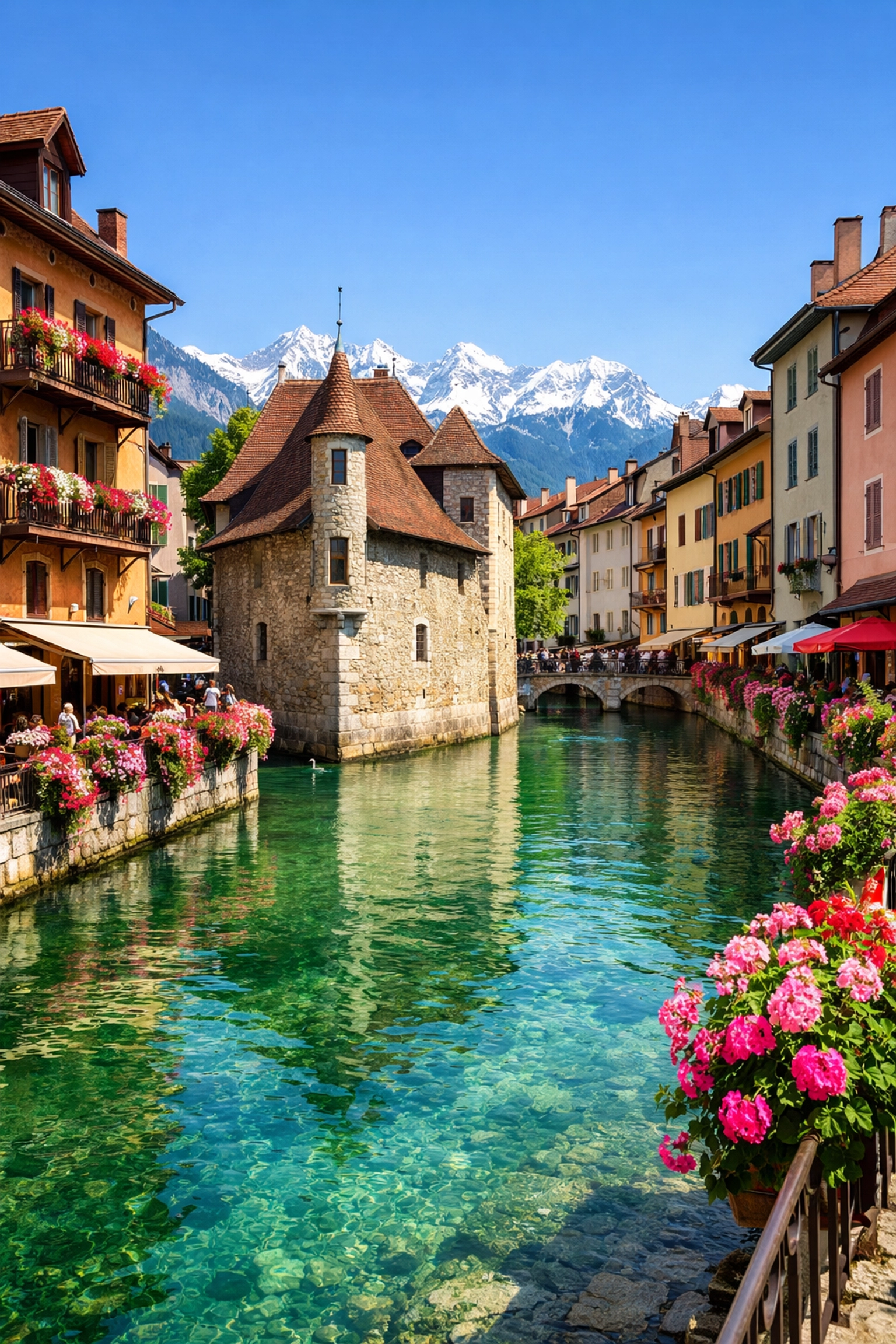
• [HERO] Travel Habits That Instantly Make a Trip Smoother

    You know what separates the frazzled airport sprinter from the calm, collected traveler sipping an Americano at Gate 37? It’s not luck. It’s not money. It’s not some secret travel gene passed down through generations of jet-setters.

    It’s habits.

    The truth is, smooth travel isn’t something that happens to you. It’s something you create through a series of small, intentional choices that compound into an entirely different travel experience. While everyone else is white-knuckling their way through security, sweating through their shirt at baggage claim, or desperately trying to find their hotel confirmation email at 2 AM in a foreign country, you’re gliding through like you’ve done this a thousand times.

    Because, well, you have. And you’ve built the habits to prove it.

    Let’s talk about the travel habits that instantly, and I mean instantly, transform your trip from a stress-inducing ordeal into the smooth, premium experience you actually paid for.

    The “Pro” Mindset: Travel Like You’ve Been There Before

    Here’s the thing about professional travelers, the flight attendants, pilots, travel agents, and road warriors who rack up hundreds of thousands of miles per year: they don’t stress about travel. Not because they’re superhuman, but because they’ve systematized the chaos.

    They know that smooth travel is 80% preparation and 20% adaptability. They know that the person who shows up at the airport two hours early with their boarding pass downloaded, their liquids already in a clear bag, and their important documents in the same pocket every single time is going to have a fundamentally different experience than the person frantically searching for their passport while their family waits in an increasingly angry line behind them.

    The pro mindset means treating travel like a skill you’re developing, not a gauntlet you’re surviving. It means recognizing patterns. It means building systems. And most importantly, it means understanding that the goal isn’t just to “get there”, the goal is to arrive in a mental and physical state where you can actually enjoy your vacation.

    Because what’s the point of spending thousands of dollars on a premium vacation if you arrive exhausted, irritated, and already needing a vacation from your vacation?

    The 24-Hour Rule: The Day Before Changes Everything

    The single most underrated habit in all of travel? What you do in the 24 hours before you leave.

    This is your dress rehearsal. Your final prep. Your moment to close all the loops that will otherwise haunt you at 35,000 feet when you suddenly realize you forgot to tell your bank you’re traveling internationally and your card is about to get frozen the moment you try to buy that first gelato in Rome.

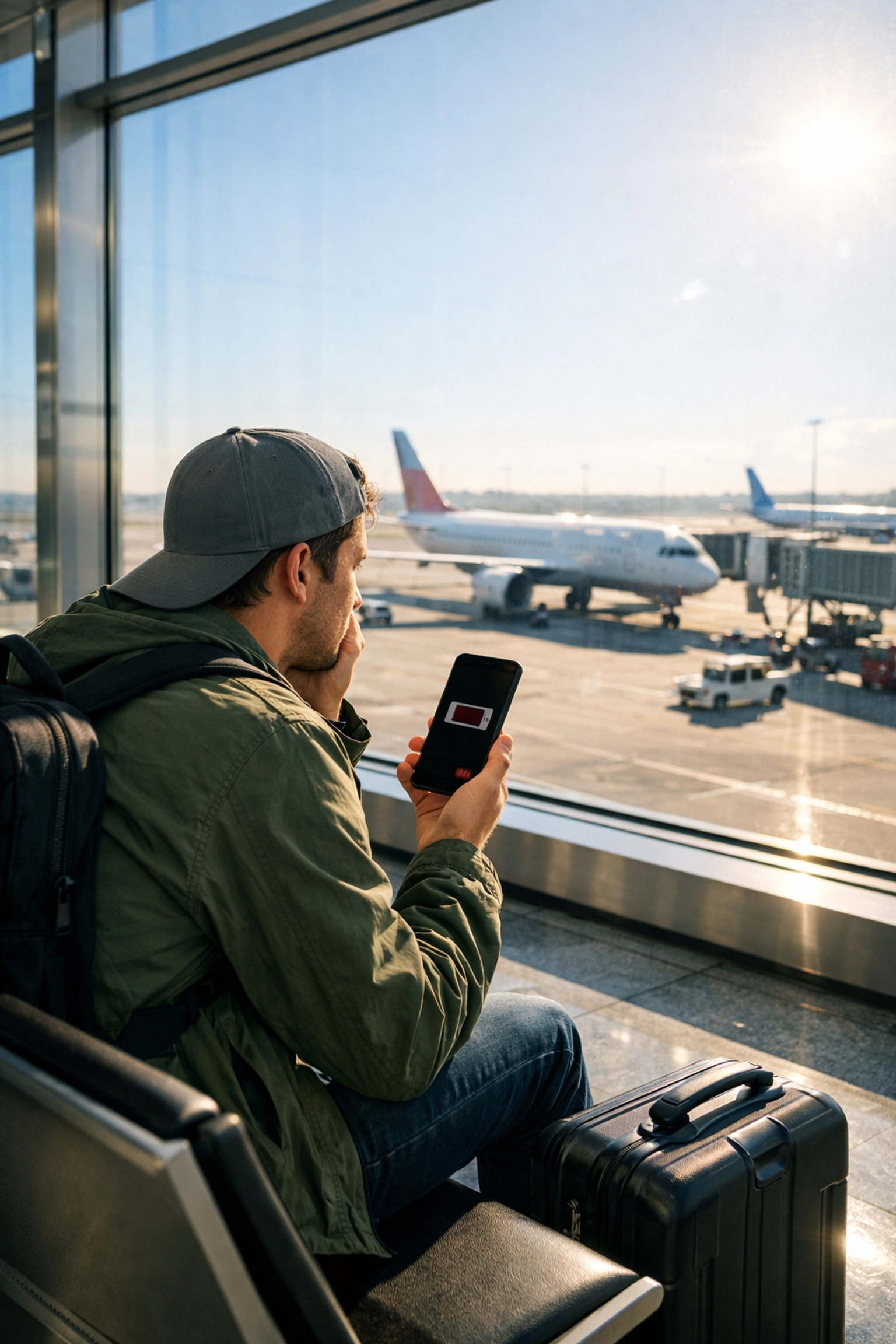
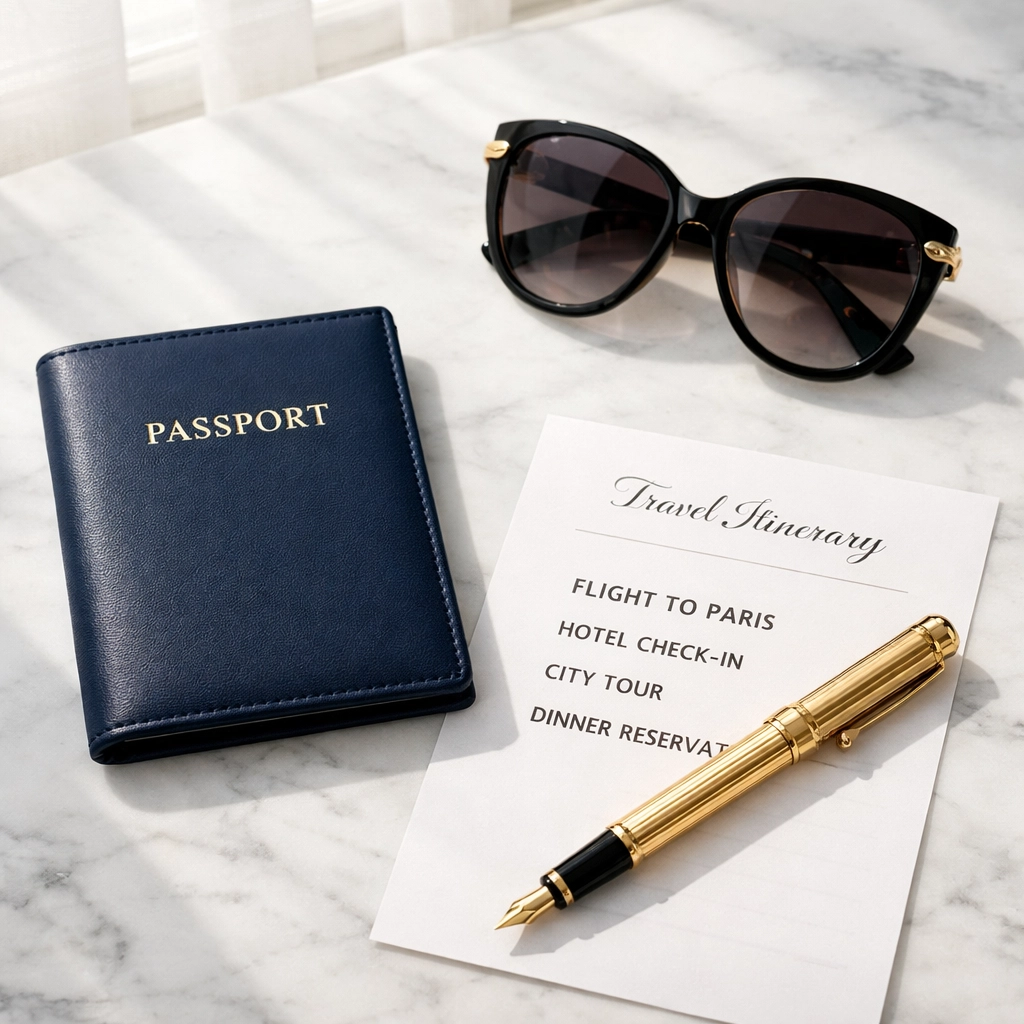
    Organized travel preparation checklist with passport, boarding pass, and essential documents on table

    Here’s your 24-hour checklist, and yes, you should actually make this a checklist:

    Check in online. As soon as that 24-hour window opens, check in. Choose your seat if you haven’t already. Download your boarding pass to your phone AND screenshot it and save it to your photos. Why both? Because apps crash, phones die, and Murphy’s Law is very real at airports.

    Download offline maps. Google Maps lets you download entire city maps for offline use. Do this while you’re still on WiFi. There’s nothing quite like the panic of trying to navigate a foreign city with no data and no map, watching your Uber driver get increasingly frustrated with your inability to provide coherent directions.

    Do the purse/wallet purge. Empty your wallet and bag completely. Remove every membership card, every receipt, every random business card from that networking event six months ago. Take out that gym membership card (you’re not going to the gym on vacation). Remove anything with sensitive information you don’t absolutely need. What you’re left with: one credit card, one backup card, your ID, your insurance cards, and cash. That’s it. This single habit will save you so much anxiety if something gets lost or stolen.

    Prep your “left behind” essentials. Set out your phone charger, your toothbrush, your medications, anything you’ll need right up until you leave. Put them in a specific spot. Take a photo of that spot. Seriously. The number of people who leave their phone charger on the bathroom counter because they used it “one last time” before leaving is astronomical.

    Set up your out-of-office and alerts. Let your bank know you’re traveling. Set your email out-of-office. Update your emergency contact about your travel dates. Put your mail on hold. These tiny administrative tasks take 20 minutes total but prevent dozens of small crises.

    Pre-pack your day-of bag. Pack a small bag with everything you’ll need for travel day itself: headphones, a book, snacks, gum, hand sanitizer, a pen (customs forms, people!), and a lightweight jacket or scarf. This is separate from your carry-on. This is your “I need this within arm’s reach” bag.

    The 24-hour rule isn’t about being paranoid. It’s about creating a buffer of preparation that means you’re solving problems when they’re still hypothetical, not when they’re actively ruining your day.

    The Carry-On Habit: Less Really Is More

    Look, I get it. The instinct to pack for every possible scenario is strong. What if it’s cold? What if it’s hot? What if we go somewhere fancy? What if we go hiking? What if I need three different shoe options for various levels of walkability?

    But here’s what I learned on my trip to Las Vegas with my family: forcing everyone to do carry-on only was one of the best travel decisions I’ve ever made. Yes, there was complaining. Yes, there was strategic packing Tetris happening in our living room the night before. Yes, my wife gave me that look that said “this better be worth it.”

    It was worth it.

    We walked off that plane, straight past baggage claim while everyone else stood there like zombies watching the carousel go round and round, waiting for their oversized suitcases to appear. We didn’t have to drag massive luggage through the casino floor. We didn’t have to wait for bellhops. We didn’t have to coordinate who had which bag. We just… moved.

    And here’s the secret: you don’t actually need as much stuff as you think you do. Hotels have shampoo. You can buy sunscreen when you get there. You can wear jeans twice (don’t @ me). The mental freedom of traveling light is worth more than having the perfect outfit for every occasion.

    The carry-on habit creates mental space. It forces prioritization. It makes you more adaptable. And most importantly, it keeps you nimble. Want to grab dinner across town? No problem, you’re not tethered to your luggage. Want to make a last-minute excursion? Easy, you can just go.

    Pack half of what you think you need. Then remove two more items. You’ll be fine. Better than fine, actually.

    The “Digital Twin” Habit: Your Backup Brain in the Cloud

    Imagine this nightmare scenario: you’re in a foreign country. Your bag gets stolen. Inside that bag? Your passport, your wallet, your phone, your hotel confirmation, and your return ticket information. You’re suddenly dealing with embassy visits, credit card cancellations, and trying to prove your identity with literally nothing.

    Now imagine that same scenario, but you have digital copies of everything stored in a secure cloud folder that you can access from any device, anywhere in the world. Suddenly, a crisis becomes an inconvenience.

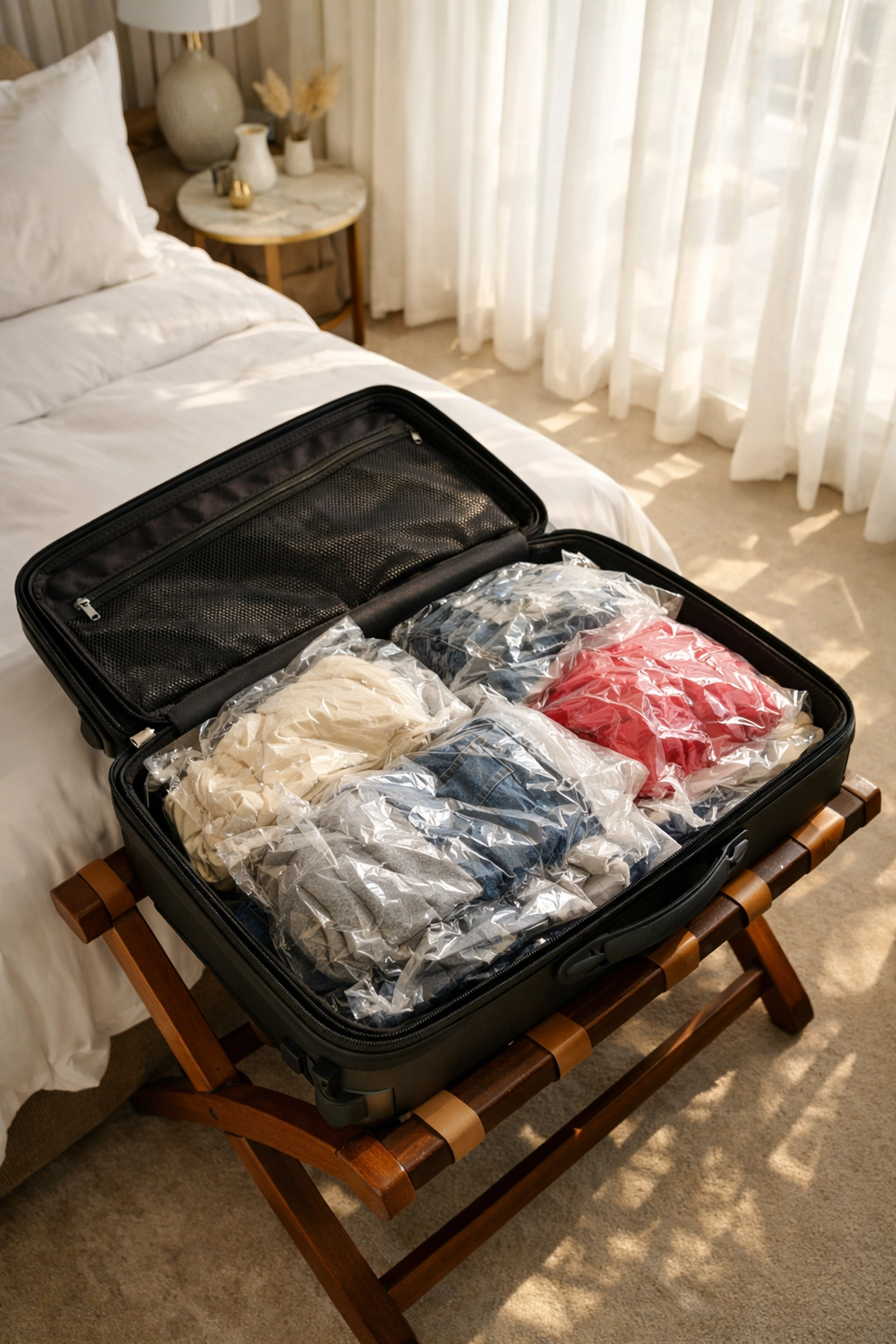
    Carry-on suitcase with organized packing cubes in sunlit hotel room for minimalist travel

    Create a “Travel Docs” folder in your cloud storage of choice: Google Drive, Dropbox, iCloud, whatever you trust. In this folder, store PDFs or photos of:

    • Your passport (photo page)
    • Your driver’s license
    • Your credit cards (front and back)
    • Your insurance cards (health, travel, car)
    • Your prescriptions
    • Your hotel confirmations
    • Your flight confirmations and ticket numbers
    • Your emergency contacts list
    • Your doctor’s contact information

    This is your digital twin. Your backup brain. Your “oh crap” insurance policy.

    And here’s the pro move: also email this folder to yourself. That way, even if you somehow can’t access your cloud storage, you can access your email from literally any device on the planet. Internet café in Morocco? Hotel business center in Tokyo? Your digital twin is there, waiting.

    This habit takes 30 minutes to set up once and then maybe 5 minutes to update before each trip. It’s one of those things that seems paranoid until the moment you need it, and then it’s the most valuable thing you’ve ever done.

    Buffer Time as a Luxury: Stop Rushing, Start Living

    You know what’s not luxurious? Sprinting through an airport. Speed-walking through security with your shoes half-on, your laptop hanging out of your bag, and your boarding pass clenched between your teeth because you forgot you’d need three hands for this entire operation.

    You know what is luxurious? Having time.

    Time to get a coffee. Time to browse the bookstore. Time to use the bathroom without calculating whether you have enough minutes to make your gate. Time to sit down, take a breath, and mentally transition into vacation mode before you even board the plane.

    Buffer time is the ultimate luxury habit, and it costs you nothing but a mindset shift.

    For domestic flights, arrive two hours early. For international flights, three hours. I can hear you already: “But that’s so much extra time!” Exactly. That’s the point. That extra time is your insurance policy against traffic, long security lines, gate changes, and the general chaos of modern air travel.

    But more than that, it’s your gift to yourself. It’s saying, “I value my peace of mind more than I value those extra 45 minutes of sleep.” It’s recognizing that the trip starts the moment you leave your house, not when you land at your destination.

    Build buffer time into everything. Hotel checkout at 11 AM? Plan to leave by 10:30. Dinner reservation at 7 PM? Leave your hotel at 6:15, not 6:45. Tour starts at 9 AM? Be in the lobby at 8:45.

    Rushing is the enemy of premium experiences. Buffer time is the secret weapon of people who actually look relaxed on vacation.

    The Arrival Ritual: First Impressions Matter

    You’ve landed. You’ve made it. Now what?

    Most people stumble off the plane, wander around the airport looking for signs they can barely read because jet lag is already setting in, stand in a taxi line for 40 minutes, have a minor argument with their travel companion about which hotel they’re actually staying at, and finally collapse into their room in a state of exhausted confusion.

    Professionals have an arrival ritual.

    Pre-book your airport transfer. Whether it’s a private car, a shared shuttle, or even just researching the best public transit route beforehand, know exactly how you’re getting from the airport to your hotel before you land. Standing in a taxi line in a foreign country while exhausted is not the time to start figuring out transportation logistics.

    Have your hotel address and confirmation readily accessible. Not just in your email: screenshot it, save it to your photos, and be able to show it to anyone who asks without needing to dig through your inbox with spotty airport WiFi.

    Follow the “first meal” strategy. Before you collapse into your hotel bed for a “quick nap” (that will definitely turn into a four-hour confusion spiral that ruins your sleep schedule for the entire trip), get food. Real food. Sit down somewhere, order a meal, and eat it slowly. This serves two purposes: it helps with jet lag adjustment, and it forces you to stay awake and engage with your destination while your body still has that travel adrenaline.

    Do the immediate unpack. You don’t have to organize your entire suitcase, but take 10 minutes to hang up anything that wrinkles, put your toiletries in the bathroom, plug in your devices, and set out tomorrow’s outfit. This small ritual transforms your hotel room from a temporary storage unit into an actual home base.

    Take the welcome walk. Even if you’re exhausted, even if it’s just around the block, walk outside. Find the nearest convenience store. Locate a coffee shop for tomorrow morning. Get your bearings. This 15-minute investment in spatial awareness will make the entire rest of your trip smoother.

    The arrival ritual isn’t about being type-A or obsessively organized. It’s about setting yourself up for success by handling the basics while you still have energy, so that when jet lag hits, you’re already settled and oriented.

    Jet Lag Jiu-Jitsu: Time Zone Domination

    Let’s talk about the silent vacation killer: jet lag. You’ve spent thousands of dollars, planned for months, and now you’re spending the first three days of your trip in a fog, falling asleep at dinner, and waking up at 3 AM staring at the ceiling.

    Laptop displaying organized cloud folder with digital copies of passport and travel documents

    Jet lag is real, but it’s not insurmountable. The key is treating it like an opponent you can strategically defeat rather than an inevitable condition you must endure.

    Start adjusting before you leave. If you’re traveling east, start going to bed an hour earlier each night for three nights before your trip. If you’re traveling west, stay up an hour later. This pre-adjustment makes the actual time change less jarring.

    Stay hydrated: but do it right. Here’s something most people don’t know: chugging a bottle of water all at once doesn’t hydrate you nearly as well as sipping water consistently throughout your flight. Your body can only absorb so much at once. Set a reminder on your phone to drink water every 30 minutes during your flight. Small sips, constant hydration. This prevents headaches, blood sugar swings, and that overall “feeling like garbage” sensation that comes with air travel.

    Move your body constantly. Set a stretch timer every 1-2 hours during the flight. Roll your wrists, flex your ankles, shrug your shoulders. During bathroom breaks, do standing quad stretches or toe raises. Pack a small massage ball and roll it under your feet and shoulders. This increases blood flow and prevents that stiff, achy feeling that makes jet lag worse.

    Wear compression socks. They look dorky. They feel weird at first. They also prevent the puffiness, leg cramps, and painful swelling that accumulate after hours of sitting. Professionals swear by them for a reason.

    Use light strategically. Light is the most powerful tool for adjusting your circadian rhythm. When you arrive, if it’s daytime, stay outside. Get as much natural sunlight as possible. If it’s nighttime, avoid screens and keep lights dim. Your body needs clear signals about what time zone you’re in now.

    The caffeine and alcohol rule. Limit both during travel. They both dehydrate you, which makes jet lag worse. If you need caffeine, have it strategically: a morning coffee at your destination’s local morning time, not scattered throughout your travel day.

    The power of protein and movement. Start your day at your destination with a protein-rich breakfast: eggs, yogurt, something substantial. Then move. Walk. Explore. Do light activity. This combination of protein and movement signals to your body that it’s morning and time to be awake, regardless of what your confused internal clock is telling you.

    Jet lag jiu-jitsu isn’t about fighting against your body: it’s about using strategic habits to help your body adjust as quickly as possible.

    The Ground Game: Small Habits That Compound

    Beyond the major habits, there are dozens of tiny practices that professional travelers use to make everything smoother. These are the 1% improvements that add up to a completely different experience:

    Always pack a pen. Customs forms, immigration documents, that random survey they hand out on the plane: you’ll need a pen. Don’t be the person asking everyone around you if they have one.

    Keep a small amount of local currency in your wallet. Even if you’re mostly using cards, having $20-40 in local cash solves so many small problems: tips, street food, that bathroom that requires coins, the taxi driver who “doesn’t take cards.”

    Take a photo of where you parked. At the airport. At the rental car return. Everywhere. You will not remember. Your phone’s camera has GPS data: use it.

    Screenshot everything important. Boarding passes, hotel confirmations, restaurant reservations, important addresses. Screenshot them all and save them to your photos. No WiFi required, no app crashes, no problems.

    The morning meditation habit. Even five minutes. Before the chaos of travel starts, before you start checking email and diving into logistics, sit quietly for five minutes. Breathe. Ground yourself. Remind yourself what this trip is actually about. This simple habit sets the tone for your entire day.

    The “one nice thing” rule. Every travel day, budget for one small luxury that makes you feel good. A nice coffee. A magazine at the airport. A pastry at a local bakery. These tiny moments of pleasure transform travel from survival mode into vacation mode.

    Stay connected with yourself. Journal for five minutes before bed. What went well today? What do you want to do tomorrow? What are you grateful for? This practice keeps you present and intentional rather than just checking boxes on an itinerary.

    The Ultimate Habit: Let Someone Else Handle the Heavy Lifting

    Here’s the truth that nobody wants to admit: the smoothest travel experience is the one where you don’t have to think about most of this stuff because someone else is handling it for you.

    I’m talking about working with an actual travel agency. Not a faceless booking algorithm. Not a “travel assistant” chatbot. A real human being who understands what smooth travel actually means and who can build those habits into your itinerary before you even think about them.

    At Time For Your Vacation, this is literally what we do all day, every day. We’re thinking about buffer time while you’re still thinking about where you want to go. We’re coordinating airport transfers while you’re looking at hotel photos. We’re building backup plans while you’re daydreaming about your vacation.

    We know which airlines have the best track records for on-time departures. We know which hotels will actually honor your early check-in request. We know which tour companies will pick you up late if your flight is delayed. We know these things because we’ve done this thousands of times, and we’ve built the systems and relationships that turn potential chaos into smooth execution.

    The best travel habit you can develop? Recognizing that your time and peace of mind are valuable enough to delegate the complexity to someone who does this professionally.

    Your Smoother Trip Starts Now

    Smooth travel isn’t mystical. It’s not about being born lucky or having unlimited resources. It’s about developing a series of intentional habits that compound into an entirely different experience.

    Start with one habit from this list. Maybe it’s the 24-hour rule. Maybe it’s building in more buffer time. Maybe it’s finally creating that digital twin folder you’ve been meaning to set up for years.

    Pick one. Master it. Make it automatic. Then add another.

    Because here’s what happens when you stack these habits: you stop surviving travel and start enjoying it. You arrive at your destination energized instead of exhausted. You spend less time dealing with problems and more time actually being on vacation. You become that person: the calm, collected traveler who makes it look easy because, through habits, it actually is.

    Your next trip is waiting. Make it smoother.


    Ready to travel smarter? Visit us at www.TimeForYourVacation.com to start planning your smoothest trip yet. Looking for insider travel tips and destination guides? Check out www.DaveTheTourGuide.com for expert advice from someone who’s been there. Want more travel wisdom delivered regularly? Head to www.TimeForYourVacation.blog for weekly insights that’ll transform how you travel.

    And if you’re the podcast type, catch our latest episodes at https://www.podomatic.com/podcasts/contact24682 where we dive deep into the travel strategies that actually work.

  • [HERO] 25 Must-Have Travel Gadgets for the Modern Luxury Traveler

    The Well-Equipped Traveler’s Philosophy

    Let’s get one thing straight from the jump: Gadgets should solve problems, not create them.

    You know the type. The traveler who shows up at TSA with seventeen dongles, four different charging systems they can’t remember how to use, and a “smart” suitcase that’s somehow dumber than a regular bag. They’re stressed. They’re fumbling. They’re holding up the line while trying to figure out which adapter works in which country.

    That’s not you. That’s not luxury travel.

    The modern luxury traveler moves through airports like water: smooth, efficient, completely unbothered. Your gadgets work seamlessly in the background, solving problems before they become problems. You’re sipping champagne in the lounge while everyone else is panicking about dead phone batteries and lost luggage.

    I learned this the hard way on a Vegas trip where I forced my entire family to go carry-on only. The resistance was real. The “but what if” scenarios were endless. But you know what? Walking past that luggage carousel while everyone else played the baggage claim lottery? That was freedom. That was the moment they got it.

    The right gadgets make that freedom possible. They compress your packing. They keep you connected. They turn a cramped economy seat into something almost bearable and a business class pod into a floating sanctuary.

    Here’s the thing: When you book with Time For Your Vacation, we handle the big stuff: the flights, the hotels, the experiences that’ll make your friends jealous on Instagram. But these gadgets? These are your secret weapons for making every moment between those experiences just as smooth.

    Let’s dive into the 25 essentials that separate the pros from the amateurs.

    Essential travel tech gadgets including power banks, charging cables, and wireless earbuds arranged neatly

    Tech & Connectivity: Stay Powered, Stay Connected

    1. Anker MagGo Power Bank

    Why you need it: Your phone dies at 3% battery just as you’re pulling up your hotel confirmation. We’ve all been there. This magnetic power bank clicks directly onto your iPhone and charges while you’re using it: no cables dangling, no fumbling in your bag.

    Luxury tip: Keep one in your day bag and one in your carry-on. Battery anxiety is for peasants.

    2. Solis Global WiFi Hotspot

    Why you need it: Hotel WiFi is a lie. Airport WiFi is a cruel joke. This device gives you blazing-fast 5G in over 135 countries with a lifetime data plan. No SIM swapping. No ridiculous roaming charges from your carrier.

    Luxury tip: Share the connection with your travel companions and become the hero of the trip. They’ll never question your gadget obsession again.

    3. Tumi Universal Travel Adapter

    Why you need it: Because plug configurations are the universe’s way of reminding us that global standardization is a myth. This sleek adapter works in over 150 countries and includes USB and USB-C ports so you’re not choosing between charging your phone or your laptop.

    Luxury tip: The Tumi branding alone elevates this from “travel necessity” to “I know what I’m doing” status symbol.

    4. Anker Nano Travel Adapter

    Why you need it: Smaller than the Tumi but just as capable. This is your backup adapter, the one that lives in your jacket pocket for those surprise coffee shop work sessions in Barcelona.

    Luxury tip: Give one to your travel partner on day one. They’ll pretend they didn’t need it, but they absolutely did.

    5. STM ChargeTree Go

    Why you need it: This foldable charging station powers your phone, Apple Watch, and AirPods simultaneously. It collapses flat, which means it actually fits in your carry-on without taking up the space of a hardcover book.

    Luxury tip: Set this up on your hotel nightstand immediately upon arrival. It’s the travel equivalent of hanging up your clothes: it signals you’re not just passing through, you’re inhabiting the space.

    6. Rolling Square Supertiny 65W GaN Charger

    Why you need it: Most laptop chargers are unnecessarily massive. This tiny cube delivers the same 65W power in a package small enough to lose in your toiletry bag. GaN technology is wizardry, basically.

    Luxury tip: This is your laptop charger now. Throw away that brick your computer came with. You’re welcome.

    7. AirFly Headphone Adapter

    Why you need it: In-flight entertainment systems are stuck in 2005 with their wired headphone jacks. This Bluetooth adapter lets you use your premium wireless headphones with their ancient systems. Suddenly that 12-hour flight becomes bearable.

    Luxury tip: Pair it with your Bose QuietComfort earbuds (coming up next) and you’ll completely forget you’re surrounded by 200 other humans.

    Comfort: Because You’re Not a Pack Mule

    8. Bose QuietComfort Ultra Earbuds

    Why you need it: Six hours of battery life. Market-leading noise cancellation. The ability to completely tune out the crying baby in row 23. These aren’t just earbuds: they’re a force field.

    Luxury tip: Enable transparency mode during takeoff and landing so you can hear important announcements without removing them. Flight attendants appreciate travelers who aren’t constantly asking them to repeat things.

    9. Cabeau Evolution S3 Travel Pillow

    Why you need it: Most neck pillows are theater props: they look supportive but deliver nothing. This one actually cradles your head in an upright position without making you look like you’re wearing a pool toy.

    Luxury tip: Clip it to your carry-on when you’re not using it. Walking through the airport with it around your neck broadcasts amateur status.

    10. Alaska Bear Silk Sleep Mask

    Why you need it: Hotel blackout curtains are a suggestion, not a guarantee. This silk mask blocks every photon while feeling like a cloud against your face. It’s also slightly adjustable, so it won’t mess up your hair (or your partner’s).

    Luxury tip: Pack two: one for you, one for your significant other when they inevitably “forget” theirs.

    Luxury airplane seat with travel comfort accessories including silk sleep mask and noise-canceling earbuds

    11. LectroFan Micro2 White Noise Machine

    Why you need it: Hotel rooms have acoustics designed by chaos agents. This palm-sized device generates white noise and functions as a Bluetooth speaker. The hallway conversation at 2 AM? Gone. The ice machine that sounds like an avalanche? Vanquished.

    Luxury tip: Place it near the door, not on your nightstand. Physics works in your favor when the sound source is closer to the noise you’re blocking.

    Organization: Where Everything Lives

    12. Eagle Creek Compression Packing Cubes

    Why you need it: These aren’t just cubes: they’re suitcase Tetris champions. The compression zippers squeeze your clothes down to half their volume. I fit four days’ worth of Vegas outfits in a carry-on using these. My family thought I was insane until they saw the results.

    Luxury tip: Use different colors for different categories. Blue for shirts, red for pants. You’ll never dig through your entire suitcase looking for one specific item again.

    13. Bellroy Tech Kit

    Why you need it: All those cables, adapters, and dongles need a home that isn’t “the bottom of your bag where they turn into a rat’s nest.” This sleek organizer has dedicated slots and elastic loops that keep everything accessible.

    Luxury tip: Pack this in your personal item, not your carry-on. When you need a charging cable mid-flight, you want it within arm’s reach, not in the overhead bin.

    14. Vaultskin Manhattan RFID Wallet

    Why you need it: Italian leather. RFID protection against digital pickpockets. Slim enough to disappear in your front pocket. This wallet telegraphs “I travel frequently” without screaming it.

    Luxury tip: Keep only the cards you’ll actually need for the trip. Your Costco membership can stay home.

    15. KeySmart Urban Union Passport Wallet

    Why you need it: Your passport deserves better than being jammed into a random pocket. This slim wallet holds your passport, cards, and even has a pen loop for those immigration forms you inevitably forget about until the last minute.

    Luxury tip: Pair this with the Vaultskin wallet and keep them in separate bags. If one gets lifted, you’re not completely stranded.

    Security & Tracking: Peace of Mind

    16. AirBolt Smart Travel Lock

    Why you need it: TSA-approved locks with 128-bit encryption that you open with your phone. No more forgetting combinations or fumbling with tiny keys at 6 AM.

    Luxury tip: Share access with your travel partner through the app. When they inevitably need something from your suitcase, you’re not scrambling to remember the code.

    17. Knog Smart Luggage Tag

    Why you need it: This isn’t your grandpa’s paper tag that falls off after one flight. It’s a rechargeable smart tag with an 85dB alarm and location tracking. When your bag decides to vacation in Prague while you’re in Paris, you’ll know immediately.

    Luxury tip: The alarm is motion-sensitive. If someone grabs your bag at baggage claim, everyone will know. Including that someone.

    18. Apple AirTag (Multiple)

    Why you need it: Slip these in your luggage, your day bag, your camera case. The Find My network turns every iPhone user into an unwitting member of your personal security team.

    Luxury tip: Attach one to your car keys before you leave for the trip. Coming home to discover you can’t remember where you parked at the airport is a special kind of hell.

    Organized suitcase with compression packing cubes, tech organizer, and RFID passport wallet on hotel bed

    19. Tile Slim Tracker

    Why you need it: Thinner than two credit cards stacked together. Slides into your wallet, your passport holder, anywhere you need backup location tracking. Works alongside your AirTags because redundancy isn’t paranoia: it’s preparation.

    Luxury tip: The community find feature means even if you’re in an Android-heavy area, you’ve got coverage.

    Photography & Memories: Capture Everything

    20. DJI Mini 4 Pro Drone

    Why you need it: This foldable drone captures 4K video and fits in your jacket pocket. Those Instagram shots that make people ask “how did you get that angle?” This is how.

    Luxury tip: Check local drone regulations before you fly. Some countries and hotels have restrictions. Breaking them isn’t the luxury experience you’re after.

    21. DJI Osmo Mobile 6 Gimbal

    Why you need it: Shaky phone videos are for amateurs. This smartphone gimbal delivers Hollywood-smooth footage whether you’re walking through Marrakech markets or capturing sunset from your overwater bungalow.

    Luxury tip: Use the gimbal’s follow mode for walking shots. It’s the difference between “vacation video” and “travel documentary.”

    Utility: The Problem Solvers

    22. Conair Compact Luggage Scale

    Why you need it: Overweight baggage fees are the travel equivalent of parking tickets: expensive, embarrassing, and completely avoidable. This digital scale weighs your bag before you leave the hotel.

    Luxury tip: Check your bag on day one before you start shopping. Knowing you have 15 pounds of cushion makes those leather jacket purchases guilt-free.

    23. LARQ Self-Cleaning Water Bottle

    Why you need it: UV-C light purifies the water and the bottle itself every two hours. Fill it from any tap worldwide (within reason: we’re not testing it in the Ganges) and drink confidently.

    Luxury tip: The insulated version keeps drinks cold for 24 hours. Perfect for those beach days when the resort charges $8 for bottled water.

    24. Hydaway Collapsible Water Bottle

    Why you need it: When you don’t need the high-tech purification of the LARQ, you need something that disappears when empty. This collapses to the size of a hockey puck.

    Luxury tip: Keep it in your day bag for those unexpected hikes or walking tours. Staying hydrated is the difference between enjoying Santorini and surviving Santorini.

    25. Kobo Libra Color E-Reader

    Why you need it: Books are heavy. This e-reader holds thousands of them in a package lighter than a single paperback. The color display makes magazines and graphic novels viable. Plus podcasts and audiobooks for when your eyes need a rest.

    Luxury tip: Load it up before you leave. Airport WiFi and international data plans don’t play nice with large downloads. Your future self will thank present self for this foresight.

    The Carry-On Philosophy Revisited

    Remember that Vegas trip? The one where I forced my family into carry-on only status? These gadgets made it possible.

    The compression cubes gave us the space. The multi-device chargers meant we didn’t need to pack five different charging systems. The collapsible water bottle saved space and money. The smart luggage tags meant we weren’t paranoid about the airline losing our only bags.

    But here’s the truth: Whether you’re a carry-on evangelist or a checked bag loyalist, these gadgets work. They just scale differently.

    Carry-on only? You’re maximizing every cubic inch with compression cubes and prioritizing multi-function gadgets like the ChargeTree Go.

    Checking bags? You’ve got room for the full-sized gimbal, the drone with extra batteries, maybe even a portable speaker for the hotel room.

    The philosophy doesn’t change. Gadgets should solve problems, not create them. They should make you more free, not more encumbered. They should fade into the background of your trip, working silently so you can focus on what matters: the experience itself.

    How This Pairs with Your Luxury Travel Planning

    When you work with Time For Your Vacation, we’re orchestrating the big picture: the flights that actually arrive on time, the hotels that exceed expectations, the experiences that become the stories you tell for years.

    These gadgets handle the spaces between. They’re your co-pilots for the journey itself.

    That villa in Tuscany we booked for you? Your Solis hotspot keeps you connected for the work calls you can’t avoid. Your white noise machine ensures the Mediterranean breeze through open windows doesn’t keep you up. Your drone captures footage of the rolling hills that makes your friends question their life choices.

    That safari in Tanzania? Your power banks keep your camera charged for the entire game drive. Your compression cubes mean you packed appropriate layers without needing a second bag. Your LARQ bottle keeps you hydrated without worrying about water quality.

    The experiences we plan are extraordinary. These gadgets ensure nothing between those moments diminishes them. No dead batteries during the sunset you’ve traveled 6,000 miles to witness. No luggage anxiety because you know exactly where your bag is. No connectivity panic because you’ve got your own personal 5G network.

    This is luxury travel in 2026. It’s not just about where you go: it’s about how smoothly you get there and back.

    The Bottom Line

    Twenty-five gadgets. Five categories. One philosophy: Make travel effortless.

    You don’t need all of these. But you need the right combination for your travel style. The minimalist carry-on warrior has different needs than the maximalist who checks bags with confidence. The digital nomad working from Bali beaches prioritizes differently than the unplugged vacationer seeking complete disconnection.

    Start with the essentials: power banks, universal adapters, packing cubes, and tracking devices. Build from there based on your weak points. If you always forget to charge your devices, add the ChargeTree Go. If you’re sensitive to noise, the white noise machine is non-negotiable. If you’re documenting every moment, invest in the gimbal and drone.

    The goal isn’t to own every gadget. It’s to eliminate friction. To move through airports and hotels and cities with the confidence that comes from being properly equipped. To spend your mental energy on choosing which wine to order with dinner, not whether your phone will last until you find a charger.

    That’s the difference between a trip and a vacation. Between surviving travel and savoring it.

    And when you’re ready to plan that next adventure: the one where you’ll actually use half these gadgets for the first time: we’re here. Time For Your Vacation doesn’t just book trips. We create the conditions for perfect vacations. You bring the gadgets. We’ll bring the destinations worth capturing with them.


    Ready to plan your next adventure? Visit us at www.TimeForYourVacation.com for personalized travel planning that turns trips into experiences.

    Want more travel insights and tips? Check out www.TimeForYourVacation.blog for our latest posts, or explore guided experiences at www.DaveTheTourGuide.com.

    You can also tune into our podcast for travel stories, destination deep-dives, and insider tips: https://www.podomatic.com/podcasts/contact24682

    Safe travels, smart packing, and remember( gadgets should solve problems, not create them.) ✈️

  • [HERO] Carry-On Only: Freedom or Foolishness?

    You’re standing at baggage claim. You’re watching that carousel spin. You’re checking your watch for the third time in five minutes. You’re realizing your “quick weekend getaway” just added forty-five minutes to your travel time because someone in Minneapolis decided your roller bag needed to take a detour through Denver.

    I recently made a executive decision for my family trip to Las Vegas. Carry-on only. No exceptions. No negotiations. My wife looked at me like I’d suggested we hitchhike there. My kids thought I’d lost my mind. But I was determined to prove a point about travel freedom.

    Spoiler alert: I was mostly right. But the journey to that victory had some hilariously humbling moments.

    The Great Las Vegas Experiment

    Las Vegas is the ultimate testing ground for the carry-on-only philosophy. You’re talking about a destination where the casino floors are so massive you could train for a marathon just walking from your room to the breakfast buffet. The last thing you want is to drag a seventy-pound checked bag across the MGM Grand while desperately searching for those slot machines that supposedly have the “loosest” odds.

    We landed at Harry Reid International. We walked straight past baggage claim while other travelers crowded around that hypnotic carousel like it was a roulette wheel. We were in our Uber before most people had even spotted their first suitcase. That moment? That feeling of nimble superiority? Pure travel gold.

    No waiting. No worrying about whether your bag made the connection. No dragging heavy luggage through a maze of slot machines and tipsy tourists. We were mobile. We were light. We were free.

    Carry-on suitcase at airport terminal highlighting travel freedom and mobility

    And here’s something nobody tells you about Vegas: hotels are massive labyrinths designed to keep you walking past temptation. Your room is never close to anything. The pool requires a fifteen-minute journey through the casino. The restaurant you booked for dinner is in an entirely different tower. When you’re carrying a small roller bag instead of wrestling with a massive suitcase, you suddenly feel like you’ve unlocked a secret level of the game.

    We hopped between hotels to check out different pools. We spontaneously decided to grab dinner at a restaurant across the Strip without that dreaded internal calculation: “Is it worth dragging our luggage there?” We were untethered from the burden of baggage.

    But let me be honest. My family didn’t immediately appreciate my genius.

    The Freedom Side: Why Carry-On Converts Become Evangelical

    Carry-on-only travel creates a specific type of traveler. You become efficient. You become decisive. You become someone who understands that freedom isn’t about having every option available, it’s about moving through the world without friction.

    Your bags stay with you always. There’s genuine peace of mind knowing your belongings are within arm’s reach. You never experience that sinking feeling when the airline announces your checked bag decided to vacation in a different city. You never stand at customer service filing a lost luggage claim while everyone else is already sipping piña coladas by the pool.

    You skip lines that other travelers don’t even realize exist. Check-in becomes a breeze when you’re not waiting to hand off your suitcase. You can often use self-service kiosks or mobile boarding passes and walk straight to security. At your destination, you’re the first person out of the airport. While others are playing the baggage claim lottery, you’re already in your rental car or taxi, windows down, vacation mode fully activated.

    The cost savings are real. Budget airlines charge obscene fees for checked bags, sometimes more than the ticket itself. Spirit Airlines will charge you up to sixty dollars each way for a checked bag. That’s potentially one hundred twenty dollars added to a “cheap” flight. Multiply that by a family of four, and you’ve just paid for an entire extra vacation day in baggage fees alone.

    But here’s the psychological benefit nobody talks about: packing light forces you to be intentional. You can’t just throw everything into a suitcase “just in case.” You make real decisions about what matters. You prioritize. You discover that you don’t actually need seven pairs of shoes for a four-day trip.

    This minimalist approach extends beyond your luggage. When you’re not weighed down by possessions, you move differently through your destination. You walk more. You explore neighborhoods on foot. You take public transportation instead of expensive taxis because you’re not hauling seventy pounds of “essentials.”

    You become the kind of traveler who can pivot. Flight canceled? No problem, you’re not waiting at customer service to reroute your checked bag. Found a better hotel deal across town? You can switch without coordinating a luggage transfer. Want to take a spontaneous day trip? You’re ready in five minutes.

    Organized carry-on luggage with packing cubes and travel essentials

    There’s a certain swagger that comes with walking through an airport with just a backpack or small roller bag. You’re not that person blocking the aisle while you wrestle your overstuffed suitcase into the overhead bin. You’re not sweating through your shirt trying to lift fifty pounds above your head. You’re smooth. You’re confident. You’re the travel equivalent of someone who parallel parks perfectly on the first try.

    The Foolishness Side: Where the Wheels Fall Off

    Now let me tell you about the reality check that happened in our Las Vegas hotel room.

    My wife opened her carefully packed carry-on and stared at the contents like she’d just discovered a tragic magic trick. Four days of clothing, compressed into vacuum-sealed cubes. One pair of shoes. A toiletry bag where every liquid container was exactly 3.4 ounces, lined up in a quart-sized Ziploc like tiny soldiers of limitation.

    “I can’t wear these sneakers to dinner at the steakhouse,” she said, holding up her walking shoes with the kind of disappointment usually reserved for discovering your slot machine was one cherry away from the jackpot.

    This is where carry-on-only travel reveals its cruel limitations.

    The liquid restrictions are genuinely maddening. You’re limited to containers of 3.4 ounces or less, all of which must fit into a single quart-sized bag. Your full-size shampoo? Nope. Your fancy face cream that costs more per ounce than truffles? Better transfer it to a tiny container and pray it doesn’t explode mid-flight. Your cologne or perfume? You get a precious few applications before you’re rationing like it’s the apocalypse.

    I watched my wife perform pharmaceutical Tetris with her skincare routine, trying to decide which serums made the cut and which got left behind. It was like watching someone choose between their children.

    The shoe situation becomes a mathematical nightmare. You need comfortable walking shoes because Vegas involves miles of walking. But you also want nice shoes for dinners and shows. And maybe flip-flops for the pool. That’s three pairs of shoes for a carry-on bag that’s already bursting at the seams. Something has to go. Usually, it’s your dignity as you wear dressy sandals with your business casual outfit because compromises must be made.

    Then there’s the wardrobe rotation problem. In Vegas, where you’re sweating through the desert heat by day and freezing in over-air-conditioned casinos by night, you need outfit flexibility. You want options. You want to feel put-together when you’re dropping money at the blackjack table or posing for photos at that Instagram-famous art installation.

    Traveler choosing between dress shoes and sneakers for carry-on packing

    But carry-on packing means repeating outfits. It means wearing the same jeans twice because you only brought one pair. It means that embarrassing moment when someone points at your shirt and says, “Didn’t you wear that yesterday?” and you have to admit that yes, yes you did, because you’re living that carry-on-only lifestyle.

    The laundry dilemma hits hard on trips longer than three days. You either pack enough outfits to avoid repeats, which defeats the entire carry-on philosophy, or you accept that you’ll be doing sink laundry in your hotel room like you’re on a backpacking adventure through Europe, not a luxury vacation where you’re supposed to feel pampered.

    I watched my teenage daughter hand-wash a shirt in our hotel bathroom sink, draping it over the shower rod to dry overnight. “This is so glamorous, Dad,” she said with the kind of sarcasm only teenagers can truly perfect. “Really feeling that Vegas luxury.”

    The Luxury Traveler’s Dilemma: Can You Do Carry-On AND Classy?

    Here’s where the carry-on philosophy collides with the luxury travel mindset. Luxury travel is about abundance. It’s about having options. It’s about that feeling of opening your suitcase and seeing possibilities instead of limitations.

    Luxury travelers want the cashmere sweater and the linen shirt and the silk dress. They want the Italian leather shoes and the comfortable sneakers and the elegant sandals. They want their full-size La Mer moisturizer, their preferred hair products, and enough outfit changes to never repeat a look in vacation photos.

    The carry-on lifestyle says: pick one. The luxury mindset says: why should I have to choose?

    This creates genuine tension. Can you truly experience luxury when you’re rationing your favorite perfume and wearing the same outfit rotation like you’re a cartoon character? Can you feel pampered when you’re hand-washing delicates in a hotel sink?

    The answer, I’ve discovered, is nuanced. Luxury isn’t always about quantity, sometimes it’s about quality. That one perfectly chosen outfit that makes you feel incredible beats five mediocre options crammed into a suitcase. Those carefully selected, travel-sized versions of your favorite products in a gorgeous toiletry case can feel more luxurious than full-size bottles rattling around in a makeup bag.

    But there’s also something to be said for the luxury of not worrying about any of this. The luxury of checking your bags and knowing you have everything you might possibly need. The luxury of options. The luxury of abundance.

    During our Vegas trip, I noticed something interesting. The travelers who seemed most relaxed weren’t necessarily the ones traveling lightest. They were the ones who’d made intentional decisions about what mattered to them, whether that was mobility or wardrobe options, and committed to that choice without regret.

    Packing Like a Pro: The Tools That Make It Possible

    If you’re going to commit to carry-on-only travel, you need the right equipment. This isn’t the time for that ratty old backpack from college or the bargain-bin roller bag you bought for thirty bucks.

    Invest in quality luggage. A well-designed carry-on bag has strategic compartments, compression features, and enough organization to maximize every cubic inch. My bag has a laptop sleeve, a shoe compartment that keeps dirty soles away from clean clothes, and compression straps that squeeze everything down to regulation size.

    Packing cubes are non-negotiable. These fabric organizers transform chaotic packing into an art form. You roll your clothes, compress them into cubes, and suddenly your carry-on has the storage capacity of Mary Poppins’ magical carpet bag. Different colored cubes for different family members means no one’s frantically digging through everyone’s underwear looking for their swimsuit.

    My wife became a packing cube evangelist. “I can see everything!” she announced with genuine excitement on day two of our trip. “I know exactly where my pajamas are without destroying the entire bag!” Small victories, but victories nonetheless.

    The right toiletry setup matters enormously. Silicone travel bottles that don’t leak. A clear, TSA-approved toiletry bag that makes security checks painless. Multi-purpose products that serve double duty, tinted moisturizer with SPF instead of separate foundation and sunscreen, a shampoo bar instead of liquid bottles, solid perfume instead of spray.

    Clothing choices become strategic. Merino wool shirts that resist odors and can be worn multiple days. Quick-dry fabrics that you can rinse in the hotel sink and have dry by morning. Wrinkle-resistant pants that emerge from your bag looking presentable instead of like you’ve been sleeping in them.

    Luxury travel essentials and toiletries arranged on hotel bed

    Shoes are the ultimate challenge. I wore my bulkiest pair, comfortable walking sneakers, on the plane to save bag space. I packed one dressier pair that could work for dinners and evening activities. My teenage son wore his dress shoes on the plane and packed only flip-flops. We looked ridiculous at the airport but strategic in our hotel room.

    The key to professional carry-on packing is accepting that you’re playing a different game. You’re not trying to bring everything you own. You’re curating a carefully edited selection that covers all scenarios with minimal overlap. Every item must justify its space.

    When Carry-On Works (And When It Doesn’t)

    Let me be brutally honest about when the carry-on-only philosophy makes sense.

    Short trips? Absolutely. Weekends and three-to-four-day vacations are perfect for carry-on travel. You can pack strategically without feeling deprived. The time savings and convenience genuinely outweigh the limitations.

    Simple destinations? Yes. Beach vacations where you’re living in swimsuits and cover-ups. City breaks where you’re wearing the same comfortable walking outfit every day. These scenarios don’t require extensive wardrobes.

    Solo or couple travel? Much easier. You’re only managing your own preferences and compromises. You’re not negotiating with a teenager who insists they need six different outfit options for four days.

    But family trips with young children? That’s where carry-on-only becomes genuinely challenging. Kids need stuff. Diapers, wipes, spare clothes for inevitable spills, comfort items, snacks. The list multiplies exponentially with each child.

    Work trips where you need professional attire plus casual clothes? Difficult. That laptop, presentation materials, dress shoes, suits, and casual outfits create a packing puzzle that would stump a Rubik’s Cube champion.

    International trips with multiple climate zones? Nearly impossible. You can’t pack for tropical beaches AND alpine hiking with just a carry-on unless you’re willing to do serious laundry or buy clothes at your destination.

    Special event travel, weddings, formal conferences, milestone celebrations, where appearance matters significantly? This is where checked luggage earns its keep. You want your outfit to look perfect, not like it spent three days compressed into a cube.

    The honest truth is that carry-on-only travel is a tool, not a religion. It works brilliantly for specific scenarios and becomes an unnecessary burden in others. The key is matching your packing strategy to your actual trip needs instead of forcing a one-size-fits-all approach.

    How We Take the Stress Out of Travel (No Matter Your Packing Style)

    Here’s what I learned from forcing my family into the carry-on-only experiment: the packing strategy isn’t what makes or breaks your vacation. What matters is removing the friction and stress from your travel experience so you can focus on creating memories instead of managing logistics.

    Whether you’re team carry-on or team checked-bags, whether you pack three days early or throw everything in your suitcase at midnight, whether you’re a packing cube evangelist or a stuff-it-all-in chaos traveler: the real luxury is having someone who understands your preferences and plans accordingly.

    At Time For Your Vacation, we think about the details you haven’t considered yet. We know which airlines have the most generous carry-on policies. We know which hotels have convenient luggage storage if you want to explore before check-in. We know which destinations require more wardrobe flexibility and which ones let you live in shorts and t-shirts all week.

    Colorful packing cubes for organized carry-on luggage travel

    We’re not here to judge your packing style. We’re here to make sure your travel experience is smooth regardless of how much luggage you’re hauling. We build in buffer time if you’re checking bags. We book accommodations near airports if you’re doing carry-on and want to maximize your time at your destination. We suggest packing services for luxury travelers who want someone else to handle the entire endeavor.

    Your vacation should feel effortless. Whether that means traveling light and nimble or arriving with every possible comfort item and wardrobe option, we create itineraries that match your style instead of forcing you into someone else’s idea of “the right way to travel.”

    Because here’s the ultimate truth: the best packing strategy is the one that lets you stop thinking about packing and start thinking about your destination. The best luggage is the one that disappears from your mind the moment you arrive. The best travel style is the one that feels natural to you, not the one some blog post insisted was superior.

    The Verdict: Freedom, Foolishness, or Something In Between?

    My Las Vegas carry-on experiment taught me that this isn’t actually a binary choice. It’s not freedom OR foolishness: it’s a spectrum where the right answer depends entirely on your specific trip, preferences, and priorities.

    Was skipping baggage claim and moving through Vegas with minimal luggage liberating? Absolutely. Did my wife’s limited shoe options cause some genuine wardrobe stress? Also absolutely. Did my kids learn valuable lessons about prioritizing and packing intentionally? Probably. Did they complain about doing sink laundry? Definitely.

    The freedom of carry-on-only travel is real. You move faster. You worry less. You save money. You force yourself to be strategic instead of defaulting to “just in case” overpacking. There’s genuine satisfaction in proving you can have an incredible vacation with just a small bag of carefully chosen items.

    But the foolishness is also real when you’re trying to force the approach into scenarios where it doesn’t fit. When you’re rationing your favorite products like they’re made of gold. When you’re wearing uncomfortable shoes because they were the only pair that fit. When you’re doing emergency laundry in a hotel sink instead of relaxing by the pool.

    The real wisdom is knowing which type of trip you’re taking and planning accordingly. Quick weekend getaway to a single destination? Pack that carry-on and enjoy your freedom. Week-long cruise with formal dinners and theme nights? Check those bags and bring your entire wardrobe guilt-free. Luxury resort vacation where appearance matters? Give yourself the gift of options.

    Travel is personal. Your packing style should be too. Don’t let anyone: including me, after my Vegas experiment: tell you there’s only one right way to travel. The right way is the way that lets you focus on experiences instead of logistics, memories instead of limitations, joy instead of stress.

    Pack light if that brings you peace. Pack heavy if abundance makes you happy. Pack whatever helps you show up as your best self at your destination. And if you need help figuring out what that looks like for your specific trip, that’s exactly what we’re here for.


    Ready to plan your next adventure? Whether you’re team carry-on or team checked-bags, we’ll create a travel experience that matches your style perfectly.

    Visit us at www.TimeForYourVacation.com to start planning, check out www.DaveTheTourGuide.com for more travel insights, explore www.TimeForYourVacation.blog for tips and stories, or listen to our podcast at https://www.podomatic.com/podcasts/contact24682 for real talk about real travel.

  • [HERO] The Booking Blunder: Why Most People Book Flights at the Wrong Time

    You know that feeling, right? You’re staring at a flight booking page. The price is hovering there like a dare. Your cursor is circling the “Buy Now” button like a shark. Your heart’s racing. Your palms are sweating. And somewhere in the back of your mind, a voice is screaming: “What if it’s cheaper tomorrow?”

    Welcome to the most stressful gambling game you never asked to play. Flight booking in 2026 isn’t just about getting from Point A to Point B, it’s about outsmarting algorithms, debunking internet myths, and trying not to have a panic attack in the process.

    Here’s the truth bomb: most people are booking flights at completely the wrong time. They’re either jumping the gun months too early, procrastinating until prices skyrocket, or falling for outdated “hacks” that stopped working when gas was $2 a gallon. And it’s costing them hundreds, sometimes thousands, of unnecessary dollars.

    Let’s fix that.

    The Stress of the ‘Buy’ Button: Why Flight Booking Feels Like Gambling

    Flight booking shouldn’t feel like you’re betting your life savings on red at a Vegas roulette table. But it does. And the airlines know it.

    Every time you hover over that purchase button, you’re wrestling with a paralyzing cocktail of FOMO and buyer’s remorse, all at once. Will this price drop tomorrow? Did I miss the sale last week? Is someone else about to snag the last cheap seat? Should I refresh one more time?

    The airlines have spent billions of dollars perfecting this psychological torture. They want you anxious. They want you second-guessing. Because anxious travelers make impulsive decisions, and impulsive decisions are rarely the cheapest decisions.

    The real kicker? Most of that anxiety is completely unnecessary. There is a method to this madness. There are patterns you can follow. You just need to know what they are, and more importantly, what to ignore.

    Stressed traveler comparing multiple flight prices on laptop showing booking anxiety

    Debunking the Myths: Is ‘Tuesday at 2 AM’ Actually a Thing?

    Let’s address the elephant in the room. You’ve heard it. Your coworker swears by it. Your aunt posted about it on Facebook. “Book your flights on Tuesday at 2 AM for the best deals.”

    Spoilers: No. Just… no.

    This myth has been circulating since the early 2000s when airlines did occasionally release fare sales late Monday night, making Tuesday morning the sweet spot. But in 2026? Airlines use dynamic pricing algorithms that update prices multiple times per hour, not once per week on a convenient schedule.

    Here are the other myths you can toss in the garbage:

    Myth #1: Clearing your cookies will drop the price. Airlines aren’t tracking you specifically and raising prices because you keep checking. They’re tracking overall demand patterns, competitor pricing, and how many seats have sold. Incognito mode isn’t going to save you money.

    Myth #2: Booking exactly X days out guarantees the best price. There’s no magic number. Airlines adjust prices based on demand, not arbitrary timelines.

    Myth #3: Prices always drop closer to departure. This is the most expensive myth to believe. Airlines raise prices dramatically in the final weeks before departure because they know desperate travelers will pay premium rates.

    Myth #4: Red-eye flights are always cheaper. Sometimes. Not always. It depends on the route and demand.

    The truth is messier and more nuanced than a viral Facebook post can capture. And that’s exactly why most people get it wrong.

    The Goldilocks Window: Not Too Early, Not Too Late

    Here’s what actually matters: timing windows based on your destination type.

    For domestic flights within the U.S.: The sweet spot is 21 to 52 days before departure, with prices typically bottoming out around 38 days before your trip. Book too far in advance, say, 10 months out, and you’re paying a premium for “planning ahead” privilege. Wait until two weeks out? You’re in the danger zone where prices spike dramatically.

    For international flights: You need more lead time. Start monitoring prices five to seven months out, with the optimal booking window sitting at three to five months before departure. Transpacific routes (think Tokyo, Singapore, Sydney) often require even more advance planning, aim for five to seven months out.

    For luxury cabin seats (Business or First Class): The rules completely change. Premium cabin inventory is limited, and the best redemption rates for points often appear 330+ days in advance. If you’re booking with cash, you might score deals during flash sales, but you can’t count on last-minute bargains like you sometimes can in economy.

    Think of it like Goldilocks testing porridge. Too hot (too early), too cold (too late), or just right (that magical middle window). Most travelers are eating scalding or freezing porridge because they don’t know the temperature they’re aiming for.

    Comparison of confused flight booking timing versus confident traveler with optimal booking strategy

    Dynamic Pricing 101: How Airlines Track Your “Desperation”

    Let’s talk about the elephant with a laptop. Airlines aren’t just selling seats, they’re running sophisticated AI-powered pricing systems that would make Wall Street jealous.

    Dynamic pricing means that the seat you’re looking at right now might be $347. Three hours from now? Could be $289. Tomorrow morning? Maybe $412. It’s not random chaos, it’s calculated strategy.

    Here’s what the algorithms are tracking:

    Current seat inventory: How many seats are left in each fare class (yes, there are multiple “economy” price tiers you never see).

    Historical booking patterns: How this route typically sells based on time of year, day of week, and proximity to departure.

    Competitor pricing: What Delta is charging affects what United charges. It’s a constant chess match.

    Search demand: If 500 people are suddenly searching for flights to Hawaii next Tuesday, prices will climb even if actual bookings haven’t changed yet.

    Your booking class behavior: Are you searching for one ticket or six? One-way or round-trip? Flexible dates or locked in? The system notices patterns.

    The algorithm isn’t targeting you specifically (that cookie-clearing myth again), but it is responding to aggregate demand signals. When you see a price, it’s not personal, it’s mathematical. The system has calculated that price will maximize revenue based on thousands of data points.

    The good news? Algorithms are predictable once you understand the patterns. They’re not magic. They’re just math.

    The Luxury Cabin Factor: Why Business Class Plays by Different Rules

    If you’re flying premium cabin, everything I just told you becomes partially obsolete. Sorry. The luxury travel world operates on a completely different set of rules, and most “flight hacking” advice ignores this reality entirely.

    Inventory is limited: There might be 150 economy seats on a 777, but only 30 Business Class pods and 8 First Class suites. When they’re gone, they’re gone. You can’t wait for a “deal” that might never materialize.

    Award availability is competitive: If you’re using points or miles, the best redemption options often appear at the 330-day mark (when most airlines release award inventory) or during flash sales. Miss that window, and you might be stuck paying 2-3x the points for the same seat.

    Cash prices are unpredictable: Premium cabin cash fares can swing wildly. You might find a Business Class seat to Paris for $2,200 one day and $7,800 the next. These aren’t incremental changes, they’re dramatic shifts based on demand.

    Premium passengers book differently: Airlines know that Business and First Class travelers often have less price sensitivity and more rigid schedules. The algorithms price accordingly.

    If you’re booking luxury cabin travel, you need a completely different strategy, one that prioritizes securing inventory over waiting for rock-bottom prices. Sometimes the “best” time to book is simply whenever you find availability that meets your standards.

    Laptop displaying airline dynamic pricing algorithms and flight price tracking charts

    Peak Season Pitfalls: Why Waiting for a ‘Deal’ During the Holidays Is a Losing Game

    Let’s talk about the biggest timing mistake of all: waiting for holiday discounts that will never come.

    You know when airlines offer deals? February. September. Random Wednesdays in October. You know when they don’t offer deals? Thanksgiving week. Christmas. Spring Break. Summer vacation season. New Year’s.

    Peak season demand is peak season pricing. Period. The system doesn’t care about your budget or your hope for a miracle sale. It cares about the fact that 10,000 other people also want to fly to Orlando during the week schools let out for summer.

    If you’re traveling during peak season:

    Book earlier than you think you need to. That three-month window for international flights? Make it five months if you’re flying Christmas week to London.

    Accept that prices will be higher. Fighting this reality only results in buying an expensive ticket at the last minute and being angry about it.

    Consider alternative airports. Flying into Oakland instead of SFO, or Providence instead of Boston, might save you hundreds during high-demand periods.

    Be flexible with exact dates. Leaving December 21st instead of December 23rd can sometimes cut your fare in half.

    Waiting for a holiday deal is like waiting for your cat to suddenly start speaking French. Theoretically possible in a parallel universe, but you’re going to waste a lot of time betting on it.

    The Secret Weapon: Jet Blue Getaway Packages

    Here’s where we get to the good stuff. While everyone else is playing the “refresh and pray” game, there’s a smarter way to approach flight booking, especially if you’re combining air travel with accommodations.

    Jet Blue Getaway packages bundle flights with hotels, and we leverage these strategically for our clients. Why? Because the math works differently when airlines partner with hotel inventory. You’re often getting flight prices that beat what you’d find booking separately, plus hotel rates that aren’t available to the general public.

    The packages work particularly well for:

    Weekend getaways to the Caribbean: San Juan, Aruba, Turks and Caicos, these routes see constant Jet Blue service with package deals that significantly undercut piecing things together yourself.

    Destination weddings: When you’re booking travel for multiple people to the same location, package economics become even more favorable.

    Last-minute trips: Ironically, when individual flight prices are skyrocketing for that weekend Miami escape, package deals often remain reasonable because hotels are trying to fill rooms.

    Predictable itineraries: If you know exactly where you’re staying and when you’re arriving/departing, packages eliminate the variables that make flight shopping stressful.

    The catch? You need to know how to evaluate whether a package is actually saving you money or just disguising regular pricing in a bundle. That’s where experience comes in.

    The ‘Time For Your Vacation‘ Edge: Why Our Clients Don’t Sweat the Clock

    Here’s the truth: even with all this knowledge, flight shopping is still a time-consuming, anxiety-inducing headache. You can understand the patterns and still spend hours comparing routes, checking prices multiple times per day, and second-guessing every decision.

    Our clients don’t deal with any of that. Here’s what we handle instead:

    Price monitoring: We’re tracking fares across multiple booking platforms, catching drops you’d miss while you’re working, sleeping, or living your life.

    Strategic booking: We know when to pull the trigger immediately and when to wait. That instinct comes from booking thousands of trips and seeing patterns you won’t find in blog posts.

    Inventory access: We have relationships and booking tools that show us availability you won’t see on Google Flights. Sometimes it’s not about getting the lowest price, it’s about finding seats when everyone else sees “sold out.”

    Flexibility optimization: We can show you how shifting your trip by one day or choosing a different departure airport saves you $600. Most people don’t have time to test all those variables.

    Package leverage: We combine flights with hotels, transfers, and experiences in ways that deliver better value than piecing things together yourself.

    Stress elimination: You’re not hovering over a laptop at 11 PM wondering if you should hit “buy.” You’re not having anxiety dreams about flight prices. You’re just… going on vacation.

    The “right time” to book becomes irrelevant when someone else is handling the monitoring and execution for you. That’s not laziness, that’s smart delegation of a task that’s specifically designed to be stressful and time-consuming.

    Luxury business class airplane cabin with lie-flat seats and premium amenities

    Pro-Tips: The Advanced Strategies (Use With Caution)

    Alright, for the DIY-ers who want to level up their flight booking game, here are some advanced strategies. Fair warning: these require time and attention to detail.

    Use proper fare tracking tools: Google Flights alerts, Hopper, and AwardHax (for points bookings) actually work. Set up tracking for your specific routes and travel dates. Don’t just randomly check prices when you remember.

    Understand the difference between sale fares and fare glitches: True mistake fares (like that $400 Business Class ticket to Asia) are rare, often get cancelled by airlines, and aren’t a booking strategy. Actual sales happen regularly, sign up for airline newsletters and follow deal accounts.

    Book positioning flights separately: If you live in an expensive departure city (looking at you, Nashville, Austin, etc.), sometimes booking a cheap Southwest flight to a major hub first, then starting your “real” trip from there, saves significant money. Just build in buffer time.

    Consider premium economy for long-haul: On flights over 8 hours, premium economy often delivers 70% of Business Class comfort for 30% of the price increase. It’s the sweet spot for value-conscious travelers.

    Avoid hidden city ticketing if you check bags: The “hack” where you book a flight to a further destination but get off at the connection sounds clever until the airline reroutes you or sends your luggage to the final destination. If you’re traveling light and understand the risks, maybe. If you’re checking bags or want reliability, absolutely not.

    Use credit card protections: If you book with the right travel credit cards, you get free trip cancellation insurance, delay protection, and sometimes price drop protection. Read your benefits guide.

    Book direct when possible: Yes, sometimes third-party sites show lower prices. But when something goes wrong: and eventually, something will: you want to be dealing directly with the airline, not playing phone tag between a booking site and the carrier.

    Monitor prices after booking: Some airlines offer price drop protection or the ability to rebook at lower fares. Others don’t. Know your airline’s policy and track prices after you commit.

    The advanced game isn’t for everyone. It requires time, attention to detail, and acceptance that you’ll occasionally miss deals or make mistakes. That’s fine if you enjoy the puzzle-solving aspect of travel planning. But if this sounds exhausting, refer back to the previous section about why smart travelers delegate this stuff.

    Caribbean beach resort in Turks and Caicos with turquoise water and palm trees

    The Bottom Line: Time Is Money, But So Is Timing

    Look, nobody wakes up excited to research flight prices. It’s not a hobby. It’s a necessary evil on the path to actual vacation enjoyment. And the stakes are real: booking at the wrong time can easily cost you $500-$1,000 in unnecessary expenses. Multiply that by a family of four, and suddenly we’re talking about real money.

    The average person makes one or two significant booking mistakes:

    Mistake #1: They wait too long, hoping for a deal that never comes, and end up panic-booking expensive last-minute tickets.

    Mistake #2: They book way too early, paying premium prices for “planning ahead” when prices haven’t actually dropped yet.

    The solution isn’t to become a part-time travel analyst. The solution is to either learn the actual patterns (not the myths), use tools that monitor prices for you, or partner with someone who does this professionally.

    Your time has value. Your peace of mind has value. And your vacation budget definitely has value. The “right time” to book isn’t a single magic moment: it’s a window of opportunity based on route type, cabin class, seasonality, and current demand patterns.

    You can learn to identify those windows yourself. Or you can focus on planning the fun parts of your trip: the restaurants, the excursions, the Instagram-worthy moments: while someone else handles the ticket hunting.

    Both approaches work. But only one of them lets you sleep at night.

    The next time you find yourself hovering over that “Buy Now” button at midnight, sweating over a $37 price difference and wondering if you’re making a terrible mistake, remember: there’s a better way. The airlines designed this system to be stressful and confusing. You don’t have to play by their rules.

    Whether you’re booking yourself or working with us, the goal is the same: get the right flights at reasonable prices without losing your mind in the process. That’s not too much to ask from a system that’s supposed to make travel easier, not harder.


    Ready to stop stressing about flight prices and start actually enjoying the trip-planning process? We handle the monitoring, the timing, and the booking strategy so you don’t have to.

    Visit us at www.TimeForYourVacation.com to learn how we make travel planning painless, check out www.DaveTheTourGuide.com for personalized tour experiences, or dive deeper into travel tips at www.TimeForYourVacation.blog.

    And if you want to hear more brutally honest travel advice (and some entertaining booking horror stories), catch our podcast at https://www.podomatic.com/podcasts/contact24682.

    Let’s get you on that plane at the right price: and the right time. ✈️

  • [HERO] The Filter Trap: Why Some Trips Look Better Online Than in Real Life

    You’ve seen it. You’ve scrolled past it. You’ve probably double-tapped it.

    That sunset over Santorini. That infinity pool in Bali. That picture-perfect hotel room with the plush white bedding and the view that looks like something out of a luxury magazine. Your thumb hovers over the “Book Now” button. Your credit card is already out. You can practically taste the piña colada.

    And then you arrive.

    The sunset is there, sure. But so are 400 other tourists, all jostling for the exact same photo angle. The infinity pool? It’s the size of a bathtub, and there’s a construction site directly behind the photographer’s carefully cropped frame. That hotel room? It’s roughly the size of a walk-in closet, and the “view” is actually a brick wall three feet from your window.

    Welcome to the Filter Trap. Welcome to the greatest scam in modern travel.

    The Instagram vs. Reality Phenomenon: Why We Fall for It Every Single Time

    Let’s talk about why this happens. Why do we keep falling for trips that look incredible online but feel like a bait-and-switch in person?

    The answer is part psychology, part technology, and 100% profit motive.

    Social media has fundamentally rewired our brains when it comes to travel expectations. We scroll through endless streams of perfectly curated vacation content, golden hour lighting, impossibly blue water, smiling couples in matching linen outfits, and our dopamine receptors start firing. Our brains literally respond to these images the same way they respond to rewards. We see it, we want it, we believe it’s real.

    The problem is that what you’re seeing isn’t real. It’s a carefully constructed digital performance designed to generate likes, clicks, and bookings. It’s marketing dressed up as authenticity.

    Content creators spend hours, sometimes days, getting the perfect shot. They use professional cameras, editing software, filters, color grading, and strategic angles. They wait for the exact right light. They remove unwanted elements in post-production. They’re not lying, exactly. They’re just showing you a version of reality that exists for approximately 0.2% of the actual experience.

    And here’s the kicker: our brains don’t care. When we see those images, we don’t think “this was probably staged” or “I wonder what’s outside the frame.” We think “I want to go there.” We internalize the fantasy as fact.

    The algorithms that run social media platforms know this. They know that aspirational travel content performs incredibly well. So they show you more of it. And more. And more. Until you’re convinced that everyone except you is living their best life on some exotic beach somewhere, and you need to book something immediately or you’ll miss out.

    That’s not travel planning. That’s manufactured FOMO.

    Instagram-filtered beach photo compared to crowded reality showing tourist trap expectations

    The 4 Major Culprits: How Your Dream Trip Gets Digitally Distorted

    Let’s break down exactly how this deception works. There are four main ways that trips get “enhanced” online to the point where reality can’t possibly compete.

    1. Selective Cropping: The Art of What They Don’t Show You

    Selective cropping is the oldest trick in the travel marketing playbook, and it’s still the most effective.

    Here’s how it works: you take a photo of that “secluded” beach in Mexico. You zoom in tight on the pristine sand, the turquoise water, the single palm tree swaying in the breeze. What you don’t show is the garbage washing up on shore twenty feet to the left. You don’t show the massive resort development under construction on the hillside. You don’t show the 200 other tourists packed into the same small stretch of beach.

    The photo isn’t technically fake. But it’s not telling the whole story either.

    This happens everywhere. That charming European piazza? Surrounded by McDonald’s and Starbucks, carefully cropped out of frame. That “private villa” in Thailand? It’s actually one of fifty identical units packed into a complex, but you’d never know from the photos. That romantic restaurant overlooking the ocean? It’s next to a highway, but the photographer angled the shot to exclude the traffic.

    Selective cropping works because our brains fill in the gaps. When we see a beautiful sliver of something, we automatically assume the rest is equally beautiful. We don’t consider that the photographer might have searched for the one attractive angle in an otherwise disappointing location.

    The worst part? This technique isn’t just used by influencers. Hotels, resorts, airlines, and booking platforms all do it. They’re not showing you lies, but they’re definitely not showing you the truth.

    2. The Wide-Angle Lie: Making Shoebox Rooms Look Like Suites

    If you’ve ever checked into a hotel room and thought “this looks nothing like the photos,” congratulations. You’ve experienced the wide-angle lie.

    Wide-angle lenses are a photographer’s best friend and a traveler’s worst enemy. They make small spaces look enormous. That “spacious” hotel room in the photos? It was shot with an ultra-wide lens that distorts perspective and makes a 200-square-foot room look like a 500-square-foot suite.

    Professional hotel photographers know all the tricks. They shoot from the corners to maximize perceived space. They use low angles to make ceilings appear higher. They remove furniture to create the illusion of openness, then put it back before guests arrive. They carefully arrange every element to suggest luxury and space that simply doesn’t exist.

    The result is that you book what looks like a comfortable, roomy accommodation and arrive to find that you can’t open your suitcase without climbing onto the bed. You saw a bathroom that looked spa-like and modern. You got a bathroom where you have to stand in the shower to close the door.

    This isn’t limited to budget hotels either. Luxury properties do it too. The difference is that luxury properties start with slightly more space to exaggerate.

    The wide-angle lie is particularly problematic for families. You think you’re booking a family-friendly room with space for everyone to move around. You arrive to find that “two queen beds” means two beds separated by approximately eighteen inches, with no space for luggage, and a bathroom that can’t fit more than one person at a time.

    3. The Overtourism Trap: When “Iconic” Means “Unbearably Crowded”

    Here’s a harsh truth: many of the world’s most photographed destinations are absolutely miserable to visit in person.

    The Mona Lisa at the Louvre. The Trevi Fountain in Rome. The beaches of Santorini. Machu Picchu. The Eiffel Tower. These places are iconic for a reason, they’re genuinely spectacular. But they’re also victim to what’s called the “Instagram effect,” where social media popularity has transformed them into overcrowded, overpriced, underwhelming experiences.

    When you see a photo of someone standing alone at the Trevi Fountain, looking pensive and romantic, you’re seeing a carefully orchestrated fiction. The reality is that you’ll be packed shoulder-to-shoulder with hundreds of other tourists, all trying to get the exact same photo. You’ll wait in line. You’ll get jostled. Someone will probably photobomb your picture. The romance? Nonexistent.

    The same goes for those famous hot springs in Iceland, the tulip fields in Amsterdam, or the cherry blossoms in Japan. Social media has amplified interest in these destinations to the point where the crowds have fundamentally changed the experience. What was once a serene, contemplative moment is now a tourist mosh pit.

    The photos don’t show this because content creators have two advantages you don’t: time and patience. They’ll wake up at 4 a.m. to catch a location before the crowds arrive. They’ll visit during the off-season. They’ll wait hours for everyone else to leave. Or they’ll simply Photoshop the people out.

    You, on the other hand, have a vacation with a limited schedule. You show up during normal hours. You get the normal experience. Which is to say, you get the overcrowded, over-touristified version that no one bothers to post on Instagram because it doesn’t get likes.

    The overtourism trap is particularly cruel because it exploits your desire to see something beautiful and turns it into a stressful, disappointing experience. You paid good money to stand in a mob and take the same photo everyone else takes, all so you can prove you were there.

    Small hotel room photographed with wide-angle lens showing misleading space and actual size

    4. Rendering vs. Reality: Hotels That Don’t Actually Exist Yet

    This is the newest and potentially most deceptive version of the Filter Trap: properties that sell you on digital renderings or AI-generated images of what they’re “going to” look like, not what they actually look like today.

    You see this constantly with new hotel developments, especially in up-and-coming destinations. The booking photos show pristine facilities, fully landscaped grounds, complete amenities. What they don’t tell you is that those images are computer-generated mockups. The hotel is still under construction. Or it’s “open” but half-finished. Or it’s technically complete but looks nothing like the rendering because the actual build didn’t match the design.

    I’ve seen clients show up to brand-new resorts in Mexico and the Caribbean where the photos showed lush, mature palm trees and completed pools, only to find that the landscaping is sparse, the pools are half-tiled, and several of the promised amenities are still “coming soon.”

    The worst offenders are Airbnb properties and vacation rentals. Hosts will use professional staging and photography for the initial listing, then remove all the nice furniture and decor after the photos are taken. Or they’ll show you photos from when the property was brand new, and by the time you book it years later, it’s outdated and worn.

    This version of the Filter Trap is particularly insidious because it’s harder to detect. You can’t just look for wide angles or check for crowds. You’re literally being shown something that doesn’t exist in physical reality yet, and might never exist the way it’s depicted.

    Why Algorithms Don’t Care About Your Happiness

    Let’s get real about how booking sites and social media platforms actually work. They’re not designed to help you find the best vacation. They’re designed to get you to click, book, and pay as quickly as possible.

    Booking platforms like Expedia, Booking.com, and even specialized travel sites use algorithms that prioritize properties that pay the highest commissions, not properties that offer the best guest experiences. That “featured” hotel at the top of your search results? It’s probably featured because they paid for that placement, not because it’s actually the best option for your trip.

    The reviews are often filtered or manipulated. Properties can remove negative reviews under various pretexts. They can incentivize positive reviews with discounts or freebies. They can time their promotional pushes to bury bad feedback under fresh positive comments. The result is a review section that looks reassuring but doesn’t reflect the full reality of what you’ll experience.

    Social media algorithms are even worse. They show you content that generates engagement, which means extreme emotions. The most beautiful destinations. The most luxurious experiences. The most enviable moments. What they don’t show you is the mundane reality, because mundane doesn’t get clicks.

    This creates a distorted feedback loop. You see incredible trips online, so you expect incredible experiences in person. When reality doesn’t match the algorithm-curated fantasy, you feel disappointed. So you might not post about your real experience, which means the next person scrolling through social media sees only the filtered highlights and falls into the exact same trap.

    The algorithm doesn’t care if you have a good time. It cares if you engage with content and make purchases. Your happiness is irrelevant to the system.

    The “Time For Your Vacation” Difference: Real Humans, Real Expertise, Real Experiences

    Here’s where things change.

    We’re not an algorithm. We’re not a booking platform trying to sell you whatever generates the highest commission. We’re real travel advisors who have actually been to these destinations, stayed in these properties, and know the difference between marketing hype and genuine quality.

    When you work with Time For Your Vacation, you’re getting the truth. Not the filtered version. Not the wide-angle lie. Not the digital rendering. The actual, real-world truth about what a destination or property is like.

    We know which side of the building gets the view and which side faces the dumpsters. We know which hotels look great in photos but are falling apart in person. We know which “must-see” attractions are actually worth your time and which ones are overcrowded tourist traps. We know this because we’ve been there, we’ve vetted the properties, and we have relationships with vendors who tell us what’s really going on.

    Our partnerships mean we get behind-the-scenes information that you’ll never find on a booking site. We know when a hotel is under renovation, even if they’re still accepting bookings. We know which rooms are recently updated and which ones are outdated. We know which resorts actually deliver on their promises and which ones are coasting on old reputations.

    But here’s what really sets us apart: we manage the entire trip so you don’t waste your vacation dealing with disappointments.

    Let’s say you book a “beachfront resort” through an algorithm and show up to find that “beachfront” actually means “you can see a sliver of ocean if you lean out your balcony and crane your neck.” You’re stuck. You’ve already paid. You have to make the best of a bad situation.

    When you book through us, that doesn’t happen. We’ve already vetted the property. We know what “beachfront” actually means for that specific resort. If there’s a better option, we steer you toward it. If something goes wrong, we have the relationships and leverage to fix it immediately.

    This is especially important for those Instagram-famous destinations. You want to see the Amalfi Coast? Great. We’ll plan your visit during shoulder season when the crowds are manageable. We’ll book you into a property that actually lives up to its photos. We’ll arrange private transfers so you’re not stuck in tourist traffic. We’ll get you reservations at restaurants that locals love, not tourist traps with Instagrammable decor and mediocre food.

    You want to visit Santorini without fighting through the cruise ship crowds? We’ll time your trip strategically, book you into a villa that actually has the view you’re picturing, and arrange experiences that feel personal rather than performative.

    The difference is that we’re on your side. We want you to have an incredible trip because that’s how we build long-term relationships with clients. An algorithm just wants you to complete the transaction.

    Serene infinity pool at boutique resort during sunset with authentic luxury travel experience

    Pro-Tips for Readers: How to Vet a Destination Like a Professional

    Okay, let’s say you’re determined to do some of this research yourself. You want to avoid the Filter Trap without hiring a travel advisor. Here are the insider tricks we use to separate reality from digital fiction.

    Use Google Earth, not Instagram. Before you book anything, plug the exact property address into Google Earth. Use the street view feature. Look at the surrounding area. Check if there’s construction nearby. See if the beach actually looks private or if there’s a public access point that brings in crowds. Look at the neighboring buildings. This gives you the unfiltered, unedited truth about the location.

    Check tagged photos instead of posted photos. On Instagram, look at the photos where the location is tagged, not just the photos the hotel or resort posts themselves. Tagged photos are taken by real guests who aren’t being paid to make things look good. You’ll see the real room sizes, the real crowds, the real condition of facilities. It’s not always pretty, but it’s honest.

    Read the negative reviews and look for patterns. Don’t just read the five-star reviews. Go straight to the one and two-star reviews and look for patterns. If multiple people complain about noise, cleanliness, or misleading photos, that’s your red flag. One negative review could be a fluke. Ten negative reviews about the same issue is a pattern you shouldn’t ignore.

    Look at the review dates. Properties can change quickly. A hotel that was great three years ago might be falling apart now. Focus on recent reviews, within the last six months if possible. Also be suspicious if a property has hundreds of five-star reviews from the same month or two. That often indicates incentivized reviews or review manipulation.

    Ask about specific room categories and locations. When you contact a property directly, don’t just ask about availability. Ask specific questions: Which floor is the room on? Does it face the ocean or the parking lot? When was it last renovated? How far is the walk to the beach/pool/main facilities? Most properties will answer honestly if you ask direct questions. If they’re evasive, that’s a warning sign.

    Search for the property name plus “Reddit.” Reddit is brutally honest about travel experiences. Search for “[property name] Reddit” and see what real people are saying in various travel forums. Redditors have no incentive to sugarcoat things, and they often share details that never make it into official reviews.

    Compare professional photos with user-generated content. Look at how different the official marketing photos are from the photos regular guests post. If there’s a huge gap, if the official photos look like a luxury resort and the guest photos look like a budget motel, you know the marketing is heavily filtered.

    Check the timestamp on property photos. Some booking sites show when photos were uploaded. If all the photos are from years ago, the property probably doesn’t look like that anymore. If photos were taken during construction and haven’t been updated since opening, be skeptical.

    Google the property name plus “construction,” “renovation,” or “complaints.” You’ll often find news articles or forum posts about ongoing construction, planned renovations, or frequent issues that aren’t mentioned in official descriptions.

    Be skeptical of “coming soon” amenities. If a property advertises facilities or amenities that are “coming soon” or “opening in 2026,” assume they won’t be available during your stay. Plans change, construction delays happen, and you don’t want to book based on something that might not exist.

    These tactics work, but they’re also time-consuming. This is exactly why working with a knowledgeable travel advisor makes sense. We’ve already done this research. We already know which properties deliver and which ones are all marketing. You get the benefit of our experience without spending hours investigating every option.

    The Reality Check: Feelings Over Filters

    Here’s the ultimate truth about travel: a great vacation has nothing to do with how many likes your photos get.

    The Filter Trap makes us forget this. We become so focused on capturing the perfect image that we forget to actually experience the moment. We visit destinations because they’re “Instagrammable,” not because they interest us. We judge our trips by how they look online rather than how they made us feel.

    Some of the best travel experiences I’ve had, and that our clients have had, would never make it to Instagram. They’re not photogenic. They’re not dramatic. They don’t have perfect lighting or ideal backdrops.

    They’re real.

    They’re the quiet morning coffee overlooking an imperfect but peaceful view. They’re the conversation with a local who tells you about their favorite neighborhood spot. They’re the unexpected detour that leads to a hidden beach with no crowds and no perfect photo opportunity. They’re the moments when you’re fully present instead of performing for an audience.

    This is what we actually sell at Time For Your Vacation. Not the filtered fantasy. The real experience of being somewhere new, doing something memorable, and feeling genuinely happy about it. No comparison necessary. No validation required. Just you, enjoying your vacation.

    The irony is that when you stop chasing the Instagram-perfect trip and start planning for actual experiences, you often end up with better photos anyway. Not because you used filters or found the perfect angle, but because you were genuinely enjoying yourself, and that shows in the images.

    Your face looks different when you’re actually relaxed versus when you’re stressed about getting the right shot. Your body language is different when you’re exploring something that genuinely interests you versus posing at a must-see attraction you don’t actually care about.

    Authentic joy is better than filtered performance every single time.

    So yes, be aware of the Filter Trap. Be skeptical of photos that look too perfect. Ask questions. Do research. Or better yet, work with advisors who’ve already done the heavy lifting and can guide you toward experiences that actually live up to: and exceed: your expectations.

    But ultimately, remember what travel is actually for. It’s not content creation. It’s not status signaling. It’s not keeping up with some impossible standard set by people who literally get paid to make their lives look perfect.

    It’s about taking a break from your regular life and doing something that makes you feel genuinely good. Whether that’s adventurous or relaxing, cultural or indulgent, social or solitary: your vacation should be designed around what you actually want, not what looks good in a photo.

    The best trips are the ones where you put the phone down, stop worrying about the documentation, and just let yourself be present. Those are the trips you remember for years. Those are the trips that actually change you.

    And those are exactly the kinds of trips we specialize in planning.


    Ready to plan a vacation that looks just as good in real life as it does online? Visit us at www.TimeForYourVacation.com to start designing your next adventure, or check out our Vegas and Portland concierge services at www.BlackKeyElite.com. Want more behind-the-scenes travel truth? Follow Dave’s insights at www.DaveTheTourGuide.com, read more articles at www.TimeForYourVacation.blog, or listen to our podcast at https://www.podomatic.com/podcasts/contact24682 for even more honest travel talk.

  • [HERO] The Sphere's Backyard: A Brutally Honest Review of Holiday Inn Club Vacations at Desert Club Resort

    Look, I’m going to cut right to it. I stayed at the Holiday Inn Club Vacations at Desert Club Resort in Las Vegas at the end of January, and despite everything I’m about to tell you, I’d totally recommend this place. But you need to know what you’re getting into. This isn’t the Bellagio. This isn’t even a Holiday Inn Express. This is something else entirely, and that’s not necessarily a bad thing.

    The View That Changes Everything

    Let me start with the winner. The massive, glowing, impossible-to-ignore winner: the Sphere view.

    Our room looked directly at the Sphere. Not kind of. Not if you leaned out the window. Directly. At. The. Sphere. If you’ve never seen this thing in person, let me tell you, it’s mesmerizing. It’s a 366-foot-tall LED orb that broadcasts everything from giant eyeballs to cosmic animations, and watching it from your private balcony with a glass of wine is genuinely one of the coolest things I’ve experienced in Vegas. No casino noise. No crowds. Just you and this futuristic marvel doing its thing.

    The location is legitimately fantastic. You’re centrally located behind the Sphere, which means you’re close to everything without being on the Strip. You get the convenience without the chaos. Want to see a show at the Sphere? You’re a five-minute walk away. Need to hit the Strip? You’re close enough that an Uber won’t cost you an arm and a leg. Want to avoid the tourist madness? Stay at the resort and enjoy the quiet.

    This is the “Real Vegas”, the one where you can actually relax between adventures.

    Las Vegas Sphere view from Holiday Inn Club Vacations Desert Club Resort balcony at night

    The “Resort” Identity Crisis

    Here’s where things get interesting. The Holiday Inn Club Vacations at Desert Club Resort calls itself a resort. Resort. That’s a big word with big expectations. So let’s talk about what makes a resort a resort, shall we?

    A resort typically has room service. This place doesn’t.

    A resort usually has a spa. This place doesn’t.

    Most resorts have a casino or at least some kind of entertainment venue. This place doesn’t.

    So what exactly are we calling a “resort” here? Is it a resort just because it has four pools? Because if that’s the bar, my apartment complex in college was basically the Four Seasons.

    The property is nice. The rooms are spacious. The pools are clean. But calling this a “resort” feels like calling a really nice apartment complex with amenities a “luxury estate.” It’s stretching the definition, and you should know that going in.

    What you’re really booking is a timeshare property that allows cash reservations. And that’s fine. Actually, it’s more than fine, it’s a great deal if you set your expectations correctly. But if you show up expecting resort-level service and amenities, you’re going to be disappointed.

    The Check-In Shuffle (AKA The Timeshare Trap)

    Let’s talk about check-in. What should take seven minutes takes twenty. Why? Because they make you play a little game.

    You check in at one desk. Then you walk to a second desk to “activate your keys.” Seriously. They physically make you walk across the lobby to another counter just to activate the plastic wrist bands that open your door. It’s not a technical requirement. It’s not a security protocol. It’s a timeshare sales funnel disguised as a check-in process.

    The second desk is where they pitch you on attending a timeshare presentation. They’re polite about it. They’re not pushy. But they’re strategic. By the time you’ve stood in line, filled out paperwork, and walked to the second station, you’re tired and just want to get to your room. That’s when they ask if you’d like to hear about “exclusive ownership opportunities.”

    The agent was cool about it. But twenty minutes to check into a hotel room? That’s excessive. That’s the price you pay for booking a timeshare property. You’re trading time for money, and you need to decide if that trade-off works for you.

    Pro tip: If you’re in a hurry, politely but firmly decline the presentation at both desks. They’ll still give you your keys. It’ll just speed things up.

    The Housekeeping Reality Check

    Okay, let’s get real about cleanliness. The room was mostly clean. Mostly. But there were some glaring issues that told me housekeeping either doesn’t have the time or doesn’t have the directive to handle certain things.

    The dust. There was dust on the light fixtures. Dust on the top of the TV. Dust on the mirrors. Dust on the paintings. Not like “we haven’t cleaned in six months” dust, but noticeable dust. The kind that tells you they’re doing surface-level cleaning but not detail work. They’re wiping down counters and making beds, but they’re not climbing ladders to clean light fixtures.

    Look, I get it. Housekeeping staff are overworked and underpaid everywhere. But when I’m paying resort prices, even discounted timeshare resort prices, I expect more than a quick vacuum and a towel swap.

    Four swimming pools at Holiday Inn Club Vacations Desert Club Resort in Las Vegas

    Speaking of which: they don’t service your room daily. This isn’t a traditional hotel where housekeeping shows up every morning to refresh your space. You have to call them if you need towels, toiletries, or trash removal. They show up when you request it, but there’s no automatic daily service. This might be fine for some people. If you’re staying for a week and don’t want someone in your space every day, this is actually ideal. But if you’re expecting fresh towels and a made bed every morning, adjust your expectations.

    The Maintenance Quirks (Or: Welcome to Vegas’s Quirkiest Property)

    Let’s rapid-fire through the maintenance issues, because there were several.

    Dead batteries in the remote. The minute we walked into the room, the TV remote didn’t work. Dead batteries. Not dying batteries. Dead. This is such an easy fix that the fact it wasn’t handled before we arrived tells me there’s a gap in the pre-arrival room checks.

    The fried power outlet. There was an outlet near the bed that looked like someone had plugged in a lightning bolt and forgot to replace it. Scorch marks. Melted plastic. Just sitting there like a decorative reminder that electrical fires are real. I didn’t use it. I also didn’t report it because I didn’t want to wait for maintenance. But future guests should know: check your outlets before plugging in expensive electronics.

    The ghost doors. The doors in our room were not balanced. They opened and closed by themselves. Close the bathroom door and it slowly creeps open like something out of a horror movie. Prop open the balcony door and it swings shut on its own. It’s not dangerous. It’s just weird. And mildly annoying when you’re trying to keep the balcony door open for fresh air.

    The pull-out couch incident. This one deserves its own paragraph. I was putting away the pull-out couch, you know, being a responsible guest, and the thing broke. Not “I broke it.” The mechanism snapped. It was clearly on its last legs (or hinges, I guess), and I just happened to be the person who triggered the final collapse.

    Here’s the good news: I called the front desk, and a handyman showed up within an hour to fix it. Within an hour. That’s actually impressive. The guy was professional, apologetic, and had it working again in about twenty minutes. So while the property has maintenance issues, the team is responsive when things go wrong. That counts for something.

    The Elevator Situation (Or Lack Thereof)

    Here’s the deal-breaker for some people: there are no elevators.

    None. Zero. If your room is on the third floor, you’re carrying your luggage up three flights of stairs. If you packed heavy, you’re going to feel it. If you have mobility issues, this property is not for you.

    I’m in decent shape and it still sucked. My suitcase isn’t light. By the time I reached the third floor, I was reconsidering my packing choices and questioning why I needed four pairs of shoes for a three-day trip.

    The resort has multiple buildings, and I didn’t see an elevator in any of them. This is a major accessibility issue. If you’re traveling with elderly family members, young kids, or anyone who struggles with stairs, find another property. Seriously. This isn’t worth the hassle.

    Hotel room maintenance issues including dead remote batteries and damaged electrical outlet

    The Things That Actually Worked

    Alright, enough complaining. Let’s talk about what I actually liked, because there’s a lot to like if you’re the right kind of traveler.

    The pools. There are four of them. Four. They’re clean, well-maintained, and surprisingly quiet even during peak Vegas season. I was there at the end of January, which is technically off-season, so the pools were basically private. No screaming kids. No rowdy pool parties. Just calm, clean water and plenty of lounge chairs. If you’re a pool person, this is a legitimate perk.

    The quiet. This is probably the quietest place I’ve stayed in Vegas. There’s no casino floor pumping noise 24/7. There’s no live music echoing through the halls. There’s no drunken bachelorette party stumbling past your door at 3 a.m. It’s just… quiet. Peaceful. Relaxing. If you’re in Vegas to actually rest between adventures (or if you’re working remotely and need to take calls), this is a huge advantage.

    The space. The rooms are legitimately spacious. Full kitchenettes, separate living areas, and actual closets. This isn’t a cramped hotel room where you’re living out of your suitcase. You can spread out. You can cook. You can actually live there for a few days without feeling claustrophobic.

    The service. Despite the check-in shenanigans and the maintenance quirks, the staff was genuinely friendly and helpful. When I needed something, they responded quickly. When the couch broke, they fixed it fast. When I had questions, they answered them. You can tell the people working here actually care about the guest experience, even if the systems they’re working within are imperfect.

    The Logistics You Need to Know

    You absolutely need a rental car. This isn’t optional. The resort isn’t on the Strip. There’s no free shuttle service to the major casinos (at least not when I was there). If you want to explore Vegas beyond the immediate area, you need wheels. Factor that into your budget.

    The property has parking, which is great. But don’t show up thinking you can walk everywhere or rely on Ubers for every trip. The costs add up fast, and Vegas is more spread out than most people realize.

    Why This Matters (And How We Can Help)

    Here’s the thing: I’m telling you all of this because this is exactly why people use us at Time For Your Vacation. We tell you the truth before you book. We don’t just sell you a vacation: we prepare you for reality.

    If you’re considering the Holiday Inn Club Vacations at Desert Club Resort, we’ll tell you if it’s right for your travel style. We’ll explain the quirks. We’ll help you decide if the Sphere view and the quiet pools outweigh the lack of elevators and the timeshare pitch. We’ll make sure you know what you’re getting into so there are no surprises.

    And if you do book this property (or any property in Vegas), our Black Key Elite concierge team in Las Vegas can handle everything else. We’ll arrange your rental car. We’ll stock your kitchen with groceries so you don’t have to hunt for a Whole Foods after a long flight. We’ll get you reservations at restaurants that are “fully booked.” We’ll make sure you have the Elite experience even in a quirky timeshare property with ghost doors and dusty light fixtures.

    No elevator at Desert Club Resort Las Vegas - luggage at bottom of outdoor staircase

    Because here’s the truth: every property has quirks. Even the luxury resorts on the Strip have issues. The difference is knowing about them ahead of time and having a team that can work around them.

    The Final Verdict

    So would I recommend the Holiday Inn Club Vacations at Desert Club Resort? Yes. Absolutely. But with caveats.

    Book this property if:

    • You’re attending a show at the Sphere and want the best view in Vegas
    • You value quiet and space over casino energy and Strip access
    • You’re comfortable with stairs and don’t mind carrying luggage
    • You’re okay with calling for towels instead of daily housekeeping
    • You can firmly decline timeshare presentations without feeling awkward
    • You’re renting a car anyway

    Skip this property if:

    • You need elevators or have mobility concerns
    • You want traditional resort amenities like room service and a spa
    • You’re expecting Four Seasons-level attention to detail
    • You don’t want to deal with timeshare sales tactics
    • You want to be able to walk to casinos and restaurants

    For me, the Sphere view alone made it worth it. Standing on that balcony, watching that massive LED orb cycle through cosmic animations while sipping coffee in the morning, was genuinely unforgettable. The quiet was a bonus. The space was appreciated. The quirks were annoying but manageable.

    This isn’t luxury travel. This is smart travel. This is getting a great location and a unique experience at a reasonable price, as long as you know what you’re signing up for.

    And honestly? That’s the kind of travel I prefer. Give me character over cookie-cutter perfection any day. Give me a fried outlet and a Sphere view over a generic Strip hotel room. Give me the real Vegas: dust, ghost doors, and all.

    Just bring your own AAA batteries for the remote.


    Ready to book your next Vegas adventure (with full transparency and zero surprises)? Let’s talk.

    www.TimeForYourVacation.com
    www.DaveTheTourGuide.com
    www.BlackKeyElite.com
    www.TimeForYourVacation.blog
    Podcast: https://www.podomatic.com/podcasts/contact24682

  • [HERO] The Connoisseur's Guide: How to Plan the Ultimate North American Wine Tour

    Why Wine Travel Is About More Than Just the Glass

    You swirl. You sniff. You sip. And then something magical happens.

    The winemaker leans against an oak barrel and tells you about the frost that nearly destroyed the 2019 harvest. About the grandfather who planted these vines in 1947. About the specific hillside where the morning fog rolls in just right to create the perfect balance of sugar and acidity. Suddenly, that Pinot Noir in your glass isn’t just a beverage, it’s a story, a place, a moment in time.

    Wine travel is about more than collecting bottles. It’s about understanding terroir, the French concept that wine is inseparable from the land where it’s grown. It’s about slowing down enough to actually taste the minerality from volcanic soil, the subtle notes that come from aging in French oak versus American oak, the difference between a wine made by a fifth-generation family versus a passionate newcomer.

    And let’s be honest, it’s about the luxury of having nothing to do except appreciate something beautiful while someone else handles every single detail.

    North America has quietly become one of the world’s most exciting wine destinations. Yes, Napa Valley remains the crown jewel, but the continent’s wine story has expanded far beyond Northern California’s famous hillsides. From Oregon’s misty valleys to Mexico’s sun-drenched desert vineyards, from New York’s glacier-carved lakes to Washington’s bold red wine country, you have access to world-class wine experiences that rival anything in Burgundy or Tuscany.

    The challenge? Planning a wine tour that’s actually worthy of the wine you’ll be drinking.

    Elegant wine tasting setup at North American vineyard with red and white wine glasses

    Beyond Napa: The Rising Stars of North American Wine

    Napa Valley is king. Let’s just acknowledge that upfront. With over 400 wineries producing some of the world’s finest Cabernet Sauvignon, it’s the destination that put American wine on the global map. But here’s what sophisticated wine travelers know: Napa is just the beginning.

    Willamette Valley, Oregon: Pinot Noir Heaven

    If Burgundy and the Pacific Northwest had a baby, it would be Willamette Valley. This region produces Pinot Noir that makes sommeliers weak in the knees. The climate here is nearly identical to Burgundy’s Côte d’Or: cool, misty, with just enough sunshine to develop complexity without overwhelming the delicate Pinot grape.

    With over 700 wineries spread across rolling hills, Willamette Valley offers something Napa sometimes can’t: intimacy. Many of these are small, family-run operations where the person pouring your wine is also the person who picked the grapes. You’re not just visiting a winery: you’re being welcomed into someone’s passion project.

    The best time to visit? Late September through October, when harvest season transforms the valley into a symphony of activity. Watch crush happen in real-time. Smell the fermenting must. Experience wine at its most alive.

    Walla Walla, Washington: Bold Red Country

    Walla Walla sounds charming, and it delivers on that promise with tree-lined streets and Western hospitality. But don’t let the small-town vibe fool you: this region produces bold, structured red wines that compete with the best of Napa and Bordeaux.

    The region’s unique geography creates the perfect conditions for Cabernet Sauvignon, Merlot, and Syrah. Days are warm enough to ripen the fruit fully, while cool nights preserve the acidity that gives these wines their structure and aging potential.

    What makes Walla Walla special is accessibility. You can walk between many tasting rooms in the downtown area, and winemakers are often pouring their own wines. It’s big wine without big attitude.

    Finger Lakes, New York: Riesling and Stunning Scenery

    The Finger Lakes region is what happens when glaciers carve out eleven long, narrow lakes, create microclimates around each one, and someone decides to plant wine grapes. The result? Some of the finest Riesling produced outside of Germany.

    These deep glacial lakes moderate temperatures, protecting vines from early frosts and creating ideal conditions for aromatic white wines. But Finger Lakes isn’t a one-trick pony: you’ll also find excellent Gewürztraminer, Pinot Noir, and even sparkling wines.

    The scenery alone is worth the trip. Imagine tasting a crisp, mineral-driven Riesling while overlooking Seneca Lake, with waterfalls cascading in the distance. It’s wine country meets outdoor paradise, and it’s criminally underrated.

    Spring and fall are ideal here. Spring brings the vineyards back to life with wildflowers and budding vines. Fall offers harvest magic plus spectacular foliage that turns the hillsides into a painter’s palette.

    Valle de Guadalupe, Mexico: The New Frontier

    Here’s where things get really interesting. Just 90 minutes south of San Diego lies Valle de Guadalupe, Mexico’s answer to Napa Valley. This sun-soaked region produces Mediterranean-style wines with a distinctly Mexican twist.

    Valle de Guadalupe combines Old World winemaking techniques with New World innovation. Many wineries are run by young, experimental winemakers who aren’t afraid to try unconventional blends or aging methods. You’ll find everything from classic Bordeaux blends to orange wines to pét-nat bubbles.

    The food scene here rivals the wine. This is where Baja Mediterranean cuisine was born: think fresh seafood, local olive oil, and vegetables grown steps from the kitchen. Pair a chilled Sauvignon Blanc with grilled octopus at a farm-to-table restaurant overlooking the valley, and you’ll understand why this region is exploding.

    The vibe is different here too. Less polished than Napa, more rustic and real. You’ll taste wine at concrete tasting rooms, at outdoor terraces, even at converted shipping containers. It’s unpretentious luxury at its finest.

    Aerial view of Willamette Valley Oregon vineyards during golden hour harvest season

    The Logistics of a Perfect Wine Tour

    Planning a wine tour sounds simple until you start considering the details. How many wineries can you realistically visit in a day? Which ones require reservations months in advance? How do you get between regions without risking a DUI? Where should you stay? When should you go?

    These logistics separate a good wine trip from an unforgettable one.

    Transportation: The Non-Negotiable

    Let’s address the elephant in the vineyard: you cannot drive yourself on a wine tour. Full stop. Even if you’re spitting and dumping (which, let’s be honest, nobody really does), you’re still consuming alcohol. Beyond the obvious safety and legal issues, driving yourself means someone in your group stays sober while everyone else enjoys the experience. That’s not luxury. That’s a designated driver.

    Professional transportation isn’t just about safety: it’s about the entire experience. A knowledgeable driver knows the back roads, the optimal routes between wineries, and where to stop for that perfect photo overlooking the vineyards. They know which tasting rooms have the best views for lunch and which ones close early on Tuesdays.

    More importantly, professional transportation means you can be present. No navigating. No watching the clock. No worrying about parking. Just sinking into the leather seats, watching the vineyards roll by, and discussing that amazing Bordeaux blend you just discovered.

    Timing: When to Visit

    Wine regions are beautiful year-round, but timing matters more than you might think.

    Harvest season (typically September through October in most North American regions) offers the most immersive experience. You’ll see harvest in action, smell fermentation happening in the cellar, and feel the energy that comes when an entire year’s work culminates in a few intense weeks. Many wineries offer special harvest experiences during this time.

    The trade-off? Harvest season is busy. Tasting rooms are crowded, reservations are harder to secure, and winemakers have less time to chat because they’re actually, you know, making wine.

    Spring and early summer offer a different magic. The vineyards are lush and green, wildflowers bloom between the rows, and you’ll have many tasting rooms almost to yourself. Winemakers have more time to talk, share library vintages, and take you on unhurried walks through the vineyards.

    Winter can be spectacular too, especially in regions like Willamette Valley or Walla Walla. Fewer tourists mean more intimate experiences, and there’s something romantic about sipping bold red wines while rain patters against the tasting room windows.

    Reservations: The Reality of Exclusive Access

    Here’s what the guidebooks don’t tell you: the best wineries don’t accept walk-ins. They’re not even listed on most wine trail maps. They’re invite-only or require reservations made three to six months in advance.

    These aren’t just wineries: they’re experiences. Private library tastings where you’ll sample vintages from the 1990s. Vertical tastings comparing the same wine across multiple years. Barrel tastings of wines that won’t be released for another two years. Vineyard walks with the winemaker, discussing soil composition and canopy management while overlooking their estate.

    This is where insider access becomes everything. Knowing which sommelier to contact at Domaine Drouhin in Oregon. Having the relationship to secure a private tasting at Leonetti Cellar in Walla Walla, one of the most acclaimed wineries in Washington. Getting you into a sunset tasting at a boutique Valle de Guadalupe winery that only hosts four groups per week.

    You can’t Google your way into these experiences. They require relationships, advance planning, and someone who knows the right people.

    Private wine cellar tasting with sommelier pouring aged red wine for exclusive experience

    The White Glove Experience: Beyond Standard Tastings

    Standard wine tastings are fine. You stand at a bar, someone pours four or five wines, you swirl and sip, you move on. But that’s not why you traveled across the country.

    The white glove experience transforms wine tasting from a transaction into a memory.

    Private Library Tastings

    Most wineries don’t sell their entire inventory immediately. They hold back bottles to age, creating a library of older vintages. These library wines offer a window into how the winery’s style has evolved, how different vintages express the same terroir, and how properly cellared wine develops complexity over time.

    During a private library tasting, you might compare the current vintage of a Cabernet Sauvignon against bottles from five, ten, even fifteen years ago. You’ll taste how the tannins have softened, how secondary flavors have developed, how the wine has become something entirely different from what it was at release.

    These tastings are revelatory. They’re also exclusive. Most wineries reserve library access for wine club members or VIP appointments only.

    Vertical Tastings

    A vertical tasting takes a single wine and pours multiple vintages side by side. Same vineyard, same winemaking philosophy, different years. It’s a masterclass in how weather, timing, and winemaking decisions impact the final product.

    You’ll taste how the drought year of 2015 produced concentrated, powerful wines. How the cooler 2017 vintage created more elegant, food-friendly bottles. How the perfect 2019 season delivered wines that hit every note.

    Vertical tastings teach you to taste critically. To notice subtleties. To understand that vintage matters, and why serious collectors pay attention to weather reports years before they’ll ever open a bottle.

    Vineyard Walks with the Winemaker

    The tasting room offers a polished version of the wine story. The vineyard offers the truth.

    Walking through the vines with the person who planted them, pruned them, and worried over them changes everything. They’ll show you the specific block where the old vines grow, explaining how 40-year-old roots dig deeper and produce smaller, more concentrated grapes. They’ll point out the hillside slope that gets afternoon sun, creating riper fruit. They’ll dig into the soil and let you feel the difference between clay loam and volcanic rock.

    This is where you understand that winemaking isn’t just chemistry and barrel selection: it’s agriculture, weather, gut instinct, and sometimes prayer.

    These walks are intimate. They’re usually reserved for serious buyers, industry professionals, or guests who come with the right introduction. They’re also the most memorable part of any wine tour.

    Winemaker leading guests on intimate vineyard walk through grape vines at sunset

    The Time For Your Vacation Advantage

    You can plan a wine tour yourself. You can spend hours researching wineries, sending reservation emails, coordinating timing, arranging transportation, and hoping everything works out. You can deal with the inevitable complications when a tasting room cancels your appointment or the driver shows up late or you realize too late that three wineries in one day is actually five hours of driving.

    Or you can let professionals handle the hard stuff while you focus on the part that matters: the wine.

    The Logistics We Handle (So You Don’t Have To)

    Shipping wine home is more complicated than you’d think. Different states have different laws about interstate wine shipments. Some wineries can ship to you directly, others require going through a licensed retailer, some states prohibit direct shipment entirely. Temperature-controlled shipping matters when you’re spending $100+ per bottle. Timing matters when you’re shipping during summer or winter.

    We handle all of it. You taste, you buy, and your wines arrive at your door properly packaged and stored. No forms, no phone calls, no worrying about whether that $500 bottle of reserve Pinot will arrive broken or cooked.

    Securing impossible reservations is what we do. We have relationships with tasting room managers, winemakers, and sommeliers across North America. When you want to visit that cult winery in Willamette Valley that’s booked solid for six months, we make it happen. When you want a private tour of a historic Finger Lakes estate, we open doors that don’t open for the public.

    Coordinating logistics between different AVAs (American Viticultural Areas) requires local knowledge. How long does it actually take to drive from Dundee to Carlton in Willamette Valley? Which tasting rooms are five minutes apart versus forty-five? Where should you stop for lunch? Which hotels put you closest to tomorrow’s appointments?

    We build itineraries that flow. That give you enough time at each winery without rushing. That build in breaks, scenic drives, and exceptional meals. That feel luxurious rather than exhausting.

    Complete Trip Management

    Wine tours work best as part of larger trips. Maybe you’re starting in Portland, spending three days in Willamette Valley, then heading to the coast for a few days before returning home. Or you’re combining Walla Walla with Seattle. Or pairing Valle de Guadalupe with a stay in San Diego.

    We coordinate everything. The vineyard reservations, the transportation, the hotels, the restaurant bookings, the activities on your non-wine days. We make sure your hotel in Carlton has the right amenities, that your dinner reservation in McMinnville is at the restaurant where the chef used to cook at a Napa institution, that your driver knows you want to stop at that cheese shop everyone’s talking about.

    You get one itinerary, one point of contact, one team making sure every detail is handled. The only thing you need to swirl is your glass.

    Local Expertise Through Black Key Elite

    Our partnership with Black Key Elite adds another layer of access and expertise. Based in Portland, they provide insider access to the best of Willamette Valley: the hidden gems, the invite-only tastings, the winemakers who don’t advertise. They know which new winery is worth visiting this year and which established name has declined in quality. They know the sommeliers at Portland’s best restaurants and can secure reservations at places that tell everyone else they’re fully booked.

    In Las Vegas, Black Key Elite opens doors to the city’s world-class wine scene. Private sommelier experiences, wine cellars you won’t find in guidebooks, the kind of curated tasting menus that wine collectors fly across the country to experience.

    This isn’t just concierge service. This is deep local knowledge combined with the relationships that make exceptional experiences possible.

    Luxury transportation service for wine country tours with private driver and SUV

    Packing Your Palate

    You research flights and hotels easily enough. But packing for a wine tour requires different thinking.

    Dress codes vary by region and winery. Napa tends toward smart casual: nice jeans, button-downs, the occasional blazer. Willamette Valley is more relaxed, especially at smaller producers. Valle de Guadalupe embraces the full spectrum from bohemian chic to elegant casual. Walla Walla keeps it Western-friendly.

    The universal rule: comfort matters more than fashion. You’ll be standing during tastings, walking through vineyards, spending time outdoors. Good walking shoes are non-negotiable. Layers work better than one perfect outfit because tasting rooms can be cool while vineyard walks get warm.

    Bring a notebook or use your phone to take notes. After tasting fifteen wines across three wineries, they all start blending together unless you’re tracking what you liked and why. The winemaker’s story, the specific vineyard block, the aging regimen: these details matter when you’re deciding which wines to buy.

    Pace yourself. Two to three wineries per day is ideal. More than that and palate fatigue sets in. You stop noticing subtleties. Everything tastes similar. The experience shifts from appreciation to endurance.

    Drink water. Eat food. The goal is to enjoy wine, not to get drunk. Every experienced wine traveler knows this, but it bears repeating because the excitement of a wine tour sometimes overrides common sense.

    The Investment in Excellence

    Luxury wine travel isn’t inexpensive. Private transportation costs money. Exclusive tastings often come with fees ranging from $50 to $500 per person. Library vintages and special releases carry premium prices. High-end accommodations in wine country rival rates at urban luxury hotels.

    But here’s what you’re actually paying for: time. Not your time spent planning and coordinating, but time with winemakers, time in vineyards, time understanding terroir, time creating memories that endure long after the bottles are empty.

    You’re paying for access that money alone can’t always buy. For relationships that took years to build. For knowledge about which wineries deliver exceptional experiences versus which ones are coasting on reputation.

    You’re paying for the luxury of showing up and being present. For the confidence that comes from knowing every detail has been handled by professionals who do this for a living.

    Most importantly, you’re paying for experiences that transform how you think about wine. Once you’ve tasted a perfectly aged Willamette Valley Pinot Noir while overlooking the vineyard where it was grown, while hearing the winemaker explain the specific vintage conditions that made it possible, you’ll never think about wine the same way again.

    Your Glass Awaits

    North American wine country offers luxury, beauty, and world-class wines that rival anything produced globally. From Oregon’s misty valleys to Mexico’s sun-drenched terroir, from New York’s glacial lakes to Washington’s bold red wine country, you have access to experiences that will redefine how you think about wine.

    The difference between a good wine tour and an unforgettable one comes down to planning, access, and expertise. Anyone can book tasting rooms and rent a car. Creating a seamless, luxurious experience where every detail is considered and every moment feels effortless requires insider knowledge and professional coordination.

    We handle the logistics. You handle the enjoyment. We secure the impossible reservations. You create the memories. We coordinate the transportation, the accommodations, the restaurant bookings, and the wine shipments. You show up, taste exceptional wines, meet passionate winemakers, and experience wine country the way it’s meant to be experienced.

    Because the best wine tours aren’t just about collecting bottles. They’re about understanding terroir, hearing stories, slowing down, and appreciating something beautiful. They’re about the luxury of being completely present while someone else ensures every single detail is perfect.

    Ready to raise a glass to your next adventure? Let’s start planning your perfect North American wine tour.

    Cheers to a trip where every detail is corked perfectly.


    Learn more about creating your ultimate wine country experience:

  • [HERO] The Accessible Ocean: A Masterclass in Cruising with a Disability

    Let me tell you something that might sound counterintuitive: cruising is probably the most accessible form of luxury travel on the planet. And I’m not just saying that because we book a lot of cruises. I’m saying it because it’s true.

    When you cruise, your hotel moves with you. Your hotel moves with you. Read that again. You unpack once, settle into a rhythm, and wake up in a new port without the chaos of airports, train stations, or unfamiliar hotel lobbies. For travelers with disabilities, whether mobility-related, visual, hearing, or invisible, this is the ultimate travel hack. No wrestling suitcases through cobblestone streets. No navigating public transportation in a foreign language. No anxiety about whether the “accessible” room you booked actually has grab bars or just good intentions.

    The ocean doesn’t care about your diagnosis. And neither should your vacation.

    Why Cruising is the Gold Standard for Accessible Travel

    Think about traditional land-based travel for a moment. You book a hotel. You hope the photos match reality. You arrive and discover the “accessible” bathroom has a tub you’d need a ladder to climb into. You spend half your vacation coordinating taxis, researching restaurant accessibility, and Googling “wheelchair-friendly attractions near me” at 11 PM.

    Cruising flips that script entirely.

    Everything is designed for safety and flow. Ships are built with wide corridors, gentle ramps, and elevators that actually work. There are no surprise staircases. No “sorry, the accessible entrance is around back through the alley.” The entire vessel is engineered to move thousands of people safely and efficiently, and that engineering benefits everyone, especially travelers who need predictable, reliable infrastructure.

    You have a dedicated Guest Services team who knows your name. You have dining staff who remember your dietary needs. You have excursion coordinators who can pre-arrange accessible shore tours. And if something goes wrong? You’re not stranded in a foreign city trying to find a pharmacy that stocks your specific medical supplies. You’re on a floating city with medical staff, pharmacies, and a concierge team whose literal job is to solve problems.

    Wheelchair user rolling through spacious accessible cruise ship corridor with crew assistance

    Choosing the Right Ship: Size Matters (But Not How You Think)

    Here’s where it gets interesting. Not all cruise ships are created equal when it comes to accessibility. And the “best” choice depends entirely on what kind of experience you’re after.

    The Mega-Ship Advantage: Ships like Royal Caribbean’s Oasis Class or MSC Seaside are floating cities with cutting-edge accessibility technology. We’re talking 40+ fully accessible cabins, state-of-the-art pool lifts, Broadway-style theaters with designated wheelchair seating and assistive listening devices, and elevators so spacious you could throw a party in them. These ships often have specialized medical facilities and staff trained in disability services. If you want variety, activities, and the peace of mind that comes with modern ADA-compliant design, mega-ships are your friend.

    The Luxury Small-Ship Experience: Now flip the script. Imagine sailing on something like Silversea or Seabourn. Fewer than 600 passengers. A crew-to-guest ratio that borders on absurd. These ships may have fewer accessible cabins (often 4-8 per vessel), but what they lack in quantity, they make up for in extreme personal service. Your butler knows you take your coffee at 7:15 AM. The cruise director remembers you’re sensitive to strobe lights. The chef personally accommodates your gluten-free, low-sodium diet without you having to ask twice.

    The choice isn’t about “better” or “worse.” It’s about what kind of traveler you are. Do you want the independence and options of a mega-ship? Or the white-glove, anticipatory service of a luxury small vessel?

    We help you figure that out. No judgment. No assumptions. Just honest conversation about what works for your life.

    The Cabin Deep Dive: Know Your Options

    This is critical. When cruise lines say “accessible cabin,” they don’t all mean the same thing. There are two main categories, and understanding the difference will save you a world of frustration.

    Fully Accessible Cabins: These are the gold standard. We’re talking roll-in showers with fold-down benches, grab bars in all the right places, lowered sinks and vanities, closet rods you can actually reach, and doorways wide enough for power chairs. Light switches are positioned lower. Emergency call buttons are within arm’s reach from the bed and bathroom. These cabins are designed for wheelchair users and travelers with significant mobility challenges.

    Ambulatory Accessible Cabins: These cabins have grab bars and wider doorways, but they typically have a bathtub with a shower curtain instead of a roll-in shower. They’re designed for travelers who can walk short distances but need stability support. If you use a walker or cane, these might work beautifully. If you’re a full-time wheelchair user? Not so much.

    Here’s the thing cruise lines won’t always tell you upfront: Accessible cabins book up fast. Like, six-months-in-advance fast. Especially on popular sailings during peak season. And once they’re gone, they’re gone. No amount of begging or pleading will magically create a roll-in shower where a bathtub exists.

    This is where working with us makes a tangible difference. We know which ships have the most accessible inventory. We know which cabins have the best layouts (not all accessible cabins are created equal, even on the same ship). And we book early to secure your spot before the inventory evaporates.

    Comparison of mega cruise ship deck with pools and intimate luxury small ship deck

    The Tendering Problem (And How to Avoid It)

    Let’s talk about one of the biggest accessibility hurdles in cruising: tendering.

    When a ship is too large to dock at a port, it anchors offshore and uses smaller boats, called tenders, to ferry passengers to land. For able-bodied travelers, it’s a minor inconvenience. For wheelchair or scooter users? It can range from “challenging” to “absolutely impossible.”

    Picture this: You’re transferring from a moving cruise ship to a smaller boat that’s bobbing in the water. Sometimes there’s a ramp. Sometimes there’s a step. Sometimes the crew physically lifts your wheelchair. The process is unpredictable, weather-dependent, and often stressful.

    The solution? Choose a “dock-only” itinerary.

    These are sailings where the ship physically docks at every port, no tendering required. You roll off the ship directly onto stable ground. No transfers. No anxiety. No weather cancellations leaving you stuck on the ship while everyone else explores Santorini.

    Not every itinerary offers this. Some of the world’s most beautiful ports, Bora Bora, certain Caribbean islands, parts of the Greek Isles, are tender-only. And that’s okay. You just need to know what you’re signing up for.

    We pre-screen itineraries for this exact issue. We flag tender ports. We discuss alternatives. And if you decide a tender port is worth the hassle, we coordinate with the ship’s access team ahead of time to ensure the smoothest possible experience.

    Onboard Amenities: The Details That Matter

    Accessibility isn’t just about cabins. It’s about the entire onboard experience. And modern cruise ships have come a long way.

    Pool lifts allow wheelchair users to actually swim, not just sit poolside watching everyone else. These hydraulic lifts gently lower you into the water and lift you back out with dignity and ease. Not every ship has them, but the ones that do make them accessible to all guests without requiring advance reservations.

    Braille signage and large-print menus are standard on most major cruise lines. Tactile deck maps help visually impaired guests navigate independently. Some ships offer guided embarkation tours specifically for guests with visual impairments.

    Assistive listening devices are available in theaters and show venues. If you have hearing loss, you can request a portable receiver that syncs with the ship’s sound system. No more straining to hear dialogue or missing punchlines.

    Accessible theater seating means you’re not relegated to the back row. Designated wheelchair spaces are integrated throughout the theater, often with companion seating right next to you. You get the same sightlines, the same experience, the same front-row excitement as everyone else.

    And here’s a detail that might seem small but matters enormously: Visual and tactile alert systems. Fire alarms flash lights in addition to making noise. Door knocks trigger vibrating alerts. These systems ensure that guests with hearing impairments aren’t left out of critical safety information.

    Accessible cruise cabin with roll-in shower, grab bars, and ocean view window

    Shore Excursions: The Make-or-Break Moment

    You’ve booked the perfect accessible cabin. The ship’s amenities are flawless. You dock at your dream destination. And then… you realize the cruise line’s standard shore excursions involve cobblestone streets, steep hills, and four hours of standing.

    This is where most travelers with disabilities get stuck at the pier.

    Not on our watch.

    We coordinate accessible-vetted shore excursions before you leave home. These aren’t the generic “bus tour for 50 people” experiences. We’re talking private or small-group tours with accessible transportation, wheelchair-friendly routes, and guides who actually understand pacing and rest breaks.

    Want to explore Rome’s Colosseum? We arrange step-free access and a guide who knows the elevator entrances. Dreaming of snorkeling in Cozumel? We find operators with beach wheelchairs and accessible boat entry. Hoping to visit a Norwegian fjord? We book the scenic drive with photo stops, no hiking required.

    The goal is simple: You don’t miss out. You don’t sit on the ship while everyone else has adventures. You just do it differently. Smarter. With the right support in place.

    Equipment Rentals: It’s Waiting When You Arrive

    Here’s a common anxiety: “How do I get my scooter/power chair/oxygen concentrator on the ship?”

    The logistics can be overwhelming. Airlines have strict rules about battery types. Cruise lines require advance notice and documentation. And then there’s the question of whether your personal equipment can even fit through your cabin door.

    We handle all of it.

    We coordinate with specialized medical equipment rental companies that deliver directly to cruise ships. Your scooter is waiting in your cabin when you board. Your oxygen concentrator is set up and ready. Your shower chair, raised toilet seat, or portable ramp, whatever you need, is already there.

    No hauling equipment through airports. No worrying about damage during transit. No last-minute panic when you realize your power chair battery doesn’t meet cruise line regulations.

    And when the cruise ends? The rental company picks everything up. You walk off the ship (or roll off, as it were) with nothing but your luggage and incredible memories.

    The Time For Your Vacation Difference

    Let me be blunt: Booking a cruise with a disability is not the same as clicking “book now” on a website.

    Cruise lines have “special needs” departments. And they mean well. But they’re also processing hundreds of requests, operating on strict timelines, and following corporate protocols that don’t always account for individual circumstances.

    We are your buffer. Your advocate. Your translator between “what you need” and “what the cruise line requires.”

    We handle the paperwork. We submit the accessibility forms 60+ days in advance (because that’s when they’re actually processed, not two weeks before sailing). We confirm and reconfirm your cabin assignment. We document your equipment rentals. We notify the dining team about allergies. We coordinate with shore excursion operators.

    And when something goes wrong, because in travel, something always goes wrong, we fix it. Not “sorry, we’ll try to help.” Not “call the cruise line directly.” We fix it. That’s the job.

    You want to spend your mental energy getting excited about glaciers in Alaska or tapas in Barcelona, not decoding cruise line accessibility policies. So we do that part for you.

    Hydraulic pool lift lowering wheelchair user into accessible cruise ship pool

    Let’s Make This Happen

    Cruising with a disability isn’t a compromise. It’s not “the best you can do given the circumstances.” It’s legitimately one of the most freeing, accessible, joyful ways to see the world.

    You deserve more than “good enough.” You deserve the full experience. The midnight buffets. The Broadway shows. The sunrise over the Mediterranean. The zip-lining in Roatán (yes, there are accessible zip-line experiences: ask us how).

    And you deserve a team that doesn’t treat accessibility as a checkbox. We treat it as the starting point for building something extraordinary.

    So let’s talk. Tell me where you want to go. Tell me what worries you. Tell me what you’ve always dreamed about but assumed wasn’t possible.

    I bet we can make it happen.


    Ready to explore the accessible ocean?
    Visit us at www.TimeForYourVacation.com | www.DaveTheTourGuide.com | www.BlackKeyElite.com | www.TimeForYourVacation.blog

    Listen to our podcast: https://www.podomatic.com/podcasts/contact24682

  • [HERO] Luxury Without Limits: The Ultimate Guide to Accessible Travel

    Your Disability Doesn’t Mean a Smaller Life

    Your disability doesn’t mean a smaller life.

    Your disability doesn’t mean settling for less.

    Your disability doesn’t mean watching from the sidelines while everyone else experiences the world.

    Let me be clear about something: You deserve luxury travel just as much as anyone else. You deserve the champagne at sunset on a Mediterranean terrace. You deserve the overwater bungalow in Bora Bora. You deserve the private tour of the Louvre, the accessible safari in Tanzania, the perfectly tailored cruise experience that makes you feel like royalty.

    The travel industry has spent decades making you feel like an afterthought. Like someone who should be grateful for the bare minimum. Like accessibility is some kind of “special accommodation” rather than a basic human right.

    That ends now.

    Because here’s what I’ve learned after years of planning luxury travel for clients with mobility needs, disabilities, and medical considerations: The best vacations aren’t about overcoming obstacles. They’re about having someone who handles the obstacles before you even know they exist.

    The Fear Factor Is Real (And Completely Valid)

    Let’s talk about the elephant in the room.

    The reason many people with disabilities stay home isn’t because they don’t want to travel. It’s because the logistics are absolutely terrifying.

    Will the hotel room actually be accessible, or will you arrive to find a “wheelchair-accessible” bathroom that’s barely wide enough to turn around in? Will the cruise line remember your mobility equipment, or will it mysteriously “get lost” somewhere between embarkation and your stateroom? Will you spend your entire vacation fighting with airlines, arguing with hotel managers, and explaining, for the hundredth time, what you actually need?

    The fear is real. The frustration is valid. And frankly, the travel industry has earned your skepticism.

    But here’s the thing: When you work with the right people, travel stops being a battle and starts being an adventure.

    Reframing the Conversation: It’s Not About Obstacles

    Stop thinking about accessible travel as a series of obstacles to overcome.

    Start thinking about it as a series of details to manage.

    Because that’s all it is. Details.

    The right cruise line. The right stateroom configuration. The right shore excursions. The right airport transfer. The right hotel with the right room on the right floor with the right bathroom setup.

    It’s not impossible. It’s not even that difficult.

    It just requires someone who knows what questions to ask, which vendors to trust, and how to verify everything three times before you ever leave home.

    That’s where the magic happens. Not in some inspirational “overcoming adversity” narrative, but in the boring, meticulous work of planning every single detail so you can focus on what matters: actually enjoying your vacation.

    Woman in wheelchair enjoying champagne on accessible luxury cruise ship deck at sunset

    The Gold Standard: Why Cruising Might Be Your Secret Weapon

    Here’s something most people don’t realize: Cruises are often the most accessible form of luxury travel available.

    I’m not talking about the massive mega-ships with 6,000 passengers and endless crowds. I’m talking about the right cruise line with the right ship and the right accommodations.

    Let me break down why cruising is often the perfect first step into accessible luxury travel:

    Royal Caribbean: The Accessibility Pioneer

    Royal Caribbean has invested millions into making their ships genuinely wheelchair-friendly. We’re talking about:

    • Accessible staterooms with roll-in showers that actually have enough space to maneuver
    • Pool lifts and accessible sun decks so you’re not stuck watching everyone else swim
    • Accessible shore excursions that are actually vetted and verified (not just labeled “accessible” and left to chance)
    • Medical facilities onboard with staff trained in mobility assistance
    • Service animal accommodations that treat your companion with respect

    Their Oasis-class ships feature some of the most thoughtful accessible design in the industry. But here’s the key: You need someone who knows which specific staterooms on which specific ships actually deliver on those promises.

    Celebrity Cruises: Where Modern Luxury Meets True Accessibility

    Celebrity Cruises has taken accessible travel to an entirely different level with their Edge-class ships. These aren’t your grandmother’s cruise ships. They’re floating luxury hotels with:

    • Infinite verandas that bring the ocean right into your accessible stateroom
    • Accessible spa facilities including thermal suites and treatment rooms
    • Restaurants designed with universal access in mind (because you shouldn’t have to choose between great food and accessibility)
    • Technology integration that lets you control room features from your phone

    The Celebrity Beyond, in particular, has some of the most stunning accessible accommodations I’ve ever seen. We’re talking about luxury that happens to be accessible, not “accessible” accommodations that feel like an afterthought.

    Silversea: Small Ship Luxury Done Right

    Here’s where we get into the really good stuff.

    Silversea operates smaller, ultra-luxury ships that offer something the mega-ships can’t: intimacy combined with accessibility.

    With fewer passengers, you get:

    • More personalized service from crew members who actually remember your name and needs
    • Less crowded spaces that make wheelchair navigation infinitely easier
    • Higher staff-to-guest ratios meaning someone’s always available to assist
    • More sophisticated accessible shore excursions tailored to luxury travelers

    Their accessible suites are genuinely luxurious. Floor-to-ceiling windows. Premium bedding. Butler service. Everything you expect from ultra-luxury travel, just designed with universal access in mind.

    The Logistics No One Talks About

    Let’s get into the weeds for a minute. Because this is where most accessible travel planning falls apart.

    The Flight Situation

    Airlines are… let’s just say they’re not winning any accessibility awards.

    But here’s where our partnership with JetBlue Getaway packages becomes crucial. JetBlue has some of the better accessibility services in the industry, including:

    • Priority boarding that actually means something
    • Consistent crew training on mobility assistance
    • Better track record with mobility equipment handling
    • Dedicated accessible services line that doesn’t keep you on hold for 90 minutes

    When we book your travel, we’re not just clicking “purchase.” We’re calling ahead. Confirming equipment handling. Verifying boarding procedures. Making sure someone on the ground knows you’re coming and what you need.

    The Transfer Problem

    This is huge. And most travelers don’t think about it until they’re standing in an airport with no accessible transport to their hotel.

    We arrange specialized accessible transfers before you leave home. Not the cheapest option. The right option. Vehicles with:

    • Proper lift equipment that’s regularly maintained
    • Drivers trained in mobility assistance (not just someone who Googled “wheelchair accessible van”)
    • Direct communication with us so if something goes wrong, we know immediately

    Equipment Rentals and Medical Supplies

    Need a mobility scooter at your destination? Specialized shower chair? CPAP machine backup? Medical equipment that meets TSA requirements?

    We handle it. Before you pack. Before you fly. Before it becomes your problem.

    Accessible cruise ship pool with wheelchair lift and spacious deck for travelers

    Accessible Luxury Destinations That Actually Deliver

    Not all destinations are created equal when it comes to accessible luxury. Here are the places that get it right:

    Hawaii: Where Accessibility Meets Paradise

    Hawaii has made incredible strides in accessible tourism. The right Hawaii luxury resort offers:

    • Accessible beach access with beach wheelchairs and specialized equipment
    • Wheelchair-friendly luaus and cultural experiences
    • Accessible snorkeling and water activities
    • Resorts designed with universal access from the ground up

    The Four Seasons Maui, in particular, has some of the most thoughtful accessible luxury accommodations in the islands. We’re talking about oceanfront rooms with roll-in showers that don’t sacrifice a single ounce of luxury.

    Europe: When You Know Where to Look

    Europe gets a bad rap for accessibility. And honestly, some of it is deserved.

    But here’s what most people don’t know: The right European destinations offer incredible accessible luxury experiences.

    Modern hotels in cities like Barcelona, Amsterdam, and Copenhagen have embraced universal design. The challenge is knowing which properties actually deliver versus which ones just claim accessibility in their marketing.

    That’s where we come in. We’ve personally inspected these properties. Measured doorways. Tested bathroom configurations. Verified elevator sizes. Walked the routes from lobby to restaurant.

    When we recommend the Hotel Arts Barcelona or the Conservatorium Amsterdam, it’s because we know, not because we read it on their website.

    The Caribbean: Beyond the Beach

    The Caribbean offers some incredible accessible all-inclusive options. But you need to be selective.

    Sandals has made significant investments in accessibility at several properties. But here’s the key: Not all Sandals resorts are created equal for accessibility. Some have elevator access to everything. Others require navigating stairs with “assistance available.”

    We know which is which. We know which specific rooms in which specific buildings offer the best combination of accessibility and ocean views.

    The Time For Your Vacation Difference: We Handle the Heavy Lifting

    Here’s what sets us apart from booking a trip yourself or working with a regular travel agent:

    We do the work you shouldn’t have to do.

    When you book accessible travel with Time For Your Vacation, we:

    • Call every hotel personally to verify accessibility features (because we don’t trust online descriptions)
    • Check door widths, bathroom configurations, and shower accessibility with actual measurements
    • Verify elevator status (because “temporarily out of service” shouldn’t ruin your vacation)
    • Arrange specialized transportation with vendors we’ve personally vetted
    • Create backup plans for every potential complication
    • Provide 24/7 support so you’re never dealing with problems alone

    This isn’t about customer service. This is about complete trip management.

    When a client arrives at their hotel to find the “accessible room” isn’t actually accessible, most travel agents tell you to work it out with the hotel. We get you moved immediately. We handle the hotel management. We make sure you’re taken care of while you’re enjoying dinner, not fighting battles in a foreign country.

    Accessible Hawaii resort room with ocean view and roll-in shower for wheelchair users

    Black Key Elite: Your Local Accessibility Concierge

    Here’s something most travelers don’t even know exists: local concierge services that specialize in accessibility.

    Our Black Key Elite service in Portland and Las Vegas provides that extra layer of white-glove security for travelers with mobility needs:

    • Pre-arrival accessibility audits of restaurants, attractions, and entertainment venues
    • On-the-ground assistance with last-minute accessibility needs
    • Direct relationships with accessible transportation providers
    • Emergency equipment and supply access if something breaks or gets lost
    • Personal concierge who knows the accessible entry points to every major venue

    Visiting Las Vegas and want to see Cirque du Soleil? We don’t just book accessible seating. We arrange accessible parking, coordinate with venue accessibility services, verify transfer assistance, and make sure your entire evening is seamless.

    That’s what luxury accessible travel should look like.

    Real Talk: What Luxury Accessible Travel Actually Costs

    Let’s address the elephant in the room: Accessible luxury travel costs more than regular luxury travel.

    Not because you’re being charged an “accessibility premium.” But because doing it right requires:

    • More planning time
    • More vendor coordination
    • More verification and backup systems
    • More specialized services

    The good news? When you work with professionals who know what they’re doing, you’re paying for expertise that prevents problems, not solving disasters after they happen.

    A Caribbean cruise might cost $5,000 for an inaccessible inside cabin. An accessible balcony stateroom with specialized shore excursions might run $8,000-$12,000 depending on the cruise line and itinerary.

    But here’s what you’re getting for that investment:

    • Zero stress about whether the room will actually work
    • Guaranteed accessible shore excursions that are pre-verified
    • Equipment handling that’s coordinated in advance
    • 24/7 support if anything goes wrong
    • Peace of mind that someone competent is handling the details

    That’s not an expense. That’s an investment in actually enjoying your vacation instead of managing it.

    The Medical Travel Consideration

    For travelers with significant medical needs, accessible travel requires an additional layer of planning:

    • Travel insurance that actually covers pre-existing conditions
    • Medical equipment transportation that meets airline requirements
    • Backup medical supplies at your destination
    • Verified medical facilities near your accommodations
    • Communication with ship or resort medical staff before arrival

    We coordinate all of it. Including communication with your medical team to ensure continuity of care while traveling.

    Because luxury travel shouldn’t mean compromising your health or safety.

    Luxury accessible European hotel suite with wide doorways and modern amenities

    Shore Excursions: Where Accessible Travel Often Falls Apart

    Here’s a dirty secret of the cruise industry: “Accessible shore excursions” often aren’t.

    They’re labeled accessible. They claim wheelchair-friendly status. And then you show up to find cobblestone streets, stairs without alternatives, or “accessible” buses that require three crew members to manually lift your wheelchair.

    That’s unacceptable.

    When we arrange shore excursions, we:

    • Personally vet every operator (or work with operators we’ve used successfully)
    • Verify vehicle accessibility with specific questions about lift equipment and space
    • Coordinate with local guides who have experience with mobility assistance
    • Create alternative itineraries if the standard excursion isn’t genuinely accessible
    • Arrange private tours when group excursions don’t meet accessibility standards

    Yes, private accessible tours cost more than standard group excursions. But you’re paying for the difference between an actual experience and a frustrating disappointment.

    Technology and Accessibility: The Hidden Helpers

    Modern technology has revolutionized accessible travel in ways most people don’t realize:

    • Room control apps that let you adjust lighting, temperature, and curtains without physical buttons
    • Navigation apps with accessibility features and barrier-free route planning
    • Translation apps that help communicate accessibility needs in foreign languages
    • Medical apps that store health information and medication lists
    • Communication apps for travelers with hearing or speech differences

    We help you set up this technology ecosystem before you leave home. Because trying to download and configure apps in a foreign country with spotty WiFi is nobody’s idea of a vacation.

    The Emotional Side: You Deserve This

    Here’s what I want you to understand: You don’t have to earn the right to luxury travel.

    You don’t have to prove you’re “brave” or “inspiring.” You don’t have to justify wanting beautiful experiences, incredible food, stunning views, and five-star service.

    You deserve it. Period.

    Your disability doesn’t make you less deserving of luxury. It doesn’t mean you should settle for “good enough” accommodations or “they tried their best” service.

    It means you deserve travel professionals who understand that accessibility isn’t a compromise: it’s a requirement. And luxury isn’t a reward: it’s a standard.

    Traveler on mobility scooter exploring accessible boardwalk with ocean views

    Pull the Trigger: We’ve Got Your Back

    The hardest part of accessible luxury travel isn’t the logistics. It’s the decision to actually do it.

    To stop letting fear and frustration keep you home. To stop settling for less than you deserve. To stop believing that “someday” will be easier than today.

    Here’s what I can promise you:

    We’ve got your back.

    When you work with Time For Your Vacation, you’re not just booking a trip. You’re partnering with professionals who understand that accessible travel requires expertise, dedication, and someone willing to fight for you when things go wrong.

    We check the door widths. We verify the elevator status. We arrange the specialized transport. We coordinate with medical staff. We create backup plans. We provide 24/7 support.

    You focus on packing and getting excited. We handle literally everything else.

    Because that’s what luxury accessible travel should look like. Not you managing obstacles, but you experiencing the world while someone else handles the details.

    Your Next Step

    Ready to start planning your accessible luxury vacation?

    Visit us at www.TimeForYourVacation.com to start the conversation. Whether you’re dreaming of an accessible Mediterranean cruise, a luxury Hawaii resort experience, or an African safari with mobility accommodations, we’ve planned it before and we’ll plan it perfectly for you.

    Want to explore our local concierge services? Check out www.BlackKeyElite.com for Portland and Las Vegas accessibility assistance that goes beyond standard tourism.

    Curious about accessible travel tips and destination guides? Head to www.TimeForYourVacation.blog for regular updates on accessible luxury travel destinations and planning advice.

    And if you want to hear real stories from real travelers, listen to our podcast at https://www.podomatic.com/podcasts/contact24682 where we discuss accessible travel experiences, challenges, and solutions.

    You can also connect with our team at www.DaveTheTourGuide.com for personalized travel consultations.

    Your disability doesn’t mean a smaller life. It means you deserve travel professionals who understand that luxury without limits isn’t just a tagline: it’s a promise.

    Let’s start planning your next adventure.


    www.TimeForYourVacation.com
    www.DaveTheTourGuide.com
    www.BlackKeyElite.com
    www.TimeForYourVacation.blog
    Podcast: https://www.podomatic.com/podcasts/contact24682

  • [HERO] Why Your First Cruise Should NOT Be a Mega Ship

    Picture this. You’ve finally booked your very first cruise. You’re imagining yourself on a sun-drenched deck, ocean breeze in your hair, a perfectly crafted cocktail in hand. You’re thinking about elegant dinners, breathtaking sunsets over the water, and the kind of relaxation that only happens when you’re completely disconnected from real life.

    Now picture this instead. You’re standing in a line of 4,000 other passengers, waiting 45 minutes to get a mediocre hamburger at the pool deck grill. The “relaxing” hot tub looks more like a crowded soup pot. And that ocean view you dreamed about? You can barely see it past the rock climbing wall, the go-kart track, and the robotic bartender station.

    Welcome to the mega ship experience.

    Look, we’re not here to bash the big boats entirely. Mega ships have their place. They’re floating theme parks with endless entertainment options, and for some travelers, that’s exactly what they want. But for your first cruise? When you’re trying to fall in love with the entire concept of cruising? A mega ship might actually ruin the romance before it even begins.

    Let’s talk about why.

    The Allure of the Mega Ship (We Get It, We Really Do)

    We understand the appeal. We truly do. When you see those glossy advertisements featuring ships the size of small cities, it’s hard not to get excited. Water slides that twist five stories high. Broadway-caliber shows every night. Twenty different restaurants. A casino. A spa. A shopping mall. An ice skating rink. Yes, an actual ice skating rink. On a boat. In the middle of the ocean.

    It sounds incredible, doesn’t it?

    The mega ship promises everything you could ever want, all in one convenient floating package. It’s the “more is more” philosophy applied to vacation planning. And the price point often seems attractive too: more ship, more amenities, more value for your dollar.

    But here’s the thing about “more.” Sometimes more is just… more. More crowds. More chaos. More confusion. More stress.

    And stress is the exact opposite of what your first cruise should feel like.

    Crowded mega cruise ship pool deck packed with passengers waiting in lines on a sunny day

    The Mega Ship Reality Check

    Let’s get real about what actually happens when you step aboard a ship carrying 5,000 to 7,000 passengers.

    The crowds are relentless. You will wait in line for everything. Embarkation? Line. Breakfast buffet? Line. Water slide? Line. Specialty dinner reservation? You should have booked that six months ago because there’s a virtual line. Shore excursion? Get off the ship early or prepare to wait behind a thousand other passengers trying to do the exact same thing.

    For first-time cruisers who haven’t developed strategies to navigate this volume, it’s exhausting. You spend your vacation managing logistics instead of actually relaxing.

    You become a number, not a guest. With thousands of passengers and crew-to-guest ratios stretched thin, personalized service becomes nearly impossible. Your cabin steward is responsible for dozens of rooms. Your dining staff is running at full capacity every single night. That bartender you wanted to get to know? He’s already moved on to the next group waving for attention.

    This isn’t the crew’s fault: they’re working incredibly hard. It’s simply the math. When you have that many guests, individual attention becomes a luxury that the infrastructure can’t support.

    The ocean disappears. This might be the most ironic part of the mega ship experience. You’re on a cruise: a journey across the actual ocean: and most of the venues face inward. The design prioritizes interior attractions over exterior views. You might spend an entire day on the ship and forget you’re even at sea.

    That magical feeling of being surrounded by nothing but water and sky? You’ll have to seek it out intentionally, and even then, you’ll probably be sharing that railing with a hundred other passengers who had the same idea.

    Decision fatigue is real. When you have 27 dining options, 15 entertainment venues, and a daily schedule that reads like a phone book, your vacation starts to feel like work. You spend mental energy figuring out where to be, what to do, and how to fit it all in.

    By day three, you’re exhausted: not from relaxation, but from trying to “maximize” your experience on a ship that’s designed to overwhelm.

    Time For Your Vacation Two colorful suitcases, one orange with travel stickers and one yellow with headphones, are placed next to the bold business name 'Time For Your Vacation,' highlighting luxury travel planning and personalized concierge services.

    The Alternative: Small Ship Luxury That Actually Feels Like Luxury

    Here’s where things get exciting. Because there’s a whole world of cruising that most first-timers don’t even know exists. A world where the ships are intimate, the service is impeccable, and the experience is genuinely transformative.

    We’re talking about small ship luxury lines like Windstar, Oceania, Azamara, and Silversea.

    These aren’t just smaller versions of the mega ships. They’re an entirely different philosophy of travel. They prioritize quality over quantity, experience over spectacle, and genuine connection over manufactured entertainment.

    Intimacy changes everything. When your ship carries 300 to 1,200 passengers instead of 6,000, something magical happens. The crew learns your name. Your preferences are remembered. That bartender actually knows you like your martini with a twist, and he starts making it the moment he sees you walk into the lounge.

    You’re not passenger number 4,847. You’re a guest. And that distinction matters more than you might think.

    The service is extraordinary. Smaller ships mean better crew-to-guest ratios. Staff can be proactive rather than reactive. They anticipate your needs before you even know you have them. This is the kind of service that luxury travelers expect: and that mega ships simply cannot deliver at scale.

    The ports are spectacular. This is a game-changer that first-time cruisers rarely consider. Mega ships can only dock at mega ports: industrial facilities designed to handle thousands of passengers at once. You’re herded off the ship into a sea of people, tourist traps, and chaos.

    Small ships? They can slip into boutique ports that the big boats can’t access. Charming Mediterranean villages. Secluded Caribbean coves. Historic harbors where you’re steps away from authentic local life instead of a cruise terminal gift shop.

    This is how you actually experience a destination, not just check it off a list.

    The atmosphere is refined. Smaller ships attract a different crowd. Passengers who value conversation over commotion. People who appreciate a quiet morning coffee with an unobstructed ocean view. Travelers who understand that the best vacations aren’t about doing everything: they’re about doing the right things, beautifully.

    Intimate small luxury cruise ship deck at sunset with few guests enjoying ocean views

    Why Your First Cruise Sets the Tone for Every Cruise After

    Here’s something most people don’t realize. Your first cruise experience shapes your entire perception of cruising as a vacation style. If your introduction to cruising is stressful, crowded, and impersonal, you might write off the entire concept forever.

    That would be a tragedy.

    Because cruising, done right, is one of the most incredible ways to travel. You unpack once and wake up in a new destination. Your floating hotel handles all the logistics. You get to experience multiple places without the hassle of airports and check-ins between each one.

    But you have to experience it right the first time. You need a cruise that shows you the potential of this travel style: not one that makes you swear you’ll never set foot on a ship again.

    A small luxury ship gives you the genuine cruise experience. The one with ocean views, attentive service, meaningful connections, and actual relaxation. Once you fall in love with cruising on a ship that does it properly, then you can decide if you ever want to try the mega ship chaos. At least you’ll know what you’re getting into.

    How Time For Your Vacation Makes This Easy

    Choosing the right cruise line for your first voyage isn’t simple. There are dozens of options, each with their own personality, itineraries, and price points. Windstar has a completely different vibe than Silversea. Oceania excels at certain things that Azamara approaches differently.

    This is where we come in.

    At Time For Your Vacation, we specialize in matching travelers with the perfect cruise experience. We don’t just book cruises: we get to know you, understand what you’re actually looking for, and guide you toward the ship and itinerary that will genuinely make you happy.

    Our complete trip management service means we handle everything. Not just the cruise booking, but the flights that get you to the port, the transfers that get you from the airport to the ship, and the shore excursions that make each destination memorable. You don’t have to coordinate a single detail. You just show up and enjoy.

    This is especially valuable for first-time cruisers. You don’t know what you don’t know yet. You might not realize that booking a late flight on disembarkation day is risky, or that certain cabin categories offer dramatically better value than others, or that some ports require advance planning while others are perfect for spontaneous exploration.

    We know all of this. And we handle it so you don’t have to.

    Couple consulting with travel advisor to plan their first stress-free cruise vacation

    Your First Cruise Should Be Unforgettable (For the Right Reasons)

    You deserve a first cruise that makes you fall in love with cruising. One that shows you what this incredible travel style can actually offer when it’s done with care, intention, and luxury.

    Don’t let a mega ship’s manufactured chaos be your introduction to the ocean. Don’t spend your first voyage waiting in lines, fighting for deck chairs, and feeling like just another face in an overwhelming crowd.

    Choose intimacy over immensity. Choose personalized service over mass efficiency. Choose boutique ports over industrial terminals. Choose an experience that actually feels like the vacation you’ve been dreaming about.

    And let us help you get there.

    Your perfect first cruise is waiting. Let’s find it together.


    Ready to plan your first cruise the right way?

    Visit us at www.TimeForYourVacation.com to start the conversation.

    More Resources:

    Listen to our Podcast: Time For Your Vacation Podcast