• A breathtaking aerial view of a hidden, pristine turquoise cove in the Mediterranean, surrounded by dramatic limestone cliffs and lush greenery

    You want the best. You want the unseen. You want the luxury that hasn’t yet been shared a million times on social media. You want to arrive at a destination and feel like you’ve discovered a secret that the rest of the world is still trying to decode.

    In 2026, the definition of travel is shifting. It’s no longer about just going somewhere expensive; it’s about going somewhere exclusive. It’s about being the first to witness the sunrise over a valley in Bhutan or the first to paraglide into a resort in Oman before the crowds follow the trend. You value your time, and you certainly value your peace. That’s why you’re looking for those hidden gems that offer world-class luxury without the line-ups and the noise.

    Finding these places isn’t just about looking at a map. It’s about understanding where the industry is moving and which regions are investing in ultra-high-end infrastructure before they become “mainstream.” We’re talking about places where the service is impeccable because you’re one of only a handful of guests, and the landscape is pristine because it hasn’t been trampled by the masses.

    Whether you’re looking for a rugged island escape or a high-tech wellness retreat in the mountains, the world still has plenty of secrets left. Here are the best places to visit in 2026 before everyone else finds them.

    The Albanian Riviera: Europe’s Best Kept Secret

    You’ve done the Amalfi Coast. You’ve seen the French Riviera. You’ve probably spent enough time in Mykonos to know the staff at the beach clubs by name. But have you looked at Albania?

    For a long time, Albania was the overlooked neighbor of Greece and Montenegro. That is changing rapidly. The Albanian Riviera is currently undergoing a massive luxury transformation, but it still retains an authentic, raw beauty that its neighbors lost decades ago. The water is just as blue, the seafood is just as fresh, and the mountains drop just as dramatically into the Ionian Sea.

    If you’re looking for the ultimate base, you need to know about Kep Merli. Located between Sarandë and Ksamil, this isn’t just a hotel; it’s a lifestyle estate. Imagine waking up in a private villa with an infinity pool that seems to spill directly into a secluded sandy cove. You won’t find the shoulder-to-shoulder crowds of Positano here. Instead, you get golf buggies whisking you around a lush, Mediterranean estate where the focus is entirely on your privacy and relaxation.

    Your days here are spent exploring the Karaburun-Sazan Marine Park by private boat, diving into sea caves that feel like they belong in a Bond movie. You can kayak through the shallow, Caribbean-blue waters of the Ksamil islets or take a scenic drive over the Llogara Pass for views that will quite literally take your breath away. This is Mediterranean luxury at its most honest. Visit now, because by 2028, the world will have caught on.

    Oman: The Fjord of the Middle East

    A luxury desert villa at sunset in Oman, featuring a private infinity pool overlooking rugged mountains and a fjord-like coastline

    Forget the glitz and artificiality of Dubai for a moment. If you want true, soul-stirring luxury in the Middle East, you go to Oman. Specifically, you go to the Musandam Peninsula. This is where the desert meets the sea in a dramatic clash of limestone mountains and turquoise fjords. It’s rugged, it’s remote, and it is absolutely spectacular.

    The crown jewel of this region is Six Senses Zighy Bay. This isn’t your standard luxury resort. Built to resemble a traditional Omani stone village, it offers a level of “barefoot luxury” that is hard to find anywhere else. The arrival experience alone sets the tone: you can choose to arrive by speedboat, a 4×4 mountain descent, or: if you’re feeling adventurous: you can paraglide off the cliff and land right on the beach in front of your villa.

    Every villa comes with its own private pool and a dedicated GEM (Guest Experience Maker) who handles every single detail of your stay. You can spend your evenings dining at Sense on the Edge, a cliff-top restaurant that offers panoramic views of the Gulf of Oman, or taking a sunset cruise on a traditional wooden dhow.

    Oman is for the traveler who wants to disconnect from the digital noise and reconnect with nature, all while enjoying the legendary hospitality the region is known for. It’s quiet, it’s sophisticated, and it’s waiting for you.

    Montenegro: The Adriatic’s New Superstar

    While Croatia has become the go-to for Adriatic travel, its neighbor to the south, Montenegro, is quietly becoming the destination for the ultra-wealthy. The Bay of Kotor is often described as Europe’s southernmost fjord, and when you see the mountains rising straight out of the water, you’ll understand why.

    The opening of One&Only Portonovi has cemented Montenegro’s status as a luxury powerhouse. This is One&Only’s first resort in Europe, and they didn’t hold back. It’s a sleek, contemporary masterpiece that feels more like a private club than a hotel. One of the biggest draws here is the Chenot Espace, a world-leading medical wellness facility. You don’t just go for a massage; you go for a full-body reset with personalized nutrition and high-tech diagnostics.

    When you aren’t being pampered, you’re on the water. We can arrange private boat trips through the bay, stopping at the medieval town of Perast or the Blue Cave for a swim in iridescent water. Montenegro offers a “Mini-Monaco” vibe with its high-end yacht marinas and designer boutiques, but it’s all set against a backdrop of ancient stone towns and rugged peaks. It is the perfect blend of old-world charm and modern opulence.

    Bhutan: Luxury in the Kingdom of Happiness

    A modern luxury lodge in the mountains of Bhutan, overlooking a misty valley with a traditional monastery in the distance

    Bhutan has always been exclusive due to its “high-value, low-volume” tourism policy, but 2026 sees the kingdom reaching new heights of luxury. This is a place where your well-being isn’t just a spa treatment: it’s a national philosophy.

    To truly experience Bhutan, you follow the Amankora circuit. Aman has five distinct lodges across the valleys of Thimphu, Paro, Punakha, Gangtey, and Bumthang. Each lodge is a minimalist masterpiece inspired by traditional dzong architecture. The idea is to travel between them, with a dedicated guide and driver, creating a seamless journey through the heart of the Himalayas.

    Your itinerary isn’t just about sightseeing; it’s about immersion. You’ll hike to the iconic Tiger’s Nest monastery, participate in private blessings with monks, and soak in traditional hot stone baths filled with local herbs. The air is thin, the silence is profound, and the luxury is understated. This is travel for the soul. It’s about finding peace in a world that never stops moving.

    The Faroe Islands: Design and Drama in the North Atlantic

    If you’re the kind of traveler who prefers wool sweaters to swimsuits, the Faroe Islands are calling. This archipelago, located between Iceland and Norway, is a masterclass in dramatic landscapes. Think emerald-green cliffs, tumbling waterfalls, and moody clouds that dance across the peaks.

    What’s surprising about the Faroe Islands is the level of sophistication you’ll find in such a remote place. The culinary scene is exploding, led by world-class chefs who utilize the islands’ unique fermented foods and fresh-caught seafood. The accommodation here is moving away from basic guesthouses toward intimate, design-forward retreats that celebrate the rugged environment.

    You spend your days hiking to clifftops that look like the end of the world and your nights dining on 20-course tasting menus in cozy, candlelit rooms. It’s slow travel at its finest. It’s rugged, it’s windy, and it is undeniably chic.

    Rwanda: The Ultimate Conservation Luxury

    An ultra-exclusive luxury safari lodge in Rwanda, tucked into a lush emerald rainforest

    Rwanda has undergone an incredible transformation and is now home to some of the most exclusive safari lodges on the planet. This is not your typical “big five” safari. This is about the silverback.

    Singita Kwitonda Lodge, located on the edge of Volcanoes National Park, is a testament to what luxury conservation looks like. The lodge was built with a massive focus on reforestation, and every suite offers views of the volcanoes where the mountain gorillas live. The rooms feature indoor and outdoor fireplaces and heated plunge pools: perfect for relaxing after a day of trekking through the jungle.

    The experience of sitting just a few feet away from a family of gorillas is something that stays with you forever. It is intimate, humbling, and profoundly moving. Because the number of permits is strictly limited, you never feel like you’re part of a crowd. It’s a privileged encounter that very few people get to experience, and doing it from a base like Singita makes it all the more unforgettable.

    Bawah Reserve: Your Own Private Archipelago

    Indonesia has thousands of islands, but very few offer the seclusion of Bawah Reserve. Located in the remote Anambas Archipelago, this is a private island escape that requires a seaplane journey from Batam to reach.

    Bawah consists of six islands, three lagoons, and thirteen beaches, but it only accommodates a small number of guests in overwater and beachfront villas. The entire reserve is a protected marine area, meaning the snorkeling and diving are world-class. You can literally step off your deck and be surrounded by vibrant coral and tropical fish.

    Everything here is designed to make you feel like a high-end castaway. All meals and most activities are included, so you never have to think about your wallet. Whether you’re paddleboarding in a crystal-clear lagoon, hiking through the jungle to a hidden viewpoint, or enjoying a private picnic on an uninhabited islet, the focus is on effortless relaxation. It is pure, unadulterated paradise.

    Lanai, Hawaii: The Pineapple Island Seclusion

    While the rest of Hawaii is buzzing with tourists, the island of Lanai remains a quiet sanctuary. Much of the island is privately owned, which has allowed it to maintain a level of exclusivity that is rare in the Pacific.

    For the ultimate wellness reset, you go to Sensei Lanai, A Four Seasons Resort. This is an adults-only retreat set in the cool, misty uplands of the island. It’s not about the beach here; it’s about the gardens, the koi ponds, and the Japanese-inspired spa “halés.”

    Your stay is built around a personalized program created by a Sensei Guide. They use data-driven assessments to help you improve your movement, sleep, and overall health. You spend your days doing yoga in the forest, soaking in onsen-style tubs, and dining at Sensei by Nobu. It is the most sophisticated wellness experience in the United States, offering a level of privacy and personalization that is truly world-class.

    Crafting Your Unforgettable Journey

    Planning a trip to these destinations requires more than just a booking: it requires expertise and deep industry connections. These aren’t the kind of places you just “find” on a standard travel site. They require a personalized touch, from securing hard-to-get permits in Rwanda to arranging a private seaplane in Indonesia.

    We specialize in creating these exact types of unforgettable vacation experiences. We handle everything, from your initial flights to the fine details of your itinerary. We have established partnerships with the world’s top luxury providers: from Four Seasons and Six Senses to Belmond and Aman. This means when you travel, you aren’t just another guest; you’re a VIP with access to the best rooms and exclusive experiences.

    Our team understands that luxury is about more than just a high price tag. It’s about the peace of mind that comes from knowing every detail is handled. It’s about the thrill of discovery. It’s about having a vacation that is as unique as you are.

    Whether you want to paraglide into a desert oasis or trek through a rainforest to find a silverback, we are here to make it happen. You deserve a vacation that removes the worry and leaves only the wonder. The world is waiting for you: visit these gems before everyone else does.

    Visit www.TimeForYourVacation.com to start planning your next adventure. Check out www.DaveTheTourGuide.com for personalized travel guidance and insider tips. And keep reading www.TimeForYourVacation.blog for more honest takes on the travel industry and how to navigate it like a pro. Try our Luxury concierge with www.BlackKeyElite.com . And listen to my podcast! https://www.podomatic.com/podcasts/contact24682

  • A breathtaking view of an opulent alpine chalet balcony overlooking Lake Geneva and the Swiss Alps, representing ultimate luxury and safety.

    You want safety. You want security. You want the ultimate peace of mind while you explore the corners of the globe. In 2026, safety isn’t just a bonus; it is the ultimate luxury. When you spend your hard-earned time and resources on a getaway, the last thing you want is a single moment of worry. You deserve to walk down a cobblestone street at midnight without looking over your shoulder. You deserve a healthcare system that is world-class if a surprise arises. You deserve a destination that works as hard as you do to ensure every detail is perfect.

    The world is changing, and so is the map of where we feel most at home. For 2026, the data is in. The rankings are clear. We are seeing a shift where countries like the Netherlands are rising to the top, while old favorites like Switzerland and Japan remain the gold standard for travelers who demand the best. Whether you are looking for a secluded geothermal spa in Iceland or a high-tech oasis in Dubai, safety is the foundation upon which your luxury experience is built.

    The New Definition of Luxury: Peace of Mind

    Luxury in 2026 is no longer just about the thread count of your sheets or the vintage of your wine. Luxury is the feeling of total relaxation. It is the ability to disconnect from the chaos of the world because you know you are in a place where things just work. It is the infrastructure of a country that prioritizes its citizens and its guests. It is the stability of a government that ensures your itinerary goes off without a hitch.

    When we talk about the safest countries, we aren’t just talking about low crime rates. We are talking about “operational reliability.” Can you trust the trains to run on time? Is the water sparkling clean? Is the medical care better than what you have at home? In 2026, these are the questions that define a premium destination.

    1. The Netherlands: The New #1 for 2026

    The Netherlands has done it. For the first time in years, it has overtaken long-standing champions to become the safest country for travelers in 2026. This isn’t an accident. It is the result of years of intelligent urban design, a culture of tolerance, and a relentless focus on public service.

    Amsterdam is no longer just a city of canals and tulips; it is a masterclass in safe, high-end urban living. You can wander the Nine Streets, popping into boutique designer shops, and feel completely at ease. The Dutch approach to safety is subtle but effective. It’s in the way the cities are lit, the way the transport is organized, and the way the locals treat visitors with a mix of directness and warmth.

    For the luxury traveler, the Netherlands offers something unique. Think Michelin-starred dining in historic canal houses and private boat tours that show you the city from its most beautiful angle. You can stay in ultra-luxe properties like the Pulitzer or the Waldorf Astoria, knowing that the world outside your door is as stable as it is stunning.

    2. Switzerland: The Gold Standard of Stability

    Switzerland is the name that always comes to mind when you think of safety. It’s the mountain of stability in an ever-changing world. In 2026, Switzerland remains the benchmark for discreet, high-end travel. There is a reason the world’s elite choose Zurich, Geneva, and St. Moritz.

    The safety here is baked into the DNA of the country. It is politically neutral, incredibly wealthy, and has a healthcare system that is frankly unparalleled. If you are traveling with family or as a solo traveler, Switzerland offers a level of comfort that is hard to find anywhere else.

    The opulent interior of a luxury European train, showing the refined way to travel between safe destinations like Switzerland and the Netherlands.

    Whether you are taking the Glacier Express through the heart of the Alps or enjoying a private chocolate tasting in Lucerne, you are surrounded by a culture of precision. Everything works. Everything is clean. Everything is safe. The luxury here is found in the silence of the mountains and the flawless execution of every service.

    3. Japan: Where Tradition Meets Total Security

    Japan is a world apart. It consistently ranks as one of the countries with the lowest violent crime rates on the planet. But it’s more than just the numbers. It’s the “Omotenashi”: the Japanese art of selfless hospitality. In Japan, the culture itself acts as a shield for the traveler.

    In 2026, Japan is more accessible and more luxurious than ever. You can take the Shinkansen (bullet train) across the country with a punctuality that would make a watchmaker jealous. You can explore the neon-lit streets of Shinjuku or the quiet temples of Kyoto with equal confidence.

    A serene and traditional Japanese ryokan interior with a view of a peaceful Zen garden, emphasizing the security and tranquility of Japanese travel.

    For the ultimate safe luxury experience, you must stay in a high-end ryokan. These traditional inns, like those found in Hakone or Arima Onsen, offer private hot spring baths and multi-course kaiseki meals. It is a controlled, beautiful, and deeply secure environment where your every need is anticipated.

    4. Iceland: Serenity in the Far North

    Iceland is a place of raw, powerful beauty. It is also a place where you can leave your car unlocked and your worries behind. With a tiny population and a massive sense of community, Iceland is one of the most peaceful nations on earth.

    In 2026, Iceland continues to draw travelers who want to escape the crowds. The luxury market here has exploded with the opening of remote lodges that offer private access to glaciers, waterfalls, and volcanic fields. You can soak in the Blue Lagoon’s exclusive “Retreat” section, a sanctuary within a sanctuary.

    The safety in Iceland is also about the strength of their emergency services. Even in the middle of a snowy landscape, the infrastructure for rescue and support is top-tier. You are never truly alone, even when you feel like you’re on another planet. It’s the perfect spot for those who want adventure without the adrenaline of danger.

    5. United Arab Emirates: The Oasis of Modern Security

    The UAE, particularly Dubai and Abu Dhabi, has redefined what a safe city looks like in the 21st century. Through a combination of high-tech surveillance, strict laws, and a deep commitment to tourism, they have created some of the safest urban environments in the world.

    You can walk through the massive malls or along the Jumeirah Beach late at night and feel a level of security that is rare in most major metropolises. The UAE is built for the luxury traveler. It is a place of seven-star hotels, private islands, and world-class dining.

    An aerial view of a luxury Dubai resort at sunset, highlighting the ultra-modern architecture and high level of security.

    Whether you are shopping for gold in the souks or enjoying a private desert safari, the UAE offers a controlled and opulent experience. In 2026, it remains a top choice for those who want the sun, the sea, and the absolute certainty that they are in one of the world’s most secure jurisdictions.

    6. Portugal: The Atlantic Gem

    Portugal has been the “cool kid” of Europe for a few years now, and in 2026, its reputation for safety is only growing. It is one of the most peaceful countries in Europe, offering a laid-back lifestyle that is infectious.

    From the luxury villas of the Algarve to the boutique hotels of Lisbon and Porto, Portugal offers safety with a smile. It’s a country where you can spend your days tasting world-class wines in the Douro Valley and your nights enjoying fado music in a cozy tavern. The risk level here is incredibly low, making it a favorite for retirees and affluent families alike.

    The luxury here is grounded in authenticity. It’s about beautiful tile-work, fresh seafood, and a coast that is as safe as it is dramatic. Portugal proves that you don’t need a high-tech police state to be safe; you just need a strong community and a welcoming spirit.

    7. Australia and New Zealand: Safety Down Under

    If you want to get away from it all while staying completely safe, look south. Australia and New Zealand are consistently at the top of every safety index.

    Australia offers the luxury of space. You can retreat to a high-end lodge in the Outback or a private villa on the Great Barrier Reef. The infrastructure is modern, the people are friendly, and the safety standards are rigorous.

    New Zealand, meanwhile, is the ultimate “safe haven.” It’s where people go when they want to truly disconnect. The luxury lodges in Queenstown and the Bay of Islands are world-renowned for their exclusivity. In 2026, these countries remain perfect for travelers who want to combine nature with the highest levels of security and comfort.

    The Luxury Cruise: Your Floating Fortress of Safety

    One of the most effective ways to visit these safe countries in 2026 is by sea. When you step onto a luxury cruise ship, you are entering a world where safety is the #1 priority. You are in a controlled environment with world-class security, medical facilities, and a staff-to-guest ratio that ensures you are always looked after.

    Partners like Windstar, Oceania, and Silverseas offer a way to see multiple safe destinations: like the ports of Japan or the fjords of Norway: without ever having to worry about logistics. You unpack once, and your luxury hotel moves with you.

    A family enjoying an elegant dining experience on a cruise ship, representing the safe and shared luxury of sea travel.

    Whether you choose the adventurous routes of Celebrity or the classic luxury of Cunard and Princess, you are choosing a mode of travel that is inherently secure. Cruise lines have some of the most sophisticated safety protocols in the travel industry, from advanced navigation systems to comprehensive health screenings. It is the ultimate way to see the world’s safest countries while enjoying a five-star experience.

    Safety Beyond the Stats: What to Look For

    When you are planning your 2026 travels, looking at a list of countries is just the start. You need to look at the specifics. You need to look at the “Level 1” destinations according to the U.S. State Department: places where you only need to exercise normal precautions.

    But even within safe countries, neighborhoods matter. The luxury experience is about being in the right place. It’s about having a driver who knows the area. It’s about staying in hotels that have their own security and concierge teams who can guide you. Safety is a service, and the best travel experiences treat it as such.

    Expedition Safety: The Ultimate Adventure

    For those who want to go even further, safety takes on a different meaning. If you are heading to Antarctica or on an African safari, safety is about the expertise of your guides.

    The pristine icebergs of Antarctica, showing that even the most remote adventures can be safe with the right experts.

    In 2026, expedition travel is more popular than ever. You can visit the most remote corners of the planet in total comfort. Whether you are on a polar-class vessel or in a luxury tented camp in the Serengeti, your safety is managed by professionals who understand the environment better than anyone. This is luxury at its most profound: the ability to be in the wild while being completely protected.

    Preparing for Your 2026 Journey

    You are ready to see the world. You are ready to experience the best that the Netherlands, Switzerland, Japan, and the UAE have to offer. But before you go, remember that safety is a partnership.

    1. Check the Advisories: Even the safest countries can have shifts in their status. Keep an eye on official travel advisories.
    2. Invest in Insurance: Luxury travel requires luxury protection. Ensure you have a policy that covers everything from medical emergencies to trip cancellations.
    3. Trust the Experts: Use travel partners who have deep connections in these countries. They know the managers of the hotels, the captains of the ships, and the local guides who make a trip truly safe and special.
    4. Stay Connected: Use the latest technology to stay in touch with your support team back home. In 2026, being connected is a key part of staying secure.

    The world of 2026 is waiting for you. It is a world where safety and luxury are two sides of the same coin. By choosing destinations that prioritize stability and well-being, you are ensuring that your next vacation isn’t just a trip: it’s a true escape.

    Visit www.TimeForYourVacation.com to start planning your next adventure. Check out www.DaveTheTourGuide.com for personalized travel guidance and insider tips. And keep reading www.TimeForYourVacation.blog for more honest takes on the travel industry and how to navigate it like a pro. Try our Luxury concierge with www.BlackKeyElite.com . And listen to my podcast! https://www.podomatic.com/podcasts/contact24682

  • A massive luxury cruise ship at sunset, showcasing the scale of a floating city.

    You step onto the deck and everything is perfect. You see the sparkling pools. You see the white linens. You see the crystal-clear water stretching toward the horizon. It feels like magic, but it isn’t magic. It is a masterpiece of logistics. It is a triumph of engineering. It is the result of thousands of people working around the clock to ensure your vacation is flawless.

    When you sail on world-class lines like Royal Caribbean, Windstar, Oceania, Carnival, Celebrity, Princess, Azamara, or Silverseas, you are participating in one of the most complex human operations on the planet. A cruise ship is not just a hotel. It is not just a resort. It is a self-contained floating city that must produce its own water, manage its own waste, and feed thousands of people at a luxury level every single day.

    Most of this happens right beneath your feet. While you are enjoying a cocktail at sunset, a literal army of professionals is navigating a labyrinth of corridors, industrial kitchens, and high-tech engine rooms. This is the world “below the waterline.” This is the secret life of the cruise ship.

    The Turnaround: A Six-Hour Miracle

    You might think the journey starts when you board, but the real work starts hours earlier. Turnaround day is the most intense day in the life of a cruise ship. This is the day when thousands of guests leave and thousands more arrive. In the tiny window between these two events, the ship must be completely stripped, cleaned, and restocked.

    The scale of this operation is staggering. In a single six-hour window, a large ship might load 160 tons of food and supplies. That is over $1 million worth of inventory moving from trucks onto the ship in a matter of hours. You see the finished product on your plate, but you don’t see the dozens of trailers full of fresh produce, meats, and spirits being inspected and stored.

    Every pallet is checked for temperature. Every crate is inspected for quality. Nothing goes aboard without passing rigorous safety standards. This happens on the “I-95,” the massive central corridor that runs the length of the ship’s lower decks. It is the main highway for crew and supplies, and on turnaround day, it is the busiest road on the ocean.

    The Galley: Feeding the Multitudes at Luxury Standards

    A high-tech industrial galley on a cruise ship where chefs prepare thousands of luxury meals.

    You sit down for dinner and expect a five-star meal. You want the steak cooked perfectly. You want the soufflé to be light. You want the service to be seamless. To make this happen, the ship’s galley: the kitchen: operates on a scale that defies logic.

    On a ship like Royal Caribbean’s Icon of the Seas or Symphony of the Seas, the culinary team produces over 40,000 meals every single day. Think about that number. That is nearly 30 meals being plated every minute, 24 hours a day. To support this, the numbers behind the ingredients are even more mind-blowing. In a single week, a large ship will go through:

    • 60,000 to 70,000 fresh eggs.
    • 15 tons of meat and poultry.
    • 47 tons of fresh fruit and vegetables.
    • 170,000 slices of bacon (about 24,000 every morning).

    The galley is divided into specialized sections. There is a bakery that never stops, producing thousands of loaves of bread and pastries daily. There is a butcher shop where entire sides of beef are processed. There is a “cold kitchen” for salads and appetizers. Every department has its own executive chef, and every plate is checked before it leaves the kitchen. Whether you are dining on a massive Royal Caribbean vessel or an intimate Silverseas yacht, the precision is the same. The luxury you experience is built on a foundation of industrial-grade discipline.

    The Laundry: The Towel Tsunami

    You probably don’t think about your towels often. You use them, you leave them, and they magically appear fresh and folded again. But in the belly of the ship, there is an industrial laundry that would make a commercial facility on land look small.

    A large ship processes between 15,000 and 30,000 kilograms of laundry every single day. That includes 14,000 pool towels, 10,000 bedsheets, and 60,000 cloth napkins. This operation runs 24/7. It is staffed by teams of experts who operate massive tunnel washers and automated folding machines that can handle 1,000 sheets per hour.

    The massive industrial laundry room of a luxury cruise ship, processing thousands of linens.

    The efficiency is incredible. The ship actually uses waste heat and steam from its own engines to power the laundry machines. It is a closed-loop system of efficiency. Without the laundry, the ship stops. If the napkins aren’t pressed, the dining room isn’t luxury. If the sheets aren’t crisp, the cabin isn’t a sanctuary. The laundry is the unsung hero of the cruise experience.

    The Engine Room: Powering a Floating City

    Below the guest decks lies the technical heart of the ship. The engine room is a world of massive diesel-electric generators and humming machinery. A modern cruise ship generates enough electricity to power a small city of 50,000 homes.

    This power doesn’t just move the ship. It runs the “hotel load.” That means the air conditioning that keeps you cool in the Caribbean, the elevators that whisk you between decks, and the desalination plants that turn seawater into fresh, drinkable water. A typical large ship produces about 3,000 tons of fresh water daily: enough to fill 400 swimming pools.

    You never hear the engines. You never feel the vibration. That is by design. The engineering teams work in a high-tech environment to ensure the ship moves silently and efficiently. On lines like Windstar or Celebrity, the focus on sustainable technology is higher than ever, with many ships moving toward LNG (Liquefied Natural Gas) to reduce their environmental footprint.

    The Bridge: The Brain of the Operation

    The futuristic bridge of a modern luxury cruise ship, showing the advanced navigation technology.

    High above the bow is the bridge. This is where the Captain and the bridge officers manage the ship’s navigation, safety, and communication. It looks less like a traditional ship’s wheelhouse and more like a NASA control center.

    The technology is breathtaking. Radar systems track every vessel within dozens of miles. GPS systems keep the ship on a course accurate within centimeters. Dynamic positioning systems allow the ship to hover in place without an anchor, protecting sensitive coral reefs below.

    Safety is the absolute priority. The bridge team is constantly monitoring weather patterns and adjusting the route to ensure the smoothest possible ride. They are the eyes and ears of the ship, ensuring that while you sleep, the vessel is navigating the world’s oceans with total precision.

    The Secret World: Crew Life Below Deck

    The most important part of the behind-the-scenes world is the people. On a large ship, there are over 2,300 crew members from dozens of different countries. They live in a world that guests never see.

    The crew area has its own dining halls (messes), gyms, bars, and lounges. It is a vibrant, multicultural community. Most crew members work 10 to 12 hours a day, seven days a week, for months at a time. They are the ones who remember your name, your favorite drink, and how you like your coffee.

    Whether they are in the laundry, the engine room, or the galley, every crew member is trained in emergency procedures. They aren’t just waiters or engineers; they are your safety net. Their dedication is the reason luxury cruise lines like Oceania and Princess are able to maintain such high standards of service.

    Luxury at Scale: Why It Matters

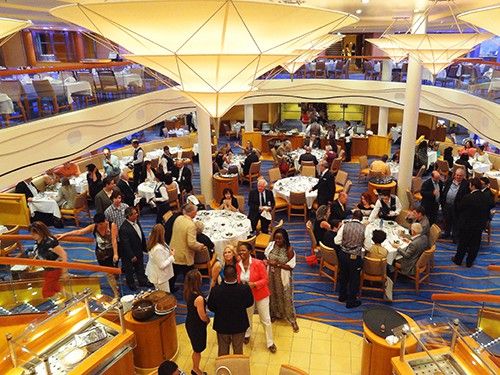
    A luxurious dining area on a cruise ship, representing the high-end experience for guests.

    You might wonder why all this matters. It matters because the “magic” of a vacation is only possible when the logistics are invisible. You shouldn’t have to think about how 60,000 eggs are cooked. You shouldn’t have to worry about where the water comes from. You shouldn’t have to wonder how 2,000 beds are made in a single morning.

    When you book a cruise with the top lines: like Azamara or Carnival: you are buying into a system designed for your total relaxation. The scale of the operations ensures that your every need is met before you even realize you have it. The luxury aspect is the result of thousands of moving parts working in perfect harmony.

    The cruise industry has mastered the art of the “floating city.” It is an operation that runs on precision, passion, and an incredible amount of hard work. The next time you are standing on your balcony, looking out at the ocean, take a moment to think about the world beneath your feet. It is a world of steel, steam, and thousands of dedicated professionals, all working to make sure your journey is unforgettable.

    Visit www.TimeForYourVacation.com to start planning your next adventure. Check out www.DaveTheTourGuide.com for personalized travel guidance and insider tips. And keep reading www.TimeForYourVacation.blog for more honest takes on the travel industry and how to navigate it like a pro. Try our Luxury concierge with www.BlackKeyElite.com . And listen to my podcast! https://www.podomatic.com/podcasts/contact24682

  • A high-end luxury resort terrace overlooking a turquoise ocean with a smartphone on a marble table

    You want the truth. You want the real story. You want a vacation that doesn’t end in a viral disaster. You deserve an experience that is as seamless as it is spectacular. In the world of modern travel, your feed is likely flooded with 15-second clips promising “secret hacks” and “unbelievable savings.” These videos look enticing. They feature catchy music and smiling creators. They promise you the world for the price of a coffee.

    But there is a hidden cost to following the crowd. There is a danger in trusting a stranger with a ring light over a professional with a decades-long network. The worst travel advice on TikTok isn’t just annoying. It is risky. It is often illegal. It is almost always a guaranteed way to ruin a high-end holiday. You are not looking for a “shortcut.” You are looking for the ultimate journey.

    Let’s look at the “hacks” that are actually hurdles. Let’s peel back the filters and see these trends for what they really are: a recipe for stress. Your time is your most valuable asset. Your peace of mind is non-negotiable. Whether you are planning an exotic safari or a sleek metropolitan getaway, you need advice that holds up when the camera stops rolling.

    The Myth of Skiplagging

    A luxury airline first-class cabin with plush leather seats

    You have seen the videos. A creator looks into the camera and tells you they found a “secret” way to save thousands on airfare. They call it “skiplagging” or hidden-city ticketing. They suggest you book a flight from New York to London with a layover in Paris, then simply walk out of the airport in Paris and never board the final leg. It sounds clever. It sounds like you are outsmarting the system.

    It is a terrible idea. Airlines are not just businesses; they are massive logistical machines with very long memories. When you skiplag, you violate the contract of carriage you signed when you bought the ticket. This is not a suggestion. It is a legal agreement.

    What happens when you skip that leg? The airline cancels your entire return itinerary. You find yourself stranded in Paris with no way home and a voided ticket. Your frequent flyer miles disappear. You are blacklisted from the airline. You lose your status. Imagine losing years of hard-earned points because of a 30-second TikTok.

    Furthermore, you cannot check luggage. If you check a bag on a New York-to-London flight, that bag is going to London. It stays on the plane. You are left in Paris with nothing but the clothes on your back. This is not luxury. This is a nightmare. True luxury travel is about ease and status. Skiplagging is the fastest way to lose both.

    The Pillowcase “Hack” is a Packing Disaster

    You might have seen the “pillowcase hack.” A traveler stuffs their extra clothes into a zippered pillowcase and carries it onto the plane as a “personal item.” They claim it bypasses luggage fees and allows you to pack twice as much.

    This is not a hack. This is a gamble. Gate agents are increasingly aware of this trend. They are trained to spot “pillows” that weigh fifteen pounds and look like they are filled with sweaters. When they catch you, you are forced to pay an oversized baggage fee that is often double the original price. You hold up the boarding line. You start your trip with an argument.

    More importantly, your clothes arrive wrinkled and damaged. You cannot fit a designer evening gown or a tailored suit into a pillowcase without ruining the fabric. You are traveling to experience the best. You should arrive looking your best. A high-end vacation requires precision packing in high-quality luggage, not stuffing your wardrobe into bedding.

    Safety Theatre and the Fear Factor

    TikTok is obsessed with “hotel safety hacks.” You see creators placing coffee cups on door handles, jamming towels under doors, or using portable locks that look like they belong in a hardware store. They tell you these tricks are essential for “staying safe” in luxury hotels.

    This is fear-mongering for views. High-end hotels and resorts invest millions in sophisticated security systems. They have 24-hour surveillance, electronic keycard logs, and trained security personnel. Placing a cup on a door handle doesn’t make you safer; it just makes a mess when the housekeeping staff comes to turn down your bed.

    When you stay at a five-star property, you are paying for peace of mind. These “hacks” imply that your environment is dangerous. They create unnecessary anxiety. They distract you from the relaxation you deserve. Real security comes from choosing the right destinations and the right properties, not from MacGyvering your hotel room door.

    The Danger of “Forbidden” Hidden Gems

    A sun-drenched European cobblestone street in Prague

    “Stop going to the Eiffel Tower and go here instead!” These videos often feature “hidden” spots that are “technically” off-limits. They show creators climbing over fences or ignoring “No Trespassing” signs to get a photo of a quarry, an abandoned building, or a private cliffside.

    In Prague, influencers recently promoted an abandoned quarry as a “secret swimming hole.” They failed to mention that the site was closed because multiple people had died there from falls and unstable terrain. They prioritized a “vibe” over human life.

    Ignoring local laws is the quickest way to end your vacation in a police station. Trespassing is a crime. It shows a complete lack of respect for the local culture and the environment. You want an unforgettable experience, but you want it to be legal. The world is full of stunning, accessible, and legal wonders. You do not need to break the law to find beauty.

    The Fake Upgrade Fiasco

    There is a recurring trend where creators suggest faking a honeymoon, a birthday, or even a disability to get a free upgrade. They tell you to wear a white dress to the airport or mention a fake anniversary to the hotel clerk.

    This is embarrassing. It is also ineffective. Premium travel providers have heard it all. They verify anniversaries. They check marriage certificates for honeymoon packages. They require medical documentation for disability accommodations. When you are caught in a lie, you destroy the rapport between you and the service staff.

    The ultimate way to get an upgrade is through loyalty and booking. Relationships with travel experts yield far better results than a fake story. Service professionals want to take care of you, but they value honesty. Start your journey on a foundation of integrity, and the service will follow.

    The Uber-Only Trap

    Some TikToks suggest that you should “Uber everywhere” in cities like Paris, London, or Tokyo. They claim that public transport is “confusing” or “dirty.” They tell you to avoid the metro and the trains at all costs.

    This is advice for people who want to see the inside of a car, not the heart of a city. In many global capitals, the traffic is so dense that an Uber will take three times longer than a high-speed train or a clean, efficient metro. You spend your precious vacation time sitting in a gridlock.

    In Tokyo, the train system is a marvel of human engineering. In London, the “Tube” is an iconic part of the experience. Using these systems allows you to move through the city like a local. It gives you a sense of place. Whether you are heading to a Michelin-starred dinner or a private gallery tour, efficiency is key. Do not let a 15-second video scare you away from the most effective way to navigate the world.

    The “Free” Trap in Viral Cities

    “Prague is so cheap! This dessert is only $2!” You see these claims constantly. But often, these numbers are outdated or completely fabricated. Recent debunks have shown that the “$2 dessert” in Prague actually costs $10 and is a product designed purely for tourists.

    Viral videos often feature “free” rooftops that, after going viral, began charging $20 just to step onto the terrace. They promote “cheap” beer in areas where the prices are actually inflated for visitors. These creators are looking for engagement, not accuracy.

    When you plan your budget based on TikTok, you are setting yourself up for disappointment. You deserve a realistic understanding of your destination. True luxury isn’t about finding the cheapest beer; it’s about finding the best experience. Accuracy matters.

    Content vs. Experience: The 35% Problem

    An expansive, breathtaking view of a private tropical island

    Studies now show that nearly 35% of travelers spend the majority of their vacation capturing content rather than experiencing the destination. They are looking at the Maldives through a screen. They are more worried about the lighting on their dinner than the taste of the food.

    TikTok encourages a “performance” version of travel. It suggests that if you didn’t film it, it didn’t happen. This is the opposite of a relaxing getaway. A vacation should be a time to disconnect. It should be a time to immerse yourself in a new culture.

    The most unforgettable moments are the ones you can’t capture on a phone. It’s the smell of the air in the Serengeti. It’s the sound of the waves on a private beach in Hawaii. It’s the feeling of total relaxation. Put the phone down. Live the life you are trying to film.

    The Myth of “No Research Needed”

    “Just wing it!” “No plan is the best plan!” These are popular TikTok refrains. They sound adventurous. They sound carefree.

    In reality, “winging it” in 2026 is a disaster. Top restaurants require reservations months in advance. The best suites are booked a year out. Popular attractions have strict timed entry. If you show up without a plan, you will spend your vacation standing in lines or being turned away from the very places you traveled to see.

    Expertise is the antidote to the “wing it” culture. You don’t need to do the research yourself, but someone should. You want your itinerary to be curated, not chaotic. You want to know that your transportation is waiting, your table is ready, and your preferences are known. This level of service cannot be found in a 60-second “day in the life” video.

    Why You Need a Professional Voice

    A close-up of a high-end travel kit with a passport and sunglasses

    You deserve more than a viral trend. You deserve a journey that is tailored to you. TikTok creators are often paid to promote specific spots, or they are simply looking for “likes.” They don’t know your preferences. They don’t know your family. They don’t know your expectations for quality.

    I see the stress these “hacks” cause every day. I hear the stories of travelers who followed a viral tip and ended up frustrated. I want to make sure that never happens to you. I am here to provide the clarity and the expertise that a social media algorithm simply cannot offer.

    Planning a luxury vacation is about more than just booking a flight. It is about crafting an experience. It is about understanding the nuances of a destination. Whether it is knowing which safari lodge has the best views or which cruise line offers the most private excursions, details matter.

    I am passionate about travel. I am dedicated to the idea that a vacation should be a period of total rejuvenation. You should be able to relax while the logistics are handled with precision. You should be able to explore with confidence, knowing that your advice is coming from a place of deep industry knowledge.

    If you are ready to move beyond the “hacks” and into a world of genuine luxury, I am ready to help. I want to hear about your dream destination. I want to know what makes a trip “perfect” for you. Let’s move past the noise of the feed and start building something real. Your next adventure is waiting. It should be nothing short of extraordinary.

    Visit www.TimeForYourVacation.com to start planning your next adventure. Check out www.DaveTheTourGuide.com for personalized travel guidance and insider tips. And keep reading www.TimeForYourVacation.blog for more honest takes on the travel industry and how to navigate it like a pro. Try our Luxury concierge with www.BlackKeyElite.com . And listen to my podcast! https://www.podomatic.com/podcasts/contact24682
  • Cinematic vista of luxury domestic travel featuring a tropical infinity pool and a snow-capped mountain lodge

    You want the ultimate escape. You want the world-class service. You want the feeling of being a thousand miles away from your daily grind without the logistical headache of international customs. Finding a destination that feels exotic, looks like a postcard, and offers five-star luxury is easy. Doing all of that without a passport is where it gets interesting.

    You deserve a vacation that begins the moment you leave your front door. You deserve to skip the long lines at the consulate and the stress of a lost document. Domestic luxury travel is evolving into a powerhouse of exclusivity and convenience. When you stay within the borders and territories of the United States, you gain access to some of the most stunning landscapes on the planet while maintaining the ease of the American dollar, your existing mobile plan, and no customs forms.

    The world is huge, but your own backyard is surprisingly vast. From the turquoise depths of the Caribbean to the glacial peaks of the north, the options for high-end travel are staggering. You are looking for a place where “luxury” isn’t just a marketing word, but a lived experience. These five destinations provide the highest level of service, the most breathtaking views, and the absolute best in accommodations: all while keeping your passport safely tucked away in your desk drawer at home.

    1. The US Virgin Islands: Private Island Perfection

    Luxury private villa in the US Virgin Islands with an infinity pool overlooking a turquoise bay

    You want white sand. You want crystal clear water. You want the Caribbean sun on your face without the international flight plan. The US Virgin Islands: comprising St. Thomas, St. John, and St. Croix: deliver a tropical experience that rivals any Mediterranean or South Pacific island. Because these are US territories, you simply hop on a flight and land in paradise. It is that simple.

    You find the height of exclusivity at the Lovango Resort & Beach Club. Situated on a private island called Lovango Cay, just a short boat ride from St. John and St. Thomas, this resort is a masterclass in secluded luxury. Imagine waking up in a designer treehouse or a luxury glamping tent that feels more like a five-star suite than a tent. You look out over the ocean, watch the yachts bobbing in the harbor, and realize you didn’t even have to talk to an immigration officer to get here.

    The service here is impeccable. You spend your days at the beach club, lounging in a private cabana with a dedicated attendant ensuring your cocktail is never empty. You snorkel in waters so clear they look like glass. The resort manages to feel like a remote escape while offering every modern amenity you could ask for. If you prefer a more traditional but no less opulent experience, The Ritz-Carlton, St. Thomas offers a renovated paradise with a private catamaran for sunset sails and a massive infinity pool that blends seamlessly into the horizon.

    You also have St. John, the jewel of the islands. Most of the island is protected National Park land, meaning the beaches like Trunk Bay and Cinnamon Bay remain pristine and undeveloped. You hike through lush tropical forests and emerge onto beaches that look like they belong on a movie set. When you stay in a luxury villa high above Cruz Bay, you get the best of both worlds: total privacy and easy access to the island’s high-end dining scene. The convenience of using your US cell phone and the US dollar makes the entire experience frictionless. You aren’t just visiting a destination; you are living in a dream where everything is handled.

    2. Puerto Rico: The Sophisticated Tropical Retreat

    Modern luxury resort in Puerto Rico with palm trees and a private beach at golden hour

    You want history. You want culture. You want a culinary scene that rivals New York or Paris. Puerto Rico is the ultimate destination for the luxury traveler who wants more than just a beach. It is a vibrant, soulful island that offers world-class luxury resorts tucked away in coastal enclaves. You arrive in San Juan and immediately feel the energy of a place that is both ancient and cutting-edge.

    The pinnacle of luxury on the island is Dorado Beach, a Ritz-Carlton Reserve. This is not your typical hotel; it is a sprawling sanctuary built on land formerly owned by the Rockefeller family. You stay in a beachfront suite where the floor-to-ceiling glass doors slide away to create a seamless indoor-outdoor living space. You have your own private plunge pool and an outdoor shower surrounded by tropical foliage. The “Embajador” (ambassador) service ensures that every whim is met before you even have to ask. Whether you want a private dinner on the sand or a tee time at one of the championship golf courses, it is handled with effortless grace.

    Puerto Rico offers a diversity of experiences that few other domestic destinations can match. You take a helicopter ride to the island of Vieques to witness the world’s brightest bioluminescent bay. You spend a morning exploring the cobblestone streets of Old San Juan, admiring the 16th-century Spanish architecture, and then retreat to the St. Regis Bahia Beach Resort for an afternoon of spa treatments. This resort sits on a former coconut plantation between the El Yunque National Forest and the Atlantic Ocean, providing a sense of immersion in nature that is truly unforgettable.

    The ease of travel here cannot be overstated. You walk off the plane, pick up your bags, and you are in a different world. There is no currency exchange, no language barrier for those who don’t speak Spanish, and no international data roaming charges. You get the full “exotic island” experience with the comfort and security of being in the United States. It is the perfect balance of adventure and luxury, allowing you to dive deep into the culture during the day and return to a sanctuary of absolute comfort at night.

    3. The Florida Keys: An Exclusive Private Island Escape

    Aerial view of Little Palm Island in the Florida Keys with thatched-roof bungalows and turquoise water

    You want total privacy. You want an adults-only sanctuary. You want a place so exclusive that you can only reach it by sea or air. Many people think of the Florida Keys and imagine casual tiki bars and fishing boats, but there is a hidden side to this archipelago that is purely high-end. At the center of this elite world is Little Palm Island Resort & Spa.

    Little Palm Island is the only private island resort in the United States, and it is a revelation. You leave your car at the shore station on Little Torch Key and board a mahogany boat that whisks you away to a world of thatched-roof bungalows and wandering Key deer. There are no telephones, no televisions, and no guests under the age of 18. This is where you go when you truly want to disappear. Each bungalow is a masterpiece of British West Indies design, featuring vaulted ceilings, private outdoor showers, and decks that lead directly to the white sand.

    You spend your days floating in the oceanfront pool or indulging in a “Madrugada” water massage at the world-class spa. The dining is spectacular, with a menu that focuses on fresh, local seafood prepared with international flair. You can choose to dine in the elegant restaurant or have a table set up right on the beach, with your toes in the sand and the sound of the waves as your soundtrack. It is the closest you can get to a Maldivian overwater villa experience without a 20-hour flight and a passport.

    Further up the keys, Bungalows Key Largo offers another luxury all-inclusive experience that focuses on relaxation and indulgence. You stay in a private bungalow with a large soaking tub on your patio and spend your days paddleboarding or cruising on a floating tiki bar. The beauty of the Florida Keys is the accessibility. You can fly into Miami or Key West, take a short drive or a quick seaplane hop, and find yourself in a tropical paradise. It is the ultimate weekend getaway for the affluent traveler who values their time as much as their comfort. You get the seclusion of a remote island with the logistical ease of a domestic flight.

    4. Hawaii: The Majestic Pacific Powerhouse

    High-end infinity pool in Hawaii overlooking the ocean at sunset

    You want drama. You want volcanic peaks. You want the absolute gold standard of American luxury hospitality. Hawaii is the undisputed heavyweight of domestic luxury travel. While it is a long flight from the East Coast, the moment you land and the humid, plumeria-scented air hits you, you know you have arrived somewhere special. It feels like a different country, yet you are still in the 50th state.

    The islands offer distinct flavors of luxury. On Maui, the Four Seasons Resort Maui at Wailea is legendary for its service. You don’t just get a pool chair; you get a staff that proactively brings you chilled towels, fruit skewers, and Evian spritzes. The resort’s infinity-edge “Serenity Pool” offers panoramic views of Lanai and West Maui, and the on-site dining: including Wolfgang Puck’s Spago: is top-tier. For those who want more rugged beauty, the 1 Hotel Hanalei Bay on Kauai provides a sustainable luxury experience that feels deeply connected to the “Garden Isle’s” dramatic cliffs and lush valleys.

    Hawaii is where you find the most incredible natural adventures paired with high-end comfort. You take a private helicopter tour over the Na Pali Coast, witnessing 3,000-foot sea cliffs and hidden waterfalls that are inaccessible by foot. You spend the evening at a private luau where the food is gourmet and the storytelling is authentic. On the Big Island, resorts like Mauna Lani, Auberge Resorts Collection, offer a sophisticated take on Hawaiian culture, with private “hale” suites and access to ancient fishponds and petroglyphs.

    The convenience factor remains a major draw. You are in the heart of the Pacific, thousands of miles from the mainland, yet you have the same consumer protections, the same safety standards, and the same healthcare system as you do at home. This provides a layer of reassurance that allows you to fully relax. You don’t have to worry about travel insurance for medical evacuations or navigating foreign legal systems. You are free to immerse yourself in the “Aloha spirit” and focus entirely on your own rejuvenation. Hawaii proves that you don’t need a passport to reach the very edge of the world.

    5. Alaska: Wilderness Luxury on a Grand Scale

    Ultra-luxury remote mountain lodge in Alaska surrounded by glaciers and snow-capped peaks

    You want adventure. You want silence. You want a level of luxury that seems impossible given the remote location. Alaska is the final frontier, and for the luxury traveler, it offers experiences that are truly once-in-a-lifetime. While many see Alaska from the deck of a massive cruise ship, the real luxury is found in the remote lodges and small-ship expeditions that get you deep into the wilderness.

    Imagine staying at the Sheldon Chalet. This is quite possibly the most exclusive hotel in America. It sits on a private nunatak (a rock outcropping) in the middle of a glacier within Denali National Park. You can only get there by helicopter. Once you arrive, you are surrounded by the sheer granite walls of the Don Sheldon Amphitheater and the silence of the high mountains. There are only five guest rooms. You have a private chef, a gear room full of everything you need for glacier trekking, and a sauna with a view of the aurora borealis. This is luxury at its most extreme and unforgettable.

    For those who prefer the coast, lodges like Tutka Bay Lodge or Winterlake Lodge offer a “refined rustic” experience. You spend your days fly-fishing for salmon, kayaking among icebergs, or bear-watching with expert guides. In the evening, you return to a multi-course gourmet meal and a selection of fine wines. The contrast between the rugged, untamed wilderness outside and the warm, sophisticated comfort inside is what makes Alaskan luxury so compelling.

    You also have the option of small-ship luxury cruises. Companies like Lindblad Expeditions or UnCruise Adventures operate vessels that feel more like private yachts than cruise ships. They can navigate narrow fjords and anchor in tiny coves where the big ships can’t go. You spend your time off the boat, exploring via Zodiac or paddleboard, and return to a cabin that is a sanctuary of comfort. The logistical ease of flying into Anchorage or Fairbanks and staying within the US system means you can focus entirely on the epic scale of the landscape. Alaska is proof that “luxury” can mean having a glacier all to yourself, with a glass of champagne in your hand.

    Why Domestic Luxury Wins Every Time

    You want a vacation that is as smooth as it is spectacular. The decision to travel domestically for a luxury getaway is a strategic one. It is about maximizing your time and minimizing your stress. When you choose any of these five destinations, you are choosing world-class standards without the international friction.

    Think about the time you save. No waiting at a consulate for a visa. No three-hour arrival window for international security. No standing in a humid customs hall after an eight-hour flight. Instead, you walk off your domestic flight, grab your bags, and you are on your way to your resort. You have more time for the spa, more time for the beach, and more time for the adventure.

    The financial simplicity is another major factor. You aren’t constantly doing math in your head to convert prices. You aren’t paying foreign transaction fees on your credit cards. You aren’t trying to figure out the local tipping customs in a language you don’t speak. Everything is familiar, which allows your brain to truly switch off.

    Safety and reliability are the final pieces of the puzzle. When you stay within the US and its territories, you are covered by US laws and regulations. If you have a medical emergency, you are in the hands of the best healthcare system in the world. If you have a flight delay, you have clear consumer rights. This peace of mind is the ultimate luxury. It allows you to take risks in your adventures: like glacier trekking in Alaska or diving in the USVI: knowing that you are always supported.

    You have the opportunity to see some of the most beautiful places on Earth right here. Whether you crave the heat of the Caribbean, the lushness of the Pacific, the seclusion of the Florida Keys, or the raw power of the Alaskan wilderness, you can have it all. These destinations don’t just compete with the rest of the world; they often surpass them in terms of service, quality, and sheer natural beauty. So, put your passport back in the safe. Your next unforgettable, luxury adventure is waiting for you, just a domestic flight away.

    Visit www.TimeForYourVacation.com to start planning your next adventure. Check out www.DaveTheTourGuide.com for personalized travel guidance and insider tips. And keep reading www.TimeForYourVacation.blog for more honest takes on the travel industry and how to navigate it like a pro. Try our Luxury concierge with www.BlackKeyElite.com . And listen to my podcast! https://www.podomatic.com/podcasts/contact24682

  • A luxury tropical resort during a dramatic sunset, with massive, dark storm clouds gathering in the distance.

    You dream of the ultimate getaway. You dream of the perfect sunset over a crystal-clear ocean. You dream of a luxury suite where every detail is curated for your comfort. But sometimes, the universe has other plans. Sometimes, your “unforgettable” vacation becomes unforgettable for all the wrong reasons. These are the stories that sound like they belong in a Hollywood thriller, yet they happen to real travelers in real time. From accidental border crossings that land families in detention to luxury resorts that turn into gilded cages during a coup, the truth about travel can be stranger: and scarier: than fiction.

    You think you are prepared. You have your passport, your high-end luggage, and your itinerary. But you cannot prepare for the bizarre. You cannot prepare for the extreme. These are the vacation horror stories that sound fake, but are terrifyingly real.

    The Invisible Line You Should Never Cross

    You are driving through a beautiful landscape. You are following your GPS. You are just looking for a Costco or a scenic turnout. Suddenly, you see a sign you didn’t expect. Suddenly, there is no place to turn around. Suddenly, you are in a different country, and the officials are not smiling.

    A lonely, misty road at dusk in a remote mountain pass near an international border.

    Accidental border crossings are one of the most common ways a luxury vacation turns into a legal nightmare. Take the case of a British family vacationing near Vancouver. They are enjoying a picturesque drive, trying to avoid a small animal on the road. They take a quick turn down an unmarked path. It feels like a minor detour until they realize they have crossed into the United States. They explain the mistake. They ask to turn back. Instead, they are arrested.

    Imagine being moved from a luxury rental to an immigration detention center. Imagine being held for 12 days in cold, filthy conditions with your three-month-old baby. This isn’t a movie plot; it is a documented reality. The “intent” doesn’t matter to border agents. To them, you are an unauthorized entrant. Your high-end status and your “honest mistake” mean nothing when you are sitting on a metal bench, shackled, wondering how a Sunday drive turned into an international incident.

    Then there is the infamous “Sentri” lane at the U.S.-Mexico border. You are heading back from a beautiful weekend in Tijuana or Ensenada. You see a lane that looks faster. You think it’s just another gate. Once you enter, concrete barriers trap you. You don’t have the pre-approved pass. You are now a target. Tourists are frequently detained for hours and hit with fines of up to $5,000 just for being in the wrong lane. You are treated like a smuggler because you missed a poorly placed sign. It is a terrifying, expensive, and utterly real vacation horror.

    The Unscheduled Revolution

    You are sitting on your balcony. You are sipping a vintage wine. You are watching the city lights of a foreign capital. Then, the internet goes out. Then, you hear the distant thud of a helicopter. Then, you see the tanks. You are no longer on a luxury retreat; you are in the middle of a coup d’état.

    When political upheaval strikes, it doesn’t wait for your checkout date. In places like Turkey, Myanmar, or Niger, travelers have found themselves caught in the crosshairs of history. You think you are safe inside your five-star hotel, but the rules change in an instant. The airport shuts down. The airspace closes. Your flight home is cancelled indefinitely. You are now stuck in a city where the banks are frozen and the ATMs are empty.

    Imagine the silence of a luxury hotel when the staff disappears. You are in a grand lobby, surrounded by marble and crystal, but there is no one to bring you water. The streets outside are under curfew. You hear gunfire, but you don’t know where it’s coming from. You call your embassy, and they tell you to “shelter in place.” You are a guest in a gilded cage, watching your dream vacation evaporate into a struggle for basic supplies. These stories sound fake because we assume our money buys us an exit strategy. In the middle of a revolution, your credit card is just a piece of plastic.

    An empty, opulent luxury hotel lobby with grand crystal chandeliers and marble floors.

    The reality of being stranded during a coup is a mix of extreme boredom and sudden, sharp terror. You spend days sleeping on airport floors because it’s the only “safe” place, only to realize the airport is the first target for the military. You share a single bottle of water with strangers in a terminal that has lost its air conditioning. It is the ultimate test of your resilience, and it happens more often than the travel brochures would ever lead you to believe.

    The Room from Hell

    You check into a “five-star” resort. You expect the ultimate in relaxation. You expect crisp linens and a view that takes your breath away. But as the sun goes down, the room begins to speak. You hear scratching in the walls. You notice a strange red dot in the smoke detector. You realize that the “luxury” you paid for is a facade for something much darker.

    The “Room from Hell” isn’t just about a dirty carpet. We are talking about extreme, life-threatening disasters. There are real stories of travelers discovering hidden cameras in their vacation rentals, streaming their private moments to unknown viewers across the globe. You think you are in a sanctuary, but you are actually on a stage. It is a violation that stays with you long after you leave the property.

    Then there are the structural nightmares. You are standing on a beautiful balcony, looking at the ocean, when the railing simply gives way. Or you are in a high-end villa in a remote location, and you wake up feeling dizzy and nauseous. You think it’s food poisoning. It’s actually carbon monoxide from a poorly maintained gas heater. Without a professional team vetting these properties, you are literally betting your life on a set of photos that might have been taken ten years ago.

    Infestations are another level of horror that sounds like a tall tale until it happens to you. You wake up in a luxury bed covered in bedbugs. Not just one or two, but a carpet of them. You lose your luggage because everything you brought is now contaminated. You bring the “souvenirs” back to your own home, leading to thousands of dollars in extermination costs. The “unforgettable” part of this vacation is the months of itching and the trauma of sleeping in your own bed.

    Nature Is Not Your Friend

    You see the majestic bison. You see the playful monkeys. You see the lions on a safari and you feel a connection to the wild. You forget that these animals are not characters in a movie. You forget that nature is indifferent to your vacation photos. You forget that the distance between a “great shot” and a “life-flight” is only a few feet.

    A majestic but powerful bison standing in a misty, green valley in Yellowstone.

    Wildlife encounters go wrong with shocking speed. In Yellowstone, tourists are gored by bison every single year because they want a selfie. You think the animal is calm because it’s standing still. Then, in a heartbeat, it charges. A two-thousand-pound wall of muscle hits you at thirty miles per hour. It is a brutal, violent reality check that turns a family trip into an emergency room nightmare.

    In Bali or Thailand, the “cute” monkeys at the temples are actually highly organized gangs. They don’t just want your banana; they want your iPhone, your sunglasses, and your dignity. When you try to get your items back, they bite. Now, your luxury beach holiday is interrupted by a series of painful rabies shots and a frantic search for a clinic that carries the vaccine.

    The ultimate horror story comes from the safari. You are in an open-air vehicle, feeling the thrill of the African bush. You decide to stand up to get a better angle of a sleeping lion. You think you are safe because the guide is there. But the lion sees movement, not a tourist. The attack is silent and incredibly fast. These incidents are rare, but they are real, and they usually happen because a traveler forgets that they are a guest in a world where they are at the bottom of the food chain.

    The Vanishing Destination

    You book a flight to a remote island. You have the ultimate itinerary. You have the private villa. Then, a storm hits. A hurricane, a typhoon, or a sudden volcanic eruption. Suddenly, the island is no longer a paradise; it is a trap. The ferry stops running. The runway is flooded. You are on a piece of land in the middle of the ocean, and the resources are running out.

    These stories of being stranded during natural disasters are the stuff of nightmares. You find yourself in a luxury resort with no power, no running water, and a limited supply of food. The staff is focused on their own families. You are a stranger in a land that is currently being reshaped by the elements. You wait for a rescue that might be days or weeks away. You realize that your “exotic” destination is only exotic when the logistics are working. When they fail, it is a survival situation.

    You spend your days watching the horizon for a boat or a plane. You realize that your “all-inclusive” package doesn’t include a way out. This is the truth about extreme travel: the more remote and “undiscovered” the location, the higher the stakes when something goes wrong.

    Why Professional Planning Is Your Safety Net

    You read these stories and you think, “That would never happen to me.” But the people in these stories thought the same thing. They were affluent, educated travelers who just wanted a great experience. The difference between a horror story and a minor inconvenience is often the people you have in your corner.

    When you are stuck at a border, you need someone who knows the law. When you are in a hotel during a coup, you need someone who can arrange a private evacuation. When your room is a nightmare, you need someone who has the leverage to move you to a new property instantly. When nature strikes, you need a team that is monitoring the weather and the local situation 24/7.

    You don’t just pay for a booking; you pay for a shield. You pay for the peace of mind that comes from knowing that if the world turns upside down, you aren’t facing it alone. The “ultimate” vacation is one where you can relax because you know every “fake-sounding” horror story has already been accounted for and mitigated by experts who have seen it all.

    Visit www.TimeForYourVacation.com to start planning your next adventure. Check out www.DaveTheTourGuide.com for personalized travel guidance and insider tips. And keep reading www.TimeForYourVacation.blog for more honest takes on the travel industry and how to navigate it like a pro. Try our Luxury concierge with www.BlackKeyElite.com . And listen to my podcast! https://www.podomatic.com/podcasts/contact24682

  • A grand, white and blue fantasy castle at the end of a beautiful manicured garden path under a vibrant, clear blue sky.

    You want the magic. You want the memories. You want the effortless joy of seeing your family beam with delight as they walk down Main Street, U.S.A. You want the ultimate vacation that lives up to the decades of marketing, the cinematic nostalgia, and the promises of “where dreams come true.” But the truth about Disney vacations in 2026 is that they are no longer the simple “pack and go” trips of your childhood. Today, a trip to the Mouse is a high-stakes, high-cost, and highly complex logistical operation that requires the tactical precision of a military maneuver.

    Disney is magic. Disney is expensive. Disney is complicated. Disney is exhausting. If you go in expecting a breezy stroll through a theme park, you are setting yourself up for a very expensive disappointment. The reality of a modern Disney vacation is a mix of breathtaking wonder and extreme frustration, and if you want to come out on top, you need to understand the gears turning behind the curtain.

    The Financial Weight of the Mouse

    Disney is expensive. Disney is reaching for your wallet at every turn. Disney is masterfully designed to make “spending more” feel like “worrying less.” When you start planning, the sticker shock is immediate, but it’s the slow bleed of the “extras” that truly defines the cost of a Disney vacation today.

    Let’s talk about the base price. In 2026, a single-day ticket to a major park like Magic Kingdom can easily clear $170 depending on the season. If you want to visit more than one park in a day, the famous “Park Hopper” option, you are looking at an additional $70 to $95 per ticket. For a family of four, you are spending nearly $1,000 just to step through the gates for a single day before you’ve bought a single bottle of water or a pair of Mickey ears. This is the ultimate baseline, and it only goes up from here.

    The “budget” Disney trip is largely a myth. Even if you stay at a “Value” resort, you are likely paying between $200 and $350 per night for a room that, in any other city, would be considered a standard roadside motel. You pay the premium for the “bubble”, the ability to stay on Disney property, use their transportation, and get into the parks thirty minutes early. Is that thirty-minute head start worth an extra $150 a night over an off-site hotel? For many, the answer is yes, because the physical toll of commuting from outside the property is a hidden cost all its own.

    Then there is the food. If you opt for the Disney Dining Plan, you are looking at approximately $99 per adult, per night. It sounds like a way to save, but the truth is it’s often more about convenience than value. You are prepaying for a lifestyle. If you don’t use every single credit, you are losing money. If you spend your vacation hunting for “the best value” for your credits, you aren’t relaxing. The Truth is, you will NOT leave the park to go eat, and then come back. You are going to purchase food and beverage in the park.

    A bustling theme park street with colorful storefronts and a festive atmosphere.

    The Digital Jungle: Your Phone is Your Master

    Disney is an app. Disney is a battery drain. Disney is a constant refresh of a digital screen. Gone are the days of paper maps and spontaneous decisions. Today, your entire vacation lives inside the My Disney Experience app (or the Disneyland app), and if you aren’t prepared to spend significant portions of your “magical” day staring at a piece of glass, you will miss out on almost everything.

    The introduction of Genie+ and Lightning Lane has fundamentally changed how you experience the parks. It is no longer enough to just wait in line. Now, you have to pay for the privilege of not waiting in line, and even then, it’s a gamble. Genie+ usually costs between $15 and $35 per person, per day, but that price fluctuates based on demand. On the busiest days when you need it most, it is the most expensive.

    But here is the catch: buying Genie+ doesn’t guarantee you’ll ride everything. It just gives you the right to book “windows” for certain rides. You wake up at 7:00 AM, on your vacation, to book your first ride. If you oversleep until 7:05 AM, the most popular attractions might already have return times in the late afternoon or evening. You spend your day “stacking” rides, checking your phone every time you finish a ride to see what’s next. You are managed by an algorithm.

    Then there are the “Individual Lightning Lanes.” These are the headliner attractions, the newest, most high-tech rides, that are not included in Genie+. If you want to ride the newest Star Wars or Guardians of the Galaxy attraction without a three-hour wait, you pay an additional $15 to $25 per person just for that one ride. For a family of four, that’s another $100 on top of the tickets, on top of the Genie+ fee, on top of the hotel. It is the ultimate “pay to play” environment.

    The Physical Reality: The 10-Mile Marathon

    Disney is a workout. Disney is a test of endurance. Disney is a physical challenge that many travelers underestimate. You will walk. You will sweat. You will feel muscles you didn’t know you had. The average Disney guest walks between 8 and 12 miles per day. Over a five-day trip, that is nearly two full marathons.

    The heat in Florida or California is not a joke. It is a heavy, humid blanket that drains your energy and tests your patience. This is where the “Disney Meltdown” happens. You see it at 3:00 PM in every park: parents snapping at children, children weeping over dropped ice cream, and couples arguing over which way to the nearest air-conditioned building. The truth is that the physical toll is what often breaks the magic.

    To survive, you have to be disciplined. You have to embrace the “Midday Break.” The most successful Disney travelers are the ones who leave the park at 1:00 PM, go back to their hotel, swim in the pool, take a nap, and return at 6:00 PM when the sun is lower and the crowds are thinning. If you try to “power through” from 8:00 AM to midnight, you aren’t having a vacation; you are performing a feat of endurance.

    A luxury resort swimming pool with crystal clear blue water, surrounded by tropical palm trees.

    The Culinary Scramble: Reservations and Reality

    Disney is a dining hustle. Disney is a 60-day countdown. Disney is a competitive sport for table service. If you want to eat at a restaurant where a waiter brings you food and you sit in a chair with a backrest, you have to book it exactly 60 days in advance.

    At 6:00 AM EST, sixty days before your check-in, the digital gates open. If you want to eat lunch inside a castle or have dinner with Mickey Mouse, you better have your credit card ready and your internet connection stable. If you miss that window, you are left with “Quick Service”, which is Disney’s term for high-quality fast food. While Disney’s quick service is miles ahead of your local burger joint, eating chicken tenders and fries for six days straight is not the luxury experience most people are paying for.

    And then there is the cost. A “Standard” sit-down meal for a family of four will easily run $150 to $200. If you go for a “Signature” dining experience, the true luxury tier, you can double that. You are paying for the atmosphere and the convenience. Is the food good? Often, yes. Is it “worth” $300? In the real world, probably not. In the Disney bubble, it feels like a bargain because it offers you an hour of air conditioning and a break from the crowds.

    A beautifully plated gourmet dessert at a high-end restaurant.

    The Deluxe Difference: Is Luxury Really Luxury?

    You want the best. You want the Grand Floridian. You want the Contemporary. You want the luxury of being on the monorail line. But the truth about Disney’s “Deluxe” resorts is that they often fall short of true five-star luxury standards found in the outside world. If you pay $800 a night at a Four Seasons or a Ritz-Carlton, you expect a certain level of service and polish. At a Disney Deluxe resort, you are paying for the location and the “theming.”

    The rooms are nice, but they aren’t always spectacular. The service is friendly, but it is often stretched thin by the sheer volume of guests. The real luxury at Disney isn’t the thread count of your sheets; it’s the time you save. Being able to walk to Magic Kingdom or take a five-minute boat ride to EPCOT is the ultimate luxury. It buys you sleep. It buys you an extra hour at the pool. It buys you the ability to escape the chaos when it becomes too much.

    If you really want a luxury experience, you look toward the VIP Tours. For a few thousand dollars on top of your tickets, you can hire a private guide who will whisk you through the back entrances of rides, provide private transportation, and handle every logistical detail of your day. This is the only way to truly experience Disney without the “hustle.” For the 1%, it’s the only way to do the parks. For everyone else, luxury is found in the small moments: a quiet corner of a resort lounge, a fireworks cruise on a private pontoon, or a spa treatment at Senses.

    The Complexity of Choice: Orlando vs. California

    Disney is two different worlds. Disney is a choice between a massive resort and a compact park experience. One of the most common mistakes travelers make is assuming Walt Disney World (Florida) and Disneyland (California) are the same. They are not.

    Walt Disney World is a city. It is twice the size of Manhattan. It requires buses, monorails, skyliners, and boats to get around. It is a multi-day commitment. You cannot “see” Disney World in two days. You need at least four days just to hit the main parks, and a fifth or sixth day if you want to breathe.

    Disneyland, on the other hand, is charmingly compact. You can walk from your hotel to the park gates. You can walk from Disneyland Park to California Adventure in sixty seconds. It is a more manageable, more “local” feel. For many, the “truth” is that Disneyland is actually the superior vacation because the logistics are significantly simpler. You spend less time commuting and more time doing. However, it lacks the sheer scale and “total immersion” that the Florida resort offers. Between yo and me, I prefer Disneyland. The history of the park means a lot.

    Strategies for Sanity: How to Win

    You need a plan. You need a strategy. You need to manage your expectations. To have a successful Disney vacation in 2026, you have to stop trying to do everything. The “truth” is that you will not see it all. You will not ride every ride. You will not meet every character.

    1. Pick Your Top Three. For every park day, identify three “must-do” experiences. If you do those three, the day is a success. Everything else is a bonus. This removes the pressure to sprint from ride to ride.
    2. Embrace the Mobile Order. Do not stand in line for food. Use the app to order your lunch while you are standing in line for a ride. Walk up to the window, hit “I’m here,” and your food appears. It saves hours over the course of a week.
    3. Budget for the “I Hate This” Fund. Set aside $200 specifically for when everyone is tired and grumpy. Use it for a Minnie Van (Disney’s private ride-share) instead of waiting for the bus. Use it for an extra round of expensive cocktails. Use it to buy your way out of a bad mood.
    4. The Battery Pack is Non-Negotiable. Since your life depends on your phone, you must carry a high-quality portable charger. If your phone dies at 2:00 PM, your ability to navigate the parks, check wait times, and use your Lightning Lanes dies with it.
    Close-up of a person's hand holding a modern smartphone displaying a colorful digital map.

    Is the “Magic” Still There?

    Disney is polarizing. Disney is a love-it-or-hate-it destination. After reading all of this: the costs, the apps, the heat, the walking: you might wonder why millions of people still flock to these parks every year. The truth is that when Disney gets it right, they get it more “right” than anyone else in the world.

    The magic isn’t in the line-skipping or the expensive hotel room. The magic is in the moment your child sees the castle for the first time. It’s in the incredible engineering of a ride that makes you feel like you are flying through space. It’s in the world-class entertainment, the meticulously clean streets, and the “Cast Members” who go out of their way to make a stranger’s day better.

    Is it worth the price tag? That is a deeply personal question. For some, the $10,000 price tag for a week of family memories is a bargain. For others, it’s an overpriced headache. The key to a successful trip is knowing exactly what you are walking into. If you go in knowing that it will be a “working vacation” of sorts: where you are the project manager of your own fun: you can have a truly unforgettable experience.

    Disney is not a passive vacation. It is an active one. It requires your attention, your money, and your physical effort. But if you play the game correctly, if you navigate the digital jungle and the physical marathons with a sense of humor and a solid plan, you will find exactly what you were looking for. You will find the magic. You will find the memories. You will find that, despite the complexity, there is still nowhere else on earth quite like it.

    Visit www.TimeForYourVacation.com to start planning your next adventure. Check out www.DaveTheTourGuide.com for personalized travel guidance and insider tips. And keep reading www.TimeForYourVacation.blog for more honest takes on the travel industry and how to navigate it like a pro. Try our Luxury concierge with www.BlackKeyElite.com . And listen to my podcast! https://www.podomatic.com/podcasts/contact24682

  • Modern airport terminal at sunrise with soft golden light

    You have been lied to. You have been fed a steady diet of outdated tips, recycled myths, and travel “hacks” that haven’t worked since the Clinton administration. You are planning your dream vacation based on logic that belongs in a museum, and it’s costing you time, money, and sanity.

    Travel advice is like milk; it has an expiration date. What was a clever trick five years ago is now a surefire way to pay double for your seat or end up in a sketchy hotel that looks nothing like the photos. The world moves fast. Airlines use sophisticated AI to price their seats. Tourism boards have transformed entire neighborhoods. Digital connectivity has flipped the script on how we navigate foreign lands.

    Whether you are planning an ultimate luxury escape to the Mediterranean or an unforgettable safari across the Serengeti, the information you rely on must be current. If you’re still clearing your browser cookies or waiting until 1:00 PM on a Tuesday to hit “book,” you’re playing a losing game. It’s time to stop listening to your cousin who took a backpacking trip in 2004 and start looking at how the travel industry actually operates in 2026.

    This is the ultimate guide to the travel advice that is completely, undeniably wrong.

    Forget everything you’ve been told about booking on Tuesdays

    Forget everything you’ve been told about the “magic hour” for flight deals. You’ve likely heard it a thousand times: “Wait until Tuesday at 3:00 PM EST to book your flight.” The myth suggests that airlines manually load their discounted fares on Tuesday mornings, and if you aren’t there to snag them, you’re throwing money away.

    This advice is flat-out wrong. In the early days of global distribution systems, there was a grain of truth here. Fares were updated in batches, and Tuesday was often the day the new “sale” prices hit the wire. But that world is gone. Today, airline pricing is handled by complex, lightning-fast algorithms that adjust prices thousands of times per second. They look at historical data, current demand, competitor pricing, and even weather patterns in real-time.

    Your airline doesn’t wait for Tuesday. If a flight to Maui isn’t filling up on a Thursday night at midnight, the price will drop then. If a sudden surge of bookings happens on a Monday morning, the price will skyrocket. There is no secret day of the week that guarantees a bargain. In fact, obsessing over the day of the week can actually cause you to miss out on the best prices. While you’re waiting for Tuesday, the “low-fare bucket” of seats for your specific flight might sell out on Sunday afternoon.

    If you want the ultimate price, you need to use tools that track these fluctuations. Set up price alerts on Google Flights or Kayak. Look for the “middle window”, typically one to three months out for domestic flights and three to six months for international journeys. The goal isn’t to time the day of the week; it’s to time the demand cycle. Stop letting a calendar day dictate your travel budget.

    Forget everything you’ve been told about incognito mode

    Forget everything you’ve been told about airlines “tracking” your searches and raising prices because they know you want that flight. This is perhaps the most persistent myth in the travel world. The idea is that every time you refresh your browser, the airline sees your interest and bumps the fare by $20 to pressure you into buying.

    It sounds plausible, but it’s a total fantasy. Major airlines and search engines like Skyscanner or Google Flights have gone on the record multiple times explaining that their pricing is not tied to your individual browser cookies. They are selling seats to millions of people simultaneously. Their systems are designed to manage global inventory, not to play mind games with one person in their living room.

    Why do prices go up when you search again? It’s usually because of “fare buckets.” Airlines allocate a certain number of seats at a specific price point. If there were only two seats left at the $400 price and someone else, anywhere in the world, booked them while you were contemplating your lunch, the system will automatically show you the next available price point, which might be $450. It feels personal, but it’s just math.

    Using incognito mode won’t hurt, but it won’t save you a dime. What actually matters is your flexibility. Changing your departure by a single day or choosing a different airport can save you hundreds. Clearing your cookies is just a digital placebo that wastes your time. Focus on the data, not the conspiracy theories.

    Forget everything you’ve been told about street food being dangerous

    Authentic street food being prepared in a bustling night market

    Forget everything you’ve been told about “avoiding the carts.” You’ve been warned by well-meaning relatives that street food is a shortcut to food poisoning and that you should stick to the sterilized environment of hotel restaurants. This advice is not only wrong, it’s a recipe for a boring, overpriced trip.

    The truth is that street food can often be safer than a fancy restaurant. Think about the logistics. At a street stall, the kitchen is right in front of you. You can see the ingredients. You can see the heat of the wok. You can see the vendor handling the food. In a closed-door restaurant, you have no idea how long that “fresh” fish has been sitting in a lukewarm fridge or how many times the chef washed their hands.

    Street food vendors rely on high turnover and a loyal local following. If they make people sick, they go out of business overnight. Look for the stalls with the longest lines of locals. That’s your quality control. High turnover means the food is fresh and hasn’t been sitting out for hours. When you see a vendor flash-frying noodles over a roaring flame, that heat is killing off the pathogens you’re worried about.

    Whether you are in Bangkok, Mexico City, or Marrakech, the street food is where the soul of the culture lives. Avoiding it means you’re missing out on the most authentic, delicious, and affordable meals of your life. Use your common sense: avoid pre-cut fruit that’s been sitting in water, ensure your meat is cooked to order, and skip the ice if you’re in a region with questionable tap water. But don’t let fear-mongering keep you away from the ultimate culinary experiences.

    Forget everything you’ve been told about solo travel being unsafe

    Forget everything you’ve been told about the “recklessness” of traveling alone, especially if you are a woman. Society loves to tell solo travelers that the world is a dark, dangerous place and that wandering off without a partner is inviting trouble. This narrative is built on fear, not reality.

    The world is, by and large, a welcoming place. While you certainly need to exercise “street smarts”, just as you would in your own city, solo travel is one of the most empowering and safe ways to see the globe. When you travel alone, you are more observant. You aren’t distracted by conversation. You are more likely to meet locals and other travelers. You are the master of your own itinerary, and you can move away from any situation that feels “off” without needing to consult a group.

    The myth that solo travel is dangerous often stems from a lack of research. Yes, there are neighborhoods in every city, from Paris to Portland, that you should avoid at night. But that doesn’t make the entire country a “no-go” zone. With the connectivity we have in 2026, you are never truly alone. You have GPS, real-time translation, and a global community of travelers just a click away.

    Don’t let the anxiety of others limit your horizons. Whether you are trekking through the Alps or exploring the ancient ruins of Jordan, going solo is an unforgettable way to discover who you are. The ultimate luxury is the freedom to change your mind, and solo travel gives you that in spades.

    Forget everything you’ve been told about duty-free bargains

    Luxurious airport duty-free section with elegant displays

    Forget everything you’ve been told about “saving big” at the airport shops. The words “Duty-Free” have a psychological pull that makes us feel like we’re getting away with something. We imagine we’re bypassing the government’s greedy hands and scoring high-end luxury goods for a fraction of the cost.

    The reality is much less exciting. While it’s true that you aren’t paying local import duties or sales tax, the retailers aren’t stupid. They know they have a captive audience with time to kill and a vacation mindset. They often hike the base price of their goods far above what you’d find at a standard retail store or online. You might save 10% on tax but pay 20% more for the item itself.

    This is especially true for electronics, perfumes, and designer clothing. Unless you have the Amazon app open and are actively comparing prices, you are likely overpaying for that “discounted” watch. The only categories where duty-free often makes sense are heavily taxed items like high-end alcohol or tobacco, and even then, only if you know the prices back home.

    Don’t let the bright lights and “tax-free” signs fool you. If you want a real deal, do your shopping in the local markets or through reputable luxury providers before you hit the terminal. The airport is for people-watching and overpriced coffee, not for your primary shopping strategy.

    Forget everything you’ve been told about the “language barrier”

    Forget everything you’ve been told about needing to be fluent before you visit a foreign country. There’s a persistent myth that if you don’t speak the local tongue, you will be lost, cheated, or ignored. This belief keeps thousands of people from visiting incredible destinations like Japan, Brazil, or Turkey.

    It’s time to stop worrying. In 2026, the language barrier has been almost entirely dismantled by technology. You have powerful AI-driven translation tools in your pocket that can translate spoken conversation in real-time. You can point your camera at a menu in a tiny village in rural France and see the English translation instantly.

    More importantly, the universal language of travel is kindness and a smile. Most people in the tourism industry speak at least a basic level of English, but even when they don’t, human connection finds a way. A few key phrases like “please,” “thank you,” and “hello” go a long way in showing respect. The idea that you’ll be stranded because you can’t conjugate verbs in Portuguese is an outdated fear.

    Go where you want to go. Don’t let a dictionary stand in your way. Whether you’re navigating a bustling bazaar or checking into a remote lodge, you will find that people are generally helpful and eager to communicate. The effort to learn a few words is appreciated, but your lack of fluency isn’t a barrier: it’s just part of the adventure.

    Forget everything you’ve been told about currency exchange booths

    Forget everything you’ve been told about “getting your money before you go.” The advice to visit your local bank or an airport exchange booth to stock up on foreign currency is some of the most expensive advice you can follow. These booths: especially those in airports: offer some of the worst exchange rates on the planet. They often hide their massive fees in a “spread” that can cost you up to 15% of your total value.

    The ultimate way to handle money abroad is the ATM. Use your debit card at a local bank-affiliated ATM once you arrive at your destination. You will get the interbank exchange rate, which is the closest you can get to the “real” value of the money. Even with a small foreign transaction fee from your bank, you will still come out way ahead compared to those colorful kiosks.

    Better yet, use a credit card with no foreign transaction fees for almost everything. In most parts of the world, even small vendors now accept tap-to-pay. The myth that you need a thick roll of local cash the moment you step off the plane is dead. A small amount of “emergency” cash is fine, but don’t let the exchange booths bleed your vacation fund dry.

    Forget everything you’ve been told about hidden city ticketing

    Forget everything you’ve been told about “skiplagging” being a genius travel hack. If you aren’t familiar, this is the practice of booking a flight with a layover in your actual destination and simply walking out of the airport at the connection point because the multi-leg flight was cheaper than a direct one.

    While it can save you money in the short term, it is an incredibly risky strategy that can lead to disastrous consequences. Airlines hate this practice. If they catch you, they can cancel your return flight without a refund. They can strip you of your frequent flyer miles. They can even ban you from the airline entirely.

    Furthermore, there are logistical nightmares. You cannot check a bag, as it will be sent to the final destination on your ticket. If there is a flight delay or a change in routing, the airline is only obligated to get you to the final city on your ticket: meaning you could end up three states away from where you actually wanted to be. It’s a high-stress, high-risk gamble that isn’t worth the few dollars you might save. If you want a deal, book early or be flexible with your dates. Don’t try to outsmart the airline’s legal department.

    Forget everything you’ve been told about hostels

    Forget everything you’ve been told about hostels being “dirty dorms for broke college kids.” This image is twenty years out of date. Today, the world of “poshtels” and boutique hostels has completely transformed the budget-luxury landscape.

    Many modern hostels offer private rooms with en-suite bathrooms that rival high-end hotels. They feature rooftop bars, co-working spaces, and curated local tours. The real value of a hostel isn’t just the price; it’s the community. Whether you are a solo traveler or a couple looking for a social vibe, hostels provide a level of interaction that you simply won’t find at a sterile five-star resort.

    If you are an affluent traveler, don’t dismiss hostels entirely. They are often located in the most vibrant, historic parts of a city where large hotels aren’t allowed. Use them as a base for exploring, and you might find that the “unforgettable” part of your trip was the people you met over breakfast, not the thread count of your sheets.

    Forget everything you’ve been told about travel insurance

    Solo traveler standing on a high mountain ridge overlooking a stunning turquoise lake

    Forget everything you’ve been told about travel insurance being a “scam” or a “waste of money.” This is perhaps the most dangerous myth of all. Many people assume that their domestic health insurance or their credit card’s basic coverage is enough. It rarely is.

    If you have a medical emergency in a foreign country, the costs can be astronomical. A simple air-evacuation can cost upwards of $50,000. Most domestic plans won’t cover you once you cross the border. Travel insurance isn’t just about lost luggage or a cancelled flight; it’s about protecting yourself from financial ruin in the face of the unexpected.

    Whether you are going on a high-octane adventure or a relaxing cruise, having a comprehensive policy is non-negotiable. It gives you the peace of mind to actually enjoy your trip. It removes the “what if” from your mind so you can focus on the “here and now.” In the world of luxury travel, insurance is the ultimate safety net. It’s the one thing you hope you never use, but you’ll be eternally grateful for if you do.

    Forget everything you’ve been told about avoiding “tourist traps”

    Forget everything you’ve been told about avoiding the most famous landmarks just because they’re “touristy.” There is a certain brand of travel snobbery that suggests you haven’t “really” seen a city unless you’ve spent the whole time in a basement jazz club where no one speaks English.

    The truth is that most tourist attractions are famous for a reason. The Eiffel Tower is magnificent. The Grand Canyon will take your breath away. The Colosseum is a marvel of human history. These places are “traps” only if you don’t know how to visit them. If you show up at noon without a ticket and eat at the restaurant directly across the street, you’ll have a bad time. But if you go at sunrise, book a private guide, and do your research, these icons will be the highlight of your journey.

    The goal isn’t to avoid the icons; it’s to balance them with the local gems. See the big sights, then wander three blocks away to find the quiet neighborhood bakery. The ultimate trip is a blend of the world-famous and the wonderfully obscure. Don’t rob yourself of seeing the wonders of the world just because you’re afraid of being a “tourist.” You are a tourist: embrace it and do it better than everyone else.

    The Ultimate Truth About Travel

    You deserve a vacation that is as seamless as it is spectacular. But to get there, you have to shed the baggage of bad advice. Stop trying to “hack” the system with tricks that no longer work. Instead, focus on expertise, preparation, and an open mind.

    The world of 2026 is full of incredible opportunities for those who know how to navigate it. From the icy reaches of Antarctica to the vibrant streets of Tokyo, the only limit is your willingness to let go of what you thought you knew. Travel is about the “unforgettable”: the moments that change your perspective and the luxury of being fully present in a new place.

    When you stop worrying about “magic” booking days and “dangerous” street food, you free up mental space to actually experience your destination. You can focus on the taste of the spices, the feel of the wind on a high ridge, and the connection you make with a stranger in a distant land. That is the ultimate goal of travel. Everything else is just noise.

    Trust your instincts. Trust the experts who spend every day navigating this industry. And most importantly, trust that the world is waiting for you to discover its truths for yourself.

    Visit www.TimeForYourVacation.com to start planning your next adventure. Check out www.DaveTheTourGuide.com for personalized travel guidance and insider tips. And keep reading www.TimeForYourVacation.blog for more honest takes on the travel industry and how to navigate it like a pro. Try our Luxury concierge with www.BlackKeyElite.com . And listen to my podcast! https://www.podomatic.com/podcasts/contact24682

  • A luxurious glass pod hotel room perched on a mountain cliff at sunset

    You want a vacation that makes people stop scrolling. You want a stay that feels less like a hotel and more like a fever dream. You want a story that starts with “You won’t believe where I slept last night.”

    For most travelers, a five-star hotel means marble lobbies, thread-count wars, and a pillow menu that offers six different ways to support your neck. But you aren’t most travelers. You are looking for the outliers. You are looking for the places that shouldn’t exist, yet somehow, they do. Whether it’s sleeping 16 feet under the ocean or dangling off a cliff in a transparent capsule, the world of luxury travel has moved far beyond the four walls of a standard suite.

    The “weird” is the new exclusive. The “bizarre” is the new “must-have.” In a world where every city has a Ritz or a Four Seasons, the true flex is staying somewhere that defies the laws of physics or common sense. We are talking about architectural marvels that challenge your perception of comfort. We are talking about locations so remote or so unusual that the journey itself becomes the destination.

    If you are tired of the beige-on-beige aesthetic of corporate luxury, it is time to look at the edge of the map. It is time to embrace the strange. Let’s dive into the weirdest, most wonderful, and absolutely unforgettable hotels you can book right now.

    Waking Up with the Sharks: The Deep Blue Experience

    Luxurious underwater hotel bedroom with fish swimming outside the glass ceiling

    You want to feel like a mermaid without the gills. You want to watch the ocean’s predators glide past your bed while you sip vintage champagne. You want the ultimate in privacy: because nobody is knocking on your door when you’re 16 feet under the Indian Ocean.

    Underwater hotels used to be the stuff of James Bond movies and sci-fi novels. Today, they are the pinnacle of high-end experiential travel. The leader in this space is undoubtedly The Muraka at Conrad Maldives Rangali Island. This isn’t just a room; it’s a two-level residence where the master bedroom is encased in a curved acrylic dome beneath the waves. You aren’t just looking at a fish tank; you are in the fish tank. The lighting is soft, the water is crystal clear, and the silence is absolute. When you stay at a place like this, you realize that the most expensive luxury in the world isn’t gold or diamonds: it’s the view of a manta ray gracefully hovering over your duvet at 3:00 AM.

    But the Maldives doesn’t have a monopoly on the deep. If you find yourself in Dubai, the Underwater Suites at Atlantis, The Palm offer a different kind of spectacle. These suites: aptly named “Neptune” and “Poseidon”: feature floor-to-ceiling windows that look directly into the Ambassador Lagoon, home to 65,000 marine animals. It’s theatrical. It’s grand. It’s exactly what you expect from Dubai. You get a 24-hour private butler who can arrange anything from a midnight snack to a private scuba dive, but let’s be honest: you’re there to watch the sharks.

    Then there is The Manta Resort on Pemba Island, Tanzania. This is for the traveler who wants to get away from the glitz and into the raw beauty of the ocean. Their “Underwater Room” is a floating island. The top deck is for sunbathing and stargazing, the middle deck is a lounge and bathroom, and the bottom deck is a glass-walled bedroom submerged in a turquoise bubble. There are no crowds here. There are no city lights. There is only you, the reef, and the rhythmic sound of the waves.

    Why choose an underwater hotel? Because it changes your perspective. You realize how vast and mysterious the world is. You realize that luxury isn’t always about what’s inside the room, but what’s happening right outside the glass.

    Hanging by a Thread: High-Altitude Thrills

    You want to test your nerves. You want to wake up to a sunrise that feels like it’s only inches away. You want a room that requires a harness to reach.

    For some, a “room with a view” means a balcony overlooking a garden. For the guests at Skylodge Adventure Suites in the Sacred Valley of Peru, it means a transparent capsule bolted to the side of a mountain, 1,200 feet above the ground. This is not for the faint of heart. To get to your bed, you have to either climb a via ferrata (a mountain path consisting of iron rungs) or hike a daring trail and zipline your way in.

    Once you are inside your “condor’s nest,” the experience is surprisingly plush. You have high-quality linens, a gourmet dinner served with wine, and a bathroom that: while minimalist: offers the most terrifyingly beautiful view you will ever have while brushing your teeth. The capsules are made of aerospace aluminum and weather-resistant polycarbonate. They are safe, but when the wind howls through the valley and you are suspended in mid-air, you will feel every bit of the adventure. It’s a place where you can see the Milky Way with startling clarity because there is zero light pollution between you and the stars.

    If you prefer an urban height, head to Amsterdam. The Faralda Crane Hotel is exactly what it sounds like: a massive, decommissioned shipyard crane that has been transformed into three ultra-luxe design suites. Located in the trendy NDSM district, this crane doesn’t just sit there: it actually moves slowly with the wind, meaning your view of the IJ river and the Amsterdam skyline is constantly changing.

    The interior of the Faralda is a masterclass in industrial chic. Think velvet textures, neon lights, and high-end finishes that contrast sharply with the raw steel of the crane. And the pièce de résistance? A heated outdoor jacuzzi on the very top deck. Imagine soaking in hot water while looking down at the city from 50 meters up. It’s weird, it’s bold, and it’s undeniably cool. You want a stay that feels like an art installation, and this is it.

    The Cold Never Bothered You: Sculpted Ice and Glass Igloos

    Interior of a majestic ice hotel suite with ice sculptures and fur-covered bed

    You want to sleep in a palace that will melt away in the spring. You want to wrap yourself in reindeer skins and toast to the Northern Lights. You want a destination that is literally “cool.”

    The Icehotel in Jukkasjärvi, Sweden, is the original and still the best. Every year, when the Torne River freezes, artists from around the world gather to carve a hotel out of massive blocks of ice. No two years are the same. One year you might sleep in a room that looks like a Victorian library carved from frozen water; the next, you might be inside a giant ice-version of a spaceship.

    Living in the Icehotel is an exercise in cozy survival. The temperature inside is kept at a constant -5 to -8 degrees Celsius (around 17-23 degrees Fahrenheit). You don’t get a standard bed; you get an ice block covered in reindeer hides and a high-tech thermal sleeping bag. The hotel provides “warm rooms” for your luggage and showers, so you aren’t completely roughing it, but the night spent in the ice suite is a rite of passage for any serious traveler. It’s silent. The ice muffles every sound, creating a peace that is hard to find anywhere else on Earth.

    If the thought of sleeping on ice makes you shiver, the Arctic SnowHotel & Glass Igloos in Rovaniemi, Finland, offers a warmer alternative with the same visual impact. Their glass igloos are thermal-insulated and feature heated glass roofs that prevent frosting. This means you can lie back in your comfortable bed and watch the Aurora Borealis dance across the sky without ever feeling a draft.

    These igloos even come with an “Aurora Alarm” that will beep to wake you up the moment the lights appear. It’s the ultimate lazy-luxury way to see one of nature’s greatest shows. You get the ruggedness of the Arctic with the comfort of a boutique hotel. Whether you are there for a romantic getaway or a solo adventure, the feeling of being surrounded by snow while staying warm inside a glass bubble is something you will never forget.

    Nature Unfiltered: Bubble Tents and Designer Treehouses

    Mirrored cube treehouse in a lush green pine forest

    You want to disappear into the woods. You want to feel the pulse of the forest without sacrificing your high-end amenities. You want a room that blends into the landscape so perfectly it’s almost invisible.

    Treehouses have come a long way since the wooden platforms of your childhood. Today’s luxury treehouses are architectural marvels. Take the Treehotel in Harads, Sweden. This isn’t a collection of huts; it’s a series of unique designs suspended in the pines. The most famous is the Mirrorcube: a 4x4x4 meter box covered in mirrored glass that reflects the trees and sky. It’s a masterclass in minimalist Scandinavian design. Inside, it’s all light wood and cozy corners.

    If the Mirrorcube is too subtle for you, you can stay in the UFO, a room shaped exactly like a classic flying saucer nestled among the branches. Or the Bird’s Nest, which looks like a giant pile of sticks from the outside but is a sleek, modern suite on the inside. Staying here is about reconnecting with nature on your own terms. You spend your days hiking or dog-sledding and your nights tucked away in the canopy.

    For those who want to be even closer to the elements, the “5 Million Star Hotel” (The Bubble) in Iceland is the answer. Located in the middle of a private forest, these completely transparent bubbles offer 360-degree views of the trees and sky. There are no curtains. There are no walls. There is only the thin, heated shell of the bubble between you and the Icelandic wilderness. It’s intimate, it’s exposed, and it’s absolutely magical. You feel like you are part of the landscape.

    If you’re looking for something a bit more tropical, Keemala in Phuket, Thailand, offers “Bird’s Nest Pool Villas.” These are inspired by the mythical Rung-Nok Clan (The Nest Clan) and feature woven exteriors that overlook the jungle and the Andaman Sea. Each villa has its own private pool, stone bathtubs, and a level of luxury that makes “glamping” feel like an insult. It’s weird, it’s wonderful, and it’s the perfect way to hide from the world in style.

    Reimagined Industry: From Sugar Mills to Sea Forts

    You want history with a twist. You want to see how man-made structures can be reclaimed and turned into something beautiful. You want a stay that celebrates the raw power of industry.

    In the Guilin region of China, the Alila Yangshuo is a stunning example of how to repurpose industrial heritage. The hotel is built into a 1960s sugar mill. Instead of tearing down the old concrete structures and rusty chimneys, the architects integrated them into a minimalist, high-design resort. The old loading dock is now a breathtaking infinity pool that reflects the karst mountains. The interiors are cool, gray, and sophisticated, creating a “hollowed-out” luxury feel that respects the building’s past. It’s a place where you can feel the history of the workers while enjoying a world-class spa treatment.

    If you want something even more isolated, look at No Man’s Fort in the Solent, off the coast of Portsmouth, UK. This is a massive Victorian sea fort that was originally built to protect the British coast from French invasion. Now, it’s a luxury hotel and event space accessible only by boat or helicopter. It’s a giant circular fortress in the middle of the ocean.

    The fort features a lighthouse, a rooftop hot tub, and even its own laser tag arena in the basement. The rooms are circular, following the curve of the fort, and offer panoramic views of the sea through the old gun ports. It’s weird because it’s so imposing and solitary. You are literally on an island of iron and stone. It’s the perfect place for someone who wants to feel like the king or queen of their own private fortress.

    For the car enthusiasts, the V8 Hotel in Stuttgart, Germany, is a must-visit. Located in the Motorworld Region Stuttgart, this hotel features themed rooms where the beds are made from real classic cars. You can sleep in a Cadillac under the stars, a Mercedes-Benz in a car wash, or even a Morris Minor in a workshop setting. It’s kitschy, it’s quirky, and it’s executed with German precision. It’s the kind of place where you don’t just stay; you play.

    Breakfast with a View (and a Giraffe)

    A giraffe poking its head through a window into a sun-drenched breakfast room

    You want a morning routine that involves more than just coffee. You want a 15-foot-tall guest joining you for pancakes. You want a wildlife encounter that is literally right in your face.

    Giraffe Manor in Nairobi, Kenya, is perhaps the most Instagrammed “weird” hotel in the world, and for good reason. This 1930s manor house is home to a resident herd of Rothschild giraffes. Every morning and evening, these gentle giants wander up to the house and poke their long necks through the windows of the breakfast room and the bedrooms, looking for a treat.

    It’s not just about the photo op, though. Giraffe Manor is an elegant, old-world estate that feels like a trip back in time. The service is impeccable, the gardens are lush, and the conservation work they do for the endangered Rothschild giraffe is vital. When you stay here, you aren’t just a tourist; you are part of a unique ecosystem. It’s a surreal experience to be lying in bed and see a giraffe’s head appear at your second-story window. It’s weird in the best possible way.

    This kind of animal-focused luxury is growing in popularity because it offers something a zoo never could: a sense of shared space. You aren’t watching the animals from behind a fence; you are living with them. It’s a reminder that we share this planet with some truly incredible creatures, and sometimes, they just want to see what’s for breakfast.

    Why You Need to Book the Weird

    You might ask yourself: why go to all this trouble? Why climb a mountain or sleep on an ice block or fly to the middle of the ocean for a room?

    The answer is simple: because life is too short for boring hotels.

    We travel to be surprised. We travel to have our assumptions challenged. When you stay in a “normal” hotel, you know exactly what to expect. You know where the towels will be, you know what the lobby smells like, and you know how the check-in process will go. There is comfort in that, but there is no magic.

    Magic happens when you are 50 feet in the air in a crane and the wind starts to howl. Magic happens when a shark swims over your head while you’re brushing your teeth. Magic happens when you realize that someone had the crazy idea to turn a sugar mill into a palace and they actually did it.

    These hotels are monuments to human creativity and the desire for adventure. They remind us that the world is a playground. They offer a break from the digital noise and the repetitive nature of modern life. When you stay at one of these places, you aren’t just paying for a bed; you are paying for a memory that will stay with you forever.

    You deserve a vacation that is as unique as you are. You deserve to see the world from a different angle. Whether you want the silence of the Arctic, the thrill of the cliffside, or the wonder of the deep sea, the perfect “weird” hotel is out there waiting for you.

    So, where are you going first? Will you be the one sleeping with the fishes, or will you be the one breakfasting with the giraffes? The choice is yours, and the options are more bizarre: and more beautiful: than you ever imagined.

    Luxury isn’t about fitting in. It’s about standing out. It’s about finding the places that speak to your sense of wonder and your love for the extraordinary. Don’t settle for another standard suite. Go find something weird. Go find something wonderful. Go find the stay of a lifetime.

    Visit www.TimeForYourVacation.com to start planning your next adventure. Check out www.DaveTheTourGuide.com for personalized travel guidance and insider tips. And keep reading www.TimeForYourVacation.blog for more honest takes on the travel industry and how to navigate it like a pro. Try our Luxury concierge with www.BlackKeyElite.com . And listen to my podcast! https://www.podomatic.com/podcasts/contact24682

  • A breathtaking wide-angle shot of Ha Long Bay, Vietnam, featuring towering limestone karsts rising out of emerald green waters under a clear blue sky.

    You walk down the street in Ho Chi Minh City and the first thing you notice is the sound. It is a rhythmic, chaotic symphony of thousands of motorbikes, their horns chirping like mechanical birds. You see gleaming glass skyscrapers that touch the clouds, high-end boutiques that would look right at home on the Champs-Élysées, and rooftop bars where world-class mixologists craft cocktails with local dragon fruit and lemongrass. It is vibrant. It is loud. It is unapologetically modern.

    It is almost impossible to reconcile this version of Vietnam with the images that dominated the global consciousness just fifty years ago.

    You remember the grainier footage. You remember the stories of a nation divided, a landscape scarred by conflict, and a people caught in the crossfire of superpowers. For decades, the word “Vietnam” wasn’t a destination; it was a tragedy. It was a war. But today, you are looking at one of the most dynamic, welcoming, and luxurious travel destinations on the planet. This is the story of how a country rose from the ashes of a devastating conflict to become a haven for the world’s most discerning travelers.

    The Resilience of the Vietnamese Spirit

    You have to understand the past to truly appreciate the present. Vietnam’s history is not defined by just one war, but by a thousand years of resistance. From the early Chinese dynasties to the French colonial era, the Vietnamese have always been masters of endurance. When you visit the Imperial City in Hue, you see the physical evidence of this. You walk through the gates of the Citadel and realize that while bombs once fell here, the spirit of the Nguyen Dynasty remains etched into the stone.

    The “American War,” as it is known locally, left deep scars. But the resilience of the people is what turned the tide. After the fall of Saigon in 1975, the country was reunified, yet it faced immense economic hardship and international isolation. The infrastructure was shattered. The people were weary. For a time, it seemed the country might remain a frozen relic of the Cold War.

    But then came 1986. You might not know the term “Doi Moi,” but you see its results every time you look at a Vietnamese skyline. This “renovation” policy shifted the country from a centrally planned economy to a market-oriented one. It opened the doors. It invited the world back in. And the world, seeing the beauty of the landscape and the warmth of the people, rushed through those doors.

    Hanoi: The Soul of the Nation

    Your journey often begins in the north, in Hanoi. If Ho Chi Minh City is the pulse, Hanoi is the soul. It is a city of lakes and legends. You walk through the Old Quarter, a maze of thirty-six streets named after the goods once traded there: Silk Street, Silver Street, even Bamboo Street. It is a sensory overload in the best way possible.

    In Hanoi, history isn’t tucked away in a book; it’s living next door to you. You see the French colonial influence in the wide, tree-lined boulevards and the lemon-yellow mansions. But you also see the revolutionary pride at the Ho Chi Minh Mausoleum. The contrast is striking. One moment you are admiring a Gothic cathedral, and the next, you are standing before a Soviet-style monument.

    For the luxury traveler, the Sofitel Legend Metropole Hanoi is more than just a hotel; it is a time capsule. Built in 1901, it has hosted everyone from Charlie Chaplin to Graham Greene. During the war, guests were ushered into a bunker beneath the bar during air raids. Today, you can take a tour of that very bunker before heading upstairs for a glass of champagne. It is this layer of history that makes Vietnam so uniquely compelling. You aren’t just visiting a place; you are witnessing a metamorphosis.

    A vibrant street scene in Hoi An Ancient Town at dusk with colorful silk lanterns and yellow-walled buildings.

    The Natural Grandeur of the North

    Beyond the city limits of Hanoi, the landscape opens up into something truly ethereal. You travel to Sapa, where the mountains touch the sky and the terraced rice fields look like green velvet stairs carved into the earth. This is the home of the Hmong and Dao ethnic minorities. You see them in their vibrant, hand-woven textiles, a splash of color against the emerald backdrop.

    But the true icon of the north is Ha Long Bay. You board a luxury junk boat: though “junk” is a massive understatement for these floating palaces: and sail out into a sea of limestone karsts. There are nearly 2,000 of them, jagged and majestic, rising out of the mist. You sit on the deck, a cool drink in hand, and watch the sunset turn the water to gold. You realize that this place, once a strategic naval lookout during countless conflicts, is now a sanctuary of peace.

    If you want a quieter experience, you head to Lan Ha Bay. It offers the same dramatic scenery but with a fraction of the crowds. You kayak into hidden lagoons, explore ancient caves, and sleep in a suite with floor-to-ceiling windows that offer a front-row seat to the wonders of nature. It is the ultimate escape from the noise of the modern world.

    Central Vietnam: Where History and Luxury Collide

    You head south to the central coast, and the atmosphere changes. This was once the site of the Demilitarized Zone (DMZ), the line that divided North and South. Today, it is the site of some of the world’s most prestigious beach resorts.

    In Hue, you explore the Royal Tombs, each a masterpiece of architecture designed to reflect the personality of the emperor it holds. You take a private boat down the Perfume River as the scent of fallen blossoms fills the air. You visit the Thien Mu Pagoda, its seven stories standing as a symbol of the city’s spiritual heart.

    Then, you cross the Hai Van Pass. You might recognize the winding road from television, but nothing prepares you for the actual views. On one side, the mountains; on the other, the South China Sea. It leads you to Da Nang, a city that has reinvented itself as a modern playground. You see the Dragon Bridge, which breathes actual fire on weekend nights, and you stay at the InterContinental Danang Sun Peninsula Resort, a design marvel tucked into a private bay.

    A short drive away is Hoi An, a UNESCO World Heritage site that looks like a movie set. Because the town’s port silted up in the 19th century, it was largely bypassed by the rapid modernization and the war that changed so much of the country. You walk through streets lit by thousands of silk lanterns. You visit a local tailor and have a custom suit made in twenty-four hours. You eat the best Cau Lau noodles of your life at a wooden table that has been in the same family for generations.

    Lush, green terraced rice fields of Sapa, Vietnam, cascading down steep mountain slopes under soft morning mist.

    Ho Chi Minh City: The Energetic Heart

    You arrive in Ho Chi Minh City, and you feel the energy immediately. It is a city that never stops moving. You visit the War Remnants Museum, a sobering and powerful experience that provides a Vietnamese perspective on the conflict. It is a place of reflection, showing the heavy cost of war.

    But then you step outside, and you are surrounded by the future. You see the Bitexco Financial Tower and the Landmark 81, a skyscraper that pierces the sky at 461 meters. You visit the Reunification Palace, where the tanks famously crashed through the gates in 1975, ending the war. Today, you can wander through its perfectly preserved 1960s interior, a fascinating look at the mid-century modern aesthetic of a bygone era.

    The luxury scene here is world-class. You stay at The Reverie Saigon, a hotel that defines opulence with its Italian marble and velvet-clad walls. You dine at Michelin-starred restaurants where traditional Vietnamese flavors are elevated with modern techniques. You realize that while the city honors its past, it is not held back by it. It is a place of ambition, creativity, and boundless optimism.

    The Island Paradox: Con Dao and Phu Quoc

    Perhaps the most striking example of Vietnam’s transformation is found on its islands. You fly to Con Dao, a ruggedly beautiful archipelago. For over a century, these islands were home to some of the most brutal prisons in the world, used by both the French and the South Vietnamese government. You can visit the prison sites today; they are silent, haunting reminders of the suffering that once took place here.

    But just a few miles away, you find Six Senses Con Dao. It is a sanctuary of sustainability and luxury, where private pool villas look out over a pristine beach where sea turtles come to nest. You spend your morning learning about the island’s dark history and your afternoon in a world-class spa. It is a paradox that only Vietnam can pull off: the coexistence of deep pain and incredible beauty.

    Then there is Phu Quoc. Once a quiet fishing island, it is now the “Jewel of the South.” You find white sand beaches that rival anything in the Maldives. You stay at the Regent Phu Quoc, where the service is so personalized they know your coffee order before you do. You visit the night market, where you can pick out fresh lobster and have it grilled right in front of you. It is the perfect place to end your journey, a tropical paradise that feels a world away from the battlefields of the past.

    An ultra-luxury infinity pool at a resort in Da Nang, Vietnam, overlooking the crystal-clear ocean and a white sand beach.

    A Culinary Revolution

    You cannot talk about Vietnam without talking about the food. It is the common thread that ties the country together. From the street stalls of Hanoi to the fine dining rooms of Saigon, the food is a celebration of fresh ingredients and complex flavors.

    You start your day with a bowl of Pho, the aromatic noodle soup that is the national dish. In the north, it is simple and savory; in the south, it is sweeter and packed with herbs. You try Banh Mi, the ultimate fusion food: a French baguette filled with Vietnamese pâté, pickled vegetables, and cilantro. It is a literal taste of history.

    But you also explore the new frontier of Vietnamese cuisine. You visit restaurants where chefs are taking traditional recipes and reimagining them for a global audience. You taste smoked duck with star anise, or scallops with a ginger-lime foam. You realize that the culinary scene is mirroring the country’s overall trajectory: it is rooted in tradition but reaching for the future.

    A beautifully plated, modern take on Vietnamese spring rolls with fresh herbs and vibrant colors.

    Why You Must Visit Now

    You might wonder if the “real” Vietnam is disappearing under the weight of tourism and development. But the truth is, Vietnam has never been more itself. The growth hasn’t erased the culture; it has given it a stage.

    You see the young generation: the “Doi Moi generation”: who are tech-savvy, entrepreneurial, and incredibly proud of their country. They aren’t looking back with bitterness; they are looking forward with hope. They want to show you their coffee culture, their art galleries, and their hidden bars. They want you to see that their country is more than a history lesson.

    The luxury traveler today has access to experiences that simply didn’t exist twenty years ago. You can take a private helicopter over Ha Long Bay. You can have a private dinner in a 15th-century cave. You can trek into the world’s largest cave, Son Doong, an experience so exclusive that more people have stood on the summit of Mount Everest than have stepped inside its depths.

    Practical Advice for Your Vietnamese Adventure

    You are ready to go, but you need to know the details. Vietnam is a long, narrow country, and the weather varies wildly from north to south.

    • When to go: The best time for a total country tour is typically from February to April or August to October. This avoids the extreme heat of the summer and the damp cold of the northern winter.
    • What to pack: Bring light, breathable fabrics for the south, but don’t forget a jacket if you are heading to Hanoi or Sapa in the winter. Most importantly, bring comfortable walking shoes. You will be doing a lot of exploring.
    • Etiquette: The Vietnamese are incredibly polite and hospitable. A small nod and a smile go a long way. When visiting temples, be sure to cover your shoulders and knees.
    • Currency: The Vietnamese Dong is the official currency, but credit cards are widely accepted in hotels and upscale restaurants. Always keep some cash for the street markets and taxis.

    You will find that the logistics of travel in Vietnam have improved dramatically. Domestic flights are frequent and reliable. The airports are modern and efficient. But the best way to see the country is still with a private driver and a knowledgeable guide. They can navigate the traffic, find the best hidden food stalls, and provide the context that turns a beautiful view into a meaningful memory.

    The modern skyline of Ho Chi Minh City (Saigon) at sunset, with the Bitexco Financial Tower reflecting in the river.

    The Transformation is Complete

    You look back at the journey from the war-torn 1970s to the tourist haven of today, and you realize that Vietnam’s greatest achievement isn’t its skyscrapers or its luxury resorts. It is the fact that it has moved forward without forgetting who it is.

    It is a country that has taken the best of its influences: Chinese, French, American: and woven them into a tapestry that is uniquely Vietnamese. It is a place where you can find peace in a pagoda, excitement in a city, and luxury on a beach. It is a place that will challenge your preconceptions and capture your heart.

    You don’t just visit Vietnam; you experience it. You feel its energy, you taste its history, and you are moved by its resilience. It is the ultimate destination for the traveler who wants more than just a vacation. It is for the traveler who wants a story. And Vietnam has one of the greatest stories ever told.

    Visit www.TimeForYourVacation.com to start planning your next adventure. Check out www.DaveTheTourGuide.com for personalized travel guidance and insider tips. And keep reading www.TimeForYourVacation.blog for more honest takes on the travel industry and how to navigate it like a pro. Try our Luxury concierge with www.BlackKeyElite.com . And listen to my podcast! https://www.podomatic.com/podcasts/contact24682