![[HERO] The Invisible Discount: How I Save My Clients Thousands Without Them Ever Realizing It](https://cdn.marblism.com/HfVRAQeLiL0.webp)
You think you are saving money. You spend hours, no, days: scouring the depths of Expedia, Booking.com, and Google Flights. You have seventeen tabs open. Your eyes are bloodshot from comparing the “Non-Refundable Queen Room” against the “Deluxe King with a Partial Street View.” You finally click “Book,” convinced you’ve hacked the system and saved $45. You feel like a genius. You feel like a conqueror of the digital age.
You are wrong.
The reality of the travel industry is a complex, multi-layered beast that thrives on the illusion of the “online deal.” The truth is that the cheapest price you see on a public website is rarely the best value, and it’s almost never the actual lowest cost when you factor in the “invisible” expenses. When I plan a trip for a client, I am not just a human search engine. I am an architect of value. I am an insider with a set of keys to a back door that most travelers don’t even know exists. I save my clients thousands of dollars on every single luxury trip, and the most fascinating part? They often don’t even see the “discount” on their final bill. It’s invisible, baked into the experience, and secured through industry leverage that the average consumer simply cannot access.
The ‘Travel Agent vs. The Internet’ Myth
The most persistent myth in modern travel is that using a professional travel advisor costs more than doing it yourself. People assume there are hidden fees, markups, or that we just look at the same websites you do and add a “service charge.” This could not be further from the clinical reality of global tourism. The internet is a great tool for research, but it is a terrible tool for securing actual luxury value.
The internet is designed to show you the highest margin products for the provider, not the best deal for the consumer. When you book on a massive discount site, you are a number. You are the lowest priority guest in the hotel’s database because the hotel had to pay that website a massive commission: sometimes up to 25%: just to list the room. They aren’t going to give you the best view. They aren’t going to give you the early check-in. They are going to give you the room next to the elevator that smells faintly of cleaning supplies.
I operate in a completely different ecosystem. I don’t look for “deals” on public sites; I look for “value” through private channels. The “Invisible Value” is the money you never have to spend in the first place. It’s the $200 breakfast you didn’t pay for, the $500 room upgrade you didn’t have to negotiate, and the $1,000 mistake you didn’t make because I knew the “discount” flight route was a logistical nightmare.
You deserve a vacation that works. You deserve to feel like a VIP from the moment you leave your front door. The internet cannot give you that feeling. Only industry leverage can.
The ‘Negotiated Rate’ Secret: Inside the GDS
To understand how I save you money, you have to understand the Global Distribution System (GDS). This is the “Matrix” of the travel world: the massive, backend software infrastructure where airlines, hotels, and travel agencies trade inventory in real-time. While you are looking at a pretty user interface on a travel blog, I am looking at the raw data.
Luxury travel advisors belong to “Consortia.” These are massive global networks of independent agencies that pool their buying power to negotiate directly with the world’s top hotel brands and cruise lines. Because my network represents billions of dollars in annual spend, I have access to “Consortia Rates” that are physically impossible for a solo traveler to find online. These rates are often lower than the “Member Rate” you see on a hotel’s own website, but more importantly, they are loaded with benefits.
Why do hotels do this? Why do they give me a better rate than they give you? It’s simple: Loyalty and Reliability. A hotel knows that if they take care of my client, I will send them ten more clients next month. You, the DIY traveler, are a one-time transaction. I am a long-term revenue stream. Therefore, they give me access to “fenced” rates. These are prices kept behind a curtain to protect the hotel’s brand image. If a five-star hotel in Paris publicly listed their rooms for 40% off on Expedia, it would ruin their prestige. But if they offer that same rate to me, privately, through the GDS? They fill the room with a high-quality guest without “cheapening” their brand.
When I book a room for you, I’m not just clicking a button. I’m leveraging a decade-long relationship. I’m calling the General Manager. I’m ensuring that your name is flagged as a “VIP” before you even land. This industry leverage is the foundation of the invisible discount. You pay the same (or less) than the online price, but the product you receive is worth significantly more.

The ‘Value-Add’ Math: Perks That Aren’t Free
Let’s talk numbers. This is where the “invisible” becomes very visible if you look at your bank statement after the trip. Most people look at the room rate and think that’s the cost of the stay. It isn’t. The cost of the stay includes everything you eat, drink, and do while you are there.
When I book a luxury property for a client through my preferred partner programs, I typically secure a package of “Value-Adds” that are standard for me but impossible for the general public. These usually include:
- Daily Full Breakfast for Two: At a luxury resort in Maui or an ultra-luxury hotel in London, breakfast isn’t a bowl of soggy cereal. It’s a $50 to $75 per person affair. For a couple on a 10-day trip, that is a $1,000 to $1,500 saving right there.
- Resort or Spa Credits: Most of my bookings come with a $100 or $200 credit to be used at the bar, the spa, or the restaurant. That’s a “free” dinner or a massage you were going to pay for anyway.
- Room Upgrades: This is the holy grail. I book you in the “Superior Room,” and because of my relationship with the property, you are checked into the “Junior Suite.” The price difference between those two categories can be anywhere from $200 to $800 per night. On a week-long stay, that’s an invisible upgrade worth $2,000 to $5,000.
- Early Check-In and Late Check-Out: Have you ever landed in Europe at 7:00 AM and been told your room won’t be ready until 3:00 PM? It’s miserable. My clients get priority. That extra half-day of “room time” has a literal dollar value, usually equal to half the nightly rate.
If we do the math on a standard 10-day luxury European tour, these perks alone often add up to over $2,500 in tangible value. You didn’t see a “discount” on your initial quote, but you also didn’t see the $1,500 breakfast bill or the $1,000 suite premium. That is money that stayed in your pocket.
The ‘Airline Architecture’: Navigating the Chaos
Airfare is the most volatile part of travel. Most people think the “best flight” is the cheapest one on Google Flights. That is a dangerous assumption. The cheapest flight often involves a 45-minute connection in a massive airport like Heathrow or O’Hare. If your first flight is delayed by ten minutes (and it will be), you miss your connection.
Now you are stuck. If you booked that flight yourself on a “discount” site, the airline doesn’t owe you anything. You are at the bottom of the pile. You might spend two days in an airport hotel, paying for your own meals, and shelling out $1,000 for a new “last-minute” ticket because the original one was non-refundable.
I practice “Airline Architecture.” I don’t just look at the price; I look at the tail numbers, the historical on-time performance of the route, and the specific fare codes. I know how to navigate complex international routing to ensure that if something goes wrong, you are protected. I use specific partnerships: like our deep understanding of Jet Blue’s getaway packages or the intricacies of international codeshares: to find “bulk” fare pricing that isn’t available to the public.
Furthermore, I save my clients thousands in “re-booking fees.” When a flight is canceled, my clients don’t stand in a line of 200 angry people at the gate. They go to the lounge, have a drink, and text me. While everyone else is fighting for the last seat on the next flight, I am already on the backend of the system, pulling strings to get them re-routed. The cost of a “DIY” flight mistake can easily reach $2,000 or more in lost time, hotels, and new tickets. My “Complete Trip Management” makes that cost zero.

Cruise Line Arbitrage: More for Less
The cruise industry is perhaps the most confusing marketplace for the average traveler. You see an ad for a “7-Day Mediterranean Cruise” for $1,200. You think, “Great! I’ll book it right now on the cruise line’s website.”
Stop. You are leaving money on the table.
When you book directly with a cruise line, they keep the commission for themselves and give you nothing extra. When you book through a professional advisor, I can access “Group Blocks.” Even if you are just one couple, I can often move your reservation into a pre-existing “block” of rooms my agency has secured. This results in two things: a lower fare than the public price and a massive amount of “On-Board Credit” (OBC).
I regularly secure $300, $500, or even $1,000 in OBC for my clients. This is “free money” you use for shore excursions, specialty dining, or drinks. On top of that, I can often get “Pre-paid Gratuities” included. On a 14-day cruise, gratuities can cost a couple $500. By having me handle the booking, that $500 expense simply vanishes.
This is “Cruise Arbitrage.” I am taking advantage of the fact that the cruise lines need professional advisors to fill their ships. They reward us with amenities that they would never give to a direct booker. You get the same cabin, the same ship, and the same ocean view: but your final bill at the end of the cruise is $1,500 lighter.
The ‘Time is Money’ Factor: Your Most Valuable Asset
We need to talk about the “Opportunity Cost” of travel planning. The average person spends between 20 and 30 hours planning a single luxury international trip. If you are a high-earning professional, what is your hourly rate? If you value your time at $100 an hour (which is low for many of my clients), you have just “spent” $3,000 in labor just to plan your own vacation.
And here is the kicker: even after those 30 hours, you still don’t have the insider knowledge. You are still guessing. You are reading reviews on TripAdvisor that were written by people whose idea of “luxury” might be very different from yours. You are taking a massive risk with your most precious asset: your time off.
When I take over the planning, I return those 30 hours to you. I handle the research, the logistics, the dinner reservations, and the fine print. I translate those hours of stress into hours of productivity or relaxation for you. That is a $3,000 “saving” that doesn’t show up on a receipt, but it shows up in your quality of life. Why would you spend your weekend stressing over train schedules in Italy when you could be playing golf or spending time with your family?

Avoiding the ‘Hidden Cost’ Traps
One of the biggest ways I save my clients money is by preventing them from booking “The Trap.” The internet is full of traps designed to look like deals.
Consider the “Discount Luxury Hotel.” You find a gorgeous five-star hotel in London or Paris for $300 less than the ones I suggested. You book it. When you arrive, you realize the hotel is forty minutes outside the city center in a business district. Now, every time you want to see a sight, grab a coffee, or go to dinner, you are spending $80 on an Uber. Twice a day. For seven days. You just spent $1,100 on transportation and four hours a day sitting in traffic. Your “deal” just cost you more than the better-located hotel would have.
Or consider the “All-Inclusive” resort that isn’t actually all-inclusive. You book a “deal” online, only to find out that the “Premium” spirits, the good restaurants, and the WiFi are all extra charges. By the end of the week, your “cheap” vacation has a $2,000 “incidentals” bill attached to it.
My local knowledge prevents these logistical money pits. Whether it’s knowing exactly which neighborhood in Portland is walkable versus a car-dependent nightmare, or knowing which “luxury” towers in Las Vegas are actually under construction, I steer you away from the hidden costs. I ensure that the price you see is the price you actually pay, and that your location is optimized to save you both time and transportation money.
The Peace of Mind Dividend
At the end of the day, the biggest saving I provide is the one you can’t quantify with a calculator: the Peace of Mind Dividend.
A vacation is an investment in your happiness and your relationships. If that investment “fails”: if the hotel is a dump, the flight is missed, or the itinerary is a chaotic mess: you haven’t just lost money. You’ve lost a year’s worth of anticipation. You’ve lost the chance to make memories that actually matter.
I save my clients thousands of dollars through negotiated rates, value-added perks, and logistical expertise. But more importantly, I save them from the “Cost of Failure.” I ensure that the trip actually works. I ensure that when you arrive, the room is ready, the driver is waiting, and the experience is exactly what you dreamed it would be.
You can spend your life chasing “deals” on the internet, or you can start investing in “value.” The choice is yours. But the next time you see a “low price” online, ask yourself: what is this actually costing me?
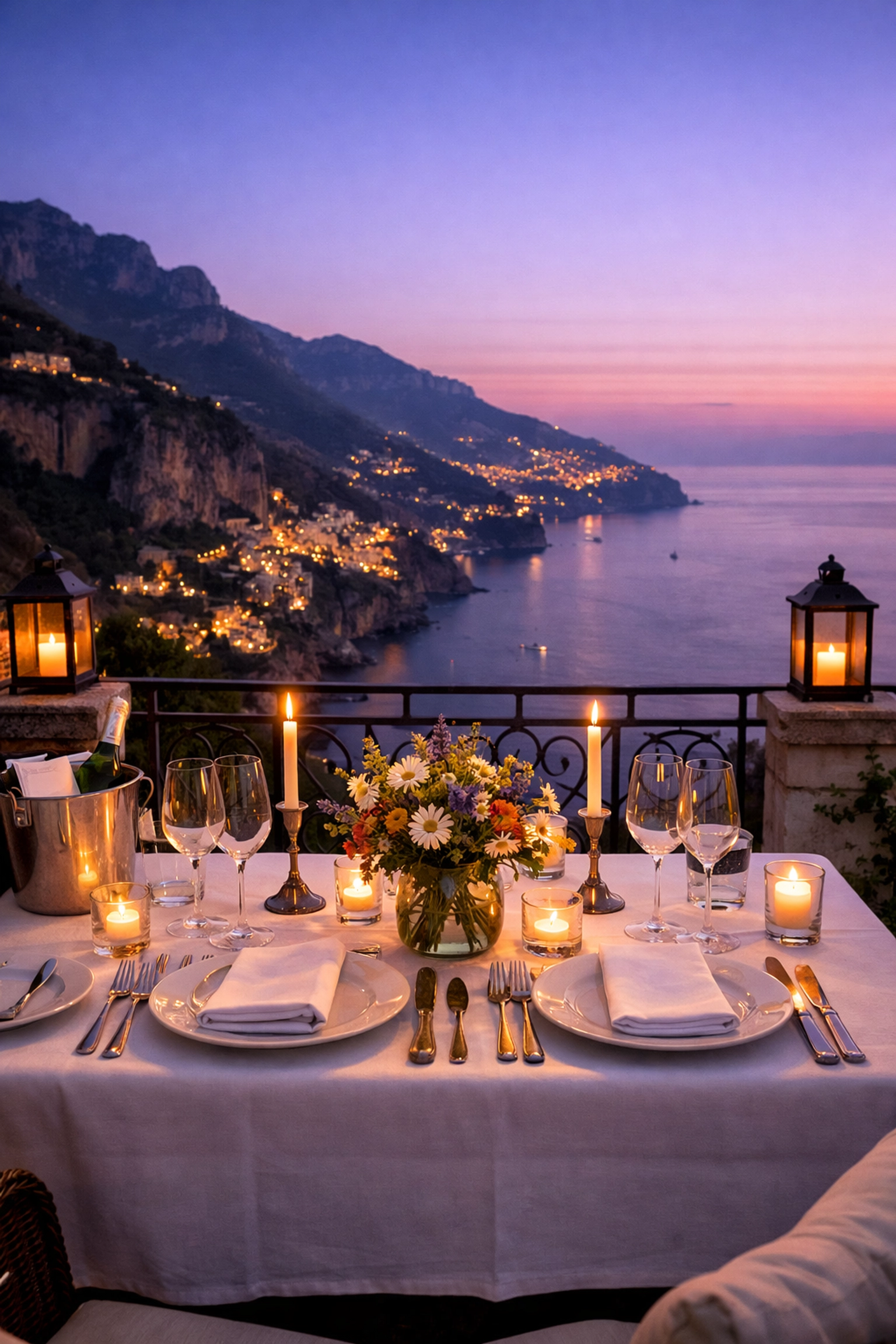
You deserve to travel like an insider. You deserve the invisible discount. You deserve a vacation that was built specifically for you, by someone who knows where the traps are hidden and where the true luxury resides. Let’s stop looking at price tags and start looking at the total value of your experience. Your future self: the one sipping a cocktail on a balcony you didn’t have to pay to upgrade to: will thank you.
Visit www.TimeForYourVacation.com to start planning your next adventure. Check out www.DaveTheTourGuide.com for personalized travel guidance and insider tips. And keep reading www.TimeForYourVacation.blog for more honest takes on the travel industry and how to navigate it like a pro. Try our Luxury concierge with www.BlackKeyElite.com . And listen to my podcast! https://www.podomatic.com/podcasts/contact24682
 Time For Your Vacation
Leave a comment