![[HERO] The American's Grand Tour: Everything First-Time Travelers Need to Know About Europe (The 5,000-Word Master Guide)](https://cdn.marblism.com/3q-zBZIeep8.webp)
You have spent years dreaming of it. You have seen the cinematic sweeps of the Eiffel Tower in Emily in Paris, you have swooned over the sun-drenched villas of Tuscany in Under the Tuscan Sun, and you have probably pinned enough Pinterest boards to fill a library. The idea of the “Grand Tour”, a rite of passage dating back to the 18th century, remains the ultimate aspirational journey for Americans. But here is the truth that social media influencers rarely mention: Europe is not a museum designed for your convenience. It is a living, breathing, sometimes chaotic, and often confusing collection of distinct cultures, ancient infrastructure, and very specific social rules.
The European Dream vs. The Reality
You imagine yourself gliding through the streets of Paris with a baguette under your arm, looking effortlessly chic. In reality, you are likely dragging a 50-pound hardshell suitcase over 500-year-old uneven cobblestones while trying to navigate a metro system that hasn’t seen an elevator since the dawn of time. This is the first lesson of the European dream: the charm is often found in the very things that make it inconvenient.
The biggest mistake first-time travelers make is trying to conquer the “10-Cities-in-10-Days” itinerary. You think you are being efficient. You think you are maximizing your “once-in-a-lifetime” trip. In reality, you are spending half of your precious vacation time in train stations, security lines, and hotel check-in lobbies. You see the inside of a high-speed train more than you see the inside of the Uffizi Gallery. This is the antithesis of luxury. Luxury is the ability to sit at a café in a Roman piazza for three hours, watching the world go by, without checking your watch.
Slow travel is the secret to a successful first trip. Instead of trying to see all of Italy, see two regions deeply. Instead of “doing” Europe, pick a corner and let it breathe. When you rush, you miss the nuances, the way the light hits the canals in Venice at 6:00 AM before the cruise ships arrive, or the specific smell of roasting chestnuts on a London street corner. You want your memories to be of the people you met and the flavors you tasted, not the stress of a missed connection at Gare du Nord.
Logistics & The Boring Stuff (That Will Save Your Life)
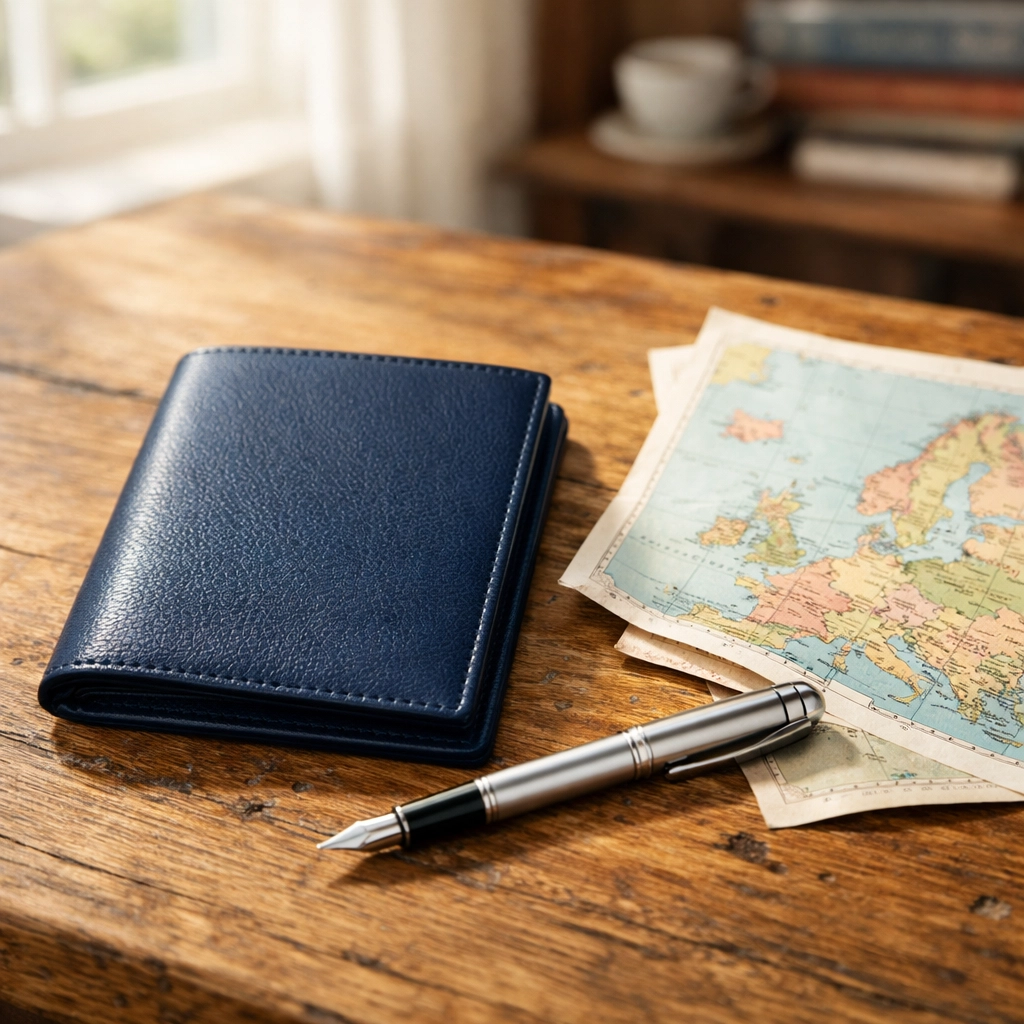
You cannot talk about travel in 2026 without talking about the ETIAS (European Travel Information and Authorization System). If you haven’t heard of this yet, pay attention. Starting in 2026, Americans will no longer simply breeze through passport control with just a smile and a blue booklet. You need prior authorization. Think of it as “Visa-Lite.” It is a security pre-screening process that links to your passport. You apply online, pay a small fee, and wait for approval. While most applications are approved in minutes, a glitch can ruin your trip before it starts. You must ensure your ETIAS is sorted weeks before you head to the airport.
Then there is the “6-month rule.” This is the administrative trap that breaks hearts at the boarding gate. Even if your passport hasn’t expired, many European countries require that it be valid for at least six months beyond your planned date of departure. If you are flying in June and your passport expires in September, the airline will likely deny you boarding. Check your expiration date today. Not tomorrow. Today.
You also need to reconsider your definition of travel insurance. For a high-end European tour, a basic policy that covers “trip interruption” isn’t enough. You are looking for primary medical coverage and, more importantly, medical evacuation. If you twist an ankle on a remote trail in the Swiss Alps or experience a medical emergency in a village in Provence, you want a policy that handles the logistics of getting you to a top-tier facility or even back to the States. True luxury is the peace of mind that comes from knowing every “what if” is already managed.
The Regional Personality Test: Where Do You Belong?
Europe is not a monolith. It is a patchwork quilt of wildly different temperaments, and choosing the right region for your first trip is like choosing the right personality for a long-term relationship.
Northern Europe (Scandinavia & The UK):
If you value punctuality, sleek design, and a certain stoic coolness, the North is calling. In Stockholm or Copenhagen, everything works. The trains are on time, the payment systems are all digital, and everyone speaks English better than you do. It is expensive, expect to pay a premium for that glass of wine, but the “vibe” is one of quiet, minimalist luxury. London, of course, is the great exception: a buzzing, global megalopolis that feels like the center of the universe, blending ancient history with cutting-edge cool.
Southern Europe (The Mediterranean):
This is the Europe of your dreams, Italy, Spain, Greece, and Portugal. It is loud, it is passionate, and it runs on its own clock. Do not expect lunch at noon in Spain; do not expect a quick coffee in Italy. The “vibe” here is sensory overload. It is the smell of jasmine and sea salt, the sound of Vespas, and the sight of crumbling ruins draped in bougainvillea. It is more affordable than the North, but it requires more patience. This is where you go to learn the “art of doing nothing.”
Western Europe (France, Benelux, Germany):
The heavy hitters. This region offers the most iconic “Grand Tour” experiences. Paris is the crown jewel, offering a level of sophistication and culinary excellence that remains unmatched. Germany provides a fascinating contrast: the efficiency of Frankfurt, the gritty history of Berlin, and the fairytale castles of Bavaria. This region is the best connected by rail, making it the easiest for first-timers to navigate.
Eastern Europe (Prague, Budapest, The Balkans):
For the traveler who wants history without the “Disney-fied” crowds of Paris. Prague and Budapest are breathtakingly beautiful and significantly more budget-friendly. The “vibe” is slightly more mysterious, a blend of Austro-Hungarian grandeur and post-Soviet grit. The hospitality here is legendary, and the food is hearty and soulful.
The Transportation Maze: How to Actually Get Around
You have heard of the Eurail pass. It sounds romantic, doesn’t it? One ticket to rule them all. But here is a pro tip: for the modern luxury traveler, the Eurail pass is often more trouble than it is worth. In the age of point-to-point high-speed rail, it is usually cheaper and more comfortable to book individual “First Class” or “Business Class” seats on trains like the French TGV, the Italian Frecciarossa, or the Spanish AVE. These trains offer reclining leather seats, meal service at your place, and, most importantly, dedicated luggage space.
When it comes to flying within Europe, beware the “Budget Airline Trap.” Ryanair and EasyJet might advertise a flight from London to Venice for $29, but by the time you pay for your carry-on bag, your seat assignment, and the 90-minute bus ride from the “secondary” airport that is actually halfway to Slovenia, you have spent more than you would have on a national carrier. More importantly, you have sacrificed your dignity. High-end travel is about avoiding “secondary” airports at all costs.
Within the cities, your best friend is your own two feet, followed closely by the local metro. However, there are exceptions. In Venice, you are taking the Vaporetto (water bus) or a private water taxi. In Amsterdam, you are walking or dodging thousands of suicidal cyclists. The one thing you should never do? Rent a car to drive into a medieval city center. Between the ZTL (Limited Traffic Zones) in Italy that carry heavy fines and the narrow, one-way labyrinths of Seville, a rental car in a city is a recipe for a divorce. Save the driving for the rolling hills of the Cotswolds or the vineyards of Bordeaux.
The Packing Paradox: Less is More (Luxury)
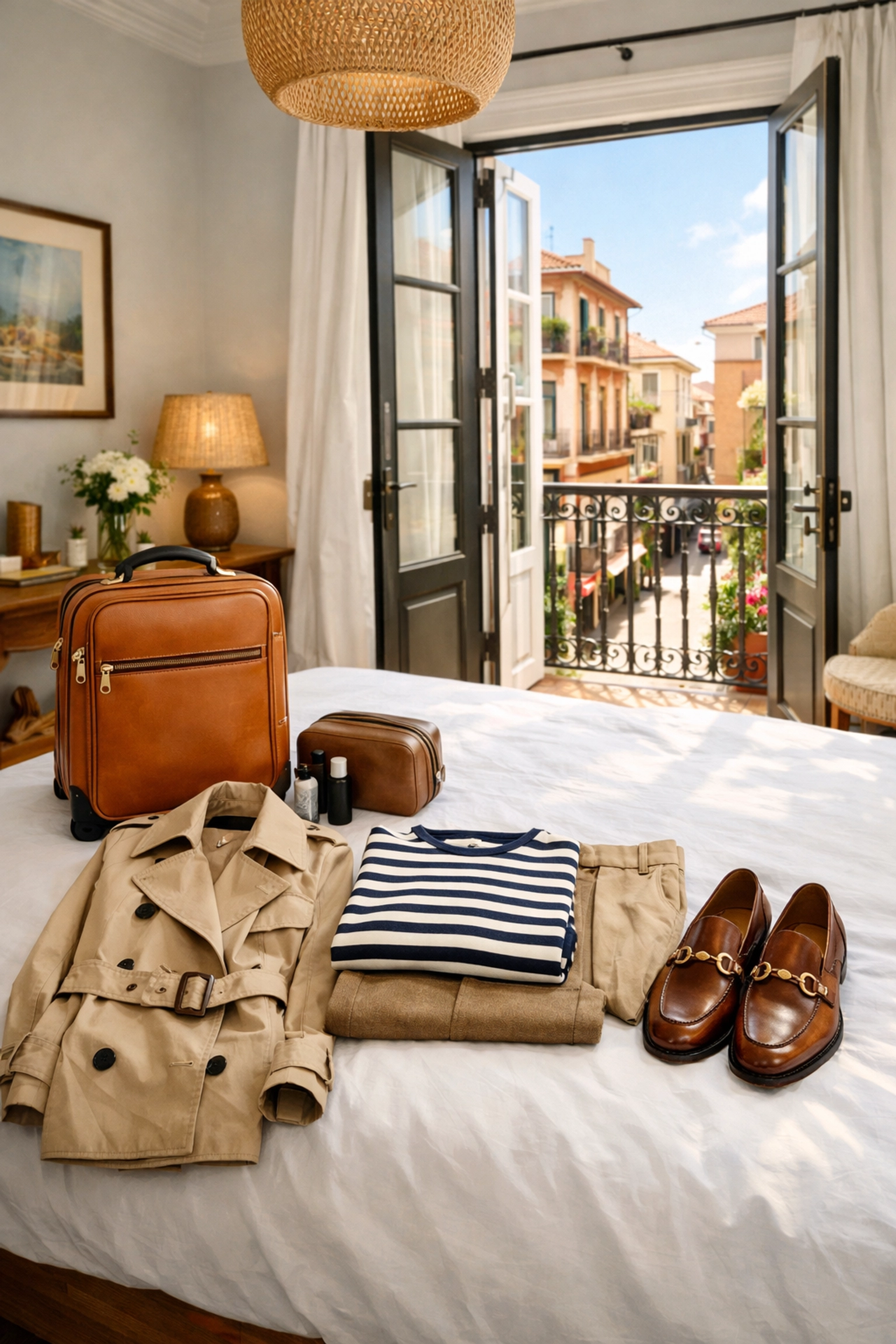
You want to look your best. We get it. But bringing three massive suitcases to Europe is a rookie mistake you will regret the moment you hit your first set of stairs. Most European boutique hotels, the ones with the most charm, are housed in historic buildings. This often means tiny elevators that can barely fit one person, let alone a mountain of luggage. Sometimes, there is no elevator at all.
The “Capsule Wardrobe” is your secret weapon. You need high-quality basics that can be layered. European weather is temperamental; it can be scorching in the sun and chilly in the shade. Think linen for the South, lightweight wool for the North, and a very comfortable pair of stylish walking shoes. Note the word “stylish.” While you want comfort, wearing neon-colored “dad” sneakers or head-to-toe athleisure screams “I am a tourist” and can actually get you barred from certain upscale restaurants or churches.
Do not forget the “Plug Struggle.” You are dealing with Type C (most of Europe) and Type G (UK/Ireland) outlets. But more importantly, you are dealing with 220-240 volts. Most modern electronics (iPhones, MacBooks) are dual-voltage, but your favorite hair straightener from home might literally melt or start a fire if you plug it in with just a simple adapter. Invest in a high-end, universal power converter that can handle high-wattage devices if you absolutely must bring your own hair tools. Better yet, check if your luxury hotel provides them (most do).
Money, Tipping, and the Mystery of the ‘Coperto’
You are used to the American system: you see a price, you add tax, and then you add a 20% tip. In Europe, the price you see is the price you pay, mostly. Tax (VAT) is already included. Tipping culture, however, is a minefield. In most of Europe, a “tip” is a small gesture of rounding up the bill or leaving a few Euros. Leaving a 25% tip is not seen as generous; it is seen as confused.
In Italy, you will often see a charge on your bill called the Coperto. This is a “cover charge” for the bread, the tablecloth, and the service. It is standard and not a scam. In other countries, a “service charge” might be included. Generally speaking, if the service was exceptional, 5-10% is more than enough.
While Europe is increasingly cashless, you still need physical coins. Why? Because in many places, especially Germany and the Netherlands, you have to pay to use the public restroom. You will find yourself standing before a turnstile at a train station, desperate to go, and realizing you only have a credit card. Keep a small pouch of 50-cent and 1-Euro coins at all times.
Lastly, beware of the “Dynamic Currency Conversion” (DCC) at ATMs and card terminals. The machine will ask if you want to be charged in “USD” or “Local Currency.” Always choose local currency. If you choose USD, the bank performing the transaction will give you a terrible exchange rate and pocket the difference. Let your own bank handle the conversion.
Dining Culture: The Customer is Not Always King
In the US, dining is often a transaction. The server wants to flip the table, and you want your food fast. In Europe, especially in the South, dining is an event. The table is yours for the night. The server will not bring you the check until you ask for it (“L’addition, s’il vous plaît” or “Il conto, per favore”), because bringing the check unprompted is considered incredibly rude, it is like saying “please leave.”
Water is another point of contention. You will not get a giant glass of ice water with a straw the moment you sit down. You will be asked “Still or Sparkling?” (Gas or No Gas). You will be served a bottle, and you will be charged for it. Free refills do not exist. If you want tap water, you have to be very specific, though in many high-end establishments, it is still considered a bit “cheap” to ask for it.
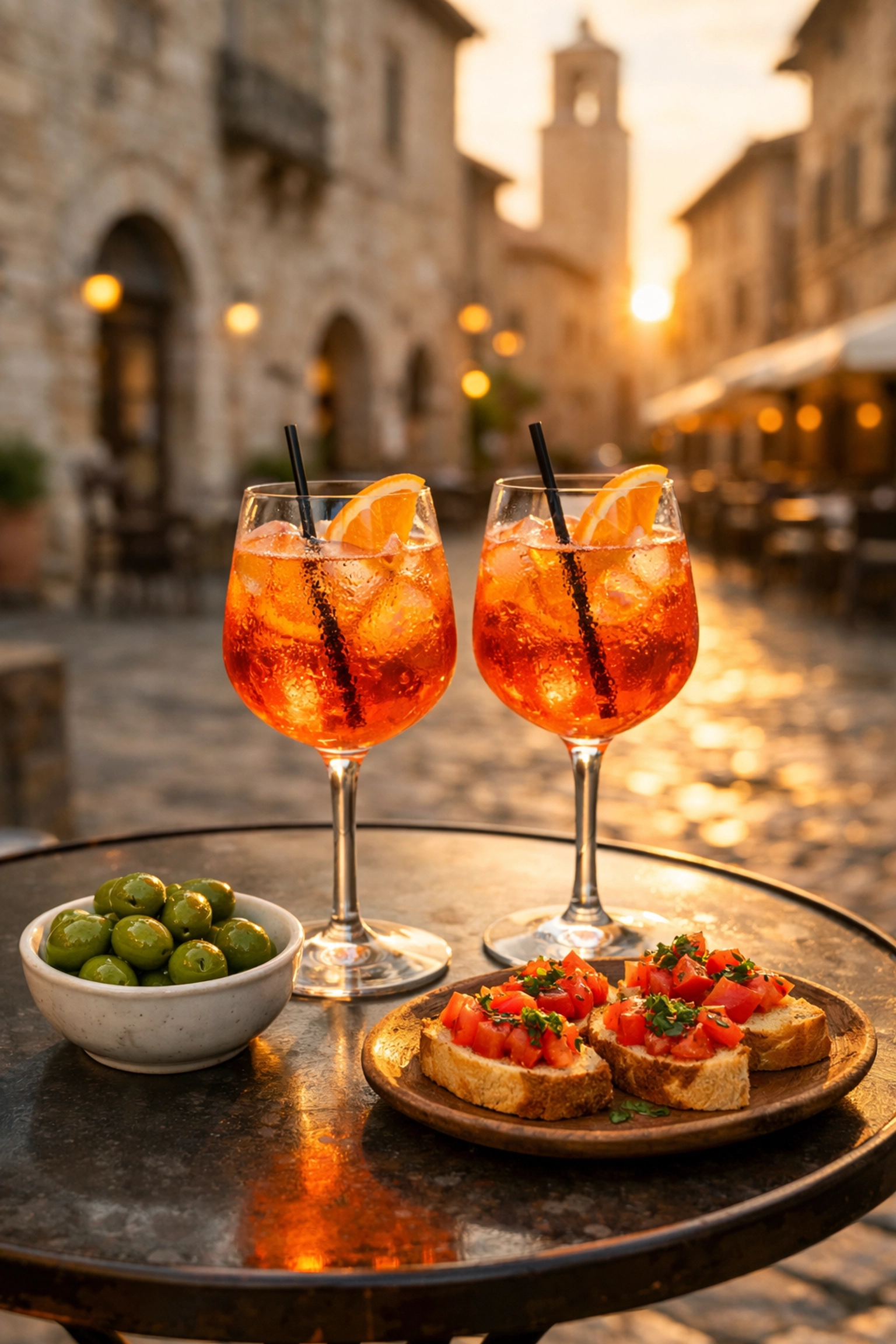
Pay attention to the clock. If you try to eat dinner at 6:00 PM in Spain, the restaurant will be closed. If you eat at 7:00 PM in Rome, you will be the only person in the room. The locals start their evening with an Aperitivo (pre-dinner drink and snacks) and don’t sit down for the main event until 8:30 or 9:00 PM. Adjust your internal clock, take a nap in the afternoon, and join the rhythm of the city.
Safety, Scams, and the Art of the “No”
Europe is generally very safe, but its major tourist hubs are playgrounds for professional pickpockets. These aren’t thugs; they are artists. They work in teams, often using distractions.
- The “Friendship Bracelet”: Someone tries to tie a string around your wrist in front of the Sacré-Cœur. Once it’s on, they demand money. Just keep walking.
- The “Dropped Ring”: Someone “finds” a gold ring on the ground and asks if it’s yours. When you say no, they try to give it to you as a gift, then ask for money for “luck.”
- The Petition: Young girls will ask you to sign a petition for a charity. While you are busy signing, their accomplice is busy emptying your pockets.
The best defense is a good offense. Do not keep your phone in your back pocket. Do not hang your purse on the back of your chair at a café. Use a crossbody bag with a zipper and keep your hand on it in crowded areas like the Paris Metro or the Ramblas in Barcelona. Most importantly, learn the “City Stare.” Walk with purpose, look like you know exactly where you are going (even if you are hopelessly lost), and do not engage with anyone who approaches you on the street with a “gift” or a question.
Conclusion: The Grand Tour Reimagined
Planning your first trip to Europe is, quite frankly, a full-time job. You can spend hundreds of hours researching, or you can accept that some things are better left to the professionals. The difference between a “good” trip and a “transformative” one lies in the details: the private entrance to the Vatican, the dinner reservation at the “locals only” spot in the Marais, and the logistical support that ensures you never have to worry about an ETIAS glitch or a missed train.
Europe is waiting for you. It is older, wiser, and more beautiful than you can imagine. But it requires respect, preparation, and a willingness to let go of your American expectations. When you stop fighting the “European way” and start embracing it, that is when the magic happens.
Visit www.TimeForYourVacation.com to start planning your next adventure. Check out www.DaveTheTourGuide.com for personalized travel guidance and insider tips. And keep reading www.TimeForYourVacation.blog for more honest takes on the travel industry and how to navigate it like a pro. Try our Luxury concierge with www.BlackKeyElite.com . And listen to my podcast! https://www.podomatic.com/podcasts/contact24682
 Time For Your Vacation
Leave a comment