![[HERO] The TikTok Travel Lies: Why That 'Viral Hack' Is Actually Ruining Your Vacation](https://cdn.marblism.com/PXZRd4X0GeK.webp)
You have seen the videos. You know the ones. A high-energy creator points at floating text bubbles while a sped-up remix of a popular song plays in the background. They promise you the world for the price of a sandwich. They tell you they have “cracked the code” of the travel industry. They insist that the airlines are lying to you, that hotels are hiding the good rooms, and that you can travel like a billionaire on a backpacker’s budget if you just follow their three simple steps.
It is seductive. It is exciting. It is also, in many cases, a complete and total lie.
The rise of “Travel TikTok” has democratized information, but it has also created a massive influx of misinformation. When you are planning the ultimate getaway, the last thing you want is for your dream trip to turn into a legal nightmare or a logistical disaster because of a 15-second clip you saw while doom-scrolling at 2 AM. You deserve the truth. You deserve a vacation that actually works.
Let’s strip away the filters and the ring lights. It is time to debunk the viral travel hacks that are actually ruining your vacation.
The Skip-Lagging Trap: A One-Way Ticket to the Blacklist
You might have heard it called “Hidden City Ticketing.” On TikTok, it is framed as the ultimate “gotcha” against greedy airlines. The logic seems sound on the surface: you want to go from New York to Charlotte. A direct flight costs $400. However, a flight from New York to Orlando with a layover in Charlotte only costs $150. The “hack” tells you to book the flight to Orlando, get off in Charlotte during the layover, and simply walk out of the airport.
You think you have won. You think you saved $250. In reality, you have just gambled with your entire future as a traveler.
Airlines hate skip-lagging with a passion that borders on the personal. Why? Because their pricing models are not based on distance; they are based on demand and hub-and-spoke logistics. When you skip-lag, you are violating the Contract of Carriage, the legal agreement you sign every time you buy a ticket.
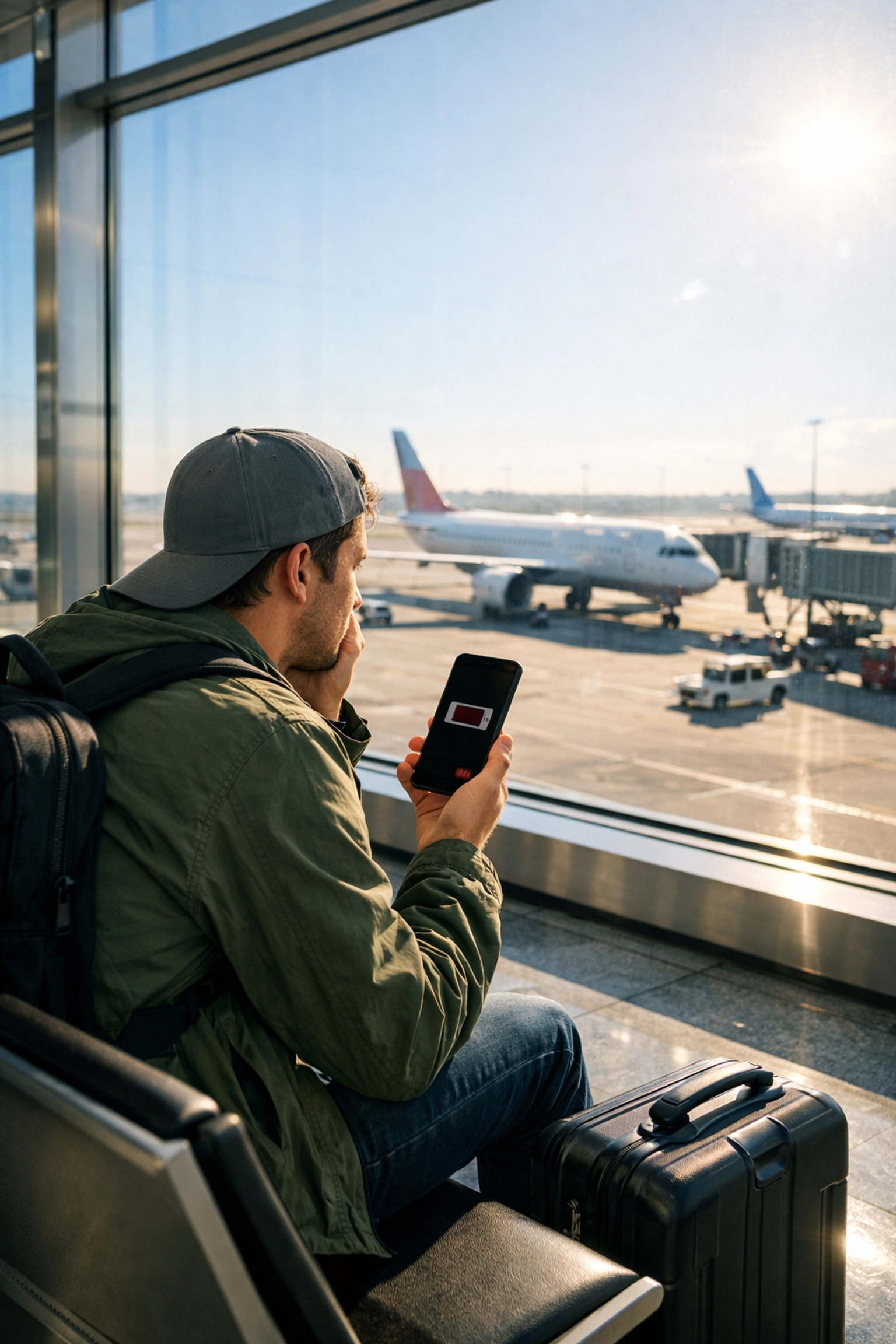
First, let’s talk about your luggage. If you check a bag, it is going to the final destination. If your ticket says Orlando, your suitcase is going to Orlando. You are standing in Charlotte with nothing but your phone and the clothes on your back while your toothbrush and favorite shoes are circling a carousel in Florida.
Second, the moment you fail to board that second leg of the trip, the airline’s system flags you as a “no-show.” The immediate consequence? Every other flight on that itinerary is instantly canceled. If you booked a round-trip ticket, your flight home is gone. You are now stranded in a “hidden city” with no way back, and the cost of a last-minute flight home will be triple what you “saved.”
Third, and most importantly, the airlines are now suing passengers and revoking frequent flyer miles. United and Lufthansa have been particularly aggressive. You might save $200 today only to find your million-mile account wiped clean or your name placed on a “do not fly” list for that carrier. Is a viral hack worth being banned from a major airline for life? Absolutely not.
The Incognito Mode Myth: Your Browser Isn’t the Problem
You have been told a thousand times: “Always search for flights in incognito mode because airlines track your cookies and raise prices when they see you are interested.”
It sounds logical. It plays into our collective distrust of big tech. It is also technically incorrect.
Airline pricing is controlled by incredibly sophisticated algorithms and Global Distribution Systems (GDS) that manage millions of “fare buckets.” These buckets have nothing to do with your browser history and everything to do with real-time inventory. There are only a certain number of seats at the lowest price point. When those are gone, the price jumps to the next bucket.
When you refresh the page and see the price go up, it isn’t because the airline saw you looking; it’s because three other people just booked seats in that lower fare bucket while you were busy clearing your cache. Professional travel experts know that prices fluctuate based on complex variables like fuel costs, currency exchange rates, and historical demand patterns.
If you want to save money on flights, focus on flexibility and timing, not your browser settings. Searching in incognito mode is the digital equivalent of wearing a tinfoil hat at the airport. It makes you feel like you’re doing something, but it doesn’t actually change the reality of the situation.
The “Free Upgrade” Delusion: No, Chocolates Won’t Work
There is a specific genre of TikTok video where a person claims they get upgraded to First Class every single time by using “one weird trick.” Usually, it involves dressing in a three-piece suit or bringing a bag of expensive chocolates for the gate agents.
Let’s be very clear: the era of the “sympathy upgrade” is dead.
In the modern aviation world, upgrades are processed by automated systems. There is a digital hierarchy. The computer looks at elite status, the original fare class of the ticket, and credit card partnerships. By the time you even reach the gate, the upgrade list has already been decided.
The gate agent doesn’t have a “make someone’s day” button that they can press just because you look sharp. In fact, if a gate agent bypasses the official list to give you a seat in the front of the plane, they can get in serious professional trouble. They have manifests to maintain and corporate oversight to answer to.
As for the chocolates? It is a nice gesture, and the crew will certainly appreciate the kindness: flight attendants have a difficult job and deserve respect. But bringing a gift with the explicit expectation of a $5,000 seat upgrade is not a hack; it’s an awkward transaction that rarely yields results. If you want the luxury of First Class, you either have to earn the status, use the miles, or pay for the seat.
The Danger of “Hidden Gems”: When Social Media Invades
We all want to find that “untouched” paradise. We want the photo of the waterfall where no one else is in the frame. TikTok is full of videos titled “Stop going here, go here instead!” showing stunning, secluded locations that supposedly no one knows about.
There are three major problems with this.
First, many of these “hidden gems” are hidden for a reason. They might be on private property, in ecologically sensitive areas, or in zones that are physically dangerous to access. Influencers often bypass “No Trespassing” signs or ignore safety warnings to get the perfect shot. Following their lead can result in heavy fines, arrest, or serious injury.
Second, the “Instagram effect” is real. When a location goes viral, it is immediately swamped by thousands of people who are not prepared for the lack of infrastructure. Small villages that can’t handle the trash or the traffic are being ruined by the sudden influx of “hidden gem” hunters.
Third, what you see on the screen is rarely the reality. That “secluded” beach in Bali or the “private” cenote in Mexico is likely surrounded by a line of 200 other people holding tripods, all waiting for their 30 seconds of “seclusion.” You aren’t finding a hidden gem; you are joining a digital assembly line.
True luxury and exclusivity aren’t found on a viral feed. They are found through deep local connections and carefully managed experiences that respect the destination as much as the traveler.

The Budget Destination Lie: The True Cost of “Affordable Luxury”
“How I lived like a king in Tulum for $50 a day!”
If you see a headline like that, keep scrolling. TikTokers are notorious for “budget-washing” their trips. They show the $10 street taco but omit the $80 taxi ride it took to get there. They show the “cheap” boutique hotel but fail to mention the $40-per-day “resort fee” or the fact that there was no air conditioning in 95-degree heat.
Destinations like Tulum, Bali, and parts of Thailand have become victims of their own success. Prices have skyrocketed. In Tulum, for example, the “beach zone” has prices that rival Manhattan or London. You aren’t getting a luxury experience for pennies anymore.
When you see these videos, you are seeing a curated highlight reel. They don’t show the power outages, the lack of potable water, or the “tourist tax” that gets added to every bill. They don’t mention the safety concerns that arise when you venture into the “ultra-cheap” areas they recommend.
Planning a trip based on these unrealistic budgets is a recipe for stress. You will arrive and find your money disappearing twice as fast as you expected, leading you to cut corners on the very experiences you traveled for. Real luxury travel requires a realistic understanding of the market.
The “Tuesday at Midnight” Myth
This is perhaps the oldest travel myth in the book, and TikTok has given it a second life. The claim is that airlines release their cheapest tickets at exactly midnight on Tuesday, or that Tuesday is the cheapest day to book a flight.
This was arguably true in the 1990s when airline employees manually updated fare databases once a week. Today, it is total nonsense.
Airlines use dynamic pricing that updates every few seconds. They use machine learning to predict demand based on everything from weather patterns to local events to how many people searched for the same route on Google. The “best day to book” is whenever the price fits your budget.
The data consistently shows that the day you fly matters much more than the day you book. Mid-week flights are generally cheaper than weekend flights. But the “Tuesday at Midnight” hack? It is just an urban legend that wastes your time and keeps you up past your bedtime for no reason.
Packing Hacks That Are Actually Wasting Your Space
TikTok loves a packing hack. From “vacuum sealing” your clothes to using dozens of tiny organization cubes, the goal is always to fit more into a carry-on.
But have you ever actually tried to live out of a vacuum-sealed bag?
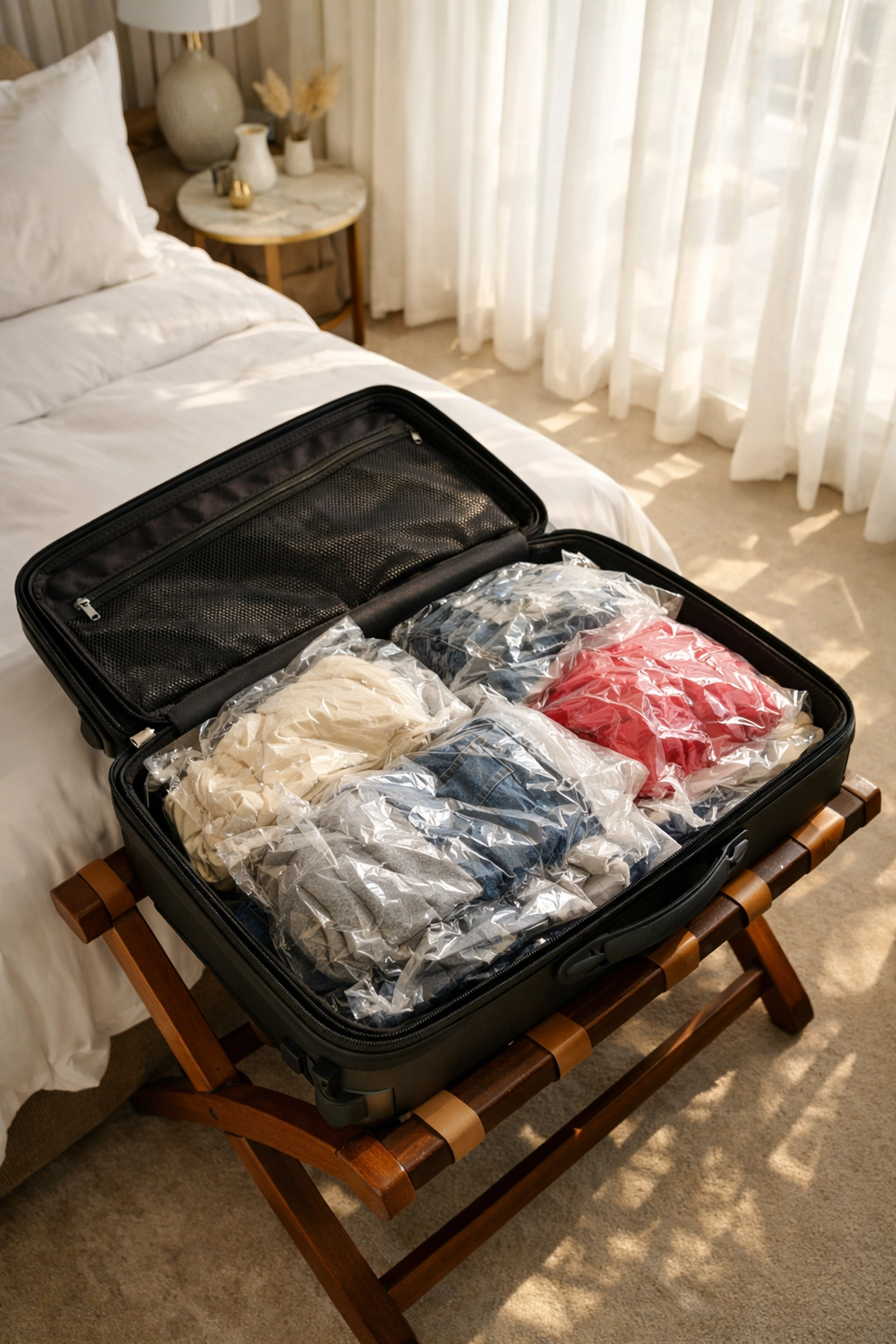
First, your clothes will come out looking like they were chewed up by a lawnmower. Unless you plan on spending the first four hours of your vacation at an ironing board, vacuum bags are a disaster. Second, while you can compress the volume of your clothes, you cannot compress the weight. You might fit 50 pounds of clothes into a small suitcase, but the moment you hit the scale at the airport, you are going to be hit with a massive “overweight bag” fee. Or worse, the airline will force you to check the bag, and you lose all the benefits of “traveling light.”
Then there are the “layering” hacks where people wear five coats and three pairs of pants to the airport to avoid baggage fees. Not only is this incredibly uncomfortable and a nightmare at the security checkpoint, but airlines are also catching on. Gate agents have the authority to deem your “outfit” as luggage if it is clearly an attempt to bypass the rules.
Effective packing isn’t about gimmicks. It is about curation. It is about knowing what you actually need and choosing high-quality, versatile pieces.
Solo Travel Safety Tips That Are Counterproductive
Solo travel is an empowering, life-changing experience. However, some of the “safety hacks” on TikTok are actually quite dangerous.
One popular tip tells solo female travelers to put a pair of large men’s boots outside their hotel door to make it look like they aren’t alone. This is problematic for several reasons. It signals to anyone walking the hallway that there is someone inside who is specifically worried about their safety: marking you as a potential target. It also alerts hotel staff that you might have an unregistered guest, which can lead to unnecessary confrontations.
Another common “hack” is the portable door lock or door stopper. While these can provide peace of mind, they can also be a major safety hazard in the event of a fire or medical emergency. If emergency responders need to get into your room to save your life, your “hack” is the thing that will stop them.
The best safety “hack” is situational awareness and professional planning. It is about knowing which neighborhoods are safe, having a reliable point of contact, and staying in properties with verified security measures. A door stopper is not a substitute for expert knowledge.
Why a 15-Second Clip Can’t Replace an Expert
The fundamental problem with TikTok travel advice is the lack of context. A creator can tell you about a “secret” beach, but they can’t tell you if the tide will be dangerous that day. They can tell you about a “cheap” flight, but they won’t be there to help you when that flight is canceled and you are stranded in a foreign country.
Travel is complex. It involves logistics, legalities, and a deep understanding of human geography. A 15-second video is designed for engagement, not for your safety or satisfaction. It is designed to make the creator look like an expert, not to make you a successful traveler.
When you are investing your hard-earned money and your precious limited time off, you shouldn’t rely on “hacks” and “glitches.” You should rely on authority, experience, and real-world results.
The world is a big, beautiful, and sometimes confusing place. Navigating it like a pro means looking past the viral trends and focusing on the reality of travel. It means understanding that the “best” way to save money isn’t skip-lagging: it’s having a trip that is planned so perfectly that you don’t waste a single cent on mistakes, fines, or overpriced “budget” traps.
You deserve an unforgettable, luxury experience that is actually real. Don’t let a “viral hack” ruin the vacation you’ve been waiting for.

Visit www.TimeForYourVacation.com to start planning your next adventure. Check out www.DaveTheTourGuide.com for personalized travel guidance and insider tips. And keep reading www.TimeForYourVacation.blog for more honest takes on the travel industry and how to navigate it like a pro. Try our Luxury concierge with www.BlackKeyElite.com . And listen to my podcast! https://www.podomatic.com/podcasts/contact24682
 Time For Your Vacation
Leave a comment