![[HERO] How Loyalty Programs Quietly Manipulate You](https://cdn.marblism.com/7hvrlGAzaJh.webp)
You scan your airline app again. Just 2,347 more miles to Gold status. You don’t even have anywhere to go next month, but you’re already browsing flights to random cities just to hit that threshold.
Sound familiar?
Congratulations. You’ve been manipulated.
And honestly? You’re in good company. Loyalty programs have become so sophisticated at influencing your behavior that you’re making decisions you wouldn’t otherwise make, spending money you wouldn’t otherwise spend, all while feeling like you’re somehow winning.
The travel industry has perfected this art. Airlines, hotels, car rental companies, they’ve turned loyalty into a science, and you’re the lab rat pressing buttons for pellets. Except the pellets are plastic cards with meaningless metal tiers printed on them, and you’re spending thousands of dollars to earn them.
Let me show you exactly how they’re doing it.
The Pavlovian Traveler
Remember Pavlov’s dogs? Ring a bell, get a treat, start salivating at the sound of bells? That’s you. Except instead of bells, it’s boarding announcements, and instead of treats, it’s early boarding privileges that save you approximately four minutes of standing time.
Loyalty programs operate on a principle called operant conditioning. It’s deliciously simple: reward a behavior, and that behavior increases. Punish a behavior, and it decreases. Your brain doesn’t care if the reward is objectively valuable. It just wants the dopamine hit.
Every time you book a flight and see those points stack up in your account, your brain releases a little burst of dopamine. You feel good. You feel accomplished. You’re “earning” something. Never mind that what you’re earning is the privilege of spending more money with the same company. Your brain has been trained to associate that airline with positive feelings.
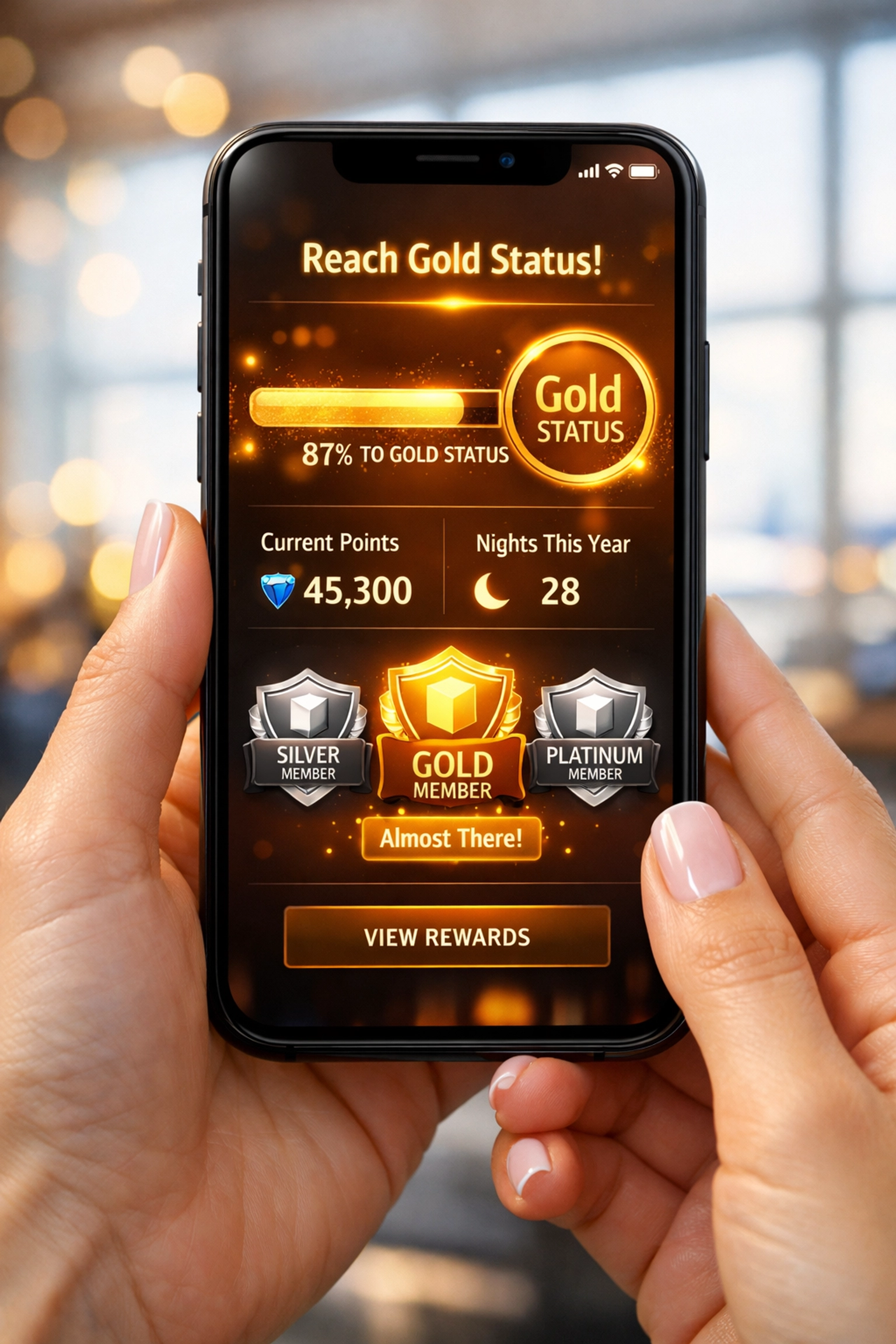
The genius part? They’ve also built in punishment. Hilton will demote you if you don’t maintain activity thresholds. Airlines threaten to expire your miles. Suddenly, you’re not just chasing rewards, you’re avoiding losses. And humans are far more motivated by loss aversion than potential gains. We’ll work twice as hard to avoid losing something we have than to gain something new.
So there you are, booking a hotel stay you didn’t really need, routing through an inconvenient connection, or taking that extra business trip. Not because you want to. Because you don’t want to lose what you’ve already “earned.”
The Progress Trap (And Why You Can’t Stop Now)
Here’s where it gets really sneaky.
You’ve probably noticed that hitting the first tier of status feels easy. You book two flights, and boom, you’re Silver. You stay at a hotel three times, and suddenly you’re a “member” with “exclusive benefits.” Those benefits might include… a free water bottle. Or late checkout that you never use. But you’ve made progress.
This is the Endowed Progress Effect in action. Once you’ve started toward a goal, you become psychologically invested in completing it. It doesn’t matter that the goal is arbitrary and the reward is minimal. You’ve already put in effort. Quitting now feels like waste.
Loyalty programs deliberately structure their tiers to get you hooked early. The first level requires minimal commitment. Maybe you were going to take those flights anyway. But once you’ve got that first tier, you’re in their ecosystem. You’re tracking points. You’re checking your status. You’re emotionally invested.
And then comes the real manipulation: the next tier is always just out of reach.
Close enough to feel achievable. Far enough that you’ll need to change your behavior to get there.
This taps into the Goal Gradient Effect, the closer you get to a goal, the harder you work to achieve it. It’s why you run faster as you approach the finish line. It’s why students cram harder as deadlines approach. And it’s why you’ll book that utterly pointless flight in December just to maintain your status for next year.
The travel industry has mastered this timing. They send you emails in November: “You’re only 5,000 miles away from Gold!” They know you’ll panic. They know you’ll book something. Anything. They’ve created artificial scarcity around an arbitrary deadline, and your brain cannot resist.
Status: The Most Expensive Drug in Travel
Let’s talk about tier status. Because this is where loyalty programs move from clever to borderline diabolical.
Status in loyalty programs isn’t about the actual benefits. Sure, free checked bags are nice. Priority boarding saves you a few minutes. Lounge access is pleasant. But these perks cost the companies pennies compared to what you spend chasing them.
Status is about identity.
You’re not just a customer anymore. You’re a Gold member. You’re Elite. You’re Platinum. These programs have convinced you that your loyalty tier says something meaningful about who you are as a person. You’ve internalized their arbitrary hierarchy as a measure of your worth as a traveler.
Watch yourself next time you board a plane. Notice how you feel when your elite status is called. Notice the tiny surge of superiority when you board before the “general” passengers. Notice how you position your bag so your status tag is visible.
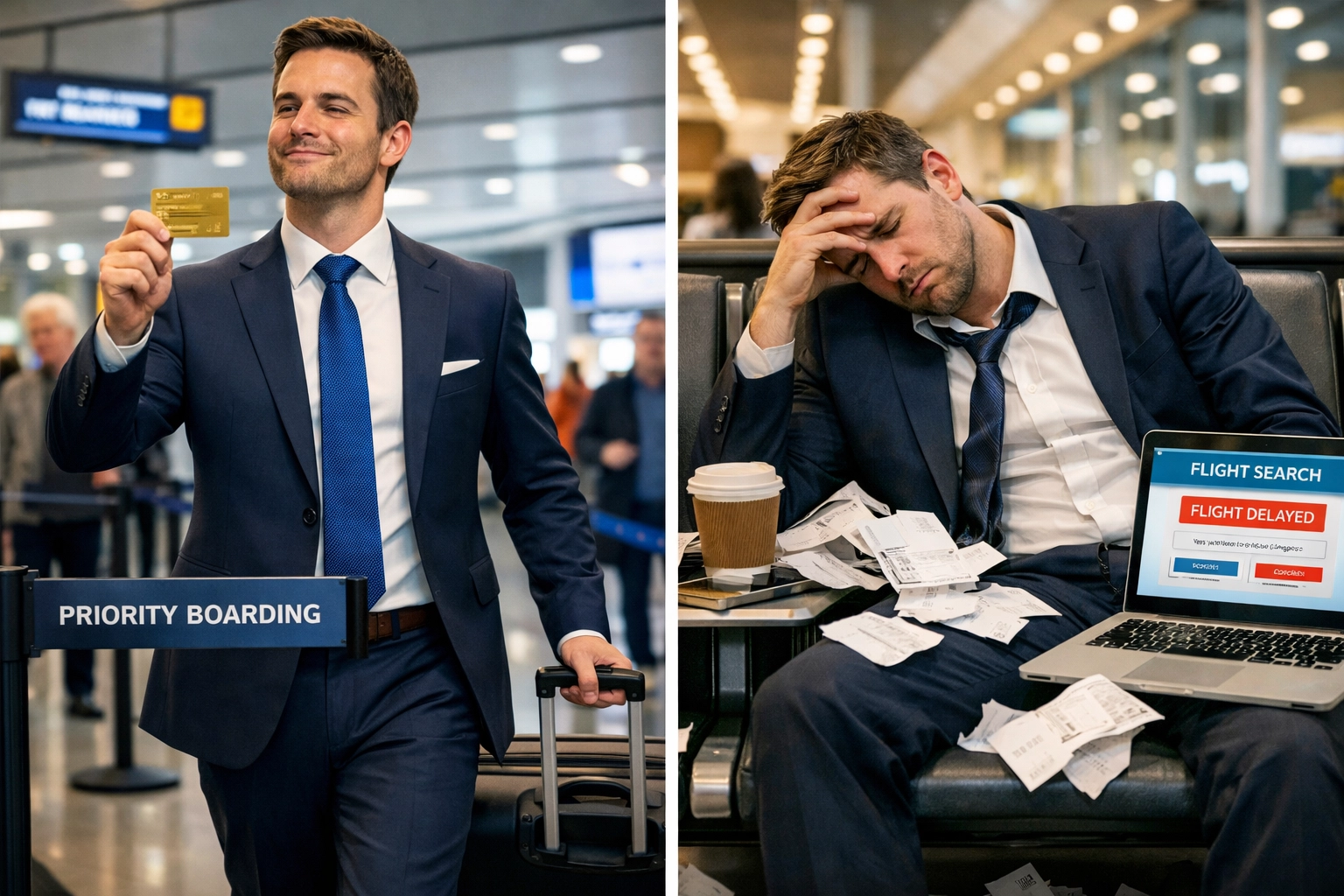
The travel industry has hijacked your ego and convinced you to pay for the privilege.
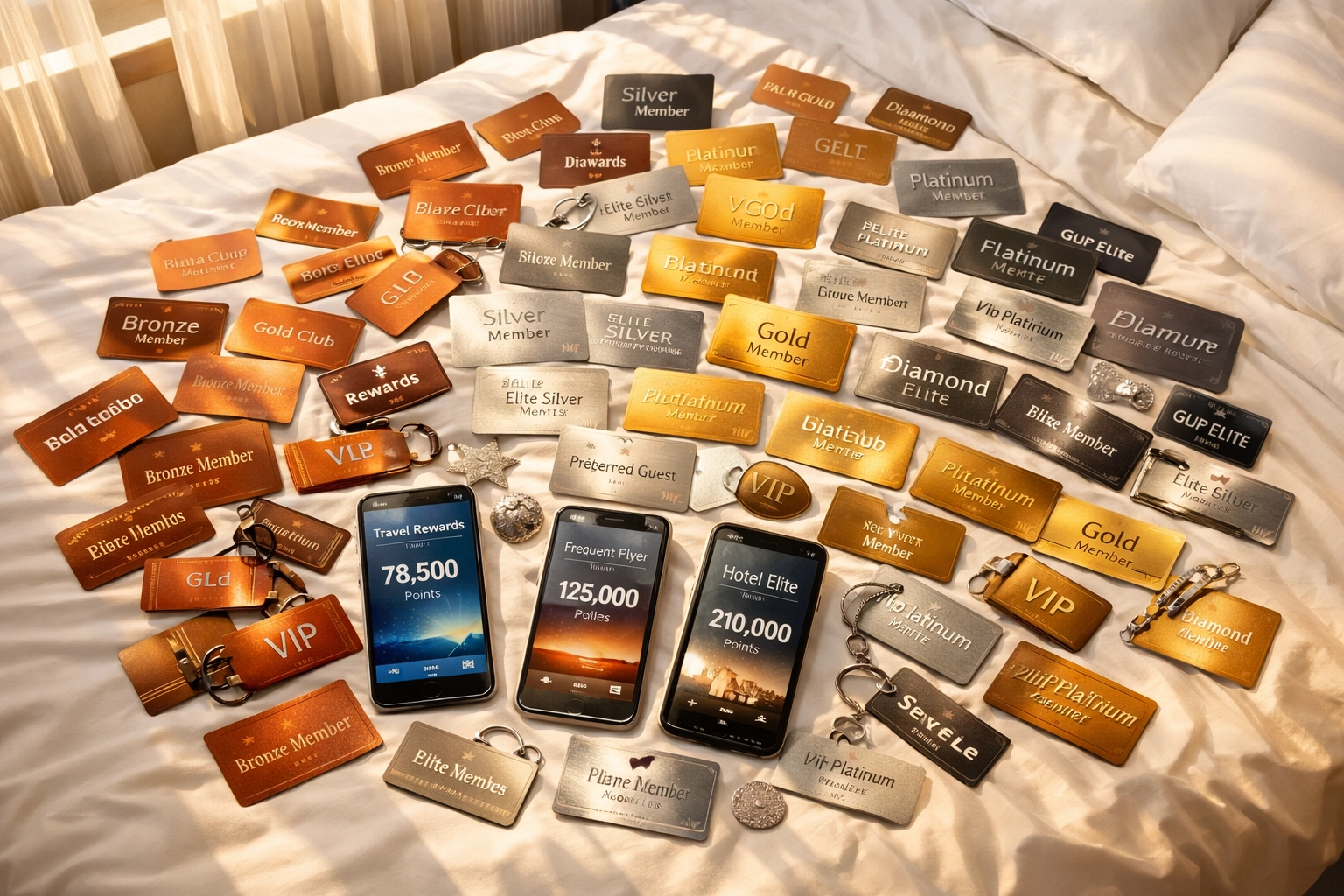
And the brilliance? The higher tiers require exponentially more spending. Going from no status to Silver might cost you three hotel stays. Going from Silver to Gold might require fifteen. Going from Gold to Platinum might demand forty. The rewards don’t scale proportionally. But the psychological investment does.
You’ve already spent so much to get this far. You can’t quit now.
This is the sunk cost fallacy weaponized against your wallet. Every dollar you’ve spent, every inconvenient flight you’ve taken, every loyalty decision you’ve made, it all becomes justification for continuing. Because if you stop now, all that previous investment feels wasted.
The Gamification Con
Modern loyalty programs have borrowed every trick from mobile gaming. And if you’ve ever spent three hours playing a game you don’t even like because you were “close to the next level,” you’ll recognize these tactics.
Badges. Challenges. Surprise bonuses. Limited-time promotions. Streaks.
These aren’t features. They’re manipulation tactics designed to trigger compulsive behavior.
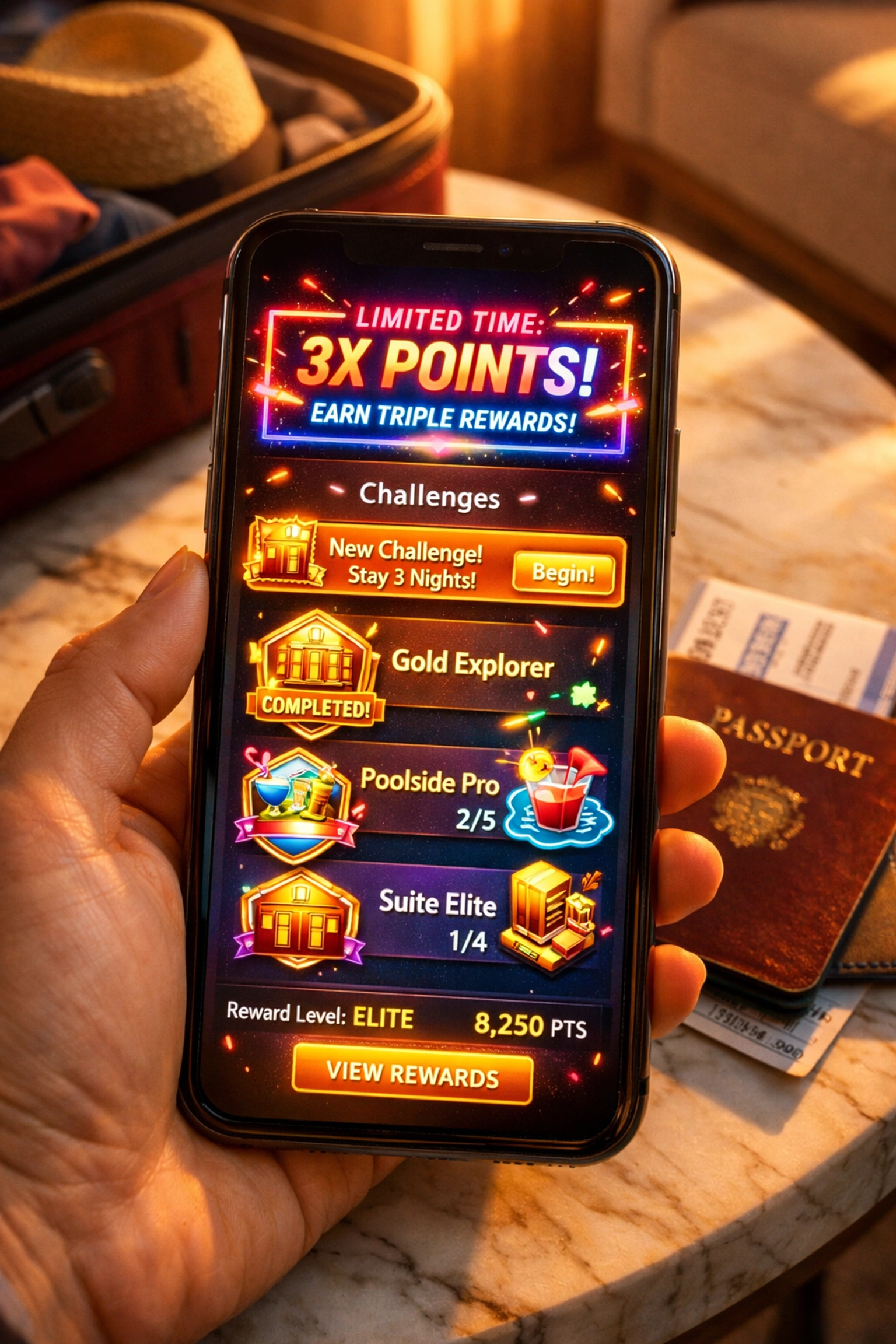
The hotel chain sends you a challenge: “Stay three more nights this month and earn double points!” This is pure psychology. They’ve created artificial urgency (this month only), attached an outsized reward (double points!), and given you a specific, achievable goal (three nights). Your brain loves this combination.
Suddenly, you’re considering a weekend trip you weren’t planning. Not because you want to go somewhere. Because you want to complete the challenge.
That’s gamification working exactly as intended.
Airlines do this brilliantly with “mileage runs”, flights people take purely to earn status or maintain tier levels. These aren’t actual travel. They’re expensive errands designed to feed the loyalty program addiction. People will literally fly across the country and back in a day, spending hundreds of dollars and 12 hours, just to earn the miles they need for status.
The entire trip is a chore. But completing it feels like winning.
And those surprise bonuses? When you unexpectedly earn extra points or get an upgrade, your brain releases even more dopamine than expected rewards. This random reinforcement is the same principle that makes slot machines addictive. You never know when the next reward is coming, so you keep pulling the lever.
Or in this case, booking the flight.
The Reciprocity Racket
Humans are wired for reciprocity. When someone does something nice for us, we feel obligated to return the favor. It’s a social survival mechanism that loyalty programs exploit ruthlessly.
You get upgraded to a better room. The hotel “comps” your breakfast. The airline gives you a free drink. These feel like gifts. Like the company is taking care of you. Like they value your loyalty.
But they’re not gifts. They’re investments in your future spending.
Studies show that people who receive unexpected rewards or perks from a loyalty program dramatically increase their spending with that brand. Not because the perks were valuable, breakfast might cost the hotel $8, but because you now feel indebted. You’ve been treated “special,” and you want to reciprocate by remaining loyal.
This is particularly insidious because the perks often cost the company almost nothing. An upgrade to an empty room that would have gone unsold anyway. Access to a lounge that exists whether you use it or not. A priority boarding announcement that costs literally zero dollars.
But to you, it feels valuable. It feels personal. And you reward them with loyalty that translates to thousands of dollars over time.
The math is absurdly one-sided. They give you $20 worth of perks. You give them $2,000 worth of loyalty. But because the perks feel like gifts, you feel like you’re winning.
Why You Can’t Walk Away
By now, you might be thinking, “Okay, I see the manipulation. I’ll just stop participating.”
Good luck with that.
Because loyalty programs have created a system where not participating actively costs you. This is the ultimate lock-in strategy.
If you’re not collecting miles, you’re paying more for the same flights that loyal customers get discounted or free. If you’re not chasing hotel points, you’re missing upgrades and perks that others receive automatically. The programs have created a two-tier system where casual customers subsidize rewards for loyal customers.
You’re not choosing between participating and not participating. You’re choosing between being rewarded for your spending and being the sucker who pays full price while funding everyone else’s perks.
Plus, you’ve already accumulated points. Hundreds of thousands of miles. Enough points for a free week at a decent hotel. Are you really going to walk away from that? Let all those points expire? Waste all that “value”?
Of course not. So you keep participating. You keep booking through the loyalty program. You keep chasing status. And the deeper you get, the harder it becomes to leave.
This is why loyalty programs work so brilliantly. They don’t just encourage repeat business: they make not repeating your business feel like a loss.
The Hidden Price of “Free”
Here’s the uncomfortable truth nobody talks about: those “free” rewards aren’t free.
You changed your behavior to earn them. You booked flights you wouldn’t have otherwise taken. You stayed at hotels that weren’t your first choice. You routed through inconvenient connections. You spent time tracking points, comparing programs, strategizing redemptions.
All of that has a cost. A real cost in time, money, and opportunity.
Research shows that people in loyalty programs spend, on average, 15-40% more with those brands than they would without the program. You’re not earning free flights. You’re spending more to receive a partial rebund disguised as a reward.
And the redemption process? Deliberately complex. Blackout dates. Capacity controls. Dynamic pricing that requires more points during peak times. Limited award availability. The programs make it just difficult enough that many people never redeem their rewards. They accumulate millions of “worthless” miles that will eventually expire.
Even when you do redeem, the value is often underwhelming. That “free” flight you earned with 50,000 miles? You could have bought that same ticket for $350. Which means you valued your miles at 0.7 cents each. Meanwhile, you made booking decisions worth thousands of dollars to earn those miles.
The math doesn’t work in your favor. But the psychology does: for them.
Playing Smarter (Not Harder)
Look, I’m not telling you to abandon loyalty programs entirely. That would be impractical in an industry that’s designed around them. What I’m saying is: recognize the manipulation for what it is.
Loyalty programs work when you let them dictate your decisions. They lose power when you make decisions based on what you actually want, and then collect whatever rewards come along for the ride.
Book the flight that best fits your schedule, not the one that earns the most miles. Stay at the hotel that’s in the best location, not the one that gives you double points. Choose the route that makes sense for your trip, not the one that maintains your status.
Use loyalty programs opportunistically. Take the rewards when they’re offered. But don’t chase them.
The moment you’re changing your behavior to earn points, you’ve lost. You’re spending more to receive less, all while convincing yourself you’re winning.
The real luxury in travel isn’t Gold status or Platinum perks. It’s making decisions based on what actually enhances your experience, not what earns you meaningless points toward arbitrary tiers.
Status doesn’t make travel better. It just makes you feel better about travel you might not have even wanted in the first place.
The Bottom Line on Loyalty
Loyalty programs are brilliant pieces of behavioral engineering. They’ve figured out how to make you feel good about spending more money for fewer choices while believing you’re somehow getting a deal.
They’ve gamified consumption, turned spending into sport, and convinced millions of people that corporate rewards programs represent some kind of achievement worth pursuing.
And the really impressive part? Even knowing all this, you’ll probably still participate. Because they’ve built a system where not participating feels worse than being manipulated.
That’s not cynicism. That’s just acknowledging how effectively these programs exploit human psychology.
The question isn’t whether you’ll use loyalty programs. The question is whether you’ll use them consciously, with clear eyes about what’s happening, or whether you’ll let them quietly manipulate you into decisions you wouldn’t otherwise make.
Your wallet will thank you for choosing the former.
Visit www.TimeForYourVacation.com to start planning your next adventure. Check out www.DaveTheTourGuide.com for personalized travel guidance and insider tips. And keep reading www.TimeForYourVacation.blog for more honest takes on the travel industry and how to navigate it like a pro. Try our Luxury concierge with www.BlackKeyElite.com . And listen to my podcast! https://www.podomatic.com/podcasts/contact24682
 Time For Your Vacation
Leave a comment