![[HERO] Why All-Inclusive Resorts Exist: The Psychology and Economics of the Ultimate "Pre-Paid" Paradise](https://cdn.marblism.com/Fo2W8W8xAiV.webp)
You know that feeling when you’re on vacation and you’re sitting at a beachside restaurant, squinting at a menu trying to do mental math in a foreign currency while simultaneously calculating whether ordering the lobster will blow your entire budget? Yeah. That feeling is exactly what all-inclusive resorts were designed to eliminate.
And spoiler alert: it’s not just about unlimited piña coladas.
The all-inclusive resort is one of the most misunderstood, debated, and wildly successful concepts in the travel industry. Some people swear by them. Others refuse to set foot in what they consider a “tourist prison.” But here’s the thing, the all-inclusive model exists for very specific psychological and economic reasons, and understanding those reasons might just change how you book your next vacation.
Let’s pull back the curtain on why these pre-paid paradises dominate the travel landscape, how they actually make money when you’re eating your weight in shrimp cocktail, and how to tell the difference between a “buffet nightmare” and a legitimately luxurious all-inclusive experience.
The History of the “Enclave”: From Club Med to the Modern Fortress of Relaxation
All-inclusive resorts didn’t just appear out of thin air with unlimited drink bracelets and nightly theme parties. They evolved from a specific need in the travel market, and it all started with a Belgian water polo champion named Gérard Blitz.
In 1950, Blitz founded Club Méditerranée (Club Med) in Mallorca, Spain. The concept was revolutionary for its time: a vacation village where everything, accommodation, meals, activities, entertainment, was bundled into one upfront price. No wallets. No tabs. No surprise bills at checkout. Just pure, uninterrupted vacation mode.
The model was inspired partly by the post-war European desire for affordable, carefree leisure and partly by the logistical nightmare of managing money while traveling abroad in an era before credit cards and ATMs. Club Med’s straw hut villages in exotic locations offered Europeans an escape where they could truly disconnect, not just from work, but from the constant financial decision-making that shadowed traditional travel.
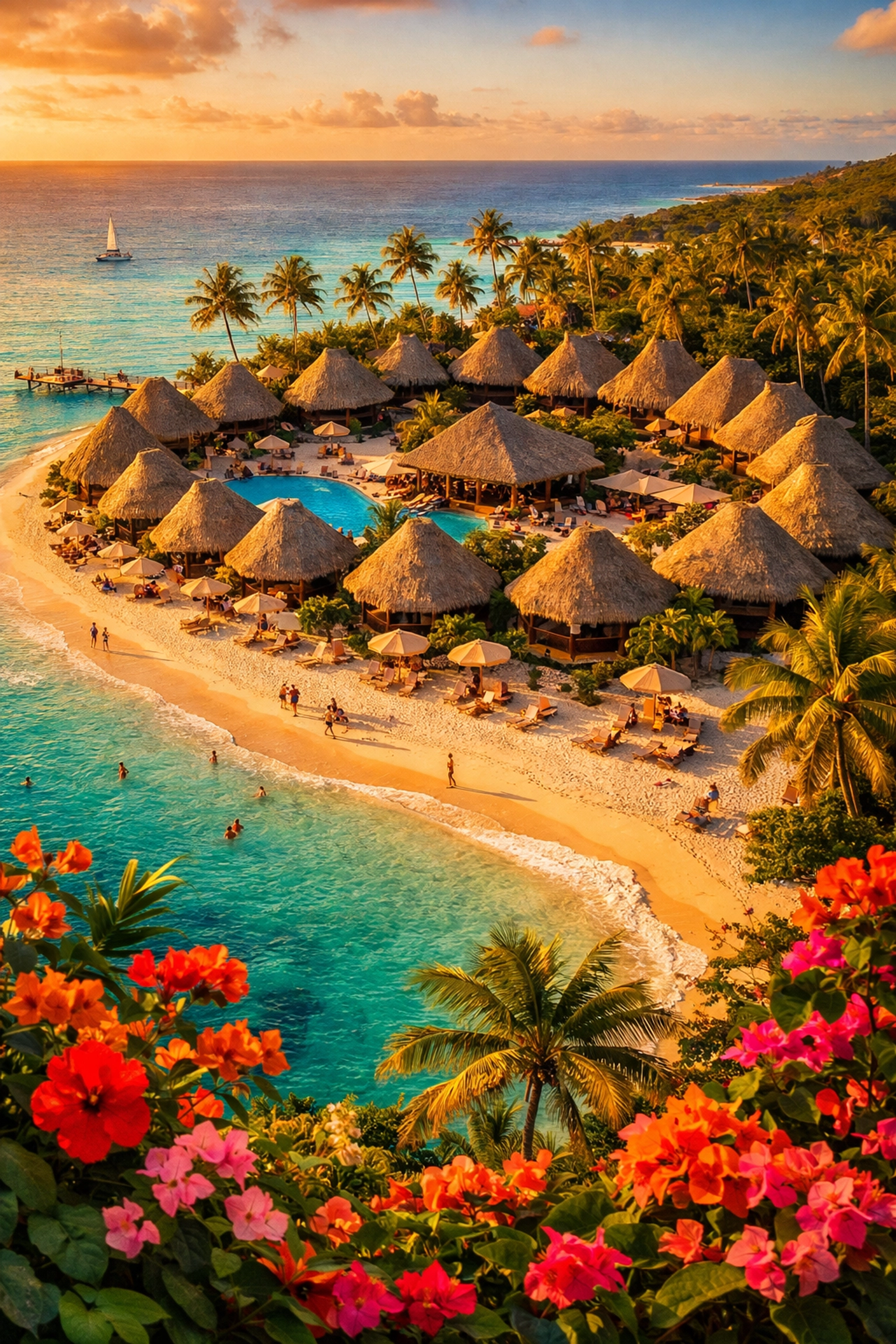
Fast forward to today, and the all-inclusive concept has exploded into a multi-billion-dollar industry. What started as rustic beachfront villages has evolved into everything from massive 2,000-room mega-resorts in Cancún to ultra-luxury private islands in the Maldives where your butler remembers how you like your morning coffee.
The “enclave” model, the idea of a self-contained vacation universe where you never need to leave the property, has become the cornerstone of destinations like Punta Cana, Jamaica, and parts of Mexico. These resorts aren’t just hotels; they’re destination ecosystems designed to keep you happy, fed, entertained, and, crucially, spending all your time (and money) on-site.
The Psychology of Pre-Payment: Why Your Brain Loves a Vacation That’s Already Paid For
Here’s where things get interesting from a psychological standpoint.
When you book an all-inclusive resort, you’re engaging in what behavioral economists call “mental accounting”, the way we categorize and treat money differently depending on its source or intended use. And our brains absolutely love the concept of sunk costs when it comes to vacation spending.
Think about it this way: You pay $4,000 upfront for a week at an all-inclusive resort in the Riviera Maya. The money is gone. It’s already spent. When you arrive at the resort and order that premium tequila or sign up for the resort’s complimentary yoga class, it doesn’t feel like spending money, even though technically, you already paid for it.
This creates what psychologists call the “pain of paying” avoidance. Normally, every time you open your wallet on vacation, there’s a tiny pang of stress. Should I order the appetizer? Is this taxi fare reasonable? How much should I tip? Each micro-decision carries a small psychological tax.
All-inclusive resorts eliminate that tax entirely.
Once you’re on property with your wristband securely fastened, you’re operating in a post-payment vacation paradise. Every margarita, every plate of tacos, every afternoon snorkeling trip feels “free”, even though you paid for it months ago. Your brain experiences the pleasure of consumption without the pain of payment. It’s vacation hedonism without the guilt.
This is incredibly powerful. Studies in consumer psychology consistently show that people enjoy experiences more when the payment is disconnected from the consumption. When you’re not reaching for your wallet every time you want another drink, you’re more relaxed, more present, and, here’s the kicker, more likely to feel like you got your money’s worth.
It’s the same reason why cruises are so popular. Pay once, vacation endlessly (at least, that’s how it’s supposed to feel).
Decision Fatigue: How All-Inclusives Save Your Brain From Vacation Burnout
Let’s talk about decision fatigue, the invisible energy drain that happens every time you make a choice.
Your brain makes thousands of decisions every day, and each one depletes a finite resource of mental energy. Where should we eat dinner? Which beach should we go to? Should we take a taxi or rent a car? What time should we leave? How much cash do I need? Is this restaurant going to be good? Should I try the ceviche or play it safe with the burger?
On a traditional vacation, you’re constantly making decisions. And while that can be exciting and adventurous (especially if you’re the type who loves spontaneity and exploration), it’s also exhausting, particularly if you’re traveling with a family or trying to decompress from a stressful job.
All-inclusive resorts eliminate a staggering percentage of those decisions.
Where should we eat? The Italian restaurant, the steakhouse, the Asian fusion place, or the buffet, all included, all on-site, all good options. What should we do today? Check the activity schedule: snorkeling at 10, beach volleyball at 2, live music at 8. Done. How much should I budget for food today? Zero additional dollars. Decision made.
This is why all-inclusives are so wildly popular with families, honeymooners, and burned-out professionals. They’re decision-free zones. You show up, you relax, and someone else handles the logistics of keeping you fed, entertained, and happy.
It’s the ultimate outsourcing of vacation planning, and your brain thanks you for it.

The Economics of the Buffet: How Resorts Make Money When You’re Eating Your Weight in Shrimp
Here’s the question everyone asks: How do all-inclusive resorts make money if I’m eating and drinking unlimited everything?
The answer is a fascinating mix of economics, psychology, and operational efficiency.
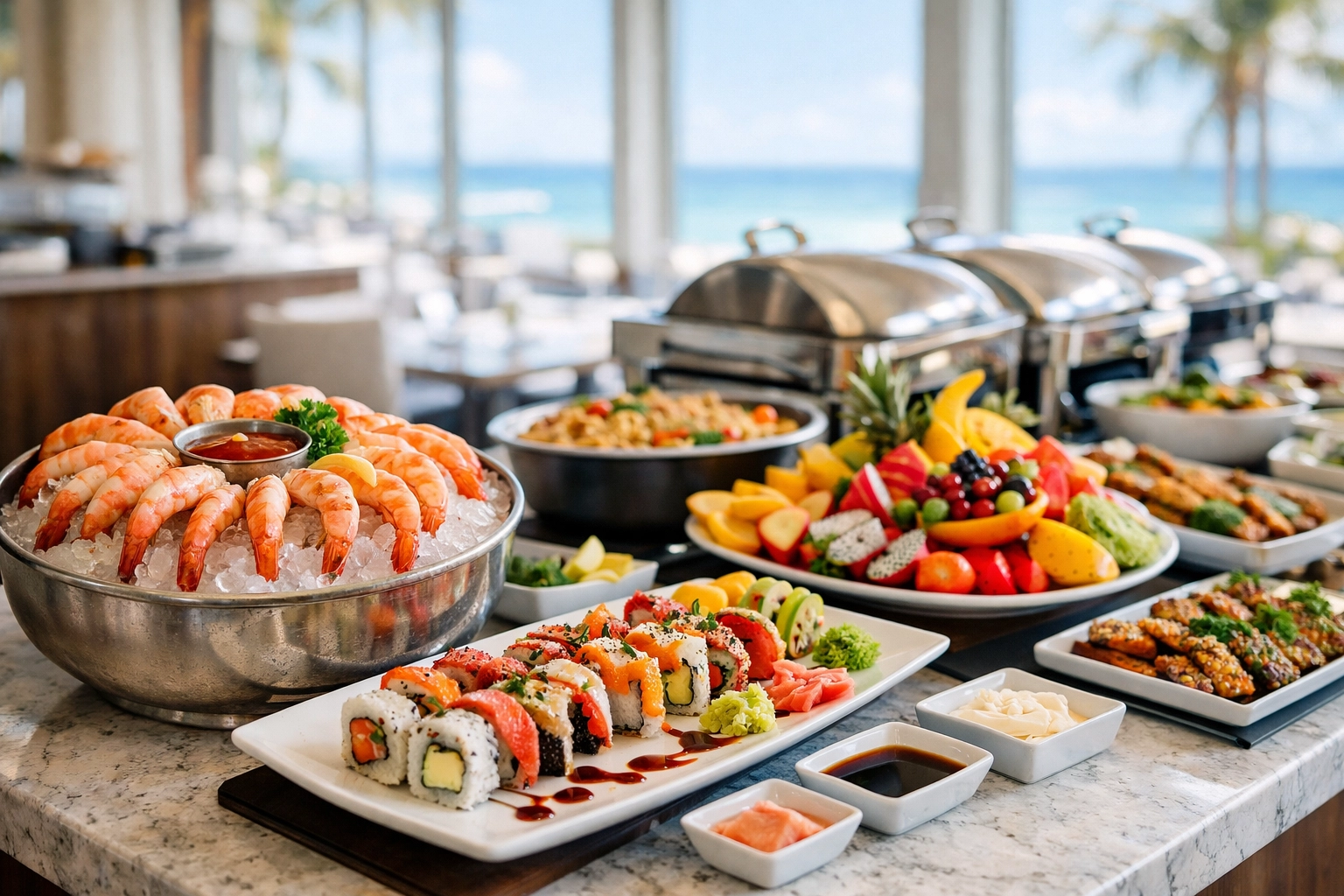
First, let’s address the elephant in the room: You’re almost certainly not eating and drinking $300 worth of food and beverages per day, even if you think you are. Resorts buy ingredients in massive bulk at wholesale prices. That shrimp cocktail you’re crushing at the pool bar? It probably cost the resort $2. The piña colada? Maybe $1.50 in ingredients. The steak dinner? Perhaps $8.
Resorts operate on economies of scale that would make Costco jealous. They’re feeding hundreds or thousands of guests with industrial kitchen efficiency, and their food costs are a fraction of what you’d pay at a standalone restaurant.
Second, there’s the concept of “shrinkage” in reverse. In retail, shrinkage refers to lost inventory. In all-inclusives, it’s the opposite, most guests don’t consume anywhere near their theoretical maximum. Sure, there’s always that one guy who treats the buffet like a competitive eating challenge, but for every one of him, there are three families who eat relatively normally and skip breakfast half the time because they slept in.
Resorts price their packages based on average consumption, not maximum consumption. They know from decades of data exactly how much the typical guest will eat and drink. They bake that cost into the room rate, add their profit margin, and still come out ahead.
Third, and this is crucial, there’s what’s not included. Premium liquor, top-shelf wines, spa treatments, private cabana rentals, off-site excursions, room service, and specialty dining experiences often carry additional fees. These upsells are where resorts make significant additional revenue.
The all-inclusive model is essentially a loss leader for the core amenities (basic food, standard drinks, non-motorized water sports) designed to get you on property, where the resort can then upsell you on the premium experiences.
And finally, there’s the matter of occupancy and predictability. All-inclusive resorts can forecast revenue with incredible accuracy. They know months in advance how many rooms are booked, which means they can staff appropriately, order food precisely, and minimize waste. This operational efficiency is hugely profitable.
Compare that to a traditional hotel where the restaurant might be half-empty on Tuesday and slammed on Saturday, all-inclusives smooth out that volatility and capture guaranteed revenue from every single guest.
It’s a brilliantly engineered business model.
The Spectrum of “All”: Comparing Mass-Market AI to Ultra-Luxury Experiences
Here’s where things get complicated: Not all “all-inclusives” are created equal.
The term “all-inclusive” spans a spectrum from massive party resorts in Cancún where spring breakers do tequila shots at 11 AM to ultra-private villa resorts in the Seychelles where your personal chef prepares your meals based on your dietary preferences.
Let’s break down the spectrum:
Mass-Market All-Inclusive: Think big-box resorts with 800+ rooms. You’ll find these in places like Punta Cana, Montego Bay, and Playa del Carmen. The food is buffet-style with some à la carte options. The drinks are decent but not premium. The activities are group-oriented, water aerobics, beach volleyball, nightly shows. These resorts are optimized for volume and value. You’re getting a lot for your money, but you’re also sharing that experience with hundreds of other guests. Brands like RIU, Iberostar, and Barceló fall into this category.
Mid-Tier All-Inclusive: This is where you start seeing better food, smaller properties, and more personalized service. Resorts like Hyatt Ziva, Hard Rock Hotels, and Dreams Resorts occupy this space. You’ll get reservation-based dining at specialty restaurants, higher-quality alcohol, and better room amenities. The vibe is still lively, but it’s a notch more refined. These properties attract couples, families, and friend groups who want the all-inclusive convenience with a bit more sophistication.
Luxury All-Inclusive: Welcome to the top tier. Sandals, Secrets, Excellence, Le Blanc, these resorts take the all-inclusive concept and wrap it in genuinely luxurious packaging. You’re looking at suites instead of rooms, butler service, premium liquor, gourmet dining, and adult-only environments (in many cases). The design is more upscale, the staff-to-guest ratio is higher, and the overall experience feels more like a boutique hotel than a mega-resort.
Ultra-Luxury All-Inclusive: And then there’s the stratosphere. Private island resorts in the Maldives, overwater bungalows in Bora Bora, and remote lodges in Africa that include everything from champagne to private chefs to guided safaris. At this level, “all-inclusive” means all inclusive, including spa treatments, premium wines, off-site excursions, and even seaplane transfers. You’re paying $1,500+ per night, but truly nothing touches your wallet. Brands like Soneva, Six Senses (when they do AI), and certain Aman properties operate at this level.
The key difference? Curation. As you move up the spectrum, the experience becomes less about unlimited quantity and more about refined quality. The buffet disappears. The crowds thin. The service becomes invisible and intuitive.
The “Hidden” Costs: What’s Usually NOT Included (And How to Spot Them)
Let’s be real: “All-inclusive” is a bit of a marketing term. Very few resorts include everything. Here’s what typically costs extra, even at resorts that advertise themselves as fully inclusive:
Premium Alcohol: Most all-inclusives include domestic liquor and standard brands. Want top-shelf tequila, aged rum, or imported scotch? That’s usually extra. Some luxury resorts include premium brands, but read the fine print.
Spa Treatments: Massages, facials, and body treatments almost always cost extra. Some ultra-luxury properties include daily spa treatments in their rates, but they’re the exception.
Off-Site Excursions: That cenote tour, zip-lining adventure, or trip to the Mayan ruins? Usually not included. Resorts offer these as paid excursions, often at marked-up prices compared to booking directly with local operators.
Room Service: Many resorts charge for room service or limit it to certain hours. Some luxury properties include it, but don’t assume.
Motorized Water Sports: Jet skis, parasailing, and scuba diving typically cost extra. Non-motorized activities like kayaking, paddleboarding, and snorkeling are usually included.
Specialty Dining: Even at all-inclusives with multiple restaurants, there’s often one “premium” steakhouse or sushi restaurant that charges a supplement, usually $40-$80 per person.
Wi-Fi: Some resorts still charge for premium or in-room Wi-Fi, though this is becoming less common.
Gratuities: While gratuities are technically “included” at most all-inclusives, many guests still tip for exceptional service, and staff often expect it.
The trick is to read the resort’s website carefully before booking. Look for phrases like “select brands,” “premium brands available for purchase,” or “some restrictions apply.” Those are red flags that not everything is truly unlimited.
The Ultimate Family Hack: Why All-Inclusives Save Sanity When Traveling With Kids
If you’ve ever traveled with children, you know the unique stress of managing their needs, entertainment, and ever-changing moods while simultaneously trying to have a relaxing vacation yourself.
All-inclusive resorts are the ultimate family travel hack. Here’s why:
Budget Certainty: Kids are expensive. They want snacks. They want ice cream. They want that inflatable dolphin from the gift shop. At an all-inclusive, you know exactly what you’re spending upfront. Your kids can eat and drink (non-alcoholic, obviously) as much as they want without you wincing every time they order another smoothie.
Built-In Childcare: Most family-oriented all-inclusives offer kids’ clubs with supervised activities. Drop your little ones off for a few hours of arts and crafts while you actually enjoy that piña colada by the adult pool. It’s guilt-free parenting.
Activity Overload: All-inclusives keep kids busy. Water slides, beach games, movie nights, teen clubs, video game rooms, there’s always something to do. No one’s whining about being bored.
Flexible Dining: Buffets are perfect for picky eaters. Your kid wants mac and cheese for the third meal in a row? No problem. No judgment. The buffet doesn’t care.
Safety and Convenience: Everything is contained within one property. You’re not wrangling kids through unfamiliar streets or worrying about them wandering off. The resort is a controlled, safe environment where they can have supervised independence.
For families, the math is simple: The peace of mind and logistical ease of an all-inclusive often outweighs the cost savings of trying to DIY a vacation with kids in tow.
When to Skip the AI: Destinations Where All-Inclusive Actually Ruins the Experience
Here’s the controversial truth: All-inclusive resorts aren’t always the right choice. In fact, in certain destinations, they can actively detract from the experience.
Italy: You do not go to Italy to eat at a resort buffet. Italy is about wandering cobblestone streets, discovering tiny family-run trattorias, and ordering house wine at lunch. An all-inclusive in Italy is like going to a Michelin-star restaurant and ordering chicken fingers.
France: Same deal. Paris, Provence, the French Riviera, these destinations are about immersion in local culture, food, and wine. Staying locked in a resort bubble defeats the entire purpose.
Japan: Japanese cuisine is hyper-regional and incredibly diverse. You want to explore street food in Osaka, sushi bars in Tokyo, and ryokan kaiseki dinners in Kyoto. An all-inclusive resort would be an absolute tragedy.
Cities in General: All-inclusives work best in beach or remote destinations. If you’re visiting Barcelona, London, or New York, you want to get out and explore. The whole point is the city itself.
Destinations With Incredible Local Food Scenes: Places like Thailand, Vietnam, Peru, and Mexico City have some of the best street food and local restaurants on the planet. Staying in an all-inclusive bubble means missing out on the best part of the destination.
On the flip side, all-inclusives absolutely shine in destinations where:
- The local area feels touristy or unsafe: Certain parts of the Caribbean benefit from the all-inclusive model because venturing off-resort can feel overwhelming or uncomfortable.
- The destination is remote: The Maldives, Bora Bora, or a remote Caribbean island where there’s literally nothing nearby, all-inclusive makes total sense.
- You want a pure beach vacation: If your goal is to plant yourself on the sand and do absolutely nothing, an all-inclusive is perfect.
The rule of thumb? If the destination itself is the attraction (culture, food, history), skip the all-inclusive. If the resort is the destination, embrace it.

How Time For Your Vacation Finds the “Goldilocks” Resort: Not Too Big, Not Too Bland, Just Right
Here’s where I come in.
The all-inclusive market is massive and overwhelming. There are hundreds of resorts across dozens of brands, and not all of them are created equal. Some are spring break party zones. Some are couples-only romantic sanctuaries. Some are family circuses. Some are legitimately luxurious. Some are… well, let’s just say they’re not great.
Finding the “Goldilocks” resort, the one that’s just right for your specific travel style, requires expertise, insider knowledge, and experience.
I’ve personally visited many of these properties. I know which ones have genuinely good food versus which ones serve reheated buffet sludge. I know which resorts have beautiful beaches versus which ones have seaweed-choked shorelines. I know which brands over-promise and under-deliver, and which ones consistently exceed expectations.
When you work with me, I’m not just booking you a generic all-inclusive vacation. I’m matching you with a resort that fits your priorities. Do you want a lively, social vibe or a quiet, adults-only retreat? Are you traveling with toddlers, teenagers, or no kids at all? Do you care more about food quality or having a swim-up bar in your room? What’s your budget, and where can I stretch that budget to get you the best value?
I also know how to read between the lines of resort marketing. When a resort says “rustic charm,” that often means “outdated rooms.” When they emphasize “lively atmosphere,” that’s code for “loud pool parties all day.” When they say “authentic local experience,” that might mean “isolated and far from anything.”
Finding the right all-inclusive isn’t about picking the cheapest option on a booking site. It’s about understanding what you want from your vacation and matching you with a property that delivers.
The Bottom Line: All-Inclusive Resorts Exist Because They Solve a Problem
At the end of the day, all-inclusive resorts exist because they solve a very real problem: travel stress.
They eliminate financial decision-making, reduce logistical complexity, and create a controlled environment where relaxation is practically guaranteed. They bundle everything into one upfront cost, giving you budget certainty and psychological freedom to enjoy your vacation without constantly calculating costs.
Are they perfect? No. Are they right for every destination or every traveler? Absolutely not.
But for beach vacations, family trips, honeymoons, and anyone who just wants to unplug without thinking about logistics, they’re an incredibly effective solution.
The key is knowing which all-inclusive to choose, and that’s where expert guidance makes all the difference.
If you’re considering an all-inclusive vacation and want to make sure you’re booking a property that matches your style, budget, and expectations, reach out. I’ve spent years navigating this space, and I can save you from the disappointment of ending up at a resort that looked great on Instagram but feels like a crowded cafeteria in real life.
Your vacation time is precious. Let’s make sure you spend it at a resort that actually delivers on the all-inclusive promise, without the hidden surprises, bland food, or buyer’s remorse.
Because the best vacation is one where the hardest decision you make is whether to have a second margarita. And the answer, by the way, is always yes.
Dave Galvan, author of this amazing tome, is a travel author, luxury travel concierge, travel blogger, travel vlogger, travel tour guide, travel podcaster and traveler.
www.TimeForYourVacation.com
www.DaveTheTourGuide.com
www.TimeForYourVacation.blog
www.BlackKeyElite.com
Podcast: https://www.podomatic.com/podcasts/contact24682
 Time For Your Vacation
Leave a comment