![[HERO] Travel Habits That Instantly Make a Trip Smoother](https://cdn.marblism.com/WAcowdIwRyf.webp)
You know what separates the frazzled airport sprinter from the calm, collected traveler sipping an Americano at Gate 37? It’s not luck. It’s not money. It’s not some secret travel gene passed down through generations of jet-setters.
It’s habits.
The truth is, smooth travel isn’t something that happens to you. It’s something you create through a series of small, intentional choices that compound into an entirely different travel experience. While everyone else is white-knuckling their way through security, sweating through their shirt at baggage claim, or desperately trying to find their hotel confirmation email at 2 AM in a foreign country, you’re gliding through like you’ve done this a thousand times.
Because, well, you have. And you’ve built the habits to prove it.
Let’s talk about the travel habits that instantly, and I mean instantly, transform your trip from a stress-inducing ordeal into the smooth, premium experience you actually paid for.
The “Pro” Mindset: Travel Like You’ve Been There Before
Here’s the thing about professional travelers, the flight attendants, pilots, travel agents, and road warriors who rack up hundreds of thousands of miles per year: they don’t stress about travel. Not because they’re superhuman, but because they’ve systematized the chaos.
They know that smooth travel is 80% preparation and 20% adaptability. They know that the person who shows up at the airport two hours early with their boarding pass downloaded, their liquids already in a clear bag, and their important documents in the same pocket every single time is going to have a fundamentally different experience than the person frantically searching for their passport while their family waits in an increasingly angry line behind them.
The pro mindset means treating travel like a skill you’re developing, not a gauntlet you’re surviving. It means recognizing patterns. It means building systems. And most importantly, it means understanding that the goal isn’t just to “get there”, the goal is to arrive in a mental and physical state where you can actually enjoy your vacation.
Because what’s the point of spending thousands of dollars on a premium vacation if you arrive exhausted, irritated, and already needing a vacation from your vacation?
The 24-Hour Rule: The Day Before Changes Everything
The single most underrated habit in all of travel? What you do in the 24 hours before you leave.
This is your dress rehearsal. Your final prep. Your moment to close all the loops that will otherwise haunt you at 35,000 feet when you suddenly realize you forgot to tell your bank you’re traveling internationally and your card is about to get frozen the moment you try to buy that first gelato in Rome.
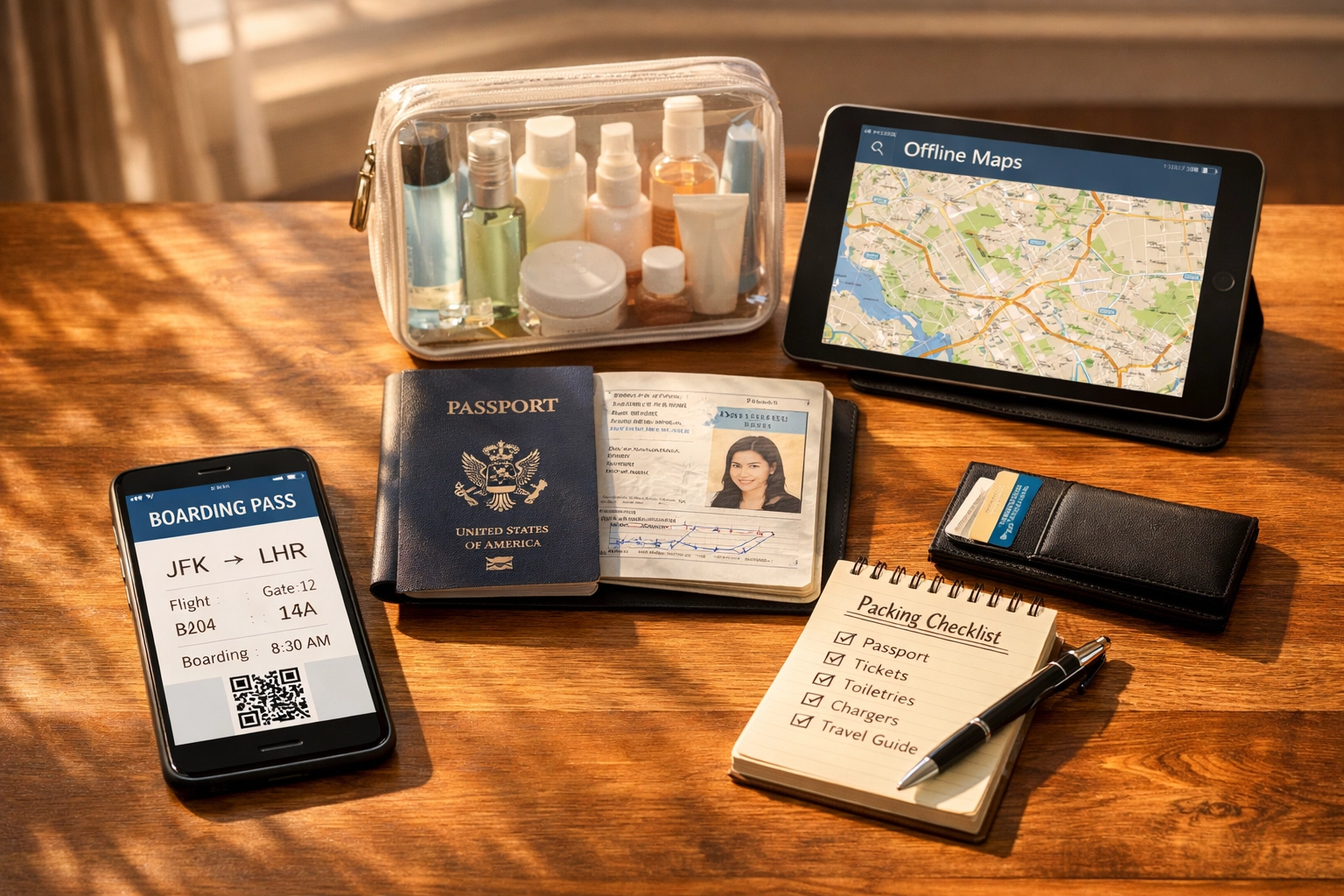
Here’s your 24-hour checklist, and yes, you should actually make this a checklist:
Check in online. As soon as that 24-hour window opens, check in. Choose your seat if you haven’t already. Download your boarding pass to your phone AND screenshot it and save it to your photos. Why both? Because apps crash, phones die, and Murphy’s Law is very real at airports.
Download offline maps. Google Maps lets you download entire city maps for offline use. Do this while you’re still on WiFi. There’s nothing quite like the panic of trying to navigate a foreign city with no data and no map, watching your Uber driver get increasingly frustrated with your inability to provide coherent directions.
Do the purse/wallet purge. Empty your wallet and bag completely. Remove every membership card, every receipt, every random business card from that networking event six months ago. Take out that gym membership card (you’re not going to the gym on vacation). Remove anything with sensitive information you don’t absolutely need. What you’re left with: one credit card, one backup card, your ID, your insurance cards, and cash. That’s it. This single habit will save you so much anxiety if something gets lost or stolen.
Prep your “left behind” essentials. Set out your phone charger, your toothbrush, your medications, anything you’ll need right up until you leave. Put them in a specific spot. Take a photo of that spot. Seriously. The number of people who leave their phone charger on the bathroom counter because they used it “one last time” before leaving is astronomical.
Set up your out-of-office and alerts. Let your bank know you’re traveling. Set your email out-of-office. Update your emergency contact about your travel dates. Put your mail on hold. These tiny administrative tasks take 20 minutes total but prevent dozens of small crises.
Pre-pack your day-of bag. Pack a small bag with everything you’ll need for travel day itself: headphones, a book, snacks, gum, hand sanitizer, a pen (customs forms, people!), and a lightweight jacket or scarf. This is separate from your carry-on. This is your “I need this within arm’s reach” bag.
The 24-hour rule isn’t about being paranoid. It’s about creating a buffer of preparation that means you’re solving problems when they’re still hypothetical, not when they’re actively ruining your day.
The Carry-On Habit: Less Really Is More
Look, I get it. The instinct to pack for every possible scenario is strong. What if it’s cold? What if it’s hot? What if we go somewhere fancy? What if we go hiking? What if I need three different shoe options for various levels of walkability?
But here’s what I learned on my trip to Las Vegas with my family: forcing everyone to do carry-on only was one of the best travel decisions I’ve ever made. Yes, there was complaining. Yes, there was strategic packing Tetris happening in our living room the night before. Yes, my wife gave me that look that said “this better be worth it.”
It was worth it.
We walked off that plane, straight past baggage claim while everyone else stood there like zombies watching the carousel go round and round, waiting for their oversized suitcases to appear. We didn’t have to drag massive luggage through the casino floor. We didn’t have to wait for bellhops. We didn’t have to coordinate who had which bag. We just… moved.
And here’s the secret: you don’t actually need as much stuff as you think you do. Hotels have shampoo. You can buy sunscreen when you get there. You can wear jeans twice (don’t @ me). The mental freedom of traveling light is worth more than having the perfect outfit for every occasion.
The carry-on habit creates mental space. It forces prioritization. It makes you more adaptable. And most importantly, it keeps you nimble. Want to grab dinner across town? No problem, you’re not tethered to your luggage. Want to make a last-minute excursion? Easy, you can just go.
Pack half of what you think you need. Then remove two more items. You’ll be fine. Better than fine, actually.
The “Digital Twin” Habit: Your Backup Brain in the Cloud
Imagine this nightmare scenario: you’re in a foreign country. Your bag gets stolen. Inside that bag? Your passport, your wallet, your phone, your hotel confirmation, and your return ticket information. You’re suddenly dealing with embassy visits, credit card cancellations, and trying to prove your identity with literally nothing.
Now imagine that same scenario, but you have digital copies of everything stored in a secure cloud folder that you can access from any device, anywhere in the world. Suddenly, a crisis becomes an inconvenience.
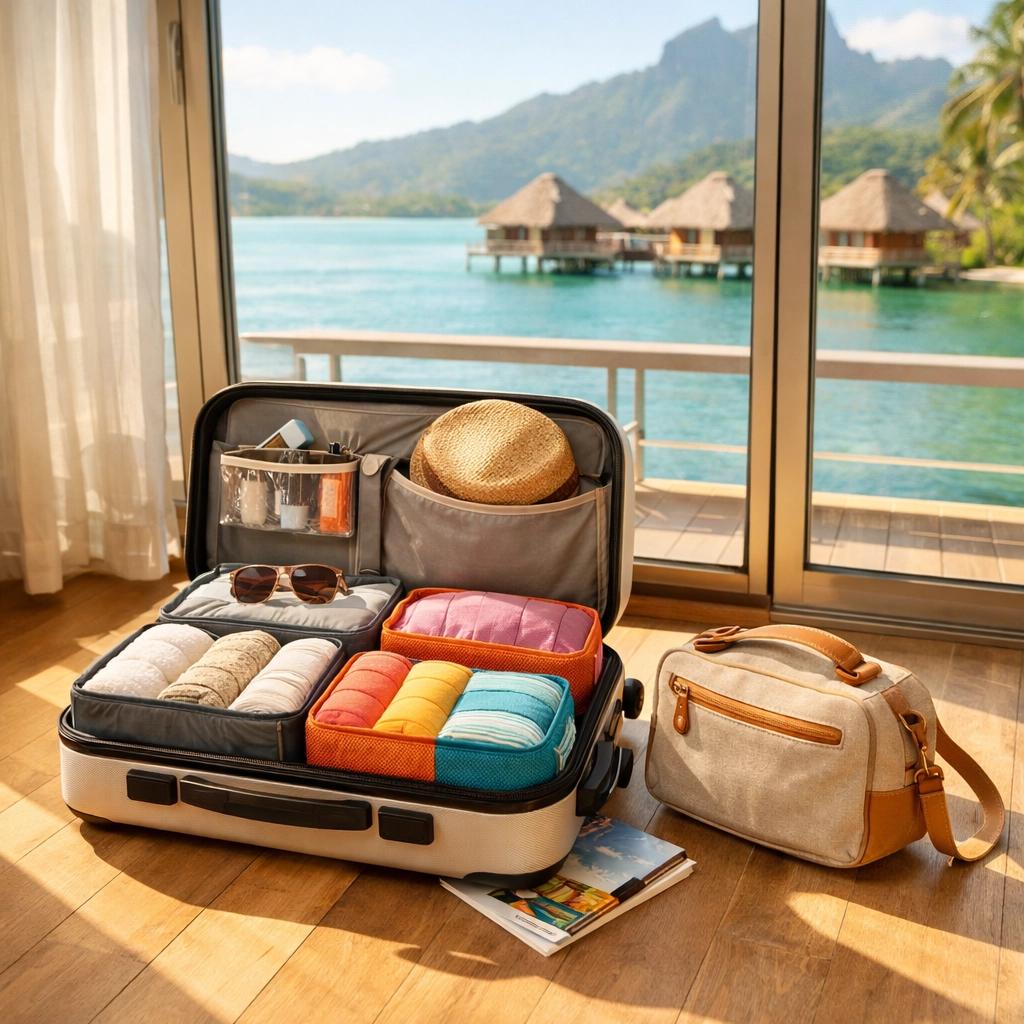
Create a “Travel Docs” folder in your cloud storage of choice: Google Drive, Dropbox, iCloud, whatever you trust. In this folder, store PDFs or photos of:
- Your passport (photo page)
- Your driver’s license
- Your credit cards (front and back)
- Your insurance cards (health, travel, car)
- Your prescriptions
- Your hotel confirmations
- Your flight confirmations and ticket numbers
- Your emergency contacts list
- Your doctor’s contact information
This is your digital twin. Your backup brain. Your “oh crap” insurance policy.
And here’s the pro move: also email this folder to yourself. That way, even if you somehow can’t access your cloud storage, you can access your email from literally any device on the planet. Internet café in Morocco? Hotel business center in Tokyo? Your digital twin is there, waiting.
This habit takes 30 minutes to set up once and then maybe 5 minutes to update before each trip. It’s one of those things that seems paranoid until the moment you need it, and then it’s the most valuable thing you’ve ever done.
Buffer Time as a Luxury: Stop Rushing, Start Living
You know what’s not luxurious? Sprinting through an airport. Speed-walking through security with your shoes half-on, your laptop hanging out of your bag, and your boarding pass clenched between your teeth because you forgot you’d need three hands for this entire operation.
You know what is luxurious? Having time.
Time to get a coffee. Time to browse the bookstore. Time to use the bathroom without calculating whether you have enough minutes to make your gate. Time to sit down, take a breath, and mentally transition into vacation mode before you even board the plane.
Buffer time is the ultimate luxury habit, and it costs you nothing but a mindset shift.
For domestic flights, arrive two hours early. For international flights, three hours. I can hear you already: “But that’s so much extra time!” Exactly. That’s the point. That extra time is your insurance policy against traffic, long security lines, gate changes, and the general chaos of modern air travel.
But more than that, it’s your gift to yourself. It’s saying, “I value my peace of mind more than I value those extra 45 minutes of sleep.” It’s recognizing that the trip starts the moment you leave your house, not when you land at your destination.
Build buffer time into everything. Hotel checkout at 11 AM? Plan to leave by 10:30. Dinner reservation at 7 PM? Leave your hotel at 6:15, not 6:45. Tour starts at 9 AM? Be in the lobby at 8:45.
Rushing is the enemy of premium experiences. Buffer time is the secret weapon of people who actually look relaxed on vacation.
The Arrival Ritual: First Impressions Matter
You’ve landed. You’ve made it. Now what?
Most people stumble off the plane, wander around the airport looking for signs they can barely read because jet lag is already setting in, stand in a taxi line for 40 minutes, have a minor argument with their travel companion about which hotel they’re actually staying at, and finally collapse into their room in a state of exhausted confusion.
Professionals have an arrival ritual.
Pre-book your airport transfer. Whether it’s a private car, a shared shuttle, or even just researching the best public transit route beforehand, know exactly how you’re getting from the airport to your hotel before you land. Standing in a taxi line in a foreign country while exhausted is not the time to start figuring out transportation logistics.
Have your hotel address and confirmation readily accessible. Not just in your email: screenshot it, save it to your photos, and be able to show it to anyone who asks without needing to dig through your inbox with spotty airport WiFi.
Follow the “first meal” strategy. Before you collapse into your hotel bed for a “quick nap” (that will definitely turn into a four-hour confusion spiral that ruins your sleep schedule for the entire trip), get food. Real food. Sit down somewhere, order a meal, and eat it slowly. This serves two purposes: it helps with jet lag adjustment, and it forces you to stay awake and engage with your destination while your body still has that travel adrenaline.
Do the immediate unpack. You don’t have to organize your entire suitcase, but take 10 minutes to hang up anything that wrinkles, put your toiletries in the bathroom, plug in your devices, and set out tomorrow’s outfit. This small ritual transforms your hotel room from a temporary storage unit into an actual home base.
Take the welcome walk. Even if you’re exhausted, even if it’s just around the block, walk outside. Find the nearest convenience store. Locate a coffee shop for tomorrow morning. Get your bearings. This 15-minute investment in spatial awareness will make the entire rest of your trip smoother.
The arrival ritual isn’t about being type-A or obsessively organized. It’s about setting yourself up for success by handling the basics while you still have energy, so that when jet lag hits, you’re already settled and oriented.
Jet Lag Jiu-Jitsu: Time Zone Domination
Let’s talk about the silent vacation killer: jet lag. You’ve spent thousands of dollars, planned for months, and now you’re spending the first three days of your trip in a fog, falling asleep at dinner, and waking up at 3 AM staring at the ceiling.
Jet lag is real, but it’s not insurmountable. The key is treating it like an opponent you can strategically defeat rather than an inevitable condition you must endure.
Start adjusting before you leave. If you’re traveling east, start going to bed an hour earlier each night for three nights before your trip. If you’re traveling west, stay up an hour later. This pre-adjustment makes the actual time change less jarring.
Stay hydrated: but do it right. Here’s something most people don’t know: chugging a bottle of water all at once doesn’t hydrate you nearly as well as sipping water consistently throughout your flight. Your body can only absorb so much at once. Set a reminder on your phone to drink water every 30 minutes during your flight. Small sips, constant hydration. This prevents headaches, blood sugar swings, and that overall “feeling like garbage” sensation that comes with air travel.
Move your body constantly. Set a stretch timer every 1-2 hours during the flight. Roll your wrists, flex your ankles, shrug your shoulders. During bathroom breaks, do standing quad stretches or toe raises. Pack a small massage ball and roll it under your feet and shoulders. This increases blood flow and prevents that stiff, achy feeling that makes jet lag worse.
Wear compression socks. They look dorky. They feel weird at first. They also prevent the puffiness, leg cramps, and painful swelling that accumulate after hours of sitting. Professionals swear by them for a reason.
Use light strategically. Light is the most powerful tool for adjusting your circadian rhythm. When you arrive, if it’s daytime, stay outside. Get as much natural sunlight as possible. If it’s nighttime, avoid screens and keep lights dim. Your body needs clear signals about what time zone you’re in now.
The caffeine and alcohol rule. Limit both during travel. They both dehydrate you, which makes jet lag worse. If you need caffeine, have it strategically: a morning coffee at your destination’s local morning time, not scattered throughout your travel day.
The power of protein and movement. Start your day at your destination with a protein-rich breakfast: eggs, yogurt, something substantial. Then move. Walk. Explore. Do light activity. This combination of protein and movement signals to your body that it’s morning and time to be awake, regardless of what your confused internal clock is telling you.
Jet lag jiu-jitsu isn’t about fighting against your body: it’s about using strategic habits to help your body adjust as quickly as possible.
The Ground Game: Small Habits That Compound
Beyond the major habits, there are dozens of tiny practices that professional travelers use to make everything smoother. These are the 1% improvements that add up to a completely different experience:
Always pack a pen. Customs forms, immigration documents, that random survey they hand out on the plane: you’ll need a pen. Don’t be the person asking everyone around you if they have one.
Keep a small amount of local currency in your wallet. Even if you’re mostly using cards, having $20-40 in local cash solves so many small problems: tips, street food, that bathroom that requires coins, the taxi driver who “doesn’t take cards.”
Take a photo of where you parked. At the airport. At the rental car return. Everywhere. You will not remember. Your phone’s camera has GPS data: use it.
Screenshot everything important. Boarding passes, hotel confirmations, restaurant reservations, important addresses. Screenshot them all and save them to your photos. No WiFi required, no app crashes, no problems.
The morning meditation habit. Even five minutes. Before the chaos of travel starts, before you start checking email and diving into logistics, sit quietly for five minutes. Breathe. Ground yourself. Remind yourself what this trip is actually about. This simple habit sets the tone for your entire day.
The “one nice thing” rule. Every travel day, budget for one small luxury that makes you feel good. A nice coffee. A magazine at the airport. A pastry at a local bakery. These tiny moments of pleasure transform travel from survival mode into vacation mode.
Stay connected with yourself. Journal for five minutes before bed. What went well today? What do you want to do tomorrow? What are you grateful for? This practice keeps you present and intentional rather than just checking boxes on an itinerary.
The Ultimate Habit: Let Someone Else Handle the Heavy Lifting
Here’s the truth that nobody wants to admit: the smoothest travel experience is the one where you don’t have to think about most of this stuff because someone else is handling it for you.
I’m talking about working with an actual travel agency. Not a faceless booking algorithm. Not a “travel assistant” chatbot. A real human being who understands what smooth travel actually means and who can build those habits into your itinerary before you even think about them.
At Time For Your Vacation, this is literally what we do all day, every day. We’re thinking about buffer time while you’re still thinking about where you want to go. We’re coordinating airport transfers while you’re looking at hotel photos. We’re building backup plans while you’re daydreaming about your vacation.
We know which airlines have the best track records for on-time departures. We know which hotels will actually honor your early check-in request. We know which tour companies will pick you up late if your flight is delayed. We know these things because we’ve done this thousands of times, and we’ve built the systems and relationships that turn potential chaos into smooth execution.
The best travel habit you can develop? Recognizing that your time and peace of mind are valuable enough to delegate the complexity to someone who does this professionally.
Your Smoother Trip Starts Now
Smooth travel isn’t mystical. It’s not about being born lucky or having unlimited resources. It’s about developing a series of intentional habits that compound into an entirely different experience.
Start with one habit from this list. Maybe it’s the 24-hour rule. Maybe it’s building in more buffer time. Maybe it’s finally creating that digital twin folder you’ve been meaning to set up for years.
Pick one. Master it. Make it automatic. Then add another.
Because here’s what happens when you stack these habits: you stop surviving travel and start enjoying it. You arrive at your destination energized instead of exhausted. You spend less time dealing with problems and more time actually being on vacation. You become that person: the calm, collected traveler who makes it look easy because, through habits, it actually is.
Your next trip is waiting. Make it smoother.
Ready to travel smarter? Visit us at www.TimeForYourVacation.com to start planning your smoothest trip yet. Looking for insider travel tips and destination guides? Check out www.DaveTheTourGuide.com for expert advice from someone who’s been there. Want more travel wisdom delivered regularly? Head to www.TimeForYourVacation.blog for weekly insights that’ll transform how you travel.
And if you’re the podcast type, catch our latest episodes at https://www.podomatic.com/podcasts/contact24682 where we dive deep into the travel strategies that actually work.
 Time For Your Vacation
Leave a comment