(Before we get started on today’s blog, I want to announce I am currently organizing a group cruise! This will be 25-30 couples on an international cruise! Details are forthcoming, but we are looking for this to be around April of 2027. Contact me; contact @ TimeForYourVacation.com if interested.)
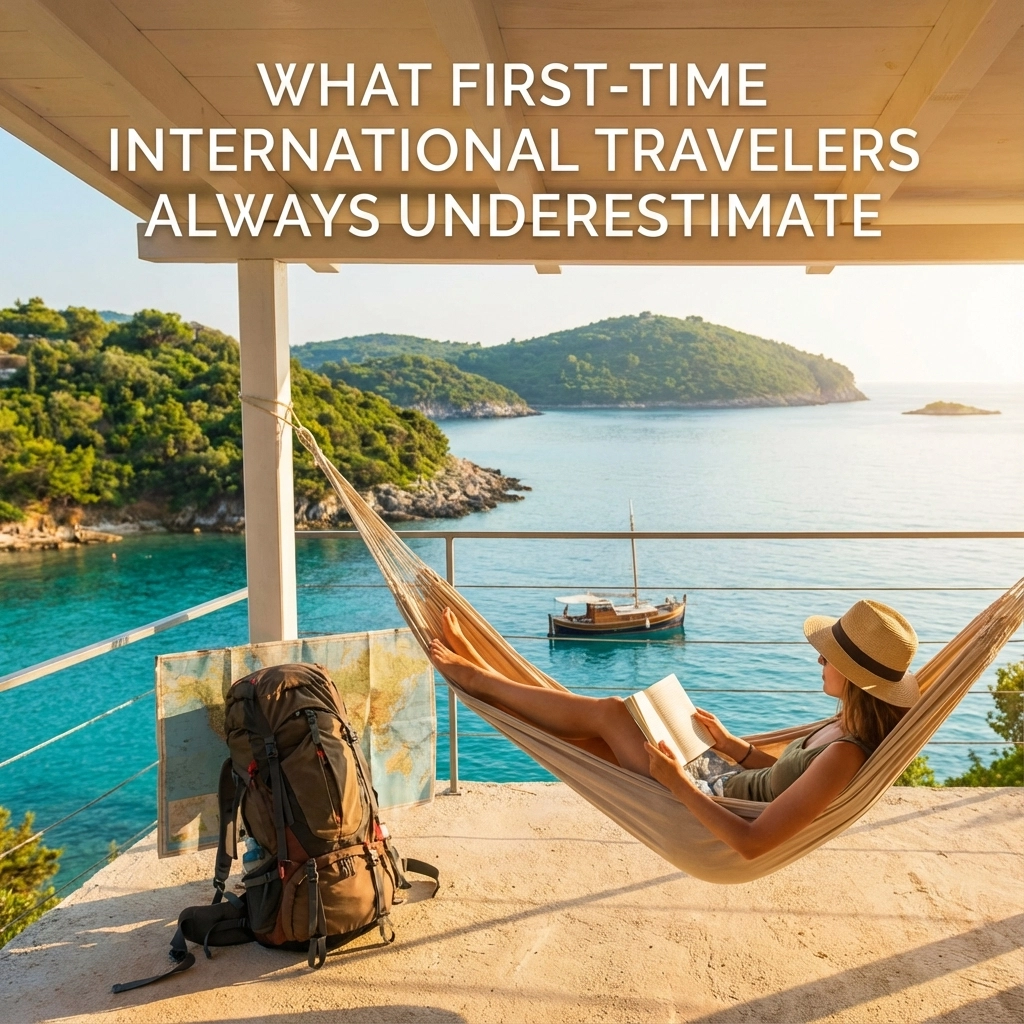
Your first international trip. Your first international trip is about to become reality, and you’re buzzing with excitement. You’ve booked your flights, researched attractions, and started your packing list. But here’s what seasoned travelers know that you don’t yet: the most challenging parts of international travel are rarely the obvious ones.
First-time international travelers consistently underestimate the same dozen things, and these oversights can transform a dream vacation into a stress-filled adventure. The good news? Every single one of these challenges has a simple solution once you know what to expect.
The Connectivity Crisis Most Travelers Never See Coming
You land in Paris, pull out your phone to call an Uber, and suddenly realize you’re completely cut off from the digital world. No maps, no translation apps, no way to contact your hotel. This scenario plays out thousands of times daily in airports worldwide.
The connectivity crisis hits first-time international travelers harder than any other single issue. You assume Wi-Fi will be everywhere, just like at home. You think your phone plan automatically covers you internationally. You believe airports and hotels provide reliable, free internet access.
You’re wrong on all three counts.
International data roaming can cost you hundreds of dollars if you’re not prepared. One traveler recently returned from a week in Italy to find a $400 phone bill waiting in their mailbox. Another discovered their “unlimited” plan didn’t include international coverage at all.
Smart Solution: Purchase an international data plan before you leave, or invest in a global SIM card. Many carriers offer temporary international packages for $10-15 per day. Download offline maps for your destinations before departure. Research Wi-Fi availability at your specific hotels and save backup connectivity options.
Your travel concierge can arrange connectivity solutions before you even pack your bags, ensuring you’re never truly disconnected from help when you need it most.
The Time Trap That Derails Dream Itineraries
First-time international travelers consistently underestimate how much time everything takes. Everything. Airport transfers, train connections, walking between attractions, checking into hotels, finding restaurants. You plan to see five museums in one day because they’re “all in the same area” on your map app.
The reality check comes quickly. That “nearby” restaurant is actually a 45-minute walk through winding medieval streets. The museum you wanted to visit requires advance booking and is sold out for three weeks. The train to your next city runs only twice daily, and you missed both departures.
Time zone confusion amplifies this problem exponentially. Your body thinks it’s 3 AM when your brain insists you should be exploring ancient ruins. Jet lag doesn’t just make you sleepy: it slows your decision-making, reduces your patience, and makes every task take twice as long.

Smart Solution: Plan for 50% more time than you think you need for every activity. Build buffer time into your schedule for unexpected discoveries and necessary rest breaks. Accept that quality experiences matter more than quantity. Choose three meaningful activities per day instead of cramming in seven rushed visits.
Professional trip planners understand the rhythm of international travel and build realistic itineraries that account for jet lag, travel time, and spontaneous moments that make trips memorable.
The Hidden Costs That Shock Your Budget
Currency conversion seems straightforward until you’re standing at an airport exchange counter discovering their rates are 15% worse than advertised. Credit card fees add up faster than subway stops. ATM withdrawals in foreign countries often include multiple fees you never knew existed.
Restaurant tipping customs vary dramatically between countries. In Japan, tipping can be considered insulting. In the United States, 20% is expected. In parts of Europe, service charges are included automatically. Get it wrong, and you’re either overpaying significantly or accidentally offending your server.
Transportation costs multiply when you’re unfamiliar with local options. Tourist taxi drivers quote inflated prices. You miss the affordable bus route that locals use daily. Your hotel recommends expensive transfer services when simple train connections would cost one-tenth the price.
Smart Solution: Research currency exchange options before departure and avoid airport kiosks when possible. Notify your bank about travel dates to prevent card blocks. Download currency conversion apps and familiarize yourself with local tipping customs. Ask locals for transportation recommendations instead of relying solely on hotel concierge suggestions.
Travel professionals handle currency strategy as part of comprehensive trip planning, ensuring your money stretches further while you focus on creating memories.
The Documentation Disasters You Never Expect
Passport expiration dates catch more travelers off-guard than any other single requirement. Many countries require six months of validity remaining on your passport for entry. Your passport expires in four months? You’re not boarding that plane to Thailand.
Visa requirements change frequently and vary significantly based on your citizenship and destination. Some countries offer visa-on-arrival services. Others require advance applications with processing times measured in weeks. A few require proof of onward travel or minimum bank balances for entry.
Travel insurance feels optional until you need emergency medical care in a country where hospital visits cost thousands of dollars upfront. Prescription medications may be illegal in your destination country, even with a valid prescription from home.
Smart Solution: Check passport expiration dates six months before any international trip and renew if necessary. Research visa requirements through official embassy websites, not travel blogs. Purchase comprehensive travel insurance that covers medical emergencies, trip cancellations, and lost luggage. Verify prescription medication legality in destination countries and carry official documentation.
Professional travel services include document verification and insurance recommendations as standard practice, preventing last-minute crises that could derail entire vacations.
The Language Barriers That Go Beyond Words
Language challenges extend far beyond basic vocabulary. Cultural communication styles differ dramatically between countries. Direct communication that works in Germany might be considered rude in Japan. Casual friendliness appreciated in Australia could be misinterpreted in more formal cultures.
Non-verbal communication varies significantly across cultures. Eye contact expectations, personal space norms, hand gestures, and even facial expressions carry different meanings worldwide. What you intend as polite interest might be perceived as inappropriate attention in conservative societies.
Menu translations often produce hilarious results, but dietary restrictions become serious challenges when lost in translation. Food allergies, religious restrictions, and vegetarian preferences require precise communication that goes beyond pointing at pictures.

Smart Solution: Learn basic courtesy phrases in the local language before departure. Download reliable translation apps that work offline. Research cultural communication norms specific to your destinations. Carry cards explaining dietary restrictions in the local language. Practice patience and maintain a sense of humor when miscommunications occur.
Experienced travel professionals provide cultural briefings that prepare you for communication differences, helping you navigate social situations with confidence and respect.
The Safety Realities Tourist Brochures Don’t Mention
Tourist areas attract opportunistic criminals who specialize in targeting confused visitors. Pickpockets work airports, train stations, and popular attractions with sophisticated techniques that go far beyond simple wallet-grabbing. They create distractions, work in teams, and often target travelers who appear lost or overwhelmed.
Scam artists develop elaborate schemes specifically designed for tourists. Fake police officers demand passport inspections to steal documents. Friendly strangers offer helpful directions while accomplices pick pockets. Restaurant servers bring inflated bills hoping tourists won’t question charges.
Personal safety extends beyond crime prevention to include health risks, natural disasters, and political situations. Food safety standards vary dramatically between countries. Natural disaster preparedness differs significantly. Political demonstrations or strikes can affect transportation and safety without advance warning.
Smart Solution: Research common scams specific to your destinations and practice recognition techniques. Use hotel safes for valuables and carry minimal cash in multiple locations. Verify police identity through official channels if approached unexpectedly. Stay informed about local news and political situations through reliable sources.
Professional travel services include destination-specific safety briefings and 24/7 emergency assistance, providing peace of mind and immediate support when unexpected situations arise.
The Health Challenges You Can’t Plan Around
Jet lag affects everyone differently, and its impact often surprises first-time international travelers. Your sleep schedule doesn’t gradually adjust: it crashes completely for several days. Your appetite disappears or becomes overwhelming at inappropriate times. Your immune system weakens, making you susceptible to illnesses that wouldn’t normally affect you.
Food and water safety standards vary dramatically worldwide. Your stomach bacteria haven’t been exposed to local microorganisms that pose no threat to residents but can cause significant digestive distress for visitors. Ice cubes, fresh fruits, and tap water become potential health hazards in certain regions.
Prescription medications may be unavailable in your destination country, or available only with complex import documentation. Over-the-counter medications that you rely on at home might require prescriptions elsewhere or simply not exist in equivalent forms.
Smart Solution: Consult a travel medicine specialist four to six weeks before departure for destination-specific health advice. Pack a comprehensive first-aid kit including extra prescription medications. Research food and water safety guidelines for specific destinations. Consider travel health insurance that covers emergency medical evacuation.
Professional travel planners coordinate health preparations as part of comprehensive pre-departure planning, ensuring you’re prepared for destination-specific health challenges.
The Technology Gaps That Leave You Stranded
Your smartphone becomes your lifeline during international travel, but technology compatibility issues often catch first-time travelers completely off-guard. Your phone might not work on local networks despite having an international plan. Your chargers might not fit foreign outlets even with basic adapters.
Banking apps frequently block transactions from foreign locations as security measures. You find yourself unable to access your money precisely when you need it most. Two-factor authentication systems that rely on SMS messages stop working when your phone can’t receive international texts.
Translation apps require internet connectivity to function properly, but Wi-Fi availability is inconsistent in many destinations. GPS navigation consumes significant battery power and data, leaving you lost with a dead phone in unfamiliar locations.

Smart Solution: Test all technology compatibility before departure and pack backup options for critical functions. Notify banks about travel dates and destinations to prevent security blocks. Download offline maps and translation tools before leaving home. Carry portable battery chargers and universal adapter plugs suitable for your specific destinations.
Professional travel services include technology coordination and backup planning, ensuring your digital tools support your adventure instead of hindering it.
The Cultural Shocks That Reshape Your Perspective
Cultural differences extend far beyond tourist guidebook mentions of local customs. Daily life rhythms vary dramatically between countries. Meal times, business hours, weekend activities, and social interaction patterns can leave you feeling constantly out of sync with local life.
Religious and cultural sensitivities require careful navigation in many destinations. Dress codes, photography restrictions, and behavioral expectations often have deeper significance than obvious tourist guidelines suggest. Inadvertent violations can result in serious consequences or simply make you appear disrespectful to local communities.
Social hierarchy and interaction patterns differ significantly worldwide. Age respect, gender interaction norms, business communication styles, and even eye contact expectations vary dramatically between cultures. Understanding these subtleties enhances your travel experience and prevents uncomfortable misunderstandings.
Smart Solution: Research cultural norms and expectations for specific destinations through reliable cultural guides rather than general travel websites. Observe local behavior patterns and adapt accordingly. Ask respectful questions when uncertain about appropriate behavior. Approach cultural differences with curiosity rather than judgment.
Experienced travel professionals provide cultural orientation that prepares you for meaningful interactions with local communities while respecting their traditions and values.
The Navigation Nightmares That Test Your Patience
GPS navigation works differently in various countries, and offline capabilities often fall short in complex urban environments or rural areas with limited connectivity. Street addressing systems vary dramatically worldwide. What works in Manhattan fails completely in Tokyo or Mumbai.
Public transportation systems operate according to local logic that may seem completely counterintuitive to foreign visitors. Metro maps appear straightforward until you discover multiple fare zones, express services, and transfer requirements that aren’t immediately obvious. Bus systems often rely on local knowledge that tourists simply don’t possess.
Walking directions become complicated when cultural norms affect pedestrian behavior, street crossing patterns, and even which side of sidewalks people typically use. Your intuitive navigation sense developed at home may lead you astray in environments with different traffic patterns and pedestrian flows.
Smart Solution: Download multiple navigation apps and test them before departure. Research local transportation systems and purchase appropriate transit passes or cards in advance. Learn to identify key landmarks and neighborhood characteristics for backup navigation. Ask locals for confirmation when directions seem confusing.
Professional travel planning includes transportation briefings and navigation assistance that help you move confidently through unfamiliar destinations.
The Weather Realities Forecasts Don’t Capture
Weather patterns in foreign destinations often differ significantly from what online forecasts suggest, especially when you’re traveling between different climate zones or hemispheres. Seasonal weather patterns may be completely opposite to your home experience, and local microclimates can create surprising conditions within short distances.
Elevation changes affect weather dramatically, and many first-time travelers underestimate temperature variations between coastal areas and mountain regions, or between day and night in desert climates. Your beach destination might require warm clothing for evening activities, while your mountain adventure could include unexpected heat during midday hours.
Weather preparation extends beyond clothing to include activity planning and health considerations. Sudden weather changes can affect transportation schedules, outdoor activities, and even indoor comfort levels in buildings without climate control.
Smart Solution: Research seasonal weather patterns and pack for various conditions rather than relying solely on forecast predictions. Include layers that can adapt to temperature changes throughout days and between different areas of your destination. Consider weather-related activity alternatives and indoor options for outdoor plans.
Professional travel services include destination-specific weather briefings and packing recommendations that prepare you for actual conditions rather than idealized forecasts.
How Professional Travel Planning Eliminates These Surprises
Every challenge mentioned above has been encountered, solved, and prevented countless times by experienced travel professionals. The patterns are predictable, the solutions are proven, and the peace of mind is invaluable.
Professional travel concierge services eliminate first-time traveler surprises through comprehensive pre-departure planning that addresses every detail you haven’t yet learned to consider. From connectivity solutions to cultural briefings, from health preparations to emergency support systems, experienced professionals handle the complexities while you focus on anticipating your adventure.
Time For Your Vacation and Black Key Elite specialize in transforming potentially overwhelming first international trips into smooth, confident adventures. Whether you’re planning a romantic European escape, an Asian cultural exploration, or an African safari adventure, professional planning eliminates surprises and maximizes experiences.
Your first international trip should be remembered for incredible discoveries, not stressful problem-solving. With proper preparation and professional support, you’ll navigate cultural differences with confidence, handle logistics with ease, and create memories that inspire decades of future adventures.
The world is waiting for you to explore it, and now you know exactly how to prepare for that exploration. Your adventure begins with understanding what you don’t yet know: and ensuring someone experienced handles those details while you focus on the excitement ahead.
Ready to plan your first international adventure with confidence? Visit us at www.TimeForYourVacation.com, www.DaveTheTourGuide.com, www.BlackKeyElite.com, and www.TimeForYourVacation.blog for personalized travel planning that eliminates surprises and maximizes unforgettable experiences.
 Time For Your Vacation
Leave a comment